Author Archives: Literary_Titan
The Pressure of Testing

Tokyo Juku follows an eighteen-year-old student in Japan who, while studying all night in her cram school, discovers one of her teachers has been murdered, leading to an investigation into the education system. What was the inspiration for the setup of your story?
The main inspiration comes from talking with my students. Their struggles inspired me to write about them. I teach at a university, so hearing from my seminar students about what they’ve been through really made me rethink the Japanese educational system from their perspective. One of the largest problems is the pressure of testing. Students hate tests. I mean, really hate them! My job entails evaluation, but more as individual feedback than standardized testing as social gatekeeping. Over the years, when I tell people that I teach at a university, they often cast their eyes down and mumble the name of their school, a little embarrassed at their past failings. Or, just the opposite, very proudly. That’s a sad reaction to what should be a life-transforming experience. In the novel, I wanted to take my students’ stories, my observations, and others’ experiences and condense them into the struggles of the main character, Mana. Like most Japanese, she has to learn how to navigate treacherous educational waters. As an educator and a writer, I’m on the side of improvement, but that’s easier said than done.
How has character development for Detective Hiroshi Shimizu changed for you through the series?
Hiroshi has evolved through the series. In the first novel, he had just returned from America and found the detective job through a connection. He works the job reluctantly but gradually finds he is pretty good at it, despite being resistant to crime scenes and the grittier aspects of the job. He reconnects with his college girlfriend, moves in with her, and they start a family in the latest novel. That idea of fatherhood causes him great anxiety because of what he’s seen behind the curtain. Does he want to bring a child into the world he’s glimpsed while working in homicide? But he has a knack for finding the pattern in the chaos of cases, and he’s needed.
Was it important for you to deliver a moral to readers, or was it circumstantial to deliver an effective novel?
An effective novel comes first. The moral is something that occurs in readers’ minds. I think if you push a moral or make themes too explicit, it takes away from the beautiful ambiguity of reading. As a writer, I can nudge readers in specific directions, but they will draw their own conclusions. So, if you push a moral without a compelling story, it comes across as preachy. Nobody likes that. Readers have their own reactions to the characters’ conflicts, which might yield a moral they take away, but it might also be something more complex—a conclusion or understanding that doesn’t fit into the frame of a moral. The conflicts and confusions of characters are at the heart of an effective story. I focus on that. My job as a writer is to keep them turning pages, thinking, and enjoying the ride.
Can you tell us more about what’s in store for Detective Hiroshi Shimizu and the direction of the next book?
The next book will focus on the tourist industry, which has really taken off in Japan. I have culture shock—or maybe reverse culture shock—in parts of the city swamped with visitors from abroad. That’s changing the city. I’m not against that, but the influx of tourists and tourist money has not been clearly planned for. And much of Japan is highly planned. Japan is internationalizing, in good and bad ways, so that Hiroshi will be needed even more with his English and accounting skills. He’s got plenty more cases to work on.
Author Links: GoodReads | X | Facebook | Website
Eighteen-year-old Mana pulls an all-nighter at her juku, a private Japanese cram school that specializes in helping students pass the once-a-year exams. She failed the year before but feels sure she’ll get it the second time—if she can stay awake. The Japanese saying, “Four pass, five fail,” presses her to sleep just four hours a day, and study the rest.
When she wakes up in the middle of the night, head pillowed on her notes, she takes a break down the silent hallway. A light comes from an empty classroom, and still sleepy, she pushes open the door to discover something not covered in her textbooks. Her juku teacher, the one who got her going again, lies stabbed to death below the whiteboard, with the knife still in his chest and the AV table soaked in blood.
Detective Hiroshi Shimizu is called in, and though he’s usually the forensic accountant, not the lead detective, he’s put in charge of the case. With the help of colleagues old and new, he’s determined to find the killer before the media convicts the girl in the press, the new head of homicide pins it on her, or big money interests make her the scapegoat.
Hiroshi follows up on uncooperative witnesses, financial deceptions, and the sordid details of some teachers’ private lives. Even as he gets closer, the accumulating evidence feels meager amid the vastness of the education industry, and the pressures and profits of Japan’s incessant exams.
At the outset of the investigation, Hiroshi listens as an education ministry official lectures him on how education holds the nation together, but he soon discovers how it also pulls it apart, and how deadly a little learning can be.
Love, Hate, and Ego
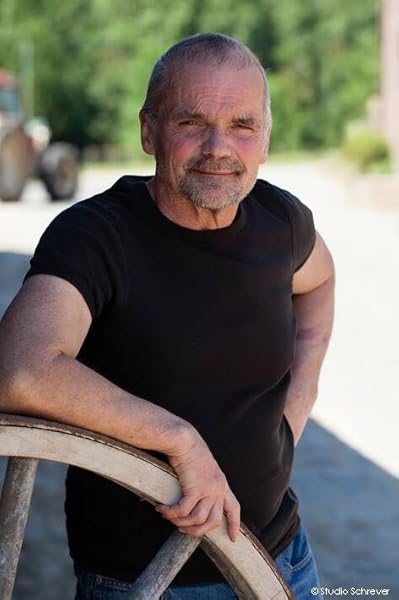
The Long Farewell follows a young man with an Oedipus complex living in the rise of Nazi Germany who, after a series of tragic events, seeks to get revenge on his father. What was the inspiration for the setup of your story?
When I was in college, I was fascinated by Jorgen, a fellow student whom others in our student house labeled as a weirdo. He exhibited abrupt mood swings and had an aggressive aura, although he was skinny and short. When something irked Jorgen – and many things did – he stood trembling, his fists clenched, his eyes wide-open, in front of you and then burst into tears. After such an emotional eruption, he was withdrawn and silent. In our student house, we placed bets on how long he would last at university. I had been so stupid to tell the others I wanted to become a writer and that Jorgen could become a fascinating character in the novel I wanted to write. The rumor had apparently reached Jorgen: during an evening out at the well-known student pub The Red Scaffold, he confronted me about my statement. It turned out that, for once, he wasn’t aggressive. On the contrary, he seemed flattered. We found a quiet place on the terrace. Jorgen told me he wanted to become a poet and asked a string of questions. We drank a few beers, and he became nostalgic and tearful. He boasted he was diagnosed as borderline schizophrenic. He really seemed proud about it and became strangely souped-up and said with trembling lips and flared nostrils: “My mother turned me into a creep. I was only thirteen when she confessed that she wanted me to make love to her. I remember that a fiery arrow went along my spine, making me shudder.” He peered closely at my shocked face and almost whispered:” Nobody knows if we did it or not.”
What could I say? I was quiet.
Jorgen looked me straight in the eyes. I saw he was fighting back tears. “I hate my father,” he whined softly, exhaling with quivering lips. “It’s all his fault.”
That evening, in my bed, I vowed to write a book one day, circling a character with an Oedipus complex.
And to dodge Jorgen.
I didn’t have to do that long. Two weeks later, Jorgen didn’t check in on Monday at our student house.
And never came back.
The memory of this troubled young man stayed with me for several years.
And popped up stronger than ever when I began writing “The Long Farewell.”
The tragic boy Hermann was born.
What are some things that you find interesting about the human condition that you think make for great fiction?
The contradiction between our ‘good’ and ‘bad’ urges is breathtaking. The building of our personalities after birth is chaotic. Our instincts are relentlessly brutal. If babies had the strength to wield weapons, I believe that most of them would be murderers before their third year. We speak with disdain –and fear- about narcissists and don’t want to face up to the fact that our own ego is narcissistic on different levels. In “The Long Farewell,” we see Hermann’s mental suffering, fueled by his hate for his SS father, getting worse and culminating in a dangerous schizophrenia, leading to a truly apocalyptic ending in the German city of Dresden. Schizophrenia is a fascinating and eerie mental disease. When a baby grows up in a family where its mother and father imprint it with radically opposed worldviews, research has detected that the tension thus generated later on in life is the ideal breeding ground for mental anomalies. In past times, these anomalies were called demons. You may smile, but I assure you that we have to take them seriously.
What were some themes that were important for you to explore in this book?
You know, I often think that everything on this Earth eventually comes down to the endless configurations that love, hate, and ego can produce. Love and ego can join forces to form powerful hate and cruelty. I know that we want to see love as something pristine and holy, but reality shows us otherwise.
Of course, I propose my statement here, pure and well-defined. In everyday life, the borders between love and hate –and ego! – are fuzzy. In my oeuvre, I try to follow the intricate signs in our mind that forecast violent drama. Not an easy task, I can assure you. You may wonder why I am so frantically searching for the roots of our violence. I wonder about that too, because after 39 years of being a full-time author, I’m still searching. I’ve been a travel writer in conflict zones between 1990 and 2003, visiting Somalia, Liberia, Sudan, Lebanon, Burundi, Bosnia, Gaza, Iran, Iraq, Kosovo, Myanmar… to name but a few. Those travels have surely influenced my outlook on the world. In Belgium and the Netherlands, my Flemish/Dutch publisher published 45 books. Although set on several continents, they all focus on the mystery of our aggression, on the executioners and the executed.
What is the next book that you are working on, and when will it be available?
I suspect that I’m writing my last novel: I am seventy-two, and I feel my energy waning. Three years ago, I fell victim to a sepsis infection that nearly killed me. I still struggle with the damage the sepsis has wrecked. Moreover, I am afraid to lose my mental powers and glide into Alzheimer’s maw. The terrible disease destroyed my mother’s brain. I know that Alzheimer’s is hereditary, therefore I spy on myself as if my life depends on it. Which it does, of course.
But enough whining, my manuscript-in-progress carries the ominous working title “Black Water,” but I keep searching for a better one. Over here, in Belgium, readers know me as an author who writes crossovers between suspense and literary, but “Black Water” is more magical realism, with a story taking place on different continents, with a central character, a writer/father hiding many secrets from his teenage daughter until a car accident results in a deep coma. Moran, the daughter, tries to wake him up by reading excerpts of his diary. I could explain more, but an author must be cautious and not divulge too much about a work in progress—the novel centers on love, sorrow, and guilt.
And magical mystery?
Maybe.
When out?
I hope next year.
Author Links: Website | Email | Facebook | X | Instagram | LinkedIn | YouTube | BookBub | Amazon | GoodReads | TikTok | Substack
His father is in the SS, his mother is Belarusian, and his girlfriend is Jewish. After a brutal clash with his father, Hermann and his mother flee to Paris. Swept along by a maelstrom of events, Hermann ends up as a spy for the British in the Polish extermination camp Treblinka.
The trauma of what he sees in this realm of death intensifies his pessimistic outlook on humanity. In Switzerland, the famous psychiatrist Carl Gustav Jung tries to free Hermann of his frightening schizophrenia, but fails to unravel the power of the young man’s emotions, especially his intense hate for his father.
What follows is a tragic chain of events, leading to Hermann’s ultimate revenge on his father: the apocalyptic bombing of Dresden.
THE LONG FAREWELL is an unforgettable exploration of fascism’s lure and the roots of the Holocaust. More than ever, the novel is a mirror for our modern times.
Blending Adventure With Science

Galileo’s Points of Light in the Night Sky follows a pair of curious siblings and Dr. K and her magical time portal, who travel back to Renaissance Italy to meet Galileo and experience firsthand the wonder of his telescope and discoveries. What was the inspiration for the setup of your story?
The inspiration came from my desire to make science and history feel alive for children. Galileo’s discoveries changed how we understand the universe, yet for many young readers, history can feel distant or abstract. By introducing a magical time portal and pairing the story with two inquisitive siblings, I wanted to create a bridge between today’s readers and the past. The setup allows children to see history not as dusty facts in a textbook but as living experiences full of curiosity, wonder, and adventure.
I enjoyed your characters, especially Dr. K. What was your favorite character to write for and why?
Dr. K was certainly the most rewarding character to write. She is both a guide and a fellow traveler, modeling how to ask questions, nurture curiosity, and balance seriousness with a sense of wonder.
Through her, I was able to weave together elements of science, history, and imagination.
She is not only a mentor to the children in the story but also a representation of my own lifelong passion for encouraging young minds to explore the world around them.
What were some educational aspects that were important for you to include in this children’s book?
I wanted to emphasize both Galileo’s scientific process and the cultural context of his discoveries.
Children learn not only that Galileo built a telescope and observed the moons of Jupiter, but also that these observations challenged established beliefs of the time.
The book highlights critical thinking, perseverance, and the courage to question accepted truths.
I also included a “Science Primer” at the back of the book to give readers and educators additional resources, ensuring that the story supports learning in both classrooms and homes.
Can you tell us more about what’s in store for Dr. K and the direction of the second book?
The second book, Marie Curie’s Radiant Quest, transports readers to Paris at the turn of the 20th century.
In this story, Dr. K and the siblings meet Marie Curie and learn about her groundbreaking work with radioactivity.
The narrative continues to blend adventure with science, showing not only Curie’s discoveries but also her perseverance in the face of challenges as a woman in science.
The series as a whole will continue to introduce children to great scientists across time, always with an emphasis on curiosity, resilience, and the wonder of discovery.
Author Links: GoodReads | X | Facebook | Website Books | Website Authors
In the awarding-winning Galileo’s Points of Light in the Night Sky, the first book of the captivating Dr. K’s Portal Through Time series, Jennifer, a vivacious 10-year-old, and her intellectually curious 8-year-old brother, Daniel, embark on an exceptional voyage through the annals of time. Guided by the enigmatic and brilliant scientist, Dr. K, they are transported to the heyday of Renaissance Italy, straight into the workshop of the iconic astronomer, Galileo Galilei.
As they traverse the time portal, Jennifer and Daniel experience firsthand Galileo’s groundbreaking observations of the celestial expanse through his innovative telescope. They are enlightened about the significance of questioning established norms and the audacity needed to defy the status quo. The siblings witness Galileo’s unveiling of the cosmos’s wonders and his revolutionary proposition that our Earth is not the center of the universe.
Throughout their journey, Jennifer and Daniel support Galileo in chronicling his pioneering discoveries. They confront challenges that enhance their problem-solving abilities and deepen their grasp of the scientific method. Their adventure cultivates an appreciation for the quest for knowledge and the potency of curiosity.
This enthralling tale seamlessly blends history, science, and adventure. It offers young readers a captivating, educational narrative, introducing them to the mesmerizing world of astronomy and the enduring contributions of one of history’s most illustrious scientists. The story of Jennifer and Daniel will inspire the readers to question, explore, and cherish the pursuit of knowledge, just like Galileo did. The book, while being a thrilling read, also helps foster a love for STEM disciplines in young, inquisitive minds, making it a perfect addition to any child’s reading list.
At the end of Book 1 is a QR code for the Science Primer, a comprehensive, free downloadable guide over 100 pages long, written specifically for parents and teachers. It also includes a complete Teacher’s Guide with detailed lesson plans, a glossary of terms, and an extensive list of resources such as books, videos, websites, and other online Resources for teaching about Galileo and his discoveries. The primer is designed to make science education engaging and accessible. Each of the books written for the series will feature its own tailored Science Primer. Book 1 itself also includes a glossary of terms and resources designed specifically for children ages 8-12, complementing the exciting adventures of Jennifer and Daniel.
Celebrating Small Victories
Lalibela is a book of poetry that wanders through memory, love, pain, Blackness, faith, and survival, shared through snapshots of memories filled with real emotions that hit the reader hard, and amplify the realities of Black life. What inspired you to write this particular collection of poems?
I am so grateful for the opportunity to talk about this collection.
This work was part of an intended series, picking up from where a previous work, Black Architects, left off. There was this and a prequel to Black Architects called Dearest. Unfortunately, the latter was stolen from my storage unit, but Lalibela survived. I was very much moved by my community and the struggles that I witnessed/experienced. When I look around me, there are people living unglorified lives, battling day in and day out to survive. I also see triumph, I see joy, I see grit, I see humor, I see love. The scene of backs breaking under hard work, celebrating on Sundays in church and lending a hand, set a very heartfelt rhythm in my mind. This was the rhythm to which my hands went to work to capture the sanctity of what we lived. The pieces, in turn, celebrate simply getting through the day and all other seemingly small victories.
I was also partly inspired by “Of the Coming of John” by W.E.B DuBois as well as the Allegory of the Cave by Plato. Being in the motions of experience sometimes means that the very thing that is taking place is lost on your eyes precisely because of its proximity to you. The burden, weariness, revelations and love carried by the protagonists in these two stories felt familiar to me. Having experienced the world outside of my neighborhood and family inspired an awakening of sorts that stirred a deeper love and admiration for the persons around me.
I love my community and I wanted to do justice to show just what made it so special to me. I was inspired by the coming architects of our tomorrow, (specifically my niece who was around 1 at the time and my nephew who was just a fetus), that will inherit and take charge of the world that I must one day forfeit. It was important to me to pass down my own legacy within the greater legacy of this community. I wanted to explore the nuances of ‘home’ and in a lot of ways this is my letting go of what I think ‘home’ should look like. The neighborhood is in the hands of a different young now; that narrative of its character no longer belongs to me, it belongs to the coming generation of architects that must rise to the task of defining and defending it.
Were there any poems that were particularly difficult to write? If so, why?
Most of the poems were difficult to write. The time they were written, in 2018, was turbulent for me. There was a death in my community, one that I managed to blame myself for and I was battling a number of things personally. Among these battles were crippling panic attacks. I would become completely incapacitated for any number of hours and then once I was functional again, I would hit the page. During this time, I thought a lot about mortality and I wondered about the things that really mattered in life. I found myself in this picture of the universe, small and mighty and I was thus able to blend easier into the flow of things on a larger scale. I realized how my life meant more when spent in communion with the Most High and in service of those around me. Being a vessel for Christ in this way meant that I had to be pure, so the task was to confront the world in me in writing and to speak truth to power as an honest and accurate witness to all that occurred within my realm. This made it difficult to write because I would have to face those lives and those faces who were written into the lines of each of the pieces. I had to live the baring of soul that made me feel naked – in the eyes of the Lord and the eyes of the people on whom I depended on and whom depended upon me. I felt so exposed. The lesson was this: there really is no hiding place in all of Creation.
How did you go about organizing the poems in the book? Was there a specific flow or structure you were aiming for?
I wanted the poems to speak to one another, so I arranged them in a way that they kind of flow into each other. Here’s a fun fact: you know how most movies have a love scene or a romantic storyline? I wanted to integrate that into the pulse and beat of the collection so I wrote “And When On Days” to give the collection that added bit of romance. The collection creates a certain type of world, like a mini neighborhood, and I wanted every representation and expression of love present in it.
Have you received any feedback from readers that surprised or moved you?
I think that when the Most High puts it in the hearts of man to be moved by these words from my soul, then there will be more readers. As of now, any feedback is welcomed and the invitation is extended to chance upon these waters in time.
Author Links: GoodReads | Amazon
Lalibela holds within its reams the fatigue and redemption of a working class family of the African Diaspora in the West. The lively avenues, bus routes, love lives and cultures preserved in memory and in real-time as if frozen in place from another, happier time. Retaining a legacy of teaching its young hard truths about survival, identity, achievement, failure, faith, death, resilience, life, love and hate.
As concepts evolve, facts change and truth disrobes, Lalibela is an expression and legacy of survival. Within this small community with limited resources people ponder existentially, pray colossal prayers, and resuscitate grit mouth-to-mouth. Named after a town in Ethiopia that is home to the legendary rock hewn churches, Lalibela is the sanctuary for a piece of mind and a direction to that inner place of belonging that travels with us all as we navigate our various and difficult realities. Simply, Lalibela is home.
Different Solutions

The Grubby Feather Gang follows a boy plagued by bullying and fear who finds himself part of a small circle of friends who together find adventure and hope in a village otherwise torn by war and chaos. What was the inspiration for the setup of your story?
I’m really not sure, to be honest. I am very interested in the experiences of those who lived through either or both of the world wars because both wars plunged otherwise peaceful, ordinary people into extraordinary and horrific situations. But I love the idea that different people can have different solutions to the same problems; most young men of fighting age during WW1 wanted – or felt the need – to go overseas and join the fighting whereas some, such as George’s father in the story, believed in a totally different, peaceful approach. The amount of courage needed for either approach must have been immense, and thankfully, most of us today can only imagine what it must have been like to face that dilemma. I’m fascinated by the fact that these experiences, that seem, to us today, to exist only in the realms of fiction, really happened to real people.
What do you find is the most challenging aspect of writing for middle-grade readers?
Other than the usual challenges of writing for any audience, I’m not sure I find anything especially challenging about writing for middle-grade readers. It can be a challenge when you’ve been hired by a publishing company – rather than writing just because you yourself have decided to do so – because if the project is for a young audience the publishers give you a tight word-count which creates restrictions and challenges, ones which, I have to say, I really enjoy working within. However, I wrote The Grubby Feather Gang off my own bat, so I didn’t have those restrictions, even though I did want to keep the book short. But middle-grade is a wonderful age range. I don’t hold back on the complexity of the language I use or the depth of the issues the story tackles. The only thing I do differently when writing for children as opposed to adults is to make the main characters children.
Is there anything from your own life included in the characters in The Grubby Feather Gang?
I’m happy to say that the experiences of the children in this story are very different from mine. I don’t think you have to have experienced something to write about it in a believable way though. I hope I’m right about that! But there often elements of the writer’s personality in the characters they create. George is prone to anger and sulking, and as a child, I was a little like that. (I’ve grown out of it now though!) I would add that I am always warmed by people – real or fictional – who turn out to be more impressive in some way than you originally realised, like Mr Haxby. And in a way, the same can be said of each of the three main characters.
What is the next book you are working on, and when will it be available?
I’m currently working on a novel for adults. Unlike most of what I’ve written before, this is a fantasy novel, with elements of horror. It features werewolves and witches. There is so much literature about such things, so the challenge is to present them in a new way, avoiding stereotypes and tropes, and I think I’ve achieved that…
Author Links: Facebook | Website
Worse still, the school bully hangs George upside-down from the hayloft, and the next day, George gets the cane! So, with a bit of help from Emma, a curious newcomer to the village, he decides to take daring and drastic revenge on both the bully and his teacher. But he could never have predicted what happens next…
The Grubby Feather Gang is the story of four friends helping each other cope with their parents’ problems.
The BigShorts books are short, stand-alone novels for strong Key Stage 2 readers. Each novel is around 100 pages long. The content is rich and detailed, tackling discussion-worthy themes. Being shorter than most novels, BigShorts books are a great length for teachers to read to their class, or for use as guided-reading texts.
Our Soul’s Lens
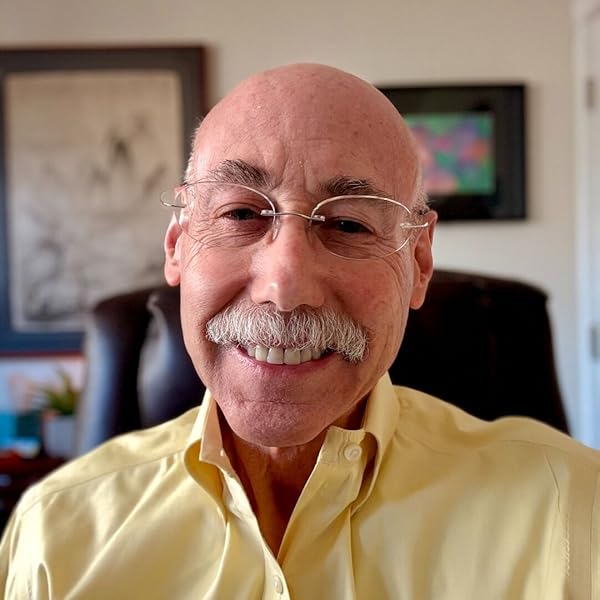
Unveiled: A Journey to Soul Realization is part memoir, part spiritual roadmap, and part therapeutic manual that weaves together personal stories, neuroscience, energy work, and metaphysical exploration into one cohesive, soul-centered narrative. Why was this an important book for you to write?
In my trauma practice, I work to help people realize what happened to them was not arbitrary but happened for a reason and has meaning. This was the reason for writing this book as well. We can learn from meaning and create new meaning. This is a powerful function of Unveiled.
I appreciated the neuroscience you incorporated into this book rather than just presenting spiritual information; the combination makes it easier to trust the process. Did you find anything in your research for this book that surprised you?
No, I this is basic to trauma therapists. Trauma therapy evolved with the simultaneous evolution of neuroimaging; thus, the practices being developed could be visually measured and understood, accounting for rapid brain changing therapies we do not see in mental health nor addiction.
What were some ideas that were important for you to share in this book?
Placebo as both miraculous and as what we can do with deliberate meaning change. I discuss our need for evidence and Placebo studies provide that in dramatic and stunning ways. The Self-Healing approaches take that idea of what is possible and plug in applications that are amazing. Of course, this book’s goal is to see through our Soul’s lens and Soul connection is perhaps the pinnacle moment in this text.
How has your experience in the mental health field helped you develop this process for healing and awakening?
Yes, my practice and my ascension evolved as one, energetically and that was amazing. My clients presented things I need to learn, not only as a trauma practitioner but as a spiritual practitioner as well. It was and still is an amazing synergy.
Author Links: GoodReads | X | Facebook | LinkedIn | Instagram | Threads
Have you struggled with letting go of past trauma or understanding why certain things have happened in your life? Have you ever considered a spiritual approach to healing? Or have you never even considered the existence of a soul? In Unveiled, licensed Creative Arts Therapist Herb Cohen challenges and guides our discernment about connecting to our soul and using that connection to better grasp the events of our lives.
With almost forty years of experience working with mental health, addiction, and trauma, Herb pondered the questions he repeatedly asked his clients and condensed years of informed practice into a concise approach to his process.
In this book, you will contemplate:
How separateness impacts our world
What role “awareness” plays in our lives
Why we see the world through certain lenses
How to connect to your soul and be guided by the essence of who you are
How to surrender to self-heal
The goal of this book is to take you on a spiritual journey from trauma or atrocity to one of love and bliss.
Live a More Informed & Enriched Life

Down to Earth: Demystify Intuition to Upgrade Your Life is a thoughtful blend of personal stories, practical exercises, and scientific studies showing readers that intuition is not a mystical talent, but an everyday skill that can be honed. Why was this an important book for you to write?
I am convinced that tapping into intuition can help us live more informed and enriched lives. I developed simple ways to tap into intuition and wanted to share these with as many people as possible. Intuition always held a special place in my life, and became more important after a life-altering event that brought moments of deep mental and emotional peace. I talk about this in the Introduction of my book. I often came up with creative ideas and solutions to long-standing problems while I was in this mentally and emotionally calm state which activated my intuition. Curious about this process, I began researching intuition. I studied with various teachers, completed an apprenticeship, and read every book and scientific study on intuition I could find. I started offering intuitive guidance sessions and eventually developed my own approach to help clients access their intuition more effectively. As more people joined as students, I created a curriculum that later became the foundation of my book, Down to Earth: Demystify Intuition to Upgrade Your Life, published on September 15, 2025.
What is a common misconception you feel people have about intuition and a person’s ability to develop it as a life skill?
Some people think that intuition is a special skill that only highly intuitive people have. In reality, it is a readily available skill that we all have and even use without realizing it. Intuition is a form of knowing or a sensation we get about something or someone without any prior conscious thought process. It draws on the knowledge and experiences we accumulate throughout our lives. There are many activities that we engage in without consciously thinking about every move and every step such as playing a sport or cooking. There may be some parts of these activities that require conscious analysis but for the most part, we just go with what we sense and muscle memory. We also use our intuition a lot socially. We sense if someone is tense or relaxed just by noticing their posture or the pace of their breath. All of this is intuition in action. It gives us useful information that can help guide our decisions and actions when we learn how to interpret and combine it with logic and other inputs such as research for due diligence.
I loved that you used neuroscience and psychology research as well as provided readers with examples and exercises to gain a better understanding of intuition. Did you find anything in your research of this book that surprised you?
In many cases, my exercises and guided meditations were inspired by students and clients based on what they needed to figure out. I tried these exercises with others, and if they worked, I included them in my book. I also used slow intuition. This type of intuition is activated when you take a break from trying to solve a problem and do something that calms your mind and emotions. Researchers such as Kenneth Gilhooly have described how nonconscious processing occurs during these break periods as intuition gets activated. It was surprising for me to learn that stepping away for such a break right after being introduced to a problem results in more creative solutions compared to working on the problem for a while then taking such a break when you get stuck. For example, you look at what the problem is, then go for a quiet walk in nature even before making your first attempt at solving it. I talk about this in the last chapter of my book.
What is one thing that you hope readers take away from Down to Earth?
I hope that readers discover ways to tap into intuition that work well for them and combine their intuition with logic and other inputs to make more grounded decisions, improve relationships, and take better care of themselves. As people connect more with their intuition, they can understand themselves and each other more deeply. This can cultivate greater compassion for themselves and others making the world a better place for all of us.
Author Links: GoodReads | Facebook | Website
If you’ve ever wondered how to harness your intuition to make better, more informed decisions, this is the practical guide you need. In Down to Earth, intuition teacher Nil Demircubuk guides you in understanding how to distinguish your conscious thoughts from your intuition, then intentionally combine it with your intellect for everyday decision-making and personal growth.
The book introduces “priming,” a method for tapping into intuition by achieving mental and emotional calmness, offering several techniques tailored to different learning styles. As you practice reaching this state and tuning in, you’ll also learn what makes your intuition come alive through a non-conscious process.
Through easy-to-follow exercises, real-life applications, and client stories, Down to Earth helps you use your intuition to make better decisions, improve relationships, navigate challenges, and enhance self-care.
They Did What Had To Be Done

The Return: The Grass Isn’t Always Greener follows a rancher in Colorado who, after his wife is struck with a mysterious illness, moves his family to Denver only to be caught up in a web of deception and hidden enemies. What was the inspiration for the setup of your story?
The Return is the third in the South Park series, all set in Colorado in the 1870s. It follows ranchers Ike and Lorraine McAlister as they struggle to survive in a fast-changing world. What they faced every day is not so different than what we face today, as days blur by in a seeming swirl.
How has character development for the main character changed for you through the series?
Ike McAlister is a strong protagonist who is also a flawed man. Much of what changes him is a result of his marriage to Lorraine, a steadfast, strong partner in a harsh world. He doesn’t have to carry the whole load, and relies on Lorraine throughout the series.
What intrigues you about this time period enough to write such a thrilling period piece?
I’ve always been intrigued by the grit of the Old West settlers. There was no whining, no complaining, no one was a victim, they just went about living and did what had to be done.
Will there be a follow-up novel to this story? If so, what aspects of the story will the next book cover?
Right now, there’s no fourth instalment planned, but I am working on another western mystery set in the time period between the end of the Civil War and 1900. Six short stories in one novel, all revolving around a mysterious pistol with a deadly past.
Author Links: GoodReads | X | Facebook | LinkedIn
Lorraine’s condition fails to improve, and Ike narrowly escapes a deadly attempt on his life. Soon, the couple finds themselves tangled in a web of deception, where hidden enemies plot their destruction. As suspicion deepens and threats draw closer, Ike and Lorraine must unravel the truth before it’s too late.
Will they survive long enough to expose the conspiracy, or will the shadows of Denver claim them both?
Perfect for fans of historical western thrillers, [Your Book Title] delivers suspense, grit, and heart in a world where survival is never guaranteed.



 LITERARY TITAN