Blog Archives
You Can’t Get A Time Refund

The Villains Who Snapped My Spine: A Memoir tells your story of diagnosing and coping with a rare nervous system disease. Why was this an important book for you to write?
It seemed pertinent to write a hospital journal, even though I wasn’t sure why. I recall thinking I had to record what happened or wait for my literary genius of a sister to pen a version after I’m dead (assuming she gets bored with fiction). Since I’m impatient, I gave it my best shot. If I wasn’t the author, it’d probably be ten times better, an award contender, and eventually adapted to film by the Hallmark Channel.
Honestly, though, if anyone else gets hit with an unexpected health crisis, I’m hoping they might read The Villains Who Snapped My Spine and be inspired—maybe even laugh. In a hospital, you can only read Jalopnik, the Bible, or Twitter for so long, and any medical-themed memoir I picked up made me want to put it down. I’m not really into reading tearjerker sob-smut, so I felt compelled to produce something a little more upbeat.
I appreciated the candid nature with which you told your story. What was the hardest thing for you to write about?
My wife, because I want to be with her for a long time. This diagnosis was a stark reminder that life is just a countdown clock to death, there are no guarantees, and you can’t get a time refund even if you have a good credit score or subscribe to Prime.
What is one piece of advice you wish someone had given you when you started the process of getting a diagnosis?
Don’t think you are dealing with something as harmless as everyone else just because there is a 99% chance that the diagnosis won’t be a worst-case scenario.
What do you hope is one thing readers take away from your story?
Never downplay how bad you feel. Often it’s nothing serious, but sometimes the issue is as life-threatening as playing on a Twister mat over an open grave.
Life is short, so don’t waste any of it working at places like the Post Office or putting off that one crucial thing until tomorrow. Maybe read a memoir.
Author Links: Amazon | GoodReads
The humor-laced and nostalgia-infused debut memoir follows A. H. Nazzareno in his attempt to make sense of a rare diagnosis. Written in a hospital bed and in the immediate weeks following major surgery, courtesy of Dr. Summeroff, an uncertain yet hopeful future emerges from a villain-riddled past.
I Decided To Be That Voice

Living in the Gray is your personal story about surviving cancer and what life now looks like for you day to day. Why was this an important book for you to write?
The importance of this book for me was twofold: 1) I wanted to provide something for others, so they know they’re not alone; and 2) It gave me somewhere to express, in an authentic voice, everything I’m dealing with. I love to read so when everything went down, I was just looking for something by a younger-ish person that I could relate to. Everything I could find was written by someone older who had already lived most of their life, or who was really optimistic about “pulling through” and “never giving up”. Those are important messages, but I wanted something more real. When I didn’t find that, I decided to be that voice.
Speaking of voice, one thing I love about writing is that it allows me to say whatever I want to say and in whatever way I want to say it. As I discuss in this book, I have facial paralysis, which greatly affects my speech, and I think surgery did something to my vocal chords, so my speech is very slow and hard to understand. Part of my persona before was adding (often snide) comments to a conversation, and talking a lot (too much?). Since I can’t do that anymore, writing creates an outlet for me to exercise that part of myself. Writing this book gave me the chance to say some of the things I’m already thinking about.
What were some ideas that were important for you to share in this book?
Mainly that I think it’s okay to be sad or angry, but that there CAN be some good things in all that sadness. Some days, it’s enough. Some days, it’s not. I also think so many people look at cancer survival as inspiring or as making you a better person, so it can make you feel bad when you’re not the 1% that comes out unscathed or when you just want to be sad and upset about all of the things cancer takes away. I spend so much time beating myself up, like “You should be grateful, there are people without access to clean water!” and it’s like, yes, sure, but suffering is suffering is suffering.
Another important idea for me is this idea of choice. Choice is a very big deal in the cancer community, because cancer takes away so much of your agency. There are so many choices I can’t make, but I CAN choose what to think or how to say something to another person. I don’t always make the BEST choice (just ask my husband), but it’s nice to know that I do have control over that. So much of life is out of our control, it’s important to recognize what we DO own and what we CAN change.
What is a common misconception you feel people have about living with cancer?
I think a lot of people think of it as this sort of “one and done” thing. Like, you get cancer. You go through surgery/treatment. You die, they get rid of it, or you go into remission. You’re done. But it doesn’t always work like that. It’s not always cut and dry, and what’s acute for some people can be chronic for others.
The other thing I think people think and talk about the most is the physical stuff: the hair loss, the nausea, the exhaustion. I never quite know how to answer the question “So, how do you feel?” Well, what do you mean? Cause physically, I feel fine. But mentally, not so much. I don’t think enough is said about the mental effects of cancer.
What do you hope is one thing readers take away from your story?
Life can be messy, but it can also be beautiful. You’ve just got to know where to look and be willing to pivot.
Author Links: Amazon | GoodReads | Website
This is a cancer memoir, because it’s about and written by a young woman who gets cancer, but it’s so much more than that. In many ways, cancer causes us to ask all of the same questions about life any of us ask, but at a much faster rate. Questions about meaning and existence that just don’t seem to have clear answers. Katie especially lives in the gray right now, but really, we all do.
In Living in the Gray by Katie Weber, we learn that the gray is something we all need to be comfortable with, because uncertainty is the only thing we can ever be certain of.
Terrifying Iterations Of Reality

The Platinum-Level Transluminal Vacation Package of Your Dreams follows a time travel salesman as he tries to make one last sale, unfortunately, time travel is tricky and he must make things right before the universe implodes. What was the inspiration for the setup to your story?
It all started with an image of Heller selling adjacent timeline vacations. I figured such a practice would lead to insanely terrifying iterations of reality and wrote the “Don’t freak out” scene. The book just cut loose after that and practically wrote itself.
Heller is a great character, blunt, determined, and humorous. What were some driving ideals behind your character’s development?
This is a terrible answer, but I don’t know. If this were a movie, Heller would be played by actor Keith David (Nope, Greenleaf, NCIS) I swear the first time I saw him was when he walks up to the “screamer.” He was just there, fully formed and alive and he looks down with a smile and has that blue tip match in his teeth and I could barely type fast enough to get him.
What were some themes that were important for you to explore in this book?
Love. The book is about love. Almost every story is a love story: Heller and Octavia, Mooki and Sidd, Aldus and Mooki—it’s all about love. Of course, I did burn through a lot of time travel tropes, using them exclusively to have fun, like the scene where Thoth goes back to the Pleistocene era and stamps on a butterfly ON PURPOSE. I mean, I loved it.
What is the next book that you are working on and when will it be available?
There’s a travel memoir, Fat in Paris, that I’m shopping and then another SciFi comedy. I don’t know, maybe 2023?
Author Links: GoodReads | Twitter | Facebook | Website
Too bad the secret science Heller uses to jump timelines is just whacky magic dreamed up by a bored deity. Heller doesn’t know it, but his company, his product-his entire career-is a divine prank. When all the tech explodes in a speed yoga accident, the whole shebang goes into ground-hog mode. The strain on reality threatens to turn Heller and the rest of the known galaxy into a scorched field of low-grade aquarium gravel if somebody doesn’t fix it, pronto.
Actually racing against time, Heller does everything in his power to stop the ground-hogging, reset reality, save the world, score that platinum vacation package, and maybe, against all odds, fall in love
(Please note: novel includes sentient phones, recursive reality T.V., vacuum-induced full-body fart scenes, Gerry Rafferty songs, transgressive blasphemy, spider dogs, naked old people, and endless cthulian dread.)
Appreciate your children the way they are!
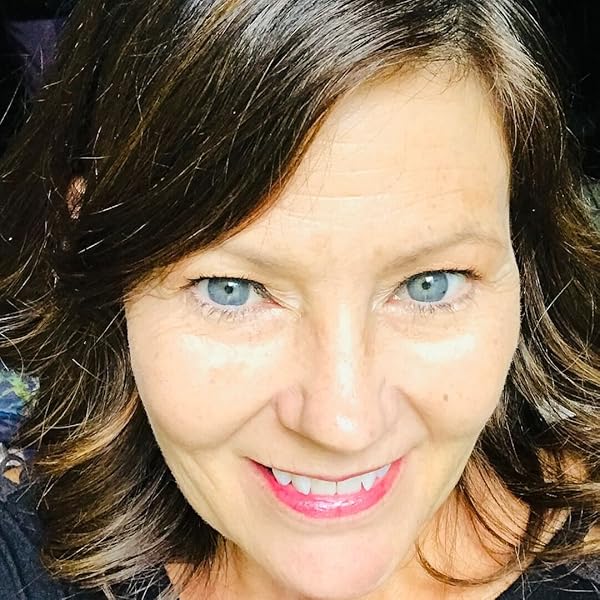
A Schizophrenic, Tapped & Skipped is the true story of your battle to remain hopeful in the face of overwhelming pain, fear, and destruction. Why was this an important book for you to write?
I felt called to write it. I didn’t want to expose my family, but after talking with them and praying about it, I spent many nights pouring over the horrifying situations over and over. I still can’t understand the lack of available long term care for persons with severe mental illnesses. I still care for my daughter every day. I want her to have a better quality of life. I will never give up being her advocate. I’m speaking at my local library and trying my best to do what I can. Being this vulnerable is extremely uncomfortable. My prayer is writing about the reality of loving a person with severe mental illness will reach the people who CAN bring about change.
I appreciate how candid you are in this book. What was the hardest thing for you to write about?
The time when my daughters were both homeless. That was such a hopeless dark time. To put myself back in that mindset in order to make it authentic was incredibly difficult.
What is one piece of advice someone gave you that was very helpful?
Write with your heart. Edit with professionals. Lol.
What do you hope is one thing readers take away from your book?
Never give up!
Celebrate the good things in your life!
Appreciate your children the way they are!
PEOPLE WITH SEVERE MENTAL ILLNESS NEED LONG TERM AFFORDABLE CARE WITHOUT A PHYSICAL DIAGNOSIS. (It’s hard to pick just one)
Author Links: GoodReads | Twitter | Website
Helping A Young Ghost
Ghost Boy follows a group of friends who set out to help a ghost in need and solve a curious mystery while facing a dangerous threat. What was the inspiration for the setup to your story?
When I was young I loved to read middle-grade mysteries that included adventures. I particularly liked the ones where the kids thought it out and talked to people who gave them helpful information. This enabled them eventually to solve the mystery, mostly without any adult help. These books had a few scary moments, but there was also kid fun to balance things out.
I like history a lot and wanted to include a look at the town’s past mining industry. This helped me to tie some elements of the story together.
Finally, to add another layer to the book, I thought kids might like to read a ghost story. That’s why I included this in the story. I tried to imagine how kids would react to helping a young ghost find peace.
The characters in your story are intriguing and well developed. What were some driving ideals behind your character’s development?
I worked on this book over about six years. I’d written eight nonfiction children’s books and hundreds of articles and stories, but this was my first fiction book. My characters changed a lot over that time. At first the dialogue I wrote for them didn’t sound realistic. So, I had my characters write journal entries about themselves and the mystery. I found this to be very helpful.
What were some themes that were important for you to explore in this book?
When I was researching the historic element of the book I read a lot about the pioneers of this area. They had to be resilient. I tried to show this in the book’s characters. They encountered problems and sometimes made mistakes, but they didn’t give up.
I think this idea of not giving up is an important concept for kids today. Most kids encounter problems of various sorts in their lives. The important thing is for them to not give up on their dreams.
What is the next book that you are working on and when will it be available?
From the start I wanted there to be three Ghost Boy books. The main characters would stay the same and the books would all feature adventure as well as a mystery.
I’m about halfway through the second Ghost Boy book. In The Secret of Cougar Pass the kids explore a cave that they later learn is said to be cursed. But they want to go back to help a young ghost connect with his long-dead parents.
Author Links: Amazon | GoodReads
After Tyler Scott finds the skull, he’s shocked when the ghost asks him to help find his dad, who has probably been dead for years. He and his friends Addy and David Jacobson set out on the seemingly impossible quest. They have to work hard to solve the mystery before whoever is watching them does more than just threaten.
In Ghost Boy, by Jan Burns, we see these children setting out on a seemingly impossible quest to help a young ghost. Will their friendship hold up after things become dangerous?
The Problems They Face
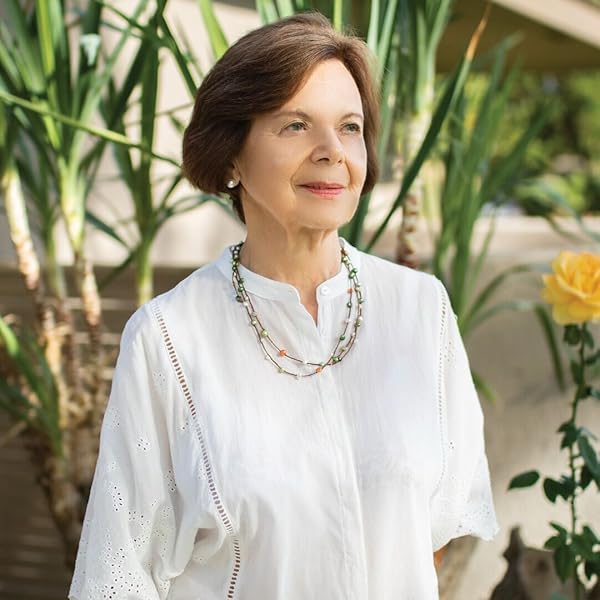
When We Return follows two people who are healing from historical trauma and struggle to find the courage to rebuild their lives and open up to love and companionship. What was the inspiration for the setup to your story?
I lived in Peru for a number of years during a time of turmoil. Most of the disturbances were taking place in remote locations and reported in the news in ambiguous ways. People wondered whether it was members of the Shining Path guerillas or those in the army responsible for the violence taking place. Years later I discovered how the media was purposefully not reporting the truth while thousands of people were disappearing and thousands forced to flee. This, as well as listening to stories of the Holocaust while growing up, provided me with inspiration for the story. I wanted to answer the one question that I was most curious about – how do people who live through horrors remake their lives?
Your characters are endearing and well developed. What were some driving ideals behind your character’s development?
My characters have suffered a lot due to unfortunate and unforeseen geo-political circumstances that have threatened their way of life. They are strong and resilient individuals for whom survival matters greatly. And although memories of war are still raw when the readers meet them, they strive to obtain justice for the human rights violations they faced years ago.
Each has a particular backstory which drives their decisions and the paths they chose to take in life. Each is strongly motivated to overcome the problems they face in order to move forward and better their lives. They are mature, honest, compassionate, and hard working people who care about family, friendship and justice.
What were some themes that were important for you to explore in this book?
- Displacement of people caused by racialized and fractured societies reeling from autocratic governments.
- People’s disappearances are cruel crimes that leave families with a lack of closure.
- As perspectives of justice began to change after the second world war, people started to confront the sins of the past. Today countries are stepping up to find truth and justice for those who have suffered human rights violations.
- The culture of remembrance – how will the past be remembered?
- Intergenerational trauma
- Issues of reparation, redemption.and reconciliation.
What is the next book that you are working on and when will it be available?
We’ve heard the term ‘the personal is political’ – and this is the argument I keep in mind as I develop a story about a politically progressive civil rights lawyer working to help underserved people obtain social justice.
In my new story I explore the plight of women running away from their impoverished and violent Latin American countries, to find a sense of security in the US. But once they cross the border these women are either detained or deported back to their homes. The detainees find themselves in a punitive institution where they have no voice. All they have are displaced dreams and their future unknown. What they discover is a different reality than what they had hoped for as authoritarian government policies are being put in place. The immigrant women are mostly forgotten until the young lawyer rallies behind them so they can be heard.
Migration is an issue that needs to be understood; it needs to be managed in a humanitarian way. Our lawyer realizes that there is a long way to go before this can be achieved and it requires the help of a larger community of immigrant rights activists to hold the system accountable and make changes.
I’m just starting to develop the story and it will take me time before it’s ready to be published.
Author Links: GoodReads | Instagram | Website
By 2008, it finally seems that the Peruvian government is ready to make amends to its citizens following the violent guerilla movement of the last three decades.
Otilia and Salvador, a mother and son torn apart during the conflict and separated for twenty years, are eager for the government to acknowledge their pain and suffering, but they hit a roadblock when the government denies responsibility in their legal case.
Things begin to look up when Otilia meets Jerry, a kind man and the son of Jewish parents who escaped the Holocaust. Grappling with his own upbringing and the psychological struggles his parents endured, Jerry is just the person to empathize with Otilia’s situation. Together, Otilia, Jerry, and Salvador must support one another through the turbulent journey that is healing from historical trauma, and through it, they must find the courage to rebuild their lives and open themselves up to love and companionship.
Artfully weaving together different timelines and countries, Tobias examines the nuanced topic of grief a community endures after a collective tragedy. In this exploration of the culture of remembrance following displacement and loss, we discover what happens when our past calls us back to what we must do to achieve justice and reconciliation when we return.
The Life Of Active Children
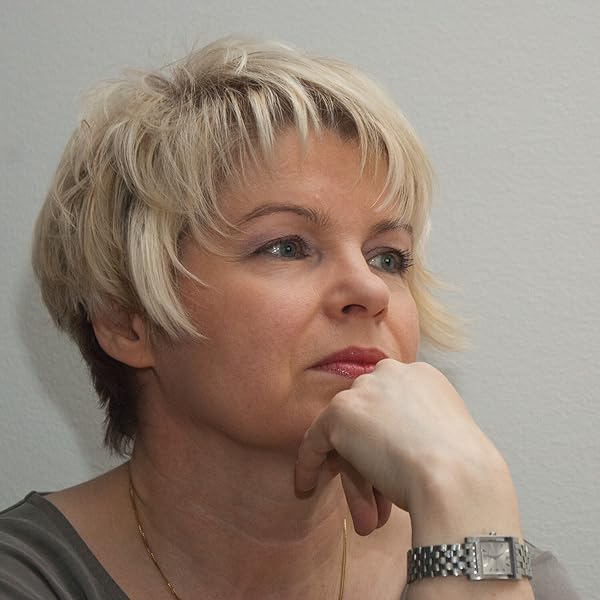
Ava and the Last Bird follows a young girl who watches over a baby bird when it falls from its nest and tries to entertain it. Where did the idea for this book come from and how did it develop over time?
Many real-life events and observations have inspired the story “Ava and the Last Bird.” In my free time in the middle of nature, I watch a lot of birds. They are my favorite animals whose life stages have plenty to follow.
Little birds made their nests on my kitchen window sill a few years ago. Through the window, I could follow their lives up very close, all the way to the chicks hatching and finally leaving the nest. The slowest chick in the nest was much like the last bird in this book. It was very timid and did not dare to fly away until several days after the others.
I have learned over the years that birds are also individuals. They have their own character and habits – unfortunately, their particular dangers and enemies, too.
What were some themes that were important for you to explore in this book?
There are quite a few things hidden in this bird story. Themes include the interest in observing nature, the need for information, the coexistence of man and animal, and respect for each other. Maybe also the fact that you shouldn’t rush with nature, not even if the active children might feel it challenging to be patient enough.
Ava’s interest in nature and the sincere attempt to help the chick are evident. Even it’s clear – at least for grownup readers – right from the beginning that Ava’s methods are not efficient but rather humorous.
Although it’s evident that nature often needs just peace to take care of its cause without human interference, I wish to encourage children to take an interest and responsibility for nature and wildlife.
The importance of the generation chain is also one of my favorite themes. It appears in this book both in the description of the human family and the life of the birds. Birds and humans take care of and prepare the youngest generation for life and take experience and knowledge forward in the family.
What were some of your inspirations as a writer?
I have already revealed above how nature is a constant source of my enthusiasm. In this story, “Ava and the Last Bird,” there are many of my observations, too.
However, my main inspiration for all books is children. Their way of observing the world is unique. Everything is still so in the beginning; everything is amazing and new. The days are full of surprises. I remember very well that feeling of endless adventure.
It is still easy for me and very pleasant to look at the world through the eyes of a child. I want to take that perspective into account in everything I write. Sometimes I watch events as if standing next to my child reader – rejoicing, being surprised, becoming sad, or feeling scared together.
Alongside that perspective, I also take the experiences of my adult self to the book. A mother’s, grandmother’s, and educator’s perspectives help me understand, support, and help children. In the same way, I have always supported children in my family and around in wider circles.
The biggest inspiration and motivation for my books comes from their impact on children’s lives. If a single cry calms down, hope is maintained, fear is overcome, or enthusiasm for learning something awakens, I’ve been successful and am ready to continue again!
Will there be more Ava and Axel stories? If so, adventures will they be going on next?
So far, three books have been published about Ava and her friend Axel. The books are named after who is at the center of that particular story.
“Axel Washes the Rug” book a small story of Axel’s routine visit to Grandma’s. Admittedly, the situation takes on new dimensions after the blueberry bowl falls on Grandma’s carpet – and the secret repair attempts with detergents and bleaches follow the accident.
In “Axel and Ava as Cat Sitters” book, the children’s efforts to help their neighbor turn into a wild chase after an unsuccessful cat carousel play. Various attempts eventually make the cat escape from the balcony window. As you see, the life of active children is full of surprises!
More of Ava and Axel’s adventures are coming later. I have already finished two other stories: one about baking and one about helping at the marketplace.
It’s easy to imagine that the attempts and ideas of young bakers in the kitchen can lead to an unpredictable outcome. Many small things can go wrong when working as a temporary sales assistant. But it’s fun anyway!
I think small readers can identify well with these situations. It’s good for them to see how others also make mistakes now and then but always happily try again. I think it’s an essential lesson in life – even for adults!
Author Links: Facebook | Website
Ava closely watches life in a bird’s nest outside her window. She is eager to help a chick when it falls onto the lawn. Can she teach the little one to sing and fly?
Follow My Journey
Rocky Mountains: A Self-Portrait is a biography about your life as a photographer as well as teaching readers some of the nuances of photography that make a great photographer. Why was this an important book for you to write?
This book is an overview of my interests and creative efforts in the high Rockies. It offers a look into a short lived community that no longer exists which I feel strongly needs to be acknowledged and documented for others to see.
I appreciated the candid nature with which you told your story. What was the hardest thing for you to write about?
I am a photographer, not a natural writer. But with a lot of effort and persistence I feel I have presented an interesting story and insights not previously available about the lives of those living and working at the Colorado ski resorts.
What is one piece of advice you wish someone had given you when you were younger?
I’ve always been told I can achieve whatever I want to do. I wish I had truly believed that and acted on that earlier in life.
What do you hope is one thing readers take away from your story?
I want readers to follow my journey and see what I saw while experiencing life in a community that no longer exists.
Author Links: Website | Facebook | Smashwords



 LITERARY TITAN