Blog Archives
Thank God For The Sinners


Thank God for the Sinners follows Rick Price through a chaotic life shaped by violence, lust, trauma, and the constant pull of self-destruction. The book opens with Rick in a seedy Chinese hotel, where a sexual encounter spirals into a death that sets the tone for everything that follows. His past and present crash into each other as he traces the roots of his darkness through childhood injuries, family dysfunction, rage, and addiction. The narrative swings between his time abroad, entangled with corrupt businessmen, and his early life on Long Island, where pain and fear molded him into someone who can’t decide if he’s cursed or simply wired wrong.
The writing hits hard without trying to be fancy. It’s blunt, messy, and weirdly charming in parts because Rick is both awful and strangely human. I felt uncomfortable many times. I also laughed a little because the voice is so honest that even the worst moments feel like confessions from a guy who knows he’s a walking disaster. The early scenes, like the baby nurse incident and the diaper accident with his brother, stuck with me. They’re told with this eerie calm that made me feel like I was sitting across from Rick while he casually unpacked a lifetime of bruises.
I also found myself reacting emotionally to how the book explores shame. The scenes in China are wild and reckless, yet the real punch comes from how Rick narrates his loneliness and fear right underneath all the bravado. The book doesn’t soften him or try to redeem him. Instead, it lets him expose his scars in his own voice. I caught myself rooting for him even though he’s digging himself deeper into chaos. The whole thing feels like reading someone’s secret diary that was never meant to be found.
I’d recommend this book to readers who enjoy dark, confessional stories that don’t pull any punches. If you like memoir-style fiction that feels like a whirlwind of bad choices, trauma, humor, and raw honesty, this book is worth your time. This book reads like a harsher, more chaotic cousin to Fight Club, trading sleek rebellion for something messier and more personal. It also carries the bruised honesty of A Million Little Pieces, only with fewer apologies and a lot more bite.
Pages: 348 | ASIN : B0F9BQMF9Z

Why Was She Moaning?

The Moaning Lisa follows an older married pair of sleuths who land in the middle of a disturbing mystery inside the Gilded Gates assisted living community, where several residents have gone missing. What was the inspiration for the setup of your story?
Almost fifteen years ago we published the three Paco and Molly mysteries: Locks and Cream Cheese, Hot Grudge Sunday, and Boston Scream Pie. We had established their ages in their sixties, but now they would be in their eighties—not exactly vigorous protagonists in pursuit of a mystery. Coincidentally, elderly relatives of ours were kicking and screaming over the prospect of moving into a retirement facility. Their reluctance and fears sparked the idea for a setting where Paco and Molly might flourish. One day, just kidding around about the Mona Lisa, one of us happened to say “Moaning Lisa” and it clicked right away. Who was Lisa and why was she moaning? We dove into the plot.
I loved the characters of Paco and Molly; their personalities work well together. Was there anything from your own life that you put into the characters in your novel?
When we started writing together decades ago, we hadn’t even considered writing mysteries—until we visited Rosemary’s father, Dr. Saul K. Pollack, a prominent psychoanalyst in Milwaukee, Wisconsin. That visit set us on a happy new course. Her father, a widower in his seventies, had a housekeeper/gourmet cook named Dorothy. She was sixty-three, with a beach ball figure, waddle walk, taffy-colored curls, and a good-natured, nosy-body personality. She had never gone past the tenth grade, but she was super-smart and keenly observant.
Dorothy also had a unique way of expressing herself. “I have to take my calcium so I don’t get osteoferocious.” During our visit, Rosemary’s father pulled out a piece of paper from his desk drawer and handed it to us: his secret list of Dorothy’s sayings. He thought we could submit it to Reader’s Digest. Back home in Severna Park, Maryland, we studied the list and decided, “Forget Reader’s Digest. Dorothy belongs to us.” We named her Molly. Her frequent witticisms were “malaprops,” but we named them Mollyprops. The concept of malaprops originated with the character Mrs. Malaprop in a 1775 comedy of manners, The Rivals, by Robert B. Sheridan.
When Locks and Cream Cheese, our first in the series, was initially conceived, we envisioned ourselves—our own alter egos—as protagonists Simon and Rachel. But Paco and Molly came across so powerfully in the writing that they soon edged us out.
Paco is modeled after a Barcelona, Spain, police inspector I met socially aboard a U.S. Naval ship docked in that city’s harbor. I was a field engineer for RCA at the time. The short, fit, and vibrant inspector was visiting the ship to practice his English. For an entire evening, the inspector told me one impressive anecdote after another. His bushy eyebrow movements were a “tell” of his current emotions. They moved together and individually, making the man memorable even to this day.
What was the hardest part about writing a mystery story, where you constantly have to give just enough to keep the mystery alive until the big reveal?
The hardest part of writing a mystery story is building and keeping track of the details. After razzle-dazzling readers with twists, turns, and the black art of red herrings—and perhaps a subplot—we need to leave a trail of clues that make sense. It’s a matter of maintaining the readers’ trust. We want them to come back and read our next mystery.
Can you tell us more about what’s in store for Paco and Molly and what the next mystery they will have to solve is?
Any new Paco and Molly mysteries will sit on the shelf for a time while we pursue our next adventures. Last year we published our first spy novel, Kent and Katcha: Espionage, Spycraft, Romance. It won five stars and an award. We are now working on the sequel, Kauai Spies and Bald-faced Lies. Our fifth short-story collection is also brewing. Who knows if and when our Paco and Molly muse will strike again. Meanwhile, our twenty-one published books are currently displayed at our website, www/magicile.com.
Author Website
Now in their eighties, Paco and Molly have moved into Gilded Gates, an assisted living community in Maryland. They expect their golden years to be blissful. They are dead wrong. Some residents are missing and no one knows what has happened to them.
One suspicious resident is a sleepwalker and claims to have heard mysterious moaning during his night walks, but for the life of him he can’t figure out where the anguished sounds are coming from.
“Inspector Paco” has retired as head of the Black Rain Corners police force. But many residents of Gilded Gates fear they might be next on the list of the missing. They beg Paco to investigate.
Naturally, Molly also pokes her keen nose and shrewd insights into the baffling disappearances.
Out Of the Drawer
Stupid Gravity follows a sharp but disgraced software engineer who is on probation, witnesses the abduction of a girl from a homeless shelter, and has to find a way to save her without breaking her parole. What was the inspiration for the setup of your story?
I created Alex/Liliane as a secondary character in my first attempt at writing a novel. That particular Not Ready for Primetime manuscript went into a drawer and never came back out, but the rocky backstory of the strange little hacker girl with the gray-fendered Mustang stuck with me. A few years later, I brought her back in a NaNoWriMo project that morphed into a full first draft, Shadow Girl. A discussion with Hank Phillipi Ryan at a writer’s conference led me to realize that what I had really written was the second book in the series and that I needed to go back and develop the origin story. The result was Stupid Gravity.
Alex can’t seem to catch a break and just wants to get her life back on track, but the universe seems to have other plans for her. What was your inspiration for their characters’ interactions and backstories?
Back in the Nineties and Aughts, I used to hang out at a carriage house on Capitol Hill where first one and then another of my friends lived and sold weed. I’ve sometimes reflected on the irony of that little business operating comfortably and profitably for over twenty years while hundreds of more technically legitimate Denver businesses came and went. Visitors stopping in for pot or just a cup of coffee and conversation included lawyers, college professors, two dominatrixes who lived next door, one published poet, a former Penthouse pet, numerous players in the local recreational pharmaceuticals scene, a PO stopping in to buy weed from his probationer, and many more unique Capitol Hill specimens. The incidents and people from that carriage house still provide a wealth of inspiration.
Do you think there’s a single moment in everyone’s life, maybe not as traumatic, that is life-changing?
I think many people have dramatic changes in their life path due to some personal or shared tragedy. We certainly hear about individuals driven to careers in medicine, law enforcement, religion, etc., by such events. In recent years, it would be hard to calculate how many lives were drastically altered by 9/11. For most of us, though, I think life is a little more like billiard balls caroming about on a pool table. I know I’ve frequently thought back on the way seemingly innocuous decisions changed my life—a college course taken, a chance encounter in a bar, a job offer accepted or turned down, etc.
Can you tell us what the second book will be about and when it will be available for fans to purchase?
Set two years after the series opener, Shadow Girl is in the final stage of beta reads and should be released in early 2026. Still the employee-from-hell at HappyMart, still rooming with Cici, and still on probation, Alex/Liliane has developed a side gig doing what she likes to call street-level detective work. That knife-edge balance of an existence comes under threat when a stalker threatens to expose her litany of probation violations. His price for keeping quiet is a hacking job as liable to land her in prison as keep her out.
Author Links: GoodReads | Website
Disgraced software engineer Liliane Dupuis is genius-level smart, wise in the way of sarcasm, and incurably socially inept. She’s also living in her car, a forty-year-old blue Mustang fastback with one primer gray fender. She’s on probation, having allowed a manipulative ex-boyfriend to drag her into a failed ATM hacking scheme. And she’s unemployed in 2010 when finding a job is tough even for those unburdened with a felony conviction. When Liliane witnesses the abduction of a little girl from a homeless shelter, she doesn’t figure her new bottom-rung reality carries the risk tolerance for getting involved.
With funds dwindling to desperation level, she uses a fake ID to land a job at a convenience store on a seamy stretch of Denver’s Colfax Avenue. Less than a week into her new salesclerk career, Liliane watches as the shelter kidnapper walks into her store. It’s not a coincidence, she knows. Just karma continuing to mess with her. A call to the police might or might not get the abductor locked up, but the exposure of Liliane’s parole violation will absoluely land her on a Sheriff’s bus headed for the state pen. Instead, she must use her resourcefulness, hacking skills, and ruthlessly logical gray matter to track down the kidnapper and rescue the little girl.
Reservations: A Samantha Wright Crime Series
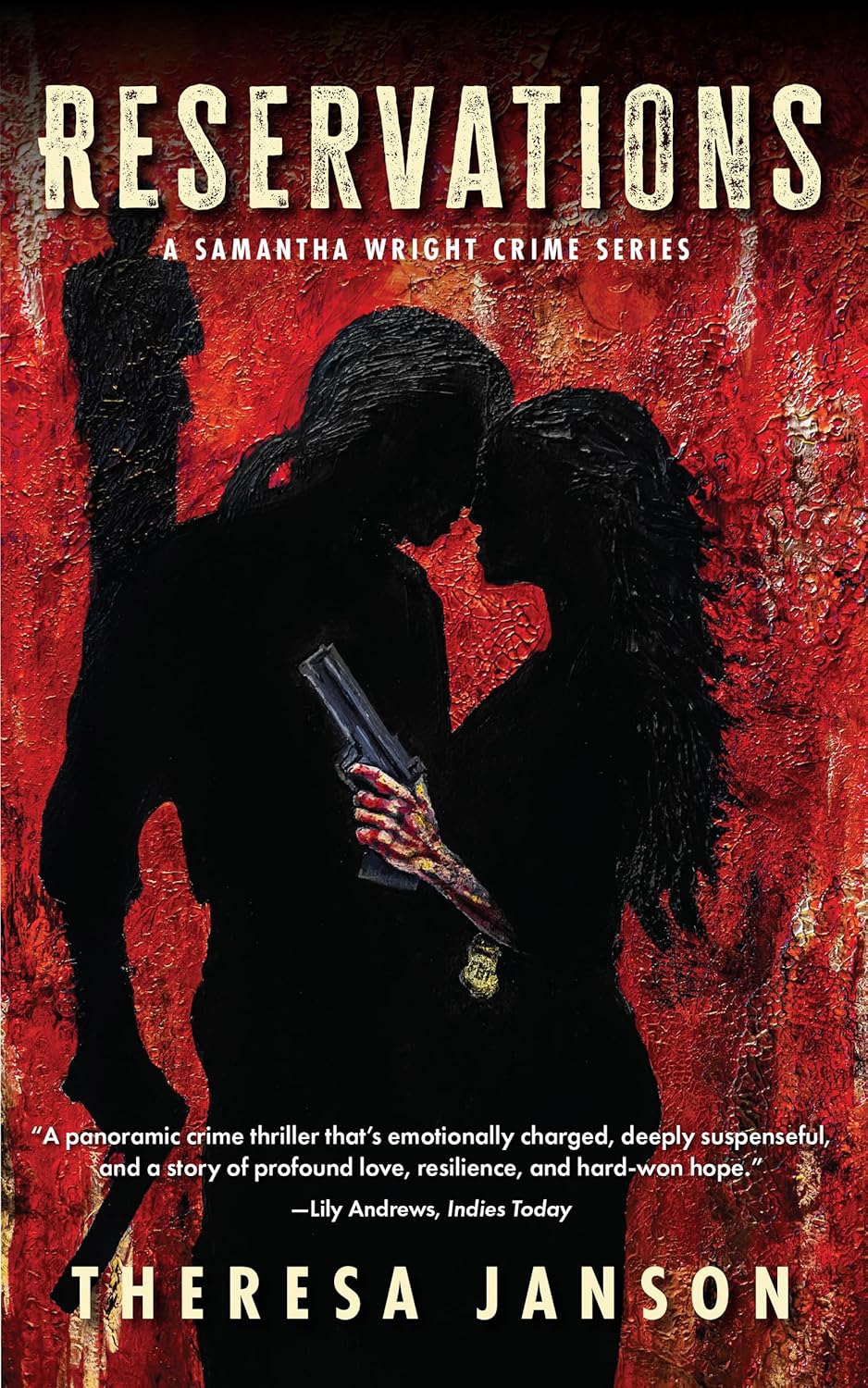
Reservations follows FBI profiler Samantha Wright as she’s pushed back into the hunt for a serial killer after the sudden death of her mentor and closest friend, Dr. Edmond Sampson. The story opens with grief, then moves fast into danger as Sam takes over the RESERVATIONS case, a string of murders involving young boys on reservations across the American West. Her past traumas, messy romantic entanglement with Special Agent Charlie Falken, and deep loyalty to Dr. Sampson color every choice she makes. The book blends crime, trauma, culture, and romance in a way that feels raw and intimate, almost like sitting beside Sam as she thinks her way through every dark corner of the investigation.
I liked how emotional the writing feels. The author doesn’t rush through Sam’s pain. She lets it sit there, real and jagged. Sam grieves her mentor with this quiet, private sorrow that feels heavy and familiar. At the same time, the pacing snaps between slow internal moments and sudden shocks. The memories of the BAKER’S DOZEN case are especially rough. The writing keeps things personal. It doesn’t pretend Sam is made of steel. She’s brilliant, but she’s tired, haunted, and sometimes unsure, and I liked her more because of that.
The mix of genres also surprised me in a good way. The romantic scenes with Charlie are blunt, sweaty, flawed, and full of emotional landmines. They’re not polished or dreamy. They feel like two people clinging to each other because they don’t know what else to do with their hurt. Then the story swings into investigative mode with sharp detail and a steady buildup of dread. The casework feels grounded and tense, especially when Sam revisits crime scenes or pieces together old trauma with new evidence. The writing is vivid.
I’d recommend Reservations to readers who enjoy crime fiction with strong emotional depth and a protagonist who feels human in all the best and hardest ways. It’s especially fitting for people who like stories that dive into trauma, culture, identity, and the complicated ties we form with the people who shape us. If you want a thriller with heart and heat, something that grips you and makes you feel a little raw by the end, this book will get you there.
Pages: 332 | ASIN : B0FHYLFVBZ

Stealing Stealth
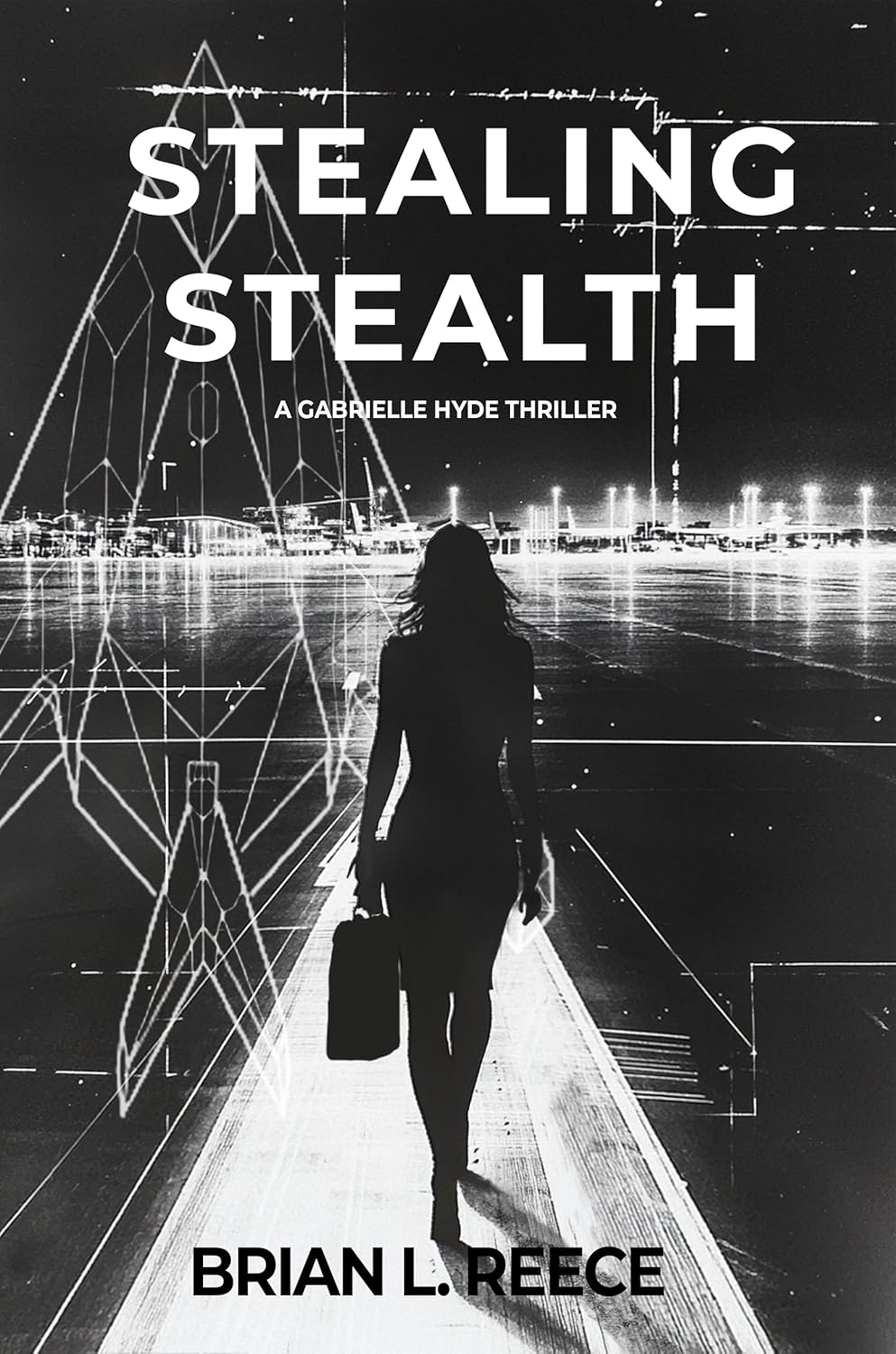

Stealing Stealth is a Cold War spy thriller about a master thief and a burned-but-still-burning CIA case officer who get pulled into a fight over the future of stealth technology. We meet Gabrielle Hyde in 1975 Toronto, dropping into a dusty old government office from a ventilation shaft to steal classified files while half the law-enforcement world hunts her. At the same time, John Olson, a young CIA case officer with something to prove, becomes obsessed with catching her and then with stopping a legendary Soviet operator, Sasha Morozov, from getting his hands on America’s experimental stealth aircraft research, the kind of “perfect first-strike weapon” that could tip the whole Cold War. Their paths cross, collide, and eventually twist together as they race from rooftops and embassies to African markets and the secretive Skunk Works facility, trying to plug leaks, uncover a mole, and keep a fragile nuclear treaty from falling apart.
Reading it, I felt like I was sitting in a dark theater watching one of those big, old-school spy movies. The writing leans into atmosphere: the musty FBI outpost, the humid chaos of Mogadishu’s markets, the cold wind high over Toronto when Olson literally throws himself between rooftops after Hyde. Scenes play out in clean, visual language that made it easy for me to track the action without getting lost in technical detail. I liked how the book switches perspectives between Gabrielle, Olson, and even Morozov, so I never felt like I was stuck on just one side of the board. The pacing feels very much like a modern spy thriller: bursts of intense action, then quieter conversations where people argue about loyalty, politics, and what it costs to do this kind of work. There are moments where the briefing-room talk about treaties and stealth programs slows things down a bit, but most of the time it adds weight instead of drag, reminding me this is not just about a cool gadget in a metal case, it is about who gets to shape the world.
What stuck with me most were the choices the characters are forced to make. Olson is haunted by a failed operation in Somalia and the death of his partner; that guilt colors everything he does after, especially when he is ordered to stand down and decides to ignore it. Gabrielle is fun to watch because she is both playful and ruthless, a thief who talks about capability as a kind of moral authority and treats sexism in the agencies as another lock to pick. The book lets her be brilliant without sanding off her sharp edges, and I appreciated that. Morozov could have been a cartoon villain, but instead, we see his grief for his granddaughter and the way he is forced back into being “the Demon” when she is taken and ransomed for the stealth data. It does not excuse what he does, but it makes him more human and more unsettling. I also liked the thread about institutions versus individuals: the CIA, FBI, and political leadership spend as much energy protecting careers and narratives as they do protecting the country, and Olson and Hyde are constantly working around their own side as much as they are fighting the enemy.
Stealing Stealth is a solid, character-driven spy thriller with a techno edge, the kind of book you pick up for the rooftop chases and Cold War tension and stay for the messy loyalties and bruised hearts underneath. If you like stories in the vein of Cold War espionage, enjoy the mix of spies, thieves, and experimental weapons, and you appreciate a capable female lead who is always three moves ahead, this book will likely hit the spot for you.
Pages: 474 | ASIN : B0FSL2KVB8
A 360-Degree View

Dream Me Dead follows a dead woman watching her husband’s trial for her murder, who tries to leave clues for the living as to what happened to her. What was the inspiration for the setup of your story?
As living people, we only know what we are told, or what we assume to be true, but if the story is told through the eyes of a deceased person, they are able to have a 360-degree view of the world, and there is no more room for speculation. Peggy Prescott knows exactly what happened to her and how it happened, but she only reveals bits and pieces of her story so that the reader can begin putting the pieces together until they make sense. If she revealed everything at once, it would not be exciting. When someone has to work for the reward, the goal is that much more exciting and fulfilling. The reader feels challenged to put their mind to work as the clues accumulate. The reward, therefore, is worth the effort. Peggy knows her life on earth was valuable, and wants the readers to appreciate her trials and tribulations, making her life, and death, more meaningful. Hopefully, it gives the reader the idea that everything we do, everything that happens to all of us, will one day make sense.
What intrigues you about the paranormal that led you to explore this direction in your psychological thriller novel?
I have always questioned the paranormal, believing that we can only know what we know, but that is not the entire story. I believe in unseen entities, good and bad, who guide us along the way, preparing us to make better choices, be fearless, love deeply, and know that when someone dies, they are still with us. Those whose death was unexpected need for those left behind to make sense of things, and to dig deeper for clues that finally are revealed. Timing is everything, especially for those who search for answers. When I look up at the sky, I see endless possibilities, other lifetimes, souls who have moved on, souls who have remained for a while to keep their loved ones safe. It is an endless cycle of love and possibilities, that intrigue me the most. We have miracles all around us if only we look for them.
What was the most challenging part about writing a mystery story, where you constantly have to give just enough to keep the mystery alive until the big reveal?
The most challenging part of writing a mystery/psychological thriller is to ask the reader to be part of the story, to immerse themselves in the richness of the characters, and to follow the clues as they appear. This cannot occur if the reader becomes bored with the story, or finds that they cannot relate to the characters, so my job was to create characters who come alive, who the reader wants to root for, or despise, but cares about deeply one way or the other. The clues have to be available, but hidden, and can be found just beneath the surface if the reader looks hard enough. For me, the characters in Dream Me Dead are taking the reader on a journey and asking them to believe that they exist, if only on the pages, but remain in our hearts as real people.
Will there be a third book in the Dream Me Home series? If so, what can readers expect, and when will it be available?
Yes, there will be a third book, entitled Dream Me Gone, which will challenge the reader to take a stand, knowing that just as in life, each person can view the same problem differently, depending on their own personal experiences. I know what the ending is, of course, but that’s because I am a believer that anything is possible. Being an optimist and hopeless romantic, I will determine that the ending comes from a place of love, but others, those who are realists, who employ logic as their first language, are welcome to view an ending that makes sense in a realistic world. In other words, just as the readers will align themselves with specific characters, they will also stand firm on a logical conclusion. Everyone should feel that the time they put in to reading the Dream Me Home series was time well spent.
Author Links: Website | Book Trailer | Amazon | Barnes and Noble
The Pressure of Testing

Tokyo Juku follows an eighteen-year-old student in Japan who, while studying all night in her cram school, discovers one of her teachers has been murdered, leading to an investigation into the education system. What was the inspiration for the setup of your story?
The main inspiration comes from talking with my students. Their struggles inspired me to write about them. I teach at a university, so hearing from my seminar students about what they’ve been through really made me rethink the Japanese educational system from their perspective. One of the largest problems is the pressure of testing. Students hate tests. I mean, really hate them! My job entails evaluation, but more as individual feedback than standardized testing as social gatekeeping. Over the years, when I tell people that I teach at a university, they often cast their eyes down and mumble the name of their school, a little embarrassed at their past failings. Or, just the opposite, very proudly. That’s a sad reaction to what should be a life-transforming experience. In the novel, I wanted to take my students’ stories, my observations, and others’ experiences and condense them into the struggles of the main character, Mana. Like most Japanese, she has to learn how to navigate treacherous educational waters. As an educator and a writer, I’m on the side of improvement, but that’s easier said than done.
How has character development for Detective Hiroshi Shimizu changed for you through the series?
Hiroshi has evolved through the series. In the first novel, he had just returned from America and found the detective job through a connection. He works the job reluctantly but gradually finds he is pretty good at it, despite being resistant to crime scenes and the grittier aspects of the job. He reconnects with his college girlfriend, moves in with her, and they start a family in the latest novel. That idea of fatherhood causes him great anxiety because of what he’s seen behind the curtain. Does he want to bring a child into the world he’s glimpsed while working in homicide? But he has a knack for finding the pattern in the chaos of cases, and he’s needed.
Was it important for you to deliver a moral to readers, or was it circumstantial to deliver an effective novel?
An effective novel comes first. The moral is something that occurs in readers’ minds. I think if you push a moral or make themes too explicit, it takes away from the beautiful ambiguity of reading. As a writer, I can nudge readers in specific directions, but they will draw their own conclusions. So, if you push a moral without a compelling story, it comes across as preachy. Nobody likes that. Readers have their own reactions to the characters’ conflicts, which might yield a moral they take away, but it might also be something more complex—a conclusion or understanding that doesn’t fit into the frame of a moral. The conflicts and confusions of characters are at the heart of an effective story. I focus on that. My job as a writer is to keep them turning pages, thinking, and enjoying the ride.
Can you tell us more about what’s in store for Detective Hiroshi Shimizu and the direction of the next book?
The next book will focus on the tourist industry, which has really taken off in Japan. I have culture shock—or maybe reverse culture shock—in parts of the city swamped with visitors from abroad. That’s changing the city. I’m not against that, but the influx of tourists and tourist money has not been clearly planned for. And much of Japan is highly planned. Japan is internationalizing, in good and bad ways, so that Hiroshi will be needed even more with his English and accounting skills. He’s got plenty more cases to work on.
Author Links: GoodReads | X | Facebook | Website
Eighteen-year-old Mana pulls an all-nighter at her juku, a private Japanese cram school that specializes in helping students pass the once-a-year exams. She failed the year before but feels sure she’ll get it the second time—if she can stay awake. The Japanese saying, “Four pass, five fail,” presses her to sleep just four hours a day, and study the rest.
When she wakes up in the middle of the night, head pillowed on her notes, she takes a break down the silent hallway. A light comes from an empty classroom, and still sleepy, she pushes open the door to discover something not covered in her textbooks. Her juku teacher, the one who got her going again, lies stabbed to death below the whiteboard, with the knife still in his chest and the AV table soaked in blood.
Detective Hiroshi Shimizu is called in, and though he’s usually the forensic accountant, not the lead detective, he’s put in charge of the case. With the help of colleagues old and new, he’s determined to find the killer before the media convicts the girl in the press, the new head of homicide pins it on her, or big money interests make her the scapegoat.
Hiroshi follows up on uncooperative witnesses, financial deceptions, and the sordid details of some teachers’ private lives. Even as he gets closer, the accumulating evidence feels meager amid the vastness of the education industry, and the pressures and profits of Japan’s incessant exams.
At the outset of the investigation, Hiroshi listens as an education ministry official lectures him on how education holds the nation together, but he soon discovers how it also pulls it apart, and how deadly a little learning can be.
Looking for Trouble
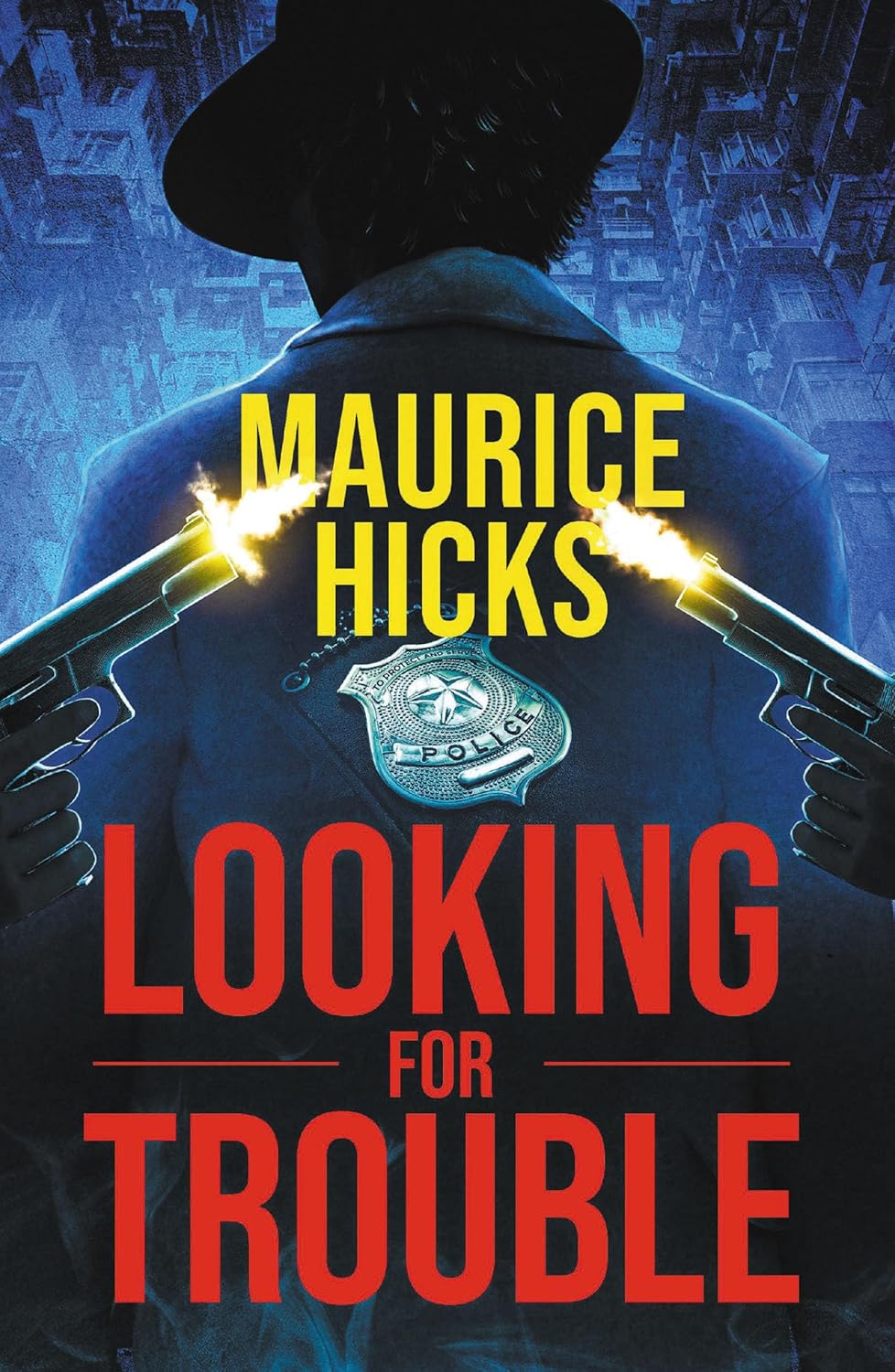
Looking for Trouble follows Maurice Hicks from his childhood in Baltimore through his early years in law enforcement. The book moves fast, almost breathless at times, as it shows a kid growing up in a rough world who somehow stays hopeful. It tracks his path from a paperboy with big dreams to a Marine and then to a police officer who ends up facing danger that feels unreal. The stories unfold with heat and sweat and fear and sometimes humor, and they paint a picture of a city that seems alive and angry and wounded all at once. What struck me most was the constant push and pull between survival and duty. The book never slows down. It grabs you at the start and keeps going.
The writing is blunt. It is raw in spots. It has a rhythm that feels like someone talking to you across a table late at night. The scenes inside the housing projects made my stomach knot. The tension builds so sharply that I kept catching my breath. At the same time, the author also slips in these little pieces of heart, small moments of gratitude or pride or humor that soften the edges. I liked that mix. It made the stories feel relatable. I found myself angry at the chaos around him, frustrated at the failures of systems that should have helped people, and surprised by how quickly small choices could turn dangerous. The book does not try to pretty anything up. It gives you the smoke and the noise and the fear straight up, and I respected that.
What stayed with me even more were the quieter reflections woven into the story. The author writes about the weight officers carry and the scars they collect along the way. He also writes about the people who shaped him, from family members to neighbors to teachers who saw more in him than he saw in himself. Those parts hit me hardest. They felt honest. They felt like memories he never stopped holding. I found myself thinking about how the environment shapes a person and how strength sometimes comes from the most unexpected places. The ideas here feel grounded. Nothing lofty. Nothing inflated. Just real life and the lessons scraped out of it.
I would recommend Looking for Trouble to readers who want a vivid, unfiltered look at police work, city life, and the long road a person walks to find purpose. It is a strong fit for people who enjoy memoirs that pull no punches and for readers curious about what it feels like to be inside the chaos instead of watching it from far away. The book is sharp, tense, and full of heart.
Pages: 535 | ASIN : B0C15B8JDB



 LITERARY TITAN