Blog Archives
Information That Will Actually Help

Beat Your Weight Beat Your Fat provides guidance and actionable advice readers can use to lose weight, live healthy, and keep the weight off. Why was this an important book for you to write?
The health, fitness and dieting world is a mess. It’s a multi-billion dollar industry that’s dominated by false promises and quackery wrapped around slick marketing, prose, and/or desirable figures and looks in order to tempt the desperate to part with their money.
Sadly, it works really well at lining people’s coffers, but I’ve grown so tired and annoyed at it all and I just felt utterly compelled to give people information that will actually help and that will last.
I appreciated all the great realistic advice you provided in the book. What are the first steps someone can take on their weight loss journey?
Stop looking for magic.
Realise that there is no quick fix that lasts long term, so commit to change and the long haul.
Nurture your tenacity.
What is a common misconception you feel people have about weight loss?
I think the biggest misconception is that you can implement something temporarily in order to achieve your desired condition indefinitely. You can’t. You must change. And you must change in a way that’s agreeable to you so it stays permanent.
This is book two in your Body & Soul Series. What can readers expect in book three?
Exercise is what’s planned for book three. Beat Your Weight briefly touches on some of the reasons as to why exercise is good for us, but it doesn’t cover how. Book three will fill that gap with both the theory and practice.
Author Website: LifeGroup.life
There are so many weight loss books, diets, and plans now that disguise this fact, inventing new ways to wrap this basic fact up in a disguise in order to sell us something that looks shiny and new. But very little is new. It’s simply food group restriction (which results in a calorie restriction), and this commonality between diets of restricting food groups works for losing fat, but there’s a problem. And that problem is that the restricted food group can often be something that we like. So, sometime later, either after we achieve our chosen weight or when we’ve got tired of the restriction, we start eating the food group again. This, inevitably, results in us relapsing on our goals, gaining back fat and becoming overweight and obese again because we never actually learned how to fix the problem in the first place. We then often enter the yo-yo dieting phase where we go from one diet to the next in the hope that this one be the golden chalice and have the keys to the kingdom. Sadly, many of us end up stuck, confused, even resigned, only just managing the will to jump on the next hype train that tells us that losing fat can be easy.
Losing fat is never going to be easy though, nor is it going to be permanent if we keep jumping from one diet to the next due to not fully getting on-board with it. We don’t want to be doing stuff like this. We want to find a method that aligns with us, because finding a method that we like and can therefore stick to for good is how our fat problems remain fixed for good.
Beat Your Weight Beat Your Fat
![Beat Your Weight Beat Your Fat: How To Lose Our Weight with Weight Loss Mastery (Body & Soul Series, Book 2) by [Ian Breaker]](https://m.media-amazon.com/images/I/51E8e9Fo2fL.jpg)

Beat Your Weight Beat Your Fat provides readers with dozens of useful tips for eating healthy and keeping fit. While writing, the author considered different kinds of eaters, diets, and food groups. What I liked about author Ian Breaker’s guide is that he offers solutions for everyone. While listing the downsides of certain food groups, Ian Breaker gives alternatives for people to use. Beat Your Weight Beat Your Fat is one of the best dieting and health books I’ve read so far this year. Ian Breaker understands the struggle people have with both weight gain and weight loss, and so he gently breaks down what should be done for each group.
How do you properly lose fat? Can you lose fat and not your weight? Is excess intake of water good? How does your body respond to certain proteins? Ian Breaker has answers to this and many other questions. The author extensively writes about dieting, the methods people choose, and why it is important to learn your body before choosing a particular dieting method. I like how Ian Breaker is raw and factual when talking about certain food trends. He does not sugar coat things and only lists helpful facts. Is it possible to lose weight without dieting? It is, and the author writes in detail why this is one of the best methods to use.
Beat Your Weight Beat Your Fat is a book that you want to keep throughout your fitness journey. Readers should keep this book even after achieving their desired body weight. This is because reading the authors refreshing words often will push one to stay fit and not relapse. This book has helped improve my relationship with food and even helped change my bad eating habits. The author will not only boost your confidence but also help you improve your interactions with others. There is a lot of positivity in the book which makes this an inspiration and motivational book as well as a health and dieting book.
One of the major lessons I learned in this book is that anything is possible if you are focused. You can have that hot body you dream of and still enjoy your favorite foods. All you need to do is be disciplined, eat right, and exercise. Ian Breaker is also sensitive when touching on delicate topics. At the end of the book, the reader feels satisfied with the information provided. I recommend Beat Your Weight Beat Your Fat to anyone conscious about their body, or anyone that just wants to eat healthy. This is an enlightening book that both encourages you and transforms you in more ways than one.
Pages: 142 | ASIN: B088D4P41S

Keeping the Weight Off
The What IF? Diet Plan takes readers through your dieting journey and how intermittent fasting changed your life. Why was this an important book for you to write?
I love this question because my book was born from the anger I felt towards the health/diet industry AND the freedom I experienced when I discovered intermittent fasting (IF) and began questioning my beliefs about health. For most of my life I struggled to lose weight by following guidance from popular coaches and health professionals, but could never stick to the regimes they touted. When I finally did manage to lose 100 pounds at one point, I was miserable because I was obsessed with food, exercise, and keeping the weight off. Once I had three kids and a full-time career in my mid-thirties, I gained the weight back and felt I just had to accept it – which wasn’t the case.
I felt that it was important to write this book because I know what it’s like to feel frustrated and confused about what, when, and how much to eat. I know what it’s like to feel uncomfortable in my own skin. And to be successful in every aspect of my life except my eating habits and weight issues.
I felt it was important because I know how lonely and maddening this can all be, and I wanted to do my small part to let others know that they are not alone and they are not crazy!
What do you feel is a common misconception people have about dieting?
A common misconception people have about dieting is that it is not supposed to be restrictive, expensive, or difficult. Plus, there is no “right” or “wrong” way to diet. In fact, the earliest meaning of the word diet was “way of living,” which means a diet should be something that comes to us naturally and fits in with our personal lifestyle.
What is the first step someone can take to start their weight loss journey?
I believe that limiting the timeframe in which you eat to a 12-hour daily window is a good first step for beginners. This small shift can help you be more cognizant of when you’re eating and to pay attention to your hunger cues. It also allows you to reap some of the benefits of fasting, since your body should be getting a break from digesting food for the 12-hours you are not eating.
I also recommend that people stop focusing on the scale when losing weight. Although this may seem counterintuitive, the number on the scale is actually a horrible predictor of our health and can sabotage our efforts. Instead, focus on implementing small, doable healthy changes that fit in with your personal lifestyle every few weeks, and weight loss will follow.
I appreciated all the tips in this book because they felt achievable. What is one thing you hope readers take away from your book?
I am so glad that you felt my tips were achievable because that’s exactly what I hope that readers take away from my book. I want them to realize that living a healthy lifestyle shouldn’t be an endeavor. It is possible to charge of our health and lose weight without sacrificing ourselves in the process.
Author Links: GoodReads | Twitter | Facebook | Website
I’ve struggled with weight and hunger issues ever since childhood and always thought there was something wrong with me, or I had a “slow metabolism,” or I was just “big-boned.”
Turns out my body was completely normal and responding to learned eating habits, making it impossible to hear my body’s natural hunger cues. Once I started questioning my beliefs around food, body image, and culture, my world shifted!
I stopped obsessing over food, quit going to the gym, gained mental clarity, had more energy, and lost 50 pounds in the process.
Join me as I take you through my personal journey of weight gain, fad dieting, poor body image, and how discovering intermittent fasting changed my life exponentially! You will also learn:
– Why you feel hungry all the time, even after you’ve just eaten
– The simple process you can use to adapt intermittent fasting into your own lifestyle without sacrificing your personal values
– Tools you can use to shift your thinking and make your personal goals more attainable
– Tips for making intermittent fasting even easier
So, if you’re ready to take control of your health and get off the dieting hamster wheel, read my story and make The What IF? Diet Plan work for you.
Educate In Fun And Exciting Ways
Captain Fantastic and the Chocolate Planet follows the Captain and his hound onto a planet filled with sweets, but they learn that filling up on treats has consequences. Why is the subject of healthy eating important to you?
As someone who fluctuates in weight, having tried most diets at some point (which in turn has created an unhealthy relationship with food), I know first hand the importance of creating good eating habits early on. From energy levels, weight and general health, it’s so important to have a good diet. After all, you are what you eat! I always aim to educate in fun and exciting ways, which hopefully this book does.
What is your process for creating the vivid art in your books?
Hire an illustrator… I’m only half-joking because Daniel does all the amazing drawings. From an author’s point of view, it’s about having a clear vision of what you want the pictures to look like.
How did the idea for Captain Fantastic begin? Did you play around with any other ideas or characters before settling on him for your series?
I trained as an actor and I stumbled across children’s entertainment whilst looking for a side hustle. After a few years of working for other people‘s companies, I decided to take the plunge and set up my own party business. I wanted the parties to be superhero themed, so I messed around with lots of alter ego names and it was my dad who suggested ‘Captain Fantastic’, thanks Gary! Fast forward 10 years and we have been voted the UK’s no.1 children’s entertainment company, which I’m extremely proud of!
What can readers expect in the next book in the Captain Fantastic series?
Captain Fantastic and the Undersea Monster is my next masterpiece (I hope)! Captain Fantastic wants to explore the depths of the ocean but gets a little too excited and forgets to listen to people’s warnings.
Author Links: GoodReads | Twitter | Facebook | Website
They explore everywhere from Cookie Dough Cove to Mount Honeycomb, but it’s not long before they find out what happens when you eat too many treats. What will our space voyagers need to do before they can board spaceship Zippity-Zap for their next exciting adventure?
“Parents reading this to their children can use it to start a conversation about healthy eating in a non-judgemental, accessible way that children will respond to.” Dr Gummer, Good Play Guide
Second in the exciting series of intergalactic adventures, based on the awesome and educational Captain Fantastic parties.
Captain Fantastic and the Chocolate Planet
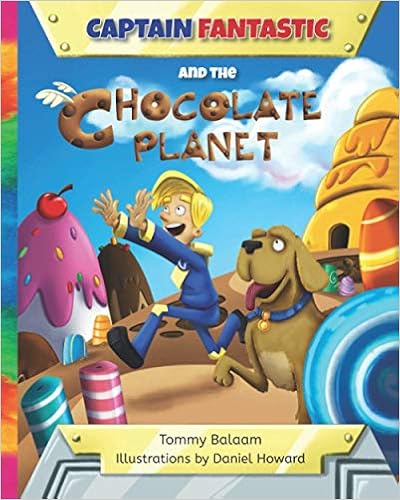

Captain Fantastic and the Chocolate Planet by Tommy Balaam is an imaginative and educational children’s adventure story of a spaceship captain and his dog Winston. When Winston is hungry and they find that there’s no food in their fridge, Captain Fantastic gets an idea. They travel to a Chocolate Planet full of sweets and treats for them to devour. They roam around, eating nearly everything in sight. When they return to their ship they’re so stuffed that they can’t fit through the door and don’t feel well. How will they ever get home?
Tommy Balaam’s has fun story full of vivid imagery, and it’s use of onomatopoeia and rhymes just makes the book much more engaging an interesting. The art in the book reminds me of a comic book style, with bright colors, clear pictures with some depth to them along with floating text boxes. The detailed artwork is visually appealing and will easily capture any child’s attention. This book does a fantastic job of delivering a message on health, eating, and exercise. It is certainly one of the more creative ways that I’ve seen to educate children on these topics.
I am giving Captain Fantastic and the Chocolate Planet, by Tommy Balaam 5 out of 5 stars. Filled with incredible artwork, a sweet story, and fantastic characters, this a perfect gift for young readers.
Pages: 32 | ASIN: B08PJPWJ18
The What IF? Diet Plan
![The What IF? Diet Plan: Transform your body and mind through intermittent fasting by [Alexis Cano]](https://m.media-amazon.com/images/I/417vnR6+FNL.jpg)
I enjoyed reading Alexis Cano’s The What IF? Diet Plan: Transform your body and mind through intermittent fasting’ because not only was she talking to mothers, but to everyone who at some point has had an issue with their body. The motherhood experiences shared in the book were interesting to read and made one understand just how much of a struggle weight issue is for women who both have or do not have kids. Reading this book is one amazing experience that gets one carried away with the stories.
The author starts the book by explaining to readers what The What IF? Diet Plan is and I liked this discussion as it gives the reader an idea of what Alexis Cano will talk about in the book. Alexis Cano’s personal history with food, her weight journey, and how she tried intermittent fasting was eye opening. Through her experiences, one learns that no matter how hard things are, it does not hurt to try. Everyone’s experience with food is different and in her book, Alexis advises everyone to first understand their bodies before jumping on any diet plan. By knowing what your body can take or reject, you are in a better place of choosing what you can consume and knowing what portions to eat.
There are several important topics covered in the book. Some topics that had me intrigued were about why restricting calories does not work, the power of hormones, how different meals like breakfast, lunch, and supper work in the body, and tuning one’s fasting. Know what science says about the intake of water when thirsty versus intake of soda? The author has a full discussion lined with facts. The author also talks about myths and weight experiences that people pass around as facts. Reading this book makes you see that there is a lot of misinformation out there about food and weight issues. The author talks to people that want to either add or shed some weight.
I appreciate the author for not only talking about the body but also touching on the mind. Mental health is as important as physical health. Whatever we consume affects both the mind and the body. Alexis Cano is a brilliant author. She has a way with words and can easily convince one to adapt to a new, healthier lifestyle. The author also provides health tips and explains how best to adapt to a unique diet. What I like most about Alexis Cano’s writing is that the discussions in the book felt grounded in reality and felt achievable. She does not sugarcoat anything and tells it as it is. She gives bitter truths and openly talks about eating habits that are harmful to the body. Reading this book will not only help you achieve your desired body, but will also have you work on your goals while being in a better state of mind.
Pages: 129 | ASIN: B08K4RM5RJ
Enhancing our Capacities

Shantha Kumar Author Interview
Functional Nutrients For Brain Health is a perfect title for this book as it outlines the different foods that can cause different health effects. What is a common misconception people have about food and brain health?
As we enter a new millennium, we are endowed with astounding knowledge about our Universe and ourselves and it is in our best interest to use them to our maximal advantage. We have to strive to protect our environment, our health and well-being and continue the momentum in the right direction. For this, we have to harness and combine the wisdom of the past with the insight and progress gained in the current information era. Lifestyle options with adequate and nourishing food, exercise and rest are needed to cope with the challenges we face every day.
Thus, the focus of this book is to provide guidelines for preserving and enhancing our capacities of intellect and thinking with proper dietary practices. This is especially important as we have extended lifespans, a plethora of commercial food products, food supplements, food fads and drugs that may be baffling to consumers. With increases in incidence of neurodegenerative diseases like Alzheimer’s, dementias and symptomatic brain disorders like autism, a retrospective look into how diet can influence proper brain function can help alleviate these conditions.
The brain is the control center of the body and as such, it has to function ideally for the rest of the body to be in perfect health. Besides its role in coordinating motor and sensory functions, the human brain has a major function in higher-order thinking and information processing skills. The role of the brain in fact extends beyond the physical into the meta-physical realm and consciousness.
A common misconception that people have about food and brain health is that what is good for the body is also good for the brain. However, this may not always be true, because every system in the body is specialized and nutrient needs are based on this. A high protein diet may favor an athletic body but may not be an ideal composition for brain functional activities. Similarly, a ketogenic diet may favor weight loss but may not be the best fuel for the brain. Also, growing fetuses, infants and children can have different nutrient requirements than adults for proper brain development.
What were some topics in the book that were important for you to cover?
I would consider this book as a preliminary attempt to understand the relation between diet and brain health. There are contradictory views on the effects of foods on brain health and the diversity of dietary practices, cultures, food availabilities makes it challenging to discern the right foods to use and the wrong foods to avoid. The approach I used for my book is to look closely at “best practices” in cultures where brain health was a priority and use scientific data to support their dietary styles. Another approach was to look at studies where specific diseases were correlated to dietary principles and try to have a disease model with a scientific basis to fit into these conditions.
However, to make the book useful to consumers, I have some dietary guidelines, plans and recipes which is the ultimate goal and this is a work-in progress.
One thing that I discovered with some of the food discussed was that although foods have health benefits they often also carry negative affects. What is a food that carries more health benefits than negative affects?
The ideal food, especially for infants and children, is milk. It is a complete food with correct proportions of macro and micronutrients and fluids. For adults, adequate and optimal quality and quantity of nutrients is important and foods can be beneficial when this principle is applied. Foods should also be customized according to a person’s needs and health status to maintain the body in homeostasis.
Do you plan to write more book on health and well being?
At this time, I would like to concentrate on making my ideas and work useful by applying the knowledge base about diet and health into the actual practice of planning diets. Also, providing people with better awareness and information regarding scientific evidence and strategies, so they can make informed choices in their food habits.
Author Links: GoodReads | Website | Facebook
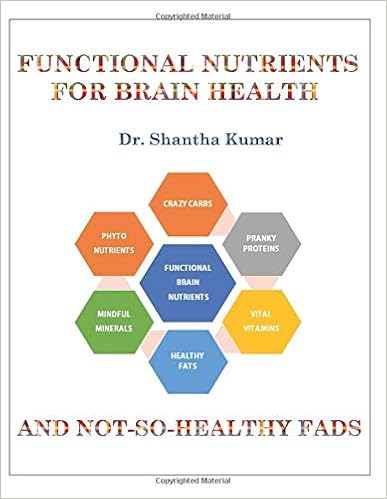 The evolution of mammals and humans is marked by a massive expansion of higher thinking abilities which has paralleled changes in associative regions of the brain and inter-neuronal connections.. This book aims to portray the role and influence of dietary factors in brain health and its intricate networks and has suggested menu options in diet planning for preserving healthy cognitive functions and preventing disease. With increasing life span, it has become a challenging issue to preserve the normal functions of the nervous system and prevent cognitive decline due to aging processes. The rising rates of diseases like obesity, diabetes, Alzheimer’s, autism, depression disorders that affect personality and brain health can be countered by dietary practices that establish better equilibrium and homeostasis in the body and central nervous system. Thus, optimal brain health involves nurturing and maintaining these capabilities and the structural and metabolic networks in the brain. Some of the relevant macronutrients (Caloric Energy, Carbohydrates, Proteins and Fats) and micronutrients (Vitamins, Minerals, Phytonutrients – Flavanoids, anti-oxidants, etc.) and their cellular and systemic functional roles in normal and abnormal health are discussed. Traditional practices in dietary control in cultures with a strong history of mental abilities have been used as the foundation for many of the recipes and suggested diet plans, while scientific advances in our understanding of the nervous system has been used as the rationale for some of the dietary modifications to achieve optimal cognitive abilities and preserve memory functions, especially in the aging process.
Osteoporosis and Osteopenia: Vitamin Therapy For Stronger Bones
![Osteoporosis & Osteopenia: Vitamin Therapy for Stronger Bones by [Lusk, Bryant]](https://images-na.ssl-images-amazon.com/images/I/41foRnxC-jL.jpg)
Osteoporosis & Osteopenia: Vitamin Therapy for Stronger Bones, by Bryant Lusk, is a comprehensive guide to bone health. The author discusses the link between lifestyle choices, age, gender, and eating habits (largely vitamin intake), and bone health.
Interestingly for a book of this subject matter, Lusk seems to have gone the ‘choose your own adventure’ route for his writing technique. Readers can choose between intensive study modes and brief overviews to ‘get the main idea’, and there are ways to achieve a hybrid approach that sits somewhere between the two extremes. It is a fantastic idea on the writer’s part to include that kind of flexibility for his readers, and it is a tool that will likely help this work reach more people than most other books on the subject.
The driving principal behind this work is, of course, to educate. To that end, the author goes to great length to discuss each topic as fully as necessary. The book is laid our in bite-sized chunks, each one focusing on a particular aspect of the overall topic. For example, there is a chapter on zinc, one on vitamin D3, another on liver and kidney health, and many more. Included in each section, there is information related to standard vs vegetarian diets, guidelines for how much and how often various vitamins should be taken, information on inhibitors that adversely affect the given vitamin or mineral, and then personal advice from the author.
An example of the type of background information provided for each of the mineral and vitamins can be found at the start of each chapter. You’ll see the vitamin or mineral’s impact on the human body in list form. Not only for bone-related issues but for all others as well.
One of the most useful parts of each chapter is the ‘how much and how often’ section. Here, the author goes into the recommended daily dosages of the various supplements, all the time adjusting for different types of people living different types of lives. Then, a convenient table is provided to show what types of foods contain said vitamin or mineral and how much would need to be consumed in order to absorb enough. Then, another table showing differences between common supplements, along with which are best and which to avoid. A short discussion about how to inhibit and enhance absorption is then held before advice from the author and finally moving on the next chapter.
This book is certainly important and is full of wisdom that is not always easy to find in such a digestible package. In fact, in all the years I have researched the effectiveness of supplements, I’ve only come across a handful of texts as well balanced as Osteoporosis & Osteopenia: Vitamin Therapy for Stronger Bones. This book is going to go into my collection as a reference book that I will frequently visit.
Pages: 138 | ASIN: B07QPWPLG7



 LITERARY TITAN