Blog Archives
Better Choices Are Possible

Against All Odds is a blunt and emotional memoir about growing up in poverty, surviving horrific abuse, entering the foster care system, and clawing a way toward stability, purpose, and adulthood. Why was this an important book for you to write?
I grew up believing that instability was normal—new homes, new schools, new last names on the mailbox. Writing this book was my way of refusing to let chaos be the whole story. I wanted to document what that instability does to a child’s sense of identity and possibility, and to show that survival can become purpose.
It was also a letter to three audiences. To foster youth: you are not what happened to you; you are what you choose next. To caregivers and professionals: stability is not an idea, it is a practice—measured in rides to school, ceremonies you don’t miss, and promises you keep. And to the broader public: systems are made of choices; better choices are possible. The memoir gave me language to transform private pain into public service.
How did you balance honesty and authenticity with protecting privacy—yours and others’?
I followed three rules. First, I wrote from the “I”—what I saw, felt, and believed in the moment—without assigning motives to others. Second, I protected people who were not public figures by changing names, compressing timelines, and removing identifying details, while keeping the emotional truth intact. Third, I applied a dignity test: if a detail sensationalized trauma or exposed someone’s private struggle without advancing understanding, it did not belong in the book.
When possible, I sought consent from supportive adults who appear in the story and shared passages with them. I also set boundaries for myself—there are scenes I chose not to relive on the page because my present and the youth I serve deserve a healthy author. Truth and care can coexist; that tension shaped every edit.
What was the most challenging part of writing—and what was most rewarding?
The hardest part was narrative order. Lived experience is nonlinear; trauma scrambles memory. Turning 25 placements and 13 schools into a coherent arc meant revisiting rooms I’d rather forget and deciding what belonged to the reader and what belonged to healing. Writing about my mother’s death and the first nights in strangers’ homes required frequent stops—walks, prayer, and time.
The reward has been hearing from youth and caregivers who used the book as a bridge—youth who said, “Now I have words for what this feels like,” and caregivers who changed a practice so a child could keep a school, a therapist, or a ritual. Reclaiming my narrative was personal; watching it make someone else feel seen has been the joy.
What is one thing you hope readers take away from your story?
That pain is data, not destiny. For kids in care, the difference between drifting and developing is often a single steady adult plus continuity—of school, relationships, and story. If readers finish the book believing they can be that steadiness—by mentoring, fostering, advocating, or simply showing up reliably—then the pages did their job.
And for those who grew up in instability: you are allowed to build a life that is quiet, rooted, and yours. Resilience is not just surviving the fire; it’s learning to live without smoke.
Author Links: GoodReads | LinkedIn | Amazon
From a young age, Tristian’s life was marked by chaos and uncertainty. Witnessing his mother being taken away on a stretcher was a pivotal moment that thrust him and his younger brother into a turbulent existence within the foster care system. They bounced from one temporary shelter to another, grappling with abuse, neglect, and the haunting specter of trauma. But amidst the darkness, a flame burned brightly within Tristian’s soul. Dreams became his sanctuary, providing solace and fueling his unwavering determination to rise above his circumstances.
Tristian’s memoir is not just a personal narrative-it sheds light on the broader societal issues surrounding foster care. With staggering statistics, he underscores the challenges faced by children in the system and gives a voice to those whose stories often go unheard. Through his writing, Tristian aims to foster empathy and understanding, urging readers to confront the flaws and shortcomings of the foster care system within. His ultimate goal is to inspire positive change and create a more compassionate and supportive system for future generations.
Against All Odds is a powerful and necessary memoir that shines a light on the realities of growing up in foster care. Tristian’s journey serves as a testament to the indomitable human spirit and the transformative power of hope. It is a call to action, urging society to come together, support foster youth, and create a brighter future for all.
Mulberries In The Rain: Permaculture Plants For Food And Friendship
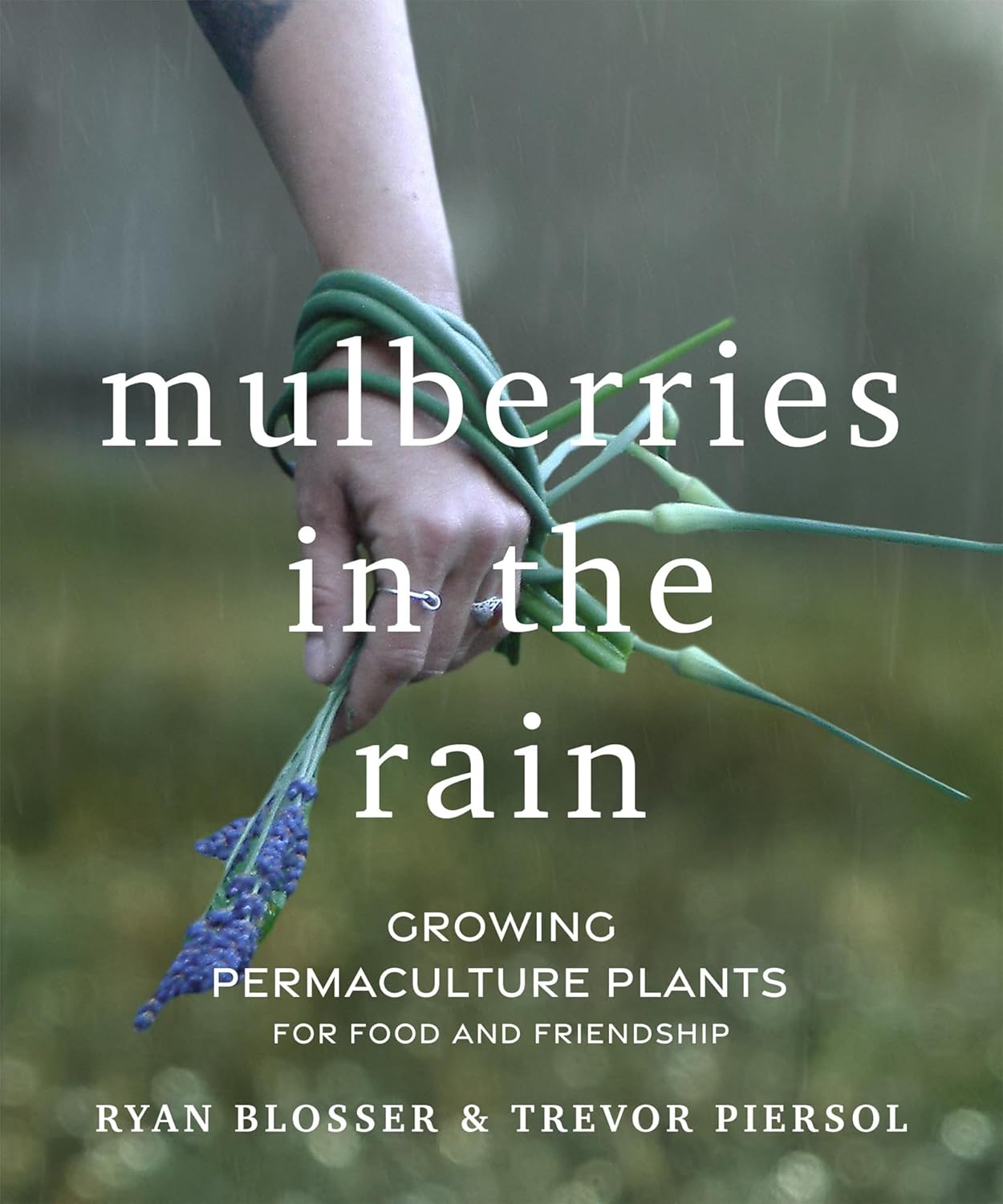

Mulberries in the Rain, is part memoir, part teaching guide, part love letter to plants. It follows two friends, Ryan Blosser and Trevor Piersol, as they build farms, communities, and a shared life of learning through Permaculture. The book blends personal stories with practical frameworks, from the Human Sector to food forests to plant guilds. It paints a picture of people shaped by land and relationships, and it shows how plants become characters in their lives. The authors invite readers to see plants this way, too, and the book moves between narrative, reflection, and guidance on growing dozens of species. It feels like an invitation to slow down and see plants as teachers.
I found myself caught up in the warmth of the storytelling. The tone is friendly. It is confident without trying to sound authoritative. I liked how the writers move between humor and sincerity. One moment, they poke fun at themselves. The next moment, they share something tender about belonging, failure, or learning to listen to land. Their voices feel lived-in and honest, and that drew me in. I also appreciated how deeply human the book is. For a book about plants, it spends a lot of time sitting with the mess and beauty of people, which surprised me in a good way. The Human Sector section especially resonated with me. It made me stop and think about how much our internal stories shape the landscapes we touch.
The loose, talky rhythm of the book has its own charm, and I enjoyed it most when the authors told personal stories. Every time they step into teaching mode, the tone shifts and the pacing slows. That said, the teaching sections still have heart. The reworked Scale of Permanence is thoughtful. The LUV triangle feels like something I could use tomorrow. The 8 Forms of Capital section is full of moments that made me smile, especially the groundhog au vin story. I caught myself nodding at the idea that recipes and jokes and small daily acts can hold entire forms of wealth. The book shines whenever it grounds big ideas in real people doing real work.
I would recommend Mulberries in the Rain to anyone who wants a different way to think about growing things. It is great for new growers who feel overwhelmed and want a gentler entry point or for longtime gardeners who crave a more personal, relational approach. It is also a strong fit for people who work in community spaces or who feel curious about Permaculture but are tired of dry instruction. Blosser and Piersol speak to folks who want stories, feelings, and a sense of connection as much as they want plant lists and guild diagrams.
Pages: 216 | ISBN : 978-1774060032

Between Eros

When I first picked up Chris Neo’s Between Eros, I thought I was stepping into a straightforward love story, but it opened up into something bigger. The book follows Aris, an older, seasoned man juggling a collapsing marriage, unpredictable friendships, and a dangerous ocean voyage that turns into a survival fight. What begins as a romantic adventure quickly spirals into storms, sabotage, and tangled emotional loyalties. The story blends romance, action, and psychological tension, giving it the feel of romantic adventure fiction tinged with thriller energy.
As I read, I found myself reacting as if I were listening to a friend tell me wild stories over coffee, pausing every so often to say, “Wait… what?” The writing leans into momentum rather than subtlety. Neo moves quickly through conflict, argument, seduction, and danger, rarely lingering on inner reflection. The fast pace kept me turning pages. I didn’t expect the mix of interpersonal drama and near disasters at sea to feel as chaotic as it did, but it fits the book’s emotional landscape. Aris is constantly pulled between desire, responsibility, ego, and fear, and the writing mirrors that turbulence.
Aris is written as both admirable and deeply flawed, and the women around him range from seductive to volatile to tender. The tone sometimes slides into melodrama, but in a way that feels intentional for the genre. What stood out most to me were the moments when characters dropped their masks. A single line of vulnerability from Kay, or a burst of insecurity from Uri, did more for me than some of the larger plot swings. The book seems to ask whether love is a force of destiny, a psychological illusion, or something we build through trial, error, and sheer stubbornness. It doesn’t hand you a tidy answer.
By the time I closed the book, I had the sense that Between Eros would appeal most to readers who enjoy high drama, fast movement, and a blend of romance and danger. If you like romantic adventure fiction that leans into passion, betrayal, big emotions, and bigger twists, this one delivers exactly that. It is bold, emotive, and unafraid to swing for the fences.
Pages: 390 | ASIN : B0D6BTYFNZ
Nurturing the Mystic Within


Nurturing the Mystic Within follows Catherine S. Tuggle’s journey to understand the message that arrived through a vivid dream. The dream delivered five simple words. Those words shook her ideas about God, fear, and love, and eventually inspired her to explore belief, trauma, and spiritual healing. Through autobiography, psychology, and a reinterpretation of the Genesis story, she builds a pathway that helps readers uncover the fears that shape their reality and block their ability to perceive life as Paradise. Much of the book focuses on the unconscious roots of fear, the formation of beliefs, and the personal exercises she developed to help dissolve the veil that hides unconditional love.
Tuggle’s writing blends intimate storytelling with big ideas; she writes plainly and openly. She doesn’t try to sound like a guru. Her willingness to expose painful memories gives the book a raw honesty that made me trust her voice. I found myself wincing at the childhood scenes. The moment Agnes threw the valentines on the floor, or the wrenching knife incident, forced me to stop for a breath. Those stories aren’t there for drama. They serve the purpose she claims for them. They show how beliefs take root long before we know the meaning of the word belief. I felt myself wishing she had lingered a little less on theory and more on lived moments, because her lived moments are where the book shines.
I also found myself moved by her interpretation of Genesis. I appreciated how she questions long-held assumptions without attacking them. The way she ties Adam and Eve’s fear to our own unconscious habits made the old story feel surprisingly fresh. The shifts between memoir, theology, and psychology come a little fast, but the blend mostly worked for me. I liked the sense of searching. I liked watching her move from confusion to clarity. The dream sequence she shares in the preface kept me thinking about the idea that love is all that exists. It sounds simple on the surface, almost too simple, and yet the book spends hundreds of pages showing just how hard it is to believe that in everyday life.
I would recommend Nurturing the Mystic Within to readers who enjoy spiritual memoirs, especially ones that grapple with fear, trauma, and the desire for inner peace. It would also suit people who like gentle psychological insight wrapped in a story rather than textbook-style instruction. Anyone who has ever felt trapped inside old beliefs or puzzled by the tension between the world’s harshness and the idea of a loving presence will find something worth holding onto here.
Pages: 216 | ASIN : B0G2DLBVHQ
The Cost of Competence

Stealing Stealth follows a CIA officer tasked with protecting a new stealth technology who must enlist the help of a brilliant thief to stop it from falling into the wrong hands. What was the inspiration for the setup of your story?
I wrote the initial draft of this story when I was deployed in Afghanistan. I was constantly in this battle with what is said and what is left unsaid, in an intriguing chess match with men who were both my ally and not at the same time. To capture this specific paranoia, I thought of the mid-1970s. We often look at the Cold War through the lens of the 80s. That was the end. But just before that, everything was messy. The Church Committee was exposing CIA secrets, Vietnam had just ended, and trust in institutions was crumbling. I wanted to drop a “Boy Scout” character like John Olson into that moral grey zone and force him to work with someone like Gabrielle Hyde, who represents pure, chaotic individualism. The stealth technology itself was the perfect catalyst because it represented a revolution in warfare that terrified everyone. The idea that a plane could be invisible to radar felt like magic in 1977.
There was a lot of time spent crafting the character traits in this novel. What was the most important factor for you to get right in your characters?
Competence. Nothing kills a thriller faster than characters who make stupid decisions just for the sake of the plot. I wanted Olson and Hyde to be masters of their respective crafts. When they fail, it’s because they were outmaneuvered by a smarter opponent, not because they were making bad choices. I also wanted to explore the cost of competence. For Olson, his dedication to the CIA cost him his personal life. For Hyde, her tragic youth led to brilliance as a thief, but it also left her isolated. The most important factor was ensuring that even when they were enemies, they respected each other’s skills. That mutual respect is the engine of the book.
How did you balance the action scenes with the story elements and still keep a fast pace in the story?
My background in special operations taught me that real action is rarely a continuous two-hour firefight. It’s hours of tension followed by seconds of chaos. I tried to replicate that rhythm, but with a better balance. Also, it is important that the reader cares. 1970s politics and game-changing aircraft technology are complicated enough, but I needed the reader to feel that pressure. Then, as the tension built through briefing room politics, the surveillance, and the planning, the reader finally felt the stakes. The pacing comes from the pressure cooker effect; the clock is ticking, and the walls are closing in. Then I added the guns.
What is the next book that you are working on, and when can your fans expect it to be out?
The next book is Arctic Fire, releasing in April 2026. It is a tonal shift from the spy world of Stealing Stealth. It’s a Neo-Western Noir set in the Alaskan wilderness, following a female Marine veteran who uncovers a conspiracy in a small, frozen town. Think Wind River meets Sicario. After that comes Eye of the Caldera. It’s a high-octane disaster thriller inspired by incredible true events and a declassified CIA operation. It drops in the Fall of 2026.
Author Links: GoodReads | X (Twitter) | Facebook | Website | Amazon
At the height of the Cold War, America’s revolutionary stealth technology could tip the balance of power. Now the race to control it threatens to derail a critical nuclear treaty between the world’s two superpowers.
Soviet operatives are close to acquiring this game-changing military secret. CIA Officer Olson has just seven days to protect America’s biggest technological advantage from falling into the wrong hands. His only hope lies with the brilliant thief he couldn’t catch: Gabrielle Hyde.
Inside the secretive Skunk Works facility, nothing is what it seems. Hyde and Olson discover Moscow isn’t the only enemy. A traitor from within is thwarting their every move. With both the FBI and KGB closing in and bodies piling up, Olson faces an impossible choice: follow orders from an agency that no longer trusts him or follow Hyde into an elaborate con against his own government.
From a decorated Air Force Colonel with 26 years in special operations and field command comes an authentic Cold War thriller where the greatest threats wear familiar faces.
Trust no one. Question everything. And never underestimate Gabrielle Hyde.
For fans of David McCloskey’s Damascus Station, John le Carré, and Daniel Silva, Stealing Stealth is a high-stakes heist where the only way to protect freedom is to steal its deepest secret.
Faith in Faith

Miracles Beyond the Crowd is a heartfelt call to push past spiritual passivity and step into a faith that moves, reaches, climbs, and refuses to settle. What is a common misconception you feel people have about living their faith?
Faith is not a theory or an empty ritual. A common misconception is that faith just exists without investigation and exploration. The truth is, everyone must wrestle with what they believe and practice how to hold fast to that conviction. It is personal, and it is relational. It is a firm conviction so powerful that it can turn a hopeless situation into a hope-filled pursuit.
There is a saying that says: We do what we believe, and we don’t do what we think is futile. Many people have faith in faith, but when challenged, they find it hard to pinpoint what their faith is ultimately built on. Faith must have a foundation, a source, or a place where believing can stand. This kind of faith is dynamic and alive, not static. It grows, shifts, matures, and deepens as we live it out.
Now, how we live by faith is different and looks different for everyone. It is easy to believe what you can trust. I believe in God, His promises, His nature and character, His history, and His word. I trust His integrity and His capacity to do what He says. That makes it easy for me to live by faith.
What were some ideas that were important for you to share in this book?
Heaven has not run out of miracles. For those willing to press through fear, doubt, and societal pressure, a deeper encounter with God awaits. My hope and passion for every reader of this book is that by reading what I have written, it will awaken a relentless, persistent, and resilient faith in the person, promises, and goodness of God. To those who pursue Jesus wholeheartedly, miracles are not accidents. My heart is that people will be inspired to look beyond the obvious distractions, troubles, and obstacles of everyday life and see that pushing deeper into God is where miracles can be found.
I also hope every reader will see they are not disqualified, unworthy, or broken beyond God’s ability to renew, restore, and bless their life. It is scandalous what grace can do when a life is surrendered to God! I pray the love of God bacons all to hear their life is valuable and important.
What do you hope is one thing readers take away from Miracles Beyond the Crowd?
I hope they take away hope! Big, crazy, and impossible hope. Hope is the beginning of faith. If hope lives, then faith is not far behind.
Author Links: GoodReads | X (Twitter) | Facebook | Website | Amazon
Step into a 10-week journey of powerful persevering faith and transformation. Based on the popular book Miracles Beyond the Crowd, this 50-day interactive devotional helps you move from watching miracles to living them. It is an invitation into faith that moves — not just in Sunday moments, but in the ordinary walk of life.
Across 10 weeks, you’ll explore what it means to:
• Press past the noise and hear God’s voice
• Reach beyond barriers and touch Jesus
• Walk in obedience before you see the path
• Finish strong when the crowd has left
Inside you’ll find Scripture, original excerpts from Miracles Beyond the Crowd, daily reflection questions, faith-in-action exercises, and a full 100-question application questionnaire to help you embed what you discover and carry it forward.
Ideal for personal study, small groups and corporate settings. This devotional workbook will guide you beyond survival into possession, beyond visitation into habitation, and beyond promise into fulfilment.
This is not a book for spectators—it’s a roadmap for those who dare to move beyond the crowd.
– FOR BEST EXPERIENCE it is recommended (not necessary) that this devotional workbook is used with the original book ‘Miracles Beyond The Crowd- The Power of Persevering Faith ‘ by Nico Smit. Whether used individually or in a group, this workbook is a tool, a challenge and a commission—to rise in faith, move forward with purpose, and passionately pursue the presence of God, no matter the cost.
Unexpected Psychologies

Drinking from the Stream follows two young men on the run for different reasons who cross paths and set out together exploring East Africa and their own morals in a world where dictatorship and mass murders are the norm. What was the inspiration for the setup of your story?
I left the US to travel one week after graduating college. When I came back five years later, my mother kept asking me, “What did you really do in Africa?” How to explain what I was thinking, whom I had met, where I had gone, what I had seen and felt and heard, smelled and tasted, what I had learned, what scared me, what made me laugh, and what inspired me? I decided to write a novel, a kind of anthem for the generation that came out of the wreckage of the ’sixties and whom I met on the road. I thought the story I wanted to tell would have more weight if the character who kills his antisemitic persecutor was not actually Jewish, thus forcing him into unexpected psychologies. Having two narrators allowed me to broaden the scope and to develop the characters in many more settings and situations than would otherwise be possible, and through their eyes also to show more of Africa and of the world.
You took your time developing the characters and the story, which had a great emotional impact. How did you manage the pacing of the story while keeping readers engaged?
There are novelist tricks that I had to learn. A novel consists of scenes. Something must happen, or else there’s no reason for the scene to be there. Scenes should ”start late and end early,” not waste time, and leave the reader wanting to know what comes next. I alluded to massacres at the start of the book, which I hoped would give readers a feel for what came next. There is a rhythm to travel which speeds up and slows down, and the action of the book also speeds up and slows down.
What were some themes that were important for you to explore in this book?
A partial list: friendship, long-distance travel on bad roads with little money, politics and history, courage, the world of the early 1970s, East Africa and Ethiopia, judgment, colonialism, revolution, mass murder, dictatorship, insurrection, racism, loyalty, small acts of bravery.
What is the next book that you are working on, and when can your fans expect it to be out?
Next book: A TRIP BY CANOE (short stories) to be published by Koehler Books July 2026.
Author Links: GoodReads | Website | Amazon
Jake Ries, a twenty-two-year-old Nebraska farm boy turned oil roughneck, turns fugitive when he unintentionally kills a homicidal White supremacist on an oil platform in the Gulf of Mexico. On the run, he meets Karl Appel, a restless Oxford dropout and former anti-war activist struggling with his own personal demons. Together they throw caution to the wind and plunge into the Ethiopian and East African hinterland, where they discover that dictatorship and mass murder are facts of life.
Guiding Principles

Aries I – The King of Mars follows a 13-year-old boy who, after his mother’s death, ends up part of the Mars colony, leading him on a journey of self-discovery and understanding of what survival really means. What were some of the emotional and moral guidelines you followed when developing your characters?
When developing my characters, I followed emotional and moral guidelines rooted in loss, survival, and empathy. The death of my son last year fundamentally changed how I understand pain, resilience, and what it truly means to endure. Grief stripped away any interest I had in shallow motivations or easy answers. From that point on, I felt a responsibility to write characters who carry weight, who hurt, adapt, and keep moving forward, not because they are fearless, but because stopping isn’t an option.
One of the strongest guiding principles was an understanding that all life is engaged in a constant struggle to survive. Whether human, animal, or even systems we build to sustain ourselves, survival is never abstract; it is physical, emotional, and moral all at once. I wanted my characters to reflect that truth. Their choices are often imperfect, driven by fear, love, guilt, or hope, but always grounded in the instinct to protect what remains and to find meaning in continuing on.
Emotionally, I allowed characters to be shaped by loss rather than defined by it. Grief does not disappear; it changes form. I tried to honor that reality by letting characters carry their wounds quietly, sometimes awkwardly, and sometimes in ways that create conflict. Morally, I avoided clear heroes and villains in favor of people making the best decisions they can with the tools they have at that moment. Survival, after all, rarely allows for clean moral lines.
Ultimately, these characters exist because I believe survival itself is an act of courage. Every living thing fights to breathe, to belong, to matter—even in hostile environments. Writing from that place, shaped by personal loss, became a way to acknowledge pain without surrendering to it, and to recognize that continuing forward, however imperfectly, is one of the most human acts there is.
What were some themes that were important for you to explore in this book?
At its core, this book is centered on a single idea: life fights to survive. Everything else grows out of that truth. My experience with loss helped me to see survival, not as something dramatic or heroic, but as something constant and relentless. Life persists even when it is broken, even when it is exhausted, even when it has been reshaped by loss. That realization became the emotional foundation of the story.
I wanted to explore survival in all its forms, not only the physical struggle to stay alive, but the quieter, harder fight to keep going emotionally and morally. Every living thing is engaged in that struggle, adapting to hostile conditions, scarcity, fear, and uncertainty. In the book, survival demands resilience, cooperation, and sacrifice, whether the challenge comes from an unforgiving environment or from the weight carried inside a person’s heart.
The idea that life continues forward also shaped how I approached legacy and responsibility. Survival isn’t only about the present moment; it’s about protecting what remains and making space for what comes next. Even after loss, life pushes forward through memory, through purpose, and through the act of building something that can endure.
Ultimately, this story is about the stubborn persistence of life. It doesn’t deny pain or minimize grief, but it recognizes that choosing to continue—to breathe, to build, to hope—is itself an act of survival. Life may be fragile, but it is also determined, and that determination is what drives the heart of this book.
Where do you see your characters after the book ends?
When Aries I: The King of Mars ends, the story is really just beginning. The characters may have survived the first and most dangerous step, arriving and establishing themselves, but survival is only the opening chapter of a much larger journey. Mars is not a destination that stays still; it pushes back, changes the people who live on it, and forces them to evolve.
Aries, in particular, is only at the beginning of becoming who he will be. By the end of the book, he has proven he can survive, adapt, and contribute, but leadership, identity, and consequence are still ahead of him. Mars will demand more than intelligence and resilience; it will test his values, his relationships, and the kind of future he believes is worth fighting for.
The other characters follow similar arcs. What starts as cooperation for survival will grow into conflicts over control, legacy, and what it truly means to claim a new world. Some characters will rise in unexpected ways, others will fracture under pressure, and alliances that seem solid at the end of this book won’t remain untouched by time or hardship.
In many ways, Aries I is the foundation stone. The next chapters explore what happens after survival, when building, ruling, and protecting a world brings new dangers that are no longer purely environmental. This story was always envisioned as a trilogy, and the later books dig deeper into the cost of leadership, the weight of inheritance, and how far people will go when Mars is no longer just a place to live, but something worth fighting over.
Author Links: GoodReads | X (Twitter) | Facebook | Website | Amazon
At first, Mars is just another hostile frontier, a place for scientists, soldiers, and survivors. But when disaster strikes and no one listens to the boy who knows the colony best, Aries must choose: follow orders or forge his own path.
What begins as rebellion becomes legend. Alone among the wreckage, Aries discovers that survival means more than oxygen and water, it means leadership, courage, and the will to challenge Earth itself.
In a world where every breath is borrowed, one boy dares to claim a planet.



 LITERARY TITAN