Blog Archives
Finding Us


This book draws on the life and experiences of a mother’s journey as the parent of an eleven-year-old with a sudden onset of panic disorder. It discusses the role of a primary caregiver and her dilemmas in making complex decisions for the safety of her daughter and those around her. The shame and judgment associated with people suffering from mental health issues, as well as the consequent assumptions and frequent misunderstandings, are draining. The overall impact it has on the patient, and their immediate family members gradually spread to include more people. It stands as a testament to all those going through a similarly difficult phase in life.
Kristen’s memoir gives a voice to the touching story of a mother’s unconditional love, patience, and understanding for her child. But the reality of parenting a child with mental illness is far from simply inspiring. It is filled with hours of dreadful administrative work, relentlessly chasing healthcare personnel, making phone calls, and constantly living with a sense of utter helplessness. The unpredictable nature of the manifestation of mental illnesses and the dire shortage of medical resources for children suffering from them often drives families to despair. In the face of such challenges, Kristen reminds herself time and again that life goes on, and so must we.
What is interesting to note is the disarming candor and complete transparency with which the book has been written. The language used works as a channel of communication and is devoid of unnecessary ornamentation. Yet there are instances of subtle humor that keeps the reader thoroughly engaged. The fundamental aim of the story is to encourage people to be more compassionate and to spread awareness about pediatric mental health issues. Despite the hardships, what remains unforgettable is the family’s indomitable spirit and unfaltering support. To sum it up, in the words of the littlest, they are survivors. The message is delivered loud and clear.
Finding Us by Kristin Rohman Rehkamp is an inspiring, empowering, and eye-opening memoir. This book is a must-read for everyone as you never know who is battling a situation like this. Kristin’s story is one that many parents and caregivers face and often feel alone. Sharing their story lets others know they are not alone and there is still hope.
Pages: 128 | ISBN : 1639885250

Dark Night of the Soul
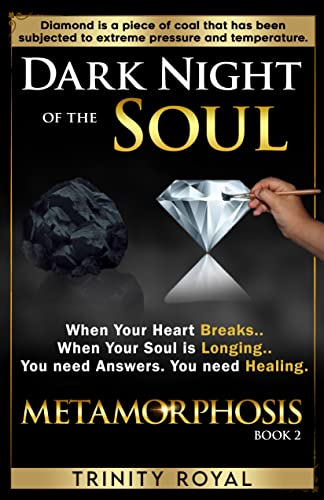

If you are experiencing grief, heartbreak, or life-changing moments, then Dark Night of the Soul by Trinity Royal is the inspirational book to guide you through your strife. This educational book is the red pill to get out of a matrix of suffering and repetition of sabotage and terrible habits in life. The author takes readers into a rabbit hole of self-examination and querying their soul on what it requires and the reason behind any suffering. It goes through the stages of stage metamorphosis, which is quite a fascinating cycle.
One of the book’s most controversial topics is that there will be suffering during the darkest night of the soul. However, this suffering reshapes a person’s character into a shiny diamond. The book illustrates the reasons for soul searching, why we suffer from depression, what to do during this process, and the possible reason for any unexpected suffering. The book also demonstrates some practical and effective healing techniques.
This is a book I would recommend for anyone undergoing any soul searching, depression, or stuck in a ‘rut’ (which, given the last couple of years, I feel like we all are in some sort of trouble here). I feel that this book can be appreciated by people who are going through a tough time in life and are ready for a change. If one is not open to the ideas in the book, they may find it repetitive and a bit ‘new age’. If you are looking for your soul’s purpose, I will leave you with the words, “Diamond is a piece of coal that has been subjected to extreme pressure and temperature.” I hope you find the healing, love, and peace that this book desperately aims for.
Pages: 241 | ASIN : B0B1QQCH22

What Lies Beneath

The Language of Dreams explores the relationship between a psychologist and her patient and the ethical quandaries they face. What was the inspiration for the setup of your story?
The relationship between a psychologist and patient is unique and intentionally focused on the client; the psychologist reveals very little, if anything, about her personal life. There are good reasons for this; the sessions are all about the patient and only the patient, unlike any other relationship in the client’s life. The client need not worry about overburdening the therapist, a feeling she might have when leaning too heavily on a friend, for example. The client also doesn’t have to be careful about offending the psychologist.
For example, in a friendship, a person might refrain from expressing her fears about getting the COVID vaccine because she knows that her friend is pro-vaccine and feels said friend appears harsh and judgmental in her attitude. We might not say things in a friendship for fear of conflict, out of worry about losing that friendship, or concern that it will just make one’s problems worse. My experience is that most patients find it a great relief to be able to speak freely to their therapist.
The psychologist as a “blank slate” is essential for the all-important “transference” process; with time, the patient projects her feelings and attitudes rooted in other relationship experiences—often the family of origin—onto the psychologist. The psychologist knows this and can gently and skillfully work with the patient to shed light on the family-of-origin dynamics that tend to be unconsciously repeated and don’t serve the client.
For example, an adult abandoned as a child may—very understandably—mistrust everyone and, therefore, miss out on trustworthy relationships that would help them heal and thrive. Or they might err in the opposite direction, trusting everyone too quickly and being hurt again. The psychologist, who is not known personally to the patient and is certainly not going to abandon them, is armed with therapeutic skills and is in a perfect position to help the client. In the comfort of a safe relationship, the client can grieve losses experienced in early relationships, recognize realistic signs of who should and shouldn’t be trusted, and learn that reliable connections can exist.
So that’s the theory. But things are messier in real life. It’s normal for the client to be curious about the psychologist. At times, the patient may find it quite unfair, even threatening, that the psychologist knows so much about her and they know nothing about the psychologist. Young Clare, in The Language of Dreams, feels this way. The psychologist is human, too; I try to make that point in my story. The therapist may be preoccupied with her issues and may make mistakes that blur the boundaries between the psychologist and the patient, like the psychologist Avery did in my story.
Many years of experience in psychotherapy practice and training young psychologists are the inspiration for the boundary problems that arise immediately between Avery and Clare. I tried to take things to an extreme to make a point about how boundaries can become blurred between psychologist and patient; after all, just two human beings in the same room. I imagined the worst thing that could happen in a highly charged first session between a seasoned but personally preoccupied psychologist and an angry young client mandated into treatment. And so, in the first chapter, Clare barges into the psychologist’s private bathroom (which the psychologist forgot to lock) and snoops around to find Avery’s two negative pregnancy tests in the trash can (that the psychologist should never have done at her place of work and then discarded there). Suddenly, Clare has usurped the unfair power dynamic she perceives in her relationship with this shrink. She has discovered the middle-aged psychologist’s Achilles heel; Clare is clever and intuits that Avery wants a baby, and it’s not going well. We aren’t surprised that the therapeutic relationship is a rollercoaster ride from the beginning. Now, what???
Avery and Clare are intriguing characters. What were some driving ideals behind their character’s development?
Clare is an angry young woman who steals stuff, taking what she pleases because she feels entitled. On the surface, she isn’t likable and seems a bit like a spoiled brat. Stealing gets her into trouble with the law, which lands her in Avery’s office, much to Clare’s chagrin. But what lies beneath Clare’s defensive façade? As the story unfolds, Avery discovers glimpses of Clare’s pain, her talents, and her potential for change. Even as a seasoned and skilled psychologist, Clare is Avery’s toughest customer. Maybe the reader will like this young woman a little or a lot. It might depend on the extent to which the reader identifies with Clare. Perhaps, we shouldn’t accept the outer crust of a person as their whole story.
The poised and caring Avery is an experienced professional who always follows the rules. On the surface, her life looks pretty good. But she is missing the one thing she wants the most; a baby and the fullness of family she lacked growing up. Like Clare, Avery is haunted by her past. At first, the reader might be disappointed by Avery’s acceptance of her fate that a baby is not in the cards. Can Avery rise up? Can she conquer the fear that holds her back?
What were some themes that were important for you to explore in this book?
A key theme in The Language of Dreams is that the story lets the reader into the private world of psychotherapy. Beyond an engaging story, the reader experiences some of the remarkable things that can happen between a skilled therapist and her client. Readers of earlier drafts of The Language of Dreams consistently felt a sense of hope when they read some psychotherapy scenes; I felt good about this, and it made me realize that encouragement can be felt in authentic yet fictionalized accounts of psychotherapy.
The second theme in my story is this; the client and the therapist are both vulnerable human beings. Therapists need therapists, too. Ideally, what the psychologist learns from processing their historical hurts—and we all have them—can make them better therapists. However, I don’t want to overstate this because the psychologist must also be well-adjusted, have insight into themselves, and seek consultation immediately if they feel things are not going well with one of their clients.
A third theme reflects my absolute fascination with the potential of human transformation. Yes, people can change; they can become calmer, more insightful, and more resolute. Growth and transformation can occur in psychotherapy, but that’s only one avenue for human change. The non-verbal agents of change are as important as the verbal exchanges in The Language of Dreams. My book explores how dreams can help us to connect with our unconscious. Clare is an artist and a lucid dreamer who paints her dreamscapes in search of clues about her lost parents. Avery found refuge in ballet during a difficult childhood, and her return to the creative outlet of dance and movement as an adult becomes essential to finding herself again.
What was one thing that excited you the most about writing this book?
I have spent most of my professional career writing non-fiction, such as published papers about research studies or how-to chapters for clinicians. I do not downplay the importance of research studies and practice papers. Yet it was so refreshing to write a story with a plot! It was exhilarating to return to my love of literature and roots in creative writing, to throw myself into coursework and learning experiences, and to write my first novel. I am passionate about creative writing that has the potential to raise awareness about mental health and offers authentic accounts of what happens in psychotherapy; all of this is embedded in an entertaining story rather than a textbook. #MentalHealthFiction #TherapistsAreHuman #WitnessTheExcitingArcsOfHumanTransformation
Author Links: Twitter | Facebook | Website
What This Illness Truly Is

Chasing Numbers details your battle with Anorexia Nervosa and your path toward recovery. Why was this an important book for you to write?
It was important for me to write the book because there are not a lot of stories out there of those who have battled this illness, less so from a male perspective. There are also a lot of misconceptions about eating disorders. Many studies have shown that 40% of the population still do not believe eating disorders are a serious mental illness when in fact they have the highest mortality rate of any mental illness. The book has also been so helpful for parents navigating the illness with their child. It is so hard to understand the illness unless you have gone through it. I wanted others to have the most raw and honest picture of what this illness truly is. I have also been donating 100% of the proceeds from Chasing Numbers to those seeking treatment with an eating disorder in Canada. This made it even more important that I really put everything I had into the book.
I appreciated how candid you were in your book. What was the hardest thing for you to write about?
The hardest part of writing the book was telling the story in a way where blame wouldn’t be placed on my parents. My parents did so much for me throughout my recovery and I knew it was hard on them. It was actually the reason I talked less about them in the book than I otherwise would have. It is so hard to see the illness in someone. It was even harder since I was so good at hiding it while I was around them. Parents often feel responsible for bad things that happen to their child so I was doing everything I could do to avoid them thinking that any of this was because of their actions or something they didn’t do.
What were some ideas that were important for you to share in this book?
One of the biggest ideas that I wanted this book to give to the reader that eating disorders are widespread and can impact anyone. When people think of eating disorders, they often think of a white college girl who is starving themselves. I wanted people to know that this is not the case and there are many diverse people that also suffer. Secondly, while presenting a story that showed how horrible Anorexia Nervosa can be, I also wanted to present a hopeful ending that shows others the illness can be beaten.
What is a common misconception you feel people have about anorexia?
A common misconception is that only females get Anorexia Nervosa. While it is much more common in females, a person of any gender can be diagnosed.
Author Links: Twitter | Facebook
All proceeds from Chasing Numbers will be donated to Eating Disorders Nova Scotia in order to help fund programs that support individuals who are suffering from eating disorders.
Literary Titan Silver Book Award September 2022

The Literary Titan Book Awards are awarded to books that have astounded and amazed us with unique writing styles, vivid worlds, complex characters, and original ideas. These books deserve extraordinary praise and we are proud to acknowledge the hard work, dedication, and writing talent of these brilliant authors.
Silver Award Recipients


Visit the Literary Titan Book Awards page to see award information.
How to Run a Marathon in 13 Years

How to Run a Marathon in 13 Years is a captivating memoir detailing the author’s incredible odyssey towards running a marathon after battling a series of injuries, medical issues and a mental health crisis. The journey is long and full of obstacles, but JP Mac shows readers that perseverance and determination are all it takes to overcome the variety of challenges that life throws at us.
JP Mac was a middle-aged man who loved running marathons. While training for his biggest marathon he noticed an odd, sharp pain in his left knee, a condition he named SPITLK (pronounced spit-lick). The knee pain didn’t leave on its own like he thought it would, instead he was forced to go from doctor to doctor, from appointment to appointment, and his health was only getting worse. As time progressed he had knee surgery, and shoulder surgery, and with that gained a lot of weight. Add to it he was then diagnosed with cancer and it’s no wonder that all this took a toll on his mental health. However, after a lot of uphill battles, years later he managed to get back to his marathons and was better than he ever was.
This is an inspirational story with a style and tone that make the book feel like a diary. This gives this extraordinary story a personal feel, which helps connect readers to JP and ensures we feel all the heartache and triumphs along the way. We learn that the author is tough and tenacious. To have gone through what he’s gone through takes so much on its own, and he still had the willpower to continue with running. This inspiring read is perfect for readers who are going through a tough time as the author shares his personal experiences while keeping a great sense of humor.
At the beginning of every chapter the author provides the year and the best picture (movie), Super Bowl champ, top song, U.S. President and the top web browser, which I found to be interesting and added a cultural point-in-time feel to the story. This was also interesting for me because I could look back at my life and remember what I was doing at that time and compare it to what the author was going through. I found it humorous that the author compared running to that of an ex girlfriend and it shows just how enticing running is to the author.
How to Run a Marathon in 13 Years is an emotional, fun, and inspiring memoir that serves as a beacon of hope to anyone that thinks they can’t pull themselves out of the rut they find themselves in. Mac’s story touched me deeply and made me think about my own life. I recommend this uplifting memoir to anyone who needs to find the motivation, willpower, and strength to push forward regardless of the goal you are trying to reach, or to readers looking for a riveting memoir about an intriguing person that faced some tough obstacles.
Pages: 174 | ASIN: B0B6MP879R



 LITERARY TITAN