Blog Archives
Bugs That Bug You
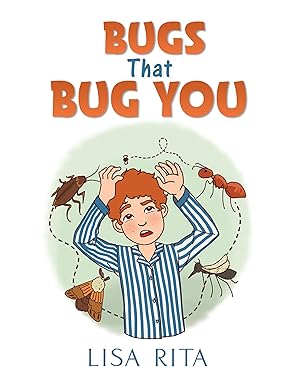

Fred is stuck in one of those days, the kind where nothing goes right and everything seems to crawl, buzz, or flutter in his way. From the first fly that zips past his head in the morning, the mischief snowballs. Breakfast is sabotaged by sneaky weasels, a moth takes a bite out of his jacket, and an ant boldly marches up his pants. With each new annoyance, Fred’s frustration grows, yet the chaos unfolds with such playful absurdity that young readers can’t help but laugh.
The rhyming text keeps the pace snappy and musical, making it a delight to read aloud. Rhythm transforms Fred’s exasperation into comic relief, so giggles replace groans. Children will revel in the silliness of every buggy encounter, while parents will appreciate the subtle reminder tucked into the fun: sometimes, the small irritations of life aren’t worth letting ruin the entire day.
The heart of the story beats through Fred’s mum, who gently nudges him to lighten up and find joy despite the pests. Her presence grounds the tale, offering both comfort and a lesson that lingers, resilience matters, whether you’re fending off flies or bigger frustrations.
Illustrations amplify the humor, packed with detail and plenty of creepy-crawlies to spot and discuss. They invite conversation, laughter, and the chance to share in Fred’s exasperation while enjoying the spectacle.
Bugs That Bug You balances humor with heart. It’s a picture book that entertains while quietly teaching the importance of perspective. With rhyme, rhythm, and a parade of pesky intruders, it earns its place as a storytime favorite, one children will request again and again, and parents won’t mind rereading.
Pages: 29 | ASIN : B0FMKPNXKM

The Unabridged Life of Missy Kinkaid

The book follows Missy Kinkaid, a fifty-something woman navigating the mess of family baggage, complicated friendships, and the ghosts of old loves. It digs into her rocky relationship with her mother, who spent most of her life institutionalized, her bond with her late father, who adored her, and her often-fractured but deeply entwined connection with her cousin Margo. Around her orbit, other women, like Scarlet and Amber, form her circle of truth-telling, wine-drinking allies. What unfolds is not a neat story but a layered patch.
Reading it felt like sitting across from a friend who doesn’t sugarcoat anything. I laughed out loud at Missy’s breakdown in the cereal aisle, and then I teared up when she admitted how much her mother’s coldness still cut into her. The writing had this strange magic. At times, it was witty and biting, other times, it felt like someone opening an old wound right in front of me. Some parts rambled, but even then, I didn’t want to look away. It felt messy in the best way, like life itself.
I found myself torn between wanting to hug Missy and wanting to shake her. Her bitterness toward Margo stung, but I understood it, and the honesty of that relationship was one of my favorite parts. The book isn’t afraid to show women being selfish, being cruel, and being brave, sometimes all at once. That’s what hooked me most, the refusal to paint anyone as simply good or bad. The emotional swings kept me on my toes. One page I was chuckling at sarcastic banter, the next I was heavy with grief. It felt real in a way most novels don’t.
I was left thinking about how family shapes us, even when we try to escape it, and how friendship can carry us through the darkest corners of memory. I’d recommend this book to readers who like character-driven stories that don’t flinch away from uncomfortable truths. It’s especially for women who have lived through complicated families, failed relationships, and the ache of trying to start over. If you want something tidy, this isn’t it. But if you want to feel like you’ve lived a whole other life, then Missy Kinkaid’s story is worth your time.
Pages: 288 | ASIN : B0FPYKKFTP
The Nickel Choir
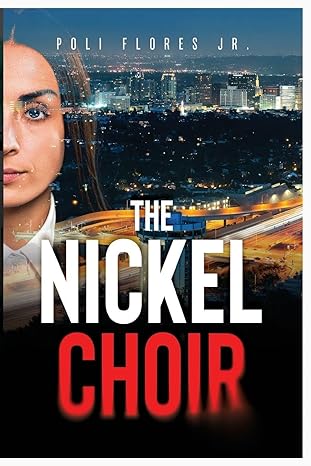
The Nickel Choir, by Poli Flores Jr., is a dark, deeply human courtroom drama that pulls no punches. The story follows Linda Sanchez, a seasoned Los Angeles prosecutor whose work in death penalty cases earns her a place in the exclusive “Nickel Choir,” a grim club of attorneys with five death penalty convictions. The book takes readers into the heart of legal battles, the raw aftermath of violent crimes, and the private toll borne by those who prosecute them. It blends gritty trial scenes, personal tragedy, and moral questions in a way that feels both brutally honest and heartbreakingly intimate.
The writing grabbed me from the start. Flores’s background as a judge and lawyer bleeds through every page, giving the legal scenes an authenticity that feels impossible to fake. The courtroom dialogue crackles with tension, and the way jurors, lawyers, and victims’ families are portrayed feels painfully real. But what struck me most was Linda’s voice. It’s confessional, self-deprecating, tough as nails, but also fragile. She compares herself to a donkey, plain on the outside but stubborn, resilient, and more capable than people expect. That metaphor resonated with me. I found myself rooting for her, not just in court but in life, through the unbearable loss of her family, her battles with addiction, and her complicated sense of justice.
The death penalty is a subject that’s hard to read about, let alone process, and Flores doesn’t soften it. He brings readers face-to-face with the cruelty of crimes and the cold mechanics of punishment. Some passages made me angry, others left me hollow, and a few had me questioning my own beliefs. That kind of discomfort isn’t easy, but it’s also the mark of writing that dares to go somewhere raw. I think that’s where the book shines most: it doesn’t tell you what to think, it makes you sit with the mess of choices and flaws.
The Nickel Choir isn’t just a courtroom thriller; it’s a meditation on justice, morality, and survival in a world where answers are never clean. I’d recommend it to readers who like legal dramas with emotional grit, who don’t mind being challenged, and who are drawn to stories that mix professional triumph with personal pain.
Pages: 250 | ISBN : 978-1804680964
Intentional Choices
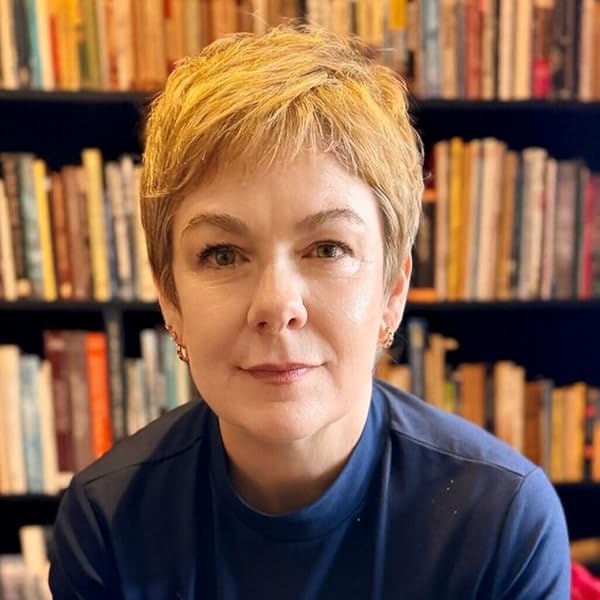
The Ten Permissions invites readers to tear up the old rulebook for what it means to “be an adult” and instead write their own permission slips by offering up ten guiding principles to help navigate a world that feels more uncertain and chaotic than the one prior generations knew. Why was this an important book for you to write?
I’ve spent my whole life helping people navigate profound change – and we’re all navigating pretty profound change right now! I wanted to take all of my learning and experience to help people better navigate this world – when the old rules no longer apply, but we’re not sure we’re allowed to write new ones. My message? We are allowed! In fact, we have to – we have to update how we operate in order to thrive in these fluid times.
What were some ideas that were important for you to share in this book?
I’d say my message around self-permission comprises three ideas: firstly, agency – we need to claim our own agency, to make intentional choices that serve us and suit this moment. Second, adaptability, we need to design much more adaptive life paths in a world where change is now a constant. And thirdly, personal authority or self-authoring – we’ve got to back ourselves, to give ourselves permission to make choices that fit life today rather than defaulting to what’s always been done.
What advice do you have for those who want to redefine their future but are afraid of taking that first step to make meaningful changes?
Start small! Start on a Saturday. Start with things that are low risk or low consequence. You don’t have to blow up your life in order to start making meaningful changes. Think in terms of how you manage your days before you think about how you manage your years.
What is one thing that you hope readers take away from The Ten Permissions?
It’s OK if your life doesn’t look or feel the way you expect/ed it to – whether you’re 24, 44, or 64! – You’re navigating adult life during seriously disruptive times. So give yourself permission to do your life differently – it might not look like your parents’ life, and that’s more than OK.
Author Links: GoodReads | Facebook | Website | Amazon
We need a new approach to being an adult in the 21st century. The old formulas for success no longer add up. Yesterday’s rules no longer apply. The world has transformed, but our internalized operating systems haven’t kept pace. It’s easy to feel overwhelmed and anxious, unsure of what life path you’re allowed to take and what choices you’re supposed to make.
It’s time to give yourself permission to step confidently into this fluid world—to design a life that takes advantage of today’s opportunities rather than defaulting to yesterday’s expectations. The Ten Permissions offers ten specific ways to let go of outdated ways of operating and
• adopt a diverse, adaptive approach to your career;
• redefine the metrics of success and security in a volatile world;
• build the capabilities to remain relevant and responsive amidst nonstop change.
As a global change facilitator and international aid veteran, Jillian Reilly offers bold, counterintuitive advice to help you thrive in a world that shows no sign of slowing down—and to imagine the kind of future you want to be a part of creating.
Television Addiction
Last Episode follows a married couple drifting apart, wrapped in petty arguments, television addictions, missed connections, and quiet despair. What was the inspiration for the setup of your story?
As a teenager, I was addicted to television for several months. It wasn’t until I watched a documentary about how much of an average person’s life is spent in front of the TV that I became frightened I might waste my own life. I managed to grow out of it. However, in most families the television is like another “household member.” Personally, I know several people who, after work, sit down in front of the TV and spend their entire day that way. In my book, I wanted to show that this is an addiction just like any other, yet it is not publicly highlighted and is rather trivialized.
What was your writing process to ensure you captured the essence of the characters?
I wrote the book in 2015 and found it by chance many years later, in my “drawer archives.” I was skeptical about it at first, but after reading it I decided it deserves to be published. At that time, I created characters through the process of visualization.
I found this novel to be a cutting piece of satire. What is one thing that you hope readers take away from your novella?
Sometimes we allow external things, people, or activities to influence our relationships with others. The worst is when this applies to those closest to us. If a few people turn off the TV, set aside extra work, and start spending more time together, then the mission can be considered accomplished. I also believe that raising awareness about television addiction, which affects a large part of society, requires opening a discussion. In my view, it is a waste of life—but of course, everyone will always find one way or another to waste their time.
What is the next story that you’re writing, and when will it be published?
I am finishing writing the novella Suicides Club, which is based on a screenplay I wrote that has won awards. I plan to publish it this year. In addition, there are several other “forgotten” projects lying in my archives, and it is possible that one of them will also be published soon.
Author Links: GoodReads | X (Twitter) | Facebook | Website | Amazon
Mark thought his marriage was stable—until Ilona fell for a TV series. What starts as a shared evening ritual spirals into jealousy, obsession, and a comic unraveling of domestic life. Last Episode is a sharp, satirical novella about emotional distance, digital distraction, and what happens when the credits roll on love.
In this digital age, emotional connections can easily drift apart, and Mark is about to find out the hard way that turning off the screen is often more challenging than it seems. As Ilona’s fixation deepens, Mark’s insecurities bubble to the surface, and the lines between reality and fiction blur amidst their heartfelt struggles.
Discover how this novella will leave you reflecting on relationships while bringing laughter to the chaos of modern love:
• Navigate the pitfalls of emotional distance in your own relationships
• Understand the powerful influence of digital distractions
• Explore the nuances of jealousy and trust in a humorous light
• Gain insights into the complex dynamics of marriage and intimacy
“Last Episode” is perfect for anyone who loves a comedic yet insightful critique of romance in our tech-driven world.
Don’t miss out on this tale—grab your copy today and see how love can outlast the final credits!
Self-Discovery

The Dryad’s Crown follows an orphaned wood nymph raised in a corrupt city and trained to be an assassin who finds a way to escape her violent past, only to be pulled back by a tragic death and seek revenge. What was the inspiration for the setup of your story?
As a kid, I loved epic fantasy, and I loved superhero stories. I was a huge Marvel Comics nerd. Still am! Originally, The Dryad’s Crown came to me from the perspective of the husband and him discovering that his wife had this whole past and an alter ego. She had these amazing powers. But as I was thinking about it, I decided to tell the story from the perspective of the wife and daughter. Yes, there’s still the alter ego aspect, but it became a larger story about self-discovery and healing. As a novelist, I can make my canvas as large as I want it to be. So, I became interested in telling a massive multi-generational saga about the fey and the gods living among us.
I find the world you created in this novel brimming with possibilities. Where did the inspiration for the setting come from, and how did it change as you were writing?
I spent about a year working on just the setting before I started writing the story. I wanted to create a fantasy world that felt immediately recognizable and required little explanation. Like Middle Earth, Westeros, the Continent, or the Six Duchies, the continent of Amon in Efre Ousel is all vaguely medieval and vaguely European. I’m not inventing anything new. Efre Ousel is a medieval world. Few of the comforts we associate with a more modern age exist. Nobles from coastal cities would have access to books, finer clothes, spices, and herbal medicine, but it’s an extravagance not available to everyone. No printing presses—only patient scribes with a quill and an inkpot. To me, it. came down to one guiding statement: “There are more secrets, wonders, and mysteries contained within these four continents and the seas between them than could be explored in several lifetimes.” I wanted a setting where I would never run out of stories to tell.
The goal was then to share rich details and nuance from the setting over the course of the first novel, to explore the history, mythology, and cosmology of this place. I wanted to delight readers with all the unique customs, common phrases, and distinctive art. My favorite part about a fantasy setting is when it has a “lived-in” quality. Not something that was invented, but explored. I can turn any corner, and I know there will be something there.
The setting didn’t change as I was writing. It was already fairly locked in. It just expanded as our characters traveled out from their home.
What were some themes that were important for you to explore in this book?
In The Dryad’s Crown, I wrote about family, self-discovery, healing, mercy, love, and much more. But as I understand theme, I think it’s the reader’s responsibility to decide what the themes are, i.e., what is being said about those subjects. You don’t want the author making declarations about such things, but they’re usually wrong. Maybe The Dryad’s Crown isn’t saying anything? I hope it is, but I’ll leave it to the reader. I will say this: Maricel’s story arc is one of my favorites, moving from being fairly helpless to quite capable and self-reliant. I think there’s something there. I also love Timon’s story. He’s a priest who hid away in his temple, and by the end, he understands his true calling. If you’re looking for themes, I think the “minor characters” also have a lot to say.
Where does the story go in the next book, and where do you see it going in the future?
The next book, War of the Hounds, is a novella interlude that tells the story of Bren Caius during the war. It’s based on Shakespeare’s Henry V. War of the Hounds is already published and available. People can download the ebook for free from my website. (Link below.) However, I’m currently writing the second novel in the main series. The Summer Sword should be available next year.
I gave some hints toward the end of The Dryad’s Crown about where the story was going. We find out about a promise made between a god and the Fey Court. That will have some repercussions. We also learn more about Mendal Caius and his ambitions. In The Summer Sword, we lose some important people. New characters are introduced, but don’t expect everyone to make it to the end. The Dryad’s Crown is fairly self-contained as a story. But once you get into The Summer Sword, we’re cutting the brake lines and going full speed. Jump out at your own risk!
Author Links: GoodReads | Facebook | Website | Amazon
Only one fae can keep them from waking.
Silbrey is an orphaned wood nymph, taken from her forest home and raised in the corrupt city of Penderyn. The fae child grows up unaware of who she is, what she can do, and the calling of her kind.
Under the control of a cruel guildmaster, Silbrey is trained as an assassin. As an adult, she escapes her violent past to start a new life and a family. But a tragic death brings her back to the familiar cobbled streets to seek revenge.
This dark path leads Silbrey to uncover an even darker secret: An ancient evil will wake the titans and break the world. Silbrey must travel with her daughter across a war-torn land to defeat that evil.
What begins as a fairy tale transforms into a multi-generational epic fantasy about love and loss—and a woman with a strange connection to nature.
The Dryad’s Crown is an emotional, coming-of-age fantasy debut. The first volume in a gritty saga, set in the immersive world of Efre Ousel.
Booklife describes the story as “a fantasy unlike any other.”
The Scars We Carry
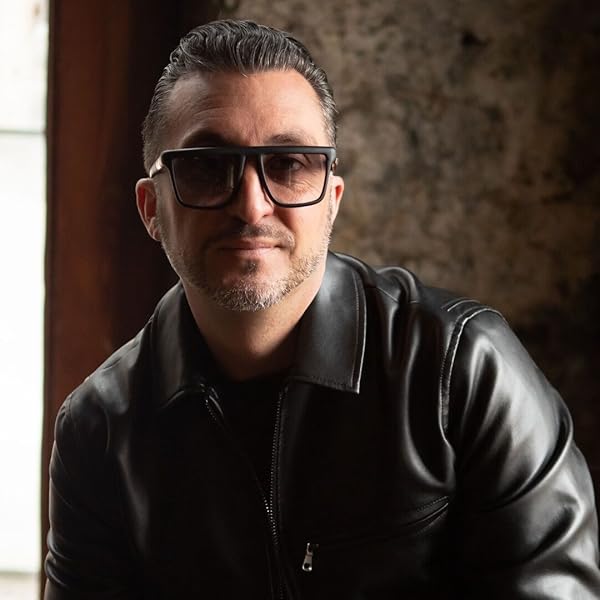
The Sins We Inherit follows a conflicted man trying to be a good father who thought he’d escaped his family’s criminal legacy, only to be pulled back in when his grandfather dies suddenly. What was the inspiration for the setup of your story?
The inspiration began in a very personal place. I started writing during a difficult season of heartbreak and anxiety, and the story grew out of those emotions. What began as journaling slowly evolved into a narrative about identity, family, and the legacies we carry.
The first two chapters — the wake and funeral — are essentially real. They were some of the hardest scenes to write because they came directly from my own experience of losing my grandfather Carlo, who was such an important figure in my life. That rawness gave the story its foundation of authenticity.
Milwaukee became the natural backdrop. I grew up there, and its history and underworld culture gave the story a setting that felt authentic and rarely explored in fiction. From there, the character of Cost took shape as someone wrestling with the same questions I was asking myself: What does it mean to be a man, a father, and a son while carrying the weight of the past? That intimacy, set against the backdrop of crime and family power struggles, gave the book a cinematic quality from the start — I’ve always envisioned it as something that could live not only on the page, but on screen as prestige television or film.
What aspects of the human condition do you find particularly interesting that could make for great fiction?
I’ve always been fascinated by flawed characters who are still trying to do right, even when they fall short. The moments that stay with me — whether in books or film — aren’t usually the loud or violent ones, but the quiet scenes of love, regret, or vulnerability. Those moments reveal our contradictions: strength and fragility, pride and longing, loyalty and betrayal.
That tension is at the heart of The Sins We Inherit. It’s why I believe the story lends itself to screen adaptation — the crime and ambition create stakes, but the real drama comes from the universal struggles of family, identity, and the need to belong. That balance is what defines the best prestige dramas, and it’s what I wanted to capture here.
What themes were particularly important for you to explore in this book?
Redemption was central. The novel asks whether we can rise above the cycles we inherit, or if they define us no matter how far we run. Alongside that, I wanted to explore legacy, manhood, and the bonds of family — especially the father–daughter relationship, which became the emotional core of the story.
Ultimately, the book is about transformation. It’s about shifting the idea of strength from suppressing pain to confronting it, and finding meaning in the scars we carry. That emotional throughline is also why I believe the story is destined to resonate beyond the page — it’s rooted in the same timeless, human themes that make the great crime dramas work on film and television.
When will Book Two be available? Can you give us an idea of where that book will take readers?
Yes — I do see The Sins We Inherit as the beginning of a larger story. From the outset, I had a general arc for a trilogy in mind, and I’ve already outlined both Book 2 and Book 3. Each installment builds on the themes of legacy, family, and redemption, while raising new questions about power, identity, and the price of the choices we inherit.
My ambition is for this saga to stand within the mafia canon, but in a way that feels contemporary and fresh. Milwaukee remains a unique, underexplored setting, and the father–daughter relationship continues to ground the story in something universal. At its heart, the next book will push deeper into what it means to face the past, confront pride, and still fight for transformation. It’s a layered arc that I believe has all the hallmarks of prestige television: intimate, character-driven drama unfolding against a backdrop of power and consequence.
Author Links: GoodReads | X (Twitter) | Facebook | Website | TikTok | Instagram | YouTube | LinkedIn | Amazon
Costantino “Cost” Caduto Jr. thought he’d escaped his family’s criminal legacy. But when his grandfather Tiger, the man who held it all together, suddenly dies, Cost is dragged back into a city simmering with tension, betrayal, and unfinished business.
Now, standing at the crossroads of who he was and who he might become, Cost must confront everything he left behind:
– A family fractured by power, grief, and long-held secrets
– A dangerous power vacuum that threatens to pull everyone under
– The one person he’s always tried to keep safe, his daughter, now watching his every move
Set against the backdrop of Milwaukee’s underworld, The Sins We Inherit is a gripping tale of legacy, loyalty, and the price of silence. As old allegiances unravel and new threats emerge, Cost must decide whether walking away was ever truly an option, or if some bloodlines run too deep to outrun.
Perfect for fans of atmospheric crime fiction, morally complex protagonists, and slow-burning suspense with heart.



 LITERARY TITAN