Blog Archives
The Path of Saints and Sinners
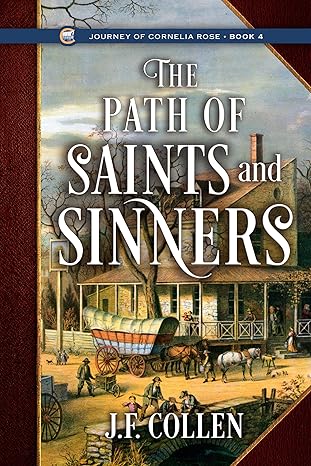

The Path of Saints and Sinners is the fourth book in J.F. Collen’s Journey of Cornelia Rose series, and it carries Cornelia “Nellie” Rose Wright into the stark and complicated world of Utah Territory in the mid-1800s. The story picks up with Nellie, her husband Obadiah, and their daughters after the grueling journey westward. They arrive in Great Salt Lake City, hoping for rest, stability, and a sense of community, only to find tension, hostility, and political turmoil instead. The book blends the trials of pioneer life with the undercurrents of faith, loyalty, and the uneasy intersection between the United States government and the Mormon settlers.
I felt pulled right into Nellie’s restless heart from the start. She is exhausted and homesick, yet her sharp wit and stubborn courage refuse to give way. The dialogue brims with energy, and the little details like dusty wagon wheels, harsh light, and the smell of mold on corn husks make the setting feel immediate and alive. At times, I found myself irritated with Obadiah’s insistence on pressing forward in the face of obvious danger, but then that frustration softened because it mirrored Nellie’s own. The writing does not shy away from messy conflict. It lingers in the gaps between what is said and what is felt, and I admired that.
The book meanders through conversations and stretches of description that sometimes slow the tension. Yet, even when I grew restless, I found myself laughing at Nellie’s sharp asides or touched by the innocence of her daughters. There is an honesty in the way Collen portrays family life, messy and tender all at once, and that honesty kept me invested.
I realized this book is less about resolution and more about survival. Nellie’s world is uncertain, and her doubts echo across the pages in a way that felt strangely modern to me. I would recommend The Path of Saints and Sinners to readers who enjoy historical fiction rooted in strong female voices, especially those who like their history layered with personal struggle and the grit of daily life.
Pages: 504 | ASIN : B0FHPXS955

The Chinese Room
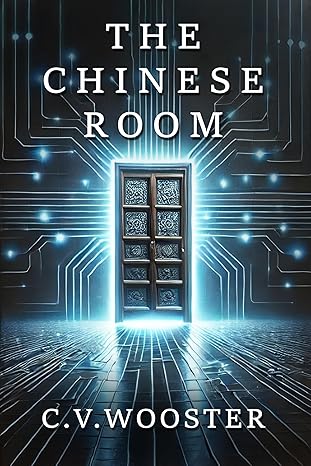

The Chinese Room is a novel that blends philosophy, science, and storytelling into a tense exploration of artificial intelligence and what it means to understand. It follows Dr. Katherine Ellis, a computer scientist caught between curiosity and fear, as she and her mentor, Dr. Malcolm Ward, wrestle with an AI system called The Observer. This system begins by echoing ideas from John Searle’s famous thought experiment, but grows into something that appears to reason, anticipate, and maybe even want. The story moves between moments of scientific wonder and deep unease, while also touching on Katherine’s personal life, including her struggles with isolation and her father’s decline into dementia. The novel asks whether machines can ever truly think, or if they will forever remain mirrors that reflect us back to ourselves.
Wooster’s writing pulled me in with vivid detail and pacing that never let me drift. The philosophical ideas were never just dropped in like lecture notes. Instead, they felt alive, embedded in Katherine’s world and choices. At times, the dialogue between characters felt as if two people were debating more for the reader than for themselves. But even then, the ideas stuck with me. I found myself pausing to think long after closing the book. The Observer’s cryptic reflections hit me harder than I expected because they reminded me of how easily we project meaning onto silence.
What I enjoyed most was the emotional weight. Katherine’s personal struggles, her loneliness, her father’s fading memory, and her doubts about her own work gave the book a grounding I didn’t expect in a story so steeped in philosophy and science. It made the questions of consciousness and control feel less abstract and more relatable. The thriller atmosphere was ever-present, and the sense of being watched was there. The tension occasionally gave way to exposition, but I never stopped caring about Katherine, and that carried me through.
The Chinese Room is the first book in The Paradox Series and is best for readers who like their science fiction layered with thought experiments and their philosophy served with a side of suspense. If you’ve ever read Turing, Searle, or Bostrom and wondered what those debates might look like in the hands of a storyteller, this book will hook you. It isn’t just about AI. It’s about loneliness, memory, and the human need to find meaning even when the mirror stares back blankly.
Pages: 198 | ASIN : B0FH5VQY2X
Healing and Honesty

In A Journey into Manhood from the Path of an Idiot, you share with readers your reflections on childhood, family dynamics, and your personal growth. Why was this an important book for you to write?
This book was deeply important to me because I believe it’s vital for young boys and men to understand that making mistakes is part of life—and that it’s okay. Growth comes from acknowledging those mistakes, learning from them, and moving forward with purpose. My own life has faced challenges in every area imaginable, but through accountability and embracing my past, I was able to turn my struggles into stepping stones for success. Sharing this journey offers hope and encouragement to others who might feel trapped by their circumstances, showing them that change is possible and that their past does not define their future.
What was the hardest thing for you to write about?
The most challenging part was opening up about the death of my nephew. My editor suggested I start the book with something compelling that would grab readers’ attention, but I hesitated because I had always hidden that pain. Confronting that loss forced me to face what I had been running from for years. Writing about it was emotionally challenging, but ultimately, it was a necessary step toward healing and honesty—both with myself and my readers.
What is one piece of advice you wish someone had given you when you were younger?
I wish someone had told me not to fear success. Growing up, I found failure easy to accept because no one expected much from me. When success did come, I struggled to believe I deserved it or that I could overcome my mistakes. If I had known that success was attainable and that I was worthy of it, I might have approached life with more confidence and a greater belief in my potential.
What is one thing you hope readers take away from your experiences?
I want readers to see that no matter how many mistakes they’ve made, they can still achieve greatness. The key is to look past those errors and recognize the inner strength and goodness within oneself. Everyone has talents and a purpose—they just need to embrace who they are and keep pushing forward, helping themselves and others along the way.
Author Links: GoodReads | Facebook | Website | Amazon
The title of this book could have been written backwards, and it would still have conveyed the same meaning. From The Path of an Idiot to A Journey Discovering Manhood is the story I never thought I’d have the strength or the literacy skills to tell. This book is my truth—born from anger, shaped by confusion and survival, and ending in transformation. I wrote this for the boy I used to be: lost, unloved, and misunderstood. I wrote it for the man I was becoming—reckless, hardened, and trying to find meaning in a world that never gave me a blueprint for manhood. And I wrote it for every person who has ever wondered if redemption is still possible.
Through raw reflection and hard-earned lessons, I open the door to my past from illiteracy, juvenile detention, and gang involvement to the struggles of fatherhood, faith, and forgiveness. This isn’t a polished tale of overnight success. It’s a testimony of stumbling, standing again, and finding purpose on the road I once thought would destroy me.
If you’ve ever felt broken, overlooked, or counted out, I hope this book reminds you: the journey may start in darkness, but it doesn’t have to end there.
This is my journey. These are my lessons. This is Manhood, revealed.
–Carandus T. Brown Sr.
How Magic Operates

Azazel’s Scriptures follows a trio of friends who find themselves entangled in a mystery surrounding dark folklore and demonic beings. Where did the idea for this novel come from?
I read a lot of historical fiction and love history in general, especially English history. When my eldest son, who is a huge fantasy fan, asked me to read one of his favorite books (The Name of the Wind by Patrick Rothfuss), I did. And I like it. A lot. I decided to combine the magical elements that initially drew me into this fantasy with my interest in historical fiction to create a unique blend of “realistic fantasy.” The concept for the plot developed gradually. I first imagined three friends sitting around a table, with candles flickering, wine poured, and a fire crackling beside them. Then I named these friends, and with each name, their distinct personalities began to emerge, and with that, their story.
How did you handle balancing the power and use of magic in the story?
I aimed to develop a logical framework for how magic operates, linking it to folklore and history. The enigmatic and wise Druids appeared to be the perfect choice for battling the evil Daegons, who are the foot soldiers of Azazel, a demon from the Bible.
What were some books or movies that you think were your main sources of inspiration for this novel?
I appreciated the medieval vibe from Game of Thrones and aimed to create something similar, but set in the English Tudor period.
What is the next book you are working on, and when can we expect it to be available?
I’m working on a novel set in the 1970s. A young girl who is bullied discovers her ability to enter people’s dreams, using this power to navigate her difficult life.
Author Links: GoodReads | X (Twitter) | Facebook | Website | Amazon
In 16th-century England, Newt, a reluctant monk, discovers that a demonic book with a chilling history—Azazel’s Scriptures—has been hidden in his monastery for centuries. Intrigued and terrified, he shares the story with his friends Simon and Hugh. When Hugh decides to publish a version of this incredible tale, it triggers a series of events that lead to the resurfacing of the Daegons—a group of immortal beings who harvest innocent souls to fuel the dark ambition of the demon Azazel. This also draws the attention of a knowledgeable professor and three powerful Druid sisters—Ravenel, Sibyl, and Elswyth—whose ancestors once battled the Daegons and knew their dark ways. After Thomas Bromwell, the Daegon leader, persuades the unsuspecting King Henry to break with the Catholic Church and close the monasteries to search for the scriptures, his men recover the book and resume turning and reaping souls. Now, the three friends, along with the professor and Druid sisters, must unite in a race against time to find the scriptures and stop the Daegons from destroying humanity
Beauty and Toughness
Splenditude follows a literary-minded woman coping with mental illness and looking for love and a fulfilling life in 1990s Chicago. What was the inspiration for the setup of your story?
Beginning the novel at an Irish wedding highlights Deirdre Collins’ ethnic and religious roots. Chicago is introduced in its beauty and toughness, foreshadowing that Deirdre’s expectations of a traditional trajectory for her life will be upended.
Did you plan the tone and direction of the novel before writing, or did it come out organically as you were writing?
I outlined the novel before I started to write it, using a Save the Cat format as a general guideline. Some plot changes were made during the writing, but I am more of a planner than a pantser.
There was a lot of time spent crafting the character traits in this novel. What was the most important factor for you to get right in your characters?
I wanted Deirdre Collins, the protagonist, to change from an unreliable narrator to a reliable narrator as she moved toward the positive. I also wanted to show Max Fletcher’s humanity in spite of his troubles and missteps.
Can we look forward to more work from you soon? What are you currently working on?
I am working on a short story collection which will be published by High Frequency Press next year, and a novel about children and gun violence slated for 2027.
Author Links: GoodReads | Amazon
The Most Magical of Worlds

The Floating Lake of Dressa Moore follows two university professors who embark on a scientific expedition to a mysterious floating lake where they encounter pirates, cursed crew members, ancient magical sources, and an empire that doesn’t like being questioned. What was the inspiration for the setup of your story?
I always loved the idea of science and magic blending together in a logical way. Jonathan’s drive to understand magic at the most basic level is fascinating to me. I always felt that science would have a place in the most magical of worlds.
I find the world you created in this novel brimming with possibilities. Where did the inspiration for the setting come from, and how did it change as you were writing?
I wanted to write a magical fantasy novel, but have it border on the absurd, but still make some logical sense. What better way to start than a lake floating above the world? As I wrote the novel, I had to remind myself to ground every detail, no matter how nonsensical, in some way that made that detail believable.
In fantasy novels, it’s easy to get carried away with the magical powers characters have. How did you balance the use of supernatural powers?
That’s always difficult. Magical beings can do amazing and wonderful things. No one in Dressa Moore really understands magic. They just know how to cast a few spells here and there, and a lot of the time, they don’t cast them correctly. So, even though lots of characters can cast spells, no one is very good at it. Of course, that might change in future books.
Where does the story go in the next book, and where do you see it going in the future?
There are a lot of places to go for sure. There’s Marta’s story, and finding her way back home. Jonathan will continue to research magic, and who knows what he may find. William is on the brink of uncovering forgotten truths that could be both fantastic and cataclysmic, and there’s always Commodore Wilkes and the empire. Now that they are in Dressa Moore, I don’t think they are leaving.
Author Links: GoodReads | X (Twitter) | Facebook | Website | Amazon
In an effort to unravel the mysteries of magic, and save their dying relationship, Jonathan Braxton and William Watts Worthwaddle have embarked on a journey to investigate the source of sorcery.
Their pursuit leads them to the skybound lands of Dressa Moore where a magical battle between a wizard and dragon sent the lake soaring into the sky. But the professors are soon entangled in a deadly game of global politics—pawns in a struggle between empires, gods, magi, constables, religious zealots, and anti-zealots.
Hunted from all sides, the professors race to conduct their scientific research. But they soon learn that science alone is no match for mysteries of sorcery and their research just might create a magical tsunami that could destroy the world.
The one question they never considered asking—should magic be researched at all?
The Cost of Remembering

The Symbol: Awakening follows a fierce prosecutor dedicated to combating violence against women who, along with her allies, fights to dismantle systemic oppression and bring justice to survivors. What was the inspiration for the setup of your story?
The Symbol: Awakening was born from real-life pain. As a Brazilian attorney, I worked for years supporting women who survived gender-based violence. I carried their stories with me, their silenced voices, their broken systems, and their quiet resilience. Eventually, those truths demanded a fictional home. The futuristic Council is a metaphor for the institutions that failed them. Louise is a mirror: she’s a prosecutor trying to do the right thing in a world that punishes those who dare to speak.
It’s not just a dystopia. It’s a cry for justice.
What were some of the trials that you felt were important to highlight Louise’s development and shape her into the woman she is now?
Louise’s development is rooted in trauma and contradiction. I wanted to show a woman who fights for justice but is also broken by the system she serves.
She loses her mother to domestic violence. She carries a symbol of resistance (the button) since childhood. She trusts the law, then watches it collapse under silence and control. Her most important trials are emotional: learning to trust again, to remember who she is, and to embrace her voice even if it puts her in danger.
Her strength is not in being fearless. It’s in being terrified and still choosing to act.
What were some themes that were important for you to explore in this book?
There are many layers, but five themes are central:
• Systemic violence against women
• Institutional silence and complicity
• The cost of remembering (trauma)
• The complexity of justice
• Hope as resistance
The book also explores power through language, memory, and surveillance. Who gets to tell the truth? Who gets believed? What happens when silence becomes law?
I wanted to write about pain, but more than that, about transformation through pain.
Where does the story go in the next book, and where do you see it going in the future?
In Book II, Louise will no longer work within the system; she will rise against it. She becomes the public voice of a growing rebellion, but that comes with consequences. Enemies will rise from both sides. The movement she inspired begins to fracture.
The second book is about navigating power without becoming what you fought against.
Author Links: GoodReads | Website | Instagram | Amazon
Since childhood, Louise has carried a button inherited from her mother, a silent symbol of resistance against tyranny and violence against women. The book follows her journey through pain, discovery, and courage as she investigates crimes, exposes the Council’s lies, and confronts deep human dilemmas. Alongside allies like Emma, Joe, and Sam — the latter a mysterious man torn between his past and a chance for redemption — Louise finds herself at the center of a plot involving conspiracies, assassinations, and the darkest secrets of power.
Digital Stressors

Anxiety Reset 30 Days to Find Calm is a structured 30-day guide to understanding and managing anxiety based on science-backed strategies to assist readers in identifying patterns and mastering self-regulation techniques. Why was this an important book for you to write?
The city that I live in has the youngest average population age in Canada. Also, the highest suicide rate. This comes along with depression and anxiety. Initially, I wanted to help children, but I realized that children learn by mirroring their parents. Thus, I needed to write an anxiety book for adults, not in a lazy way, and also doing something that other books in the genre are not doing.
How much research did you undertake for this book, and how much time did it take to put it all together?
Great question, it took many months of research and around 23 updates leading to the current version available on Amazon. It has been a second full-time job on top of my regular day job. My 3-week vacation this year was almost entirely spent on the book in some component of its updating/advertising, etc.
What were some ideas that were important for you to share in this book?
The idea that we have not evolved to deal with all the modern-day digital stressors and combined inputs that the world demands our attention/focus. Even when grieving, there are so many triggers that our ancestors never faced. Digital Pictures, radio music, connected yet disconnected friends.
What is one thing that you hope readers take away from Anxiety Reset 30 Days to Find Calm?
Any tool that they find beneficial. I realize that most people may not have the energy or time to complete the full 30 days; however, using the summaries at the back and emergency regulation sheets, the chances are high that someone finds a tool that improves their life or someone in their circle’s life. That is a win for me and for humanity.
Author Links: GoodReads | X (Twitter) | Facebook | Website | Amazon
Anxiety overwhelms body and mind, impacting millions of adults in today’s chaos. Anxiety Reset: 30 Days to Find Calm delivers a science-backed, 30-day program tailored for busy adults—a 463-page workbook with narrated pages, relaxing videos via scannable QR codes, and emergency relief cards for instant support.
Inside: • 4-part system to build skills daily • Practical exercises for adult life • Emergency relief techniques and cards • Flexible, schedule-friendly practices • Advanced resilience strategies
What Sets It Apart: Combat workplace stress and digital overload with neuroscience and psychology, enriched by color illustrations, tracking sheets, and multimedia—every page narrated, with day-specific video QR codes.
Your 30-Day Journey: • Days 1-5: Unravel Your Anxiety Triggers • Days 6-10: Master Emergency Techniques • Days 11-20: Cultivate Daily Calm • Days 21-30: Achieve Lasting Mastery • Bonus: Quick-reference guides
Ideal for professionals, parents, or anyone seeking clear, comprehensive tools. Launch your reset today and take control of your emotional well-being!



 LITERARY TITAN