Blog Archives
Loosen Their Lips: How to Capture the Information You Seek During a Conversation


Ellen Naylor’s Loosen Their Lips is a guide to finding out what you need to know through conversation. Drawing on more than four decades in competitive intelligence, Naylor writes for people who interview customers, research competitors, or need to understand a business decision. Her central idea is practical: a useful conversation starts well before anyone says hello. She shows how to identify the right person, research their work, decide what you need to learn, and prepare questions that sound natural. She also asks readers to consider what they’re willing to share in return. The result feels like advice from someone who has made thousands of calls and still pays attention to what each one can teach her.
The book’s first part follows an interview from planning through reflection afterward. Naylor spends as much time on the interviewer’s state of mind as she does on wording. She recommends getting grounded, listening without rushing to the next question, and noticing when a person’s tone or energy changes. Her stories make these habits concrete. In one project, a repair technician turned out to know far more about electrical meters than the users she’d planned to interview, so she set her prepared questions aside. In another, a change in a CEO’s voice during an earnings call led her to the personal reason he’d kept an unprofitable glass business. These examples give the book its momentum: Naylor shows how preparation makes room for a useful surprise.
The second part introduces elicitation, Naylor’s term for guiding someone to share information through the flow of a conversation. She walks through techniques such as finding a mutual interest, offering information in exchange, suggesting a range to learn a number, and leaving enough silence for someone to keep talking. A worked example involving temporary operating room nurses shows how several techniques can fit into one call. The chapter exercises invite readers to try them and examine what happened. I appreciated that Naylor returns repeatedly to honesty, empathy, and the other person’s comfort. Her examples also give readers something to weigh: deliberate errors and confidential bait may draw out an answer, but they can test the trust she works so hard to build.
Naylor’s warm and direct voice makes this a readable field guide, though its many lists and repeated reminders are best taken a few chapters at a time. Her discussion of body language deserves similar care. She warns that no single behavior proves deception, yet some passages give eye movements and brief expressions more definite meanings than that warning allows. The strongest advice is simpler and more durable: learn the subject, notice changes, ask for clarification, check what you’ve heard against other sources, and leave the person glad they spoke with you. I’d recommend Loosen Their Lips most to competitive intelligence practitioners, customer researchers, product marketers, and sales professionals who conduct interviews regularly. They’ll find specific ideas to try on their next call, along with plenty to reconsider after it.
Pages: 251 | ASIN : B0FFTRHBBJ

The Robe Squad: A Charlestown Tail


A man and his dog wearing bathrobes around Boston is an appealing place to start a story, and Arthur Russell Smith makes that little quirk feel perfectly at home in The Robe Squad. This children’s book follows Artie and Gizmo, two companions who enjoy watching boats, sharing everyday routines, and being together. When an evening walk brings them face to face with a tiny mouse who needs help, their familiar world opens up to someone else’s needs. It’s an easy premise for young children to follow, with a gentle sense of curiosity and a clear invitation to notice the lives around them.
Smith’s writing has the friendly, unhurried feel of someone telling a child a story while sitting beside them. Short sentences, repeated references to being together, and animal sounds give adults plenty of opportunities to vary their voices and invite listeners to join in. The bathrobes add a playful touch, especially because Artie treats his dog’s outfit as an ordinary part of their shared life. The emphasis on kindness is direct, and some of the dialogue spells out feelings that the pictures already communicate. Still, the characters’ affection gives those exchanges warmth. For preschool listeners, the familiar language and steady pace should make the story comfortable to revisit.
Craig Orback’s illustrations give this picture book a lot of personality. The harbor scenes have pink and peach skies, reflections on the water, sailboats, and brick buildings that make Charlestown feel like a particular neighborhood. There’s plenty to look at beyond the main action, from window boxes and passing pedestrians to the objects tucked onto shelves inside Artie’s home. His bright blue robe and Gizmo’s pink one keep the pair easy to spot across the pages. Orback also uses scale effectively: the small animals’ faces and bodies draw attention to their vulnerability beside the human figures. Alternating broad scenes with closer views encourages readers to pause, notice expressions, and spend a little longer with the pictures.
I liked how naturally the book connects companionship with paying attention. Artie and Gizmo’s closeness establishes a reassuring starting point, and the story makes room for children to think about what another creature might be feeling. It’s well suited to a shared bedtime reading or a preschool conversation about caring for animals and recognizing when someone needs support. The author’s note adds a personal connection by explaining the real experience that inspired the story and his fondness for Charlestown and bathrobes. For families who enjoy gentle animal stories, this is an inviting read with an affectionate central pair and illustrations worth lingering over.
Love Theory 101

Dolly Gray Landon’s Love Theory 101 is a four-act black comedy set at Pimpleton State Looniversity, where a course devoted to love becomes a meeting place for ambition, desire, jealousy, and violence. Perfessor Xeroxburger presides over the seminar with an imposing title and lectures dense with scholarly jargon. His students respond according to their own hopes: Phisto courts approval while pursuing romance, Goldie develops a secret relationship with the perfessor, and Dweebaldo struggles to make sense of what he’s hearing. Outside the classroom, a series of killings troubles the city. Chief Inspector Helga Thornsnag, Xeroxburger’s wife, leads the investigation, bringing its menace steadily closer to the students.
The play’s sharpest comic device is Dweebaldo’s attempt to test his teacher. He invents scholars and theories during a classroom exchange, then watches Xeroxburger weave them confidently into his answer. The scene gives their rivalry a clear dramatic purpose. Dweebaldo’s wish to expose a fraud grows alongside his infatuation with Abigail, whose response to his gift of roses leaves him bewildered and angry. Their exchanges show characters trying to interpret one another through assumptions learned in the seminar. The course’s language spreads from the lectern into their courtship and quarrels, so its effects become part of the action.
Landon writes for an exuberant stage. Rhymes, invented words, sudden shifts in dialect, songs, and overlapping dialogue give the six principal actors plenty to perform. A chorus voices Xeroxburger’s torment, while another turns desire into a noisy dance number. The elaborate speeches can slow a scene, particularly when the perfessor’s jargon runs at length, but their accumulation also makes Dweebaldo’s challenge satisfying: the audience has heard how readily confident delivery passes for insight. The comedy is often coarse and graphic, and its humor depends on excess. In the last act, a frightening encounter involving Goldie becomes part of the play’s larger pattern of appearances that demand closer scrutiny.
The office scene gathers the personal and criminal plots into one crowded confrontation. Xeroxburger admits his intellectual fraud, Helga’s investigation takes a violent turn, and the students are left to decide what to carry forward. Their closing chorus declares, “Those who instruct us, confuse us!” and “Those who protect us, abuse us!” Yet they also pledge to pass on their dead teacher’s impenetrable theories. That final contradiction gives the comedy its lasting sting. Love Theory 101 portrays people who can recognize a false authority in front of them and still find its habits difficult to relinquish. Its unruly language and theatrical excess make that idea loud, unsettling, and often funny.
Page: 164 | ASIN : B0HDM117DW
House of Wind

In Laura DeNooyer’s House of Wind, Wendi Burkham’s husband is a beloved pastor who praises her from the pulpit and belittles her at home. An incident during a church service brings that painful divide into focus and sets this contemporary Christian fiction novel in motion. Wendi wants her marriage to heal, but she’s also beginning to see what years of criticism, control, and second-guessing have done to her. When she leaves with fourteen-year-old Julia and eleven-year-old Christopher, she has little money, an uncertain place to stay, and no clear idea of what comes next. DeNooyer gives that uncertainty room to breathe.
The most compelling part of this Christian women’s fiction story is Wendi’s struggle to trust her own experience. Her husband, Rod, rarely loses his composure in public, which makes it easier for church elders to dismiss what she tells them about life at home. Their response deepens the harm: they question her judgment, invoke submission, and worry about the church’s reputation. Meanwhile, Rod’s attention turns to the children, drawing Christopher toward him with promises and leaving Julia wary of another cutting remark. DeNooyer shows how emotional and spiritual abuse can affect an entire family, especially when the people asked for help see only the pastor they admire. Wendi’s progress comes in difficult increments, through counseling, work, honest conversations with her children, and friends who take her seriously.
The family’s temporary shelter brings its own complications to this inspirational fiction novel. Wendi arrives to discover she’ll be sharing the house with Garrett, the man renovating it. For someone trying to escape her husband’s control, living alongside a virtual stranger raises uncomfortable questions about privacy, boundaries, and trust. Even ordinary exchanges become difficult when she’s used to looking for hidden motives behind a man’s words. The unfinished house adds practical challenges to an arrangement that already tests her nerves, and I wanted to see how she’d handle the unfamiliar situation while protecting her kids. Julia and Christopher have distinct responses to the upheaval: Julia’s anger is sharp and observant, while Christopher still longs for his father’s attention. Their feelings complicate every choice Wendi makes.
DeNooyer writes with a clear purpose, and at times characters explain a feeling or lesson soon after a scene has already made it plain. The renovation imagery can be equally direct. Still, the everyday details keep House of Wind grounded: a tight grocery budget, a job that’s hard to manage while exhausted, a child who wants his belongings from home. Faith remains central to Wendi’s decisions, even as she learns to question advice delivered in its name. This is a hopeful Christian fiction novel about a woman recovering her voice and building a life in which her children can feel safe. Its hope grows from the practical, sometimes painful work of getting there.
Pages: 441 | ASIN : B0H9Y6CZDD
If I Had You


Paul G. O’Connor’s If I Had You begins with a summer romance on Ireland’s west coast. Visiting his grandmother in County Clare, Nick Sullivan falls for Molly Hourihan among town dances, family gatherings, and afternoons near the Cliffs of Moher. Then Nick returns to Boston and leaves behind the St. Christopher medal Molly gave him, with her picture tucked inside. Years pass before a crisis brings him back. His grandmother Una is at risk of losing her home, Molly is engaged to someone else, and the boy who promised to return has to face what his silence cost them both. It’s a story about love that lingers, and about the choices people make while they’re waiting for life to turn out differently.
O’Connor gives that romance a lively and crowded world. Una can be sharp over a cup of tea and fiercely tender toward Nick in the same breath. Aunt Mary and Uncle Paddy trade barbs that make a visit feel like a family event, while the older, world-weary Mike Stetson brings a dry Boston voice to the story. His friendship with Nick becomes especially compelling once a loan meant to save Una’s house draws them into a dangerous financial scheme. The plot moves through betting shops, pubs, hotel corridors, and criminal offices, with each place adding another person whose decisions matter. Love, money, pride, and old grievances keep crossing paths, often at the worst possible moment.
Molly’s mother, Tara, gives the book much of its emotional weight. Her anger at Una has roots in a painful family history, and her fear for Molly comes from losses of her own. Watching Molly question the life she’s planned with Conor makes their conversations feel as consequential as the race to recover Una’s money. Molly wants a future she can choose for herself. Tara has to consider what her years of guarding against hurt have asked of her daughter. Their scenes make room for affection even when neither woman finds the right words immediately. O’Connor is also good at giving feelings a physical home: a kitchen table, a garden bench, a piece of bread offered when someone needs comfort.
The final stretch gathers those details into a satisfying return to the Cliffs. The medal, Una’s barmbrack, and Nick’s long delayed decision all carry the history of the people who have held on to them. There’s humor alongside the worry, especially in the family’s teasing and Stetson’s surprised enjoyment of Tara’s company. By the end, If I Had You has become a generous story about several generations finding the nerve to make a new choice. Its most affecting moments come when someone opens a door, offers a hand, or decides there’s still time to show up. If I Had You knows that love changes a life when someone finally chooses to stay.
Pages: 267 | ASIN : B0HCM5M1KB
A Plushy Story: The Tale of Jules the Horse
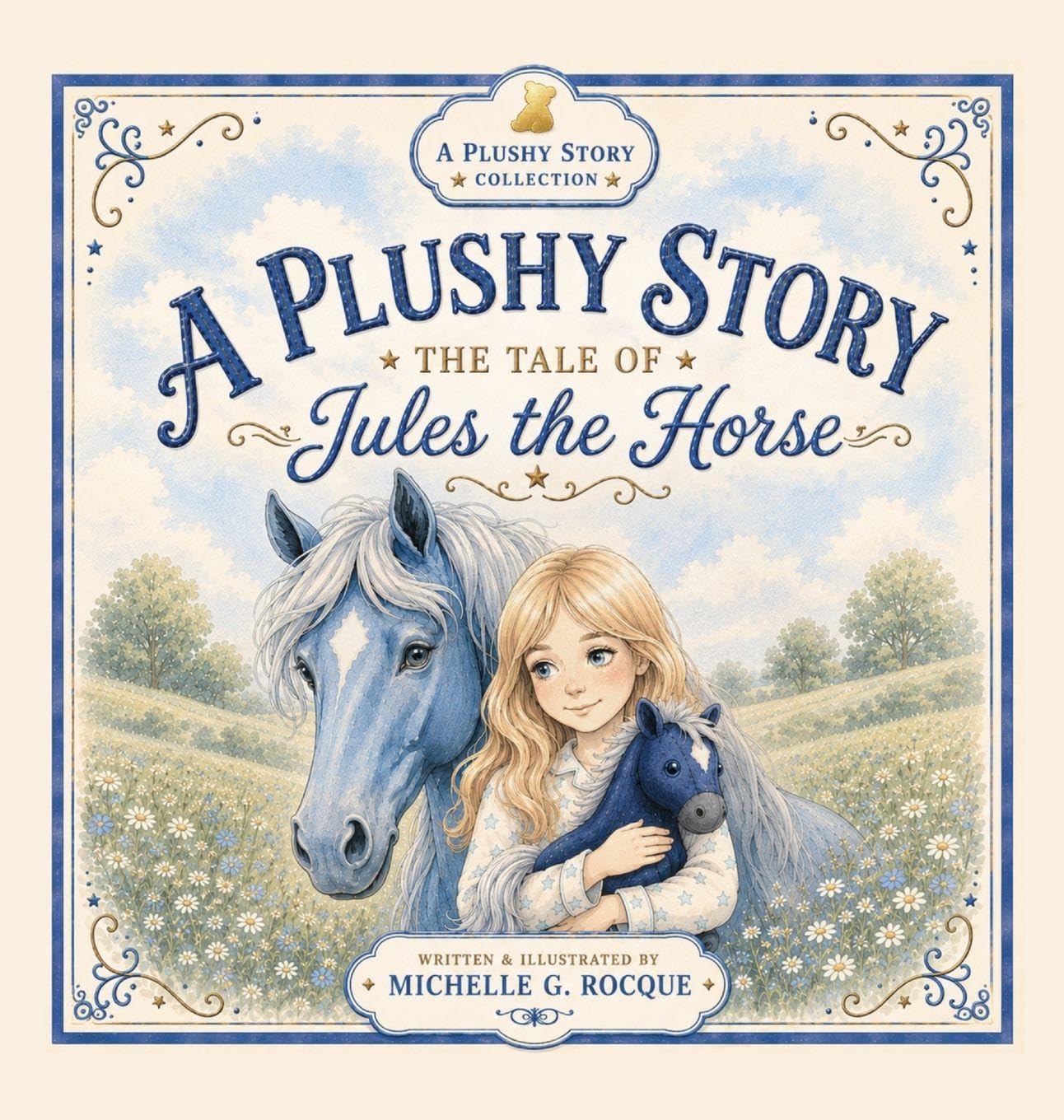
Michelle G. Rocque’s The Tale of Jules the Horse begins with a discovery many children will recognize: Mika finds an old plush horse while her family is unpacking. Her mother knows him at once. Jules was a gift from Mika’s grandfather, and the little horse has carried years of love with him. When Mika asks for his story, her mother draws her close and begins a tale about a real horse in the town of Lumberland. That bedtime exchange gives this children’s book its warmth. The adventure grows out of something Mika can hold in her hands, while her mother’s memories make the story feel personal before Jules has even taken his first step.
Jules arrives in Lumberland as a frail foal whose survival is uncertain. He grows strong under the mayor’s care, works faithfully, and finds joy in racing across the open plain. Other horses tease him for being a workhorse without a champion’s ribbons, but he goes about his days with steady good humor. His courage comes into sharp focus during a storm, when he frees one of those horses from beneath a stranded carriage. Later, on a snowy Christmas Eve, he helps the mayor bring the town’s children together. These episodes give young listeners several ways to know Jules: through the work he does, the freedom he loves, and the care he shows when someone needs him.
Rocque also illustrated the picture book, and the images give each part of the tale its own atmosphere. Mika’s room glows in soft pinks and purples, with moving boxes and familiar toys that make her discovery feel lived in. In Lumberland, Jules’s blue-gray coat and silver mane stand out against autumn fields, muddy storm clouds, and snowy streets lit by warm windows. One lovely image shows him running beneath a star-filled sky; another catches the strain of his rescue in the rain. Illustrated scenes alternate with verses set inside borders of clouds, stars, and crescent moons. That pattern leaves room to linger over a picture before turning back to the mother’s telling.
The rhyming text has the gentle pace of a story meant to be read aloud at bedtime. Some lines flow more easily than others, but the recurring images of hooves, night skies, and closeness give the reading a soothing rhythm. When Mika asks whether Jules was like her grandfather, the book brings its two stories together in a simple, touching moment. The horse’s kindness becomes a way for mother and daughter to remember someone they love and to imagine how his example can live on. By the final page, Mika is asleep with her plush Jules beside her, dreaming of a ride through the clouds. It’s a tender ending that grows naturally from the keepsake she found.
Pages: 66 | ISBN : 1067502920
Legends Unearthed: The Lost Bitcoin

A billion-dollar treasure hunt starts with an ordinary piece of computer hardware in Sutton Lewis’s The Lost Bitcoin. This second installment follows Sam, Riley, Ava, and Jonah to London, where a family vacation provides cover for their search for a discarded hard drive containing access to a Bitcoin fortune. Its owner, Hannah Collins, has spent years trying to recover it, and the friends suspect that the official blocking her efforts has interests of his own. It’s an inviting setup for a middle-grade adventure novel: an enormous prize, a distinctly unglamorous hiding place, and four kids convinced they can solve a problem that’s defeated the adults. The story quickly makes room for both the mission and the cheerful disorder of traveling with three families.
The friends’ personalities give this children’s mystery much of its appeal. Sam brings research, careful observation, and a concern for fairness; Riley keeps things moving; Ava supplies engineering talent and confidence in nearly equal quantities. Jonah’s appetite, dramatic complaints, and questionable negotiating skills create a steady supply of trouble. Their conversations feel like an ongoing contest to see who can land the next joke, but there’s affection beneath the teasing. Sam’s frustration over extra treasure his friends secretly kept from their previous adventure gives their friendship a useful complication. Trust requires some repair, even among people who work well together. Ava’s landfill rover, Trash Panda, and her drone, Sky Fang, also develop surprisingly memorable personalities through the kids’ reactions to them. A solemn ceremony for a battered robot is one of the book’s funniest expressions of that attachment.
London gives the adventure plenty to work with. Westminster Abbey, the British Museum, the Tower of London, afternoon tea, and a visit to the Harry Potter studio tour become occasions for curiosity and comic mishaps. Sam’s interest in architecture and Ava’s fascination with security systems and special effects make those outings feel connected to who they are. Readers who enjoy STEM adventure stories will appreciate the emphasis on designing equipment, studying a search area, and preparing for setbacks. The explanations of Bitcoin keep the treasure’s significance accessible, while the gadgets invite readers to enjoy some generous imaginative license. Lewis favors short paragraphs, lively dialogue, and escalating slapstick. The recurring jokes about an outdated guidebook, missing luggage, and glitter establish a familiar rhythm, though some run longer than they need to. Replaying an extended confrontation through recorded footage also slows the story’s forward movement.
Reginald Pemberton-Smythe, the council official with extravagant royal ambitions, gives the book a wonderfully specific comic target. His fixation on ancestry, status, and the things a fortune could buy makes his increasingly ridiculous behavior easy to follow. That outsized greed gives the friends’ effort to help Hannah a clear purpose. The closing visit with her adds a quieter emotional note, allowing the reader to feel what recovering something lost can mean to its owner. Across the book, friendship, ingenuity, and responsibility emerge through choices and consequences, with room for the kids to be selfish, impulsive, and funny along the way. For readers drawn to humorous children’s fiction and treasure-hunt mysteries, The Lost Bitcoin offers an entertaining mix of inventive machinery, family antics, and a mission worth caring about.
Pages: 182 | ASIN : B0H58X2F4B
The Invisible Soul: Rise Up

George W. Beasley’s The Invisible Soul: Rise Up, in its second edition, is a Christian memoir about childhood abuse, concealed emotional suffering, and the relationships through which he comes to understand healing. Beasley traces his life from a violent home and placements in children’s homes to marriage, fatherhood, and ministry. The title names the private world of fear, guilt, and condemnation that persists beneath an outwardly capable, cheerful identity. He captures that division in a sentence that gives the book much of its emotional clarity: “A smile was a mask, a laugh was a cry and a hug was a separation from all truth.” His account examines how a person can build a loving family and serve others while continuing to carry experiences he’s scarcely able to describe.
The second edition’s inclusion of court and social-service records adds a valuable documentary dimension. These reports show a child seeking acceptance, struggling with his circumstances, and gradually responding to adults who invest time in him. Read alongside Beasley’s memories, they give readers two perspectives on the same boy: the observations recorded by professionals and the fear he remembers living through. His descriptions of confinement, hunger, and violence are explicit, and their cumulative effect establishes the severity of the childhood he survived. Equally significant is his recognition of the counselors, house parents, and friends who offered stability. The book’s attention to these people gives its account of recovery substance, showing how practical care and sustained involvement become part of a life long before their significance is fully understood.
The narrative becomes especially engaging when water skiing connects Beasley’s family life with his work for In His Wakes. What begins as a source of pleasure and temporary relief develops into a ministry that brings him into contact with children whose expressions and stories recall his own. These encounters make the book’s recurring images of mirrors and reflections concrete: he recognizes his hidden pain through other people. The movement between exhilaration on the water, difficult conversations, and exhaustion after ministry events gives this section emotional complexity. His wife, Lisa, provides continuity throughout, offering affection and a place where he can speak and grieve. Beasley’s growing willingness to tell his story, together with the support of his family and ministry colleagues, makes healing a process readers can follow through specific relationships and events.
Beasley writes with the directness of spoken testimony, frequently addressing readers and interpreting his experiences through passages from The Message. That approach creates intimacy and makes his evangelical purpose clear. Repeated lists of painful emotions and frequent assurances of victory sometimes slow the narrative; the strongest passages allow a scene or conversation to carry the meaning. His firm convictions about divine sovereignty and healing also shape the book’s appeal, particularly for readers who share his Christian framework. Its concluding emphasis on humility, trust, and forgiveness gathers the personal history into an invitation to live differently. “You can never forget, but you can forgive,” he writes, expressing a distinction central to his understanding of recovery. The Invisible Soul offers a candid account of the lasting effects of abuse and a deeply personal interpretation of how faith, love, and service can reshape a survivor’s relationship with his past.
Pages: 118 | ASIN : B094YWMN54


