Blog Archives
A Fusion of Essays and Photos
Meanwhile, Here in Austin is a seasonal portrait of a city becoming home, blending intimate essays and photography to capture the quiet beauty, chaos, and heart of everyday life in Austin. Did you begin this project knowing it would become a book, or did it grow organically?
It grew organically. When we first moved to Austin, every weekend felt like a vacation. I’d grab my camera and head out to explore our new home. Over the years, I built up a large collection of photos, but I eventually wanted to do more with them than let them sit in an online gallery. My first thought was a photography book. But some of the images needed context. A line or two didn’t seem to be enough.
The first time I started writing longer pieces was after a storm, when I realized a single photo couldn’t capture its intensity. We had previously lived in Los Angeles, where unplugging devices during a storm never even crossed my mind. In Austin, though, after hearing a few horror stories about fried electronics, I decided to play it safe. That experience needed explanation beyond the image itself.
Then came the winter storm. Photos of icicles alone couldn’t accurately explain what we went through. The images needed my experience alongside them so readers could understand what photographing those icicles really meant and how they fit into the larger context.
As a result, the book expanded to become a fusion of essays and photos. But I still wanted to “lead” with photos and have the essays serve as a larger explanation. I think the only instance where I wrote an essay purely for the sake of written content was when a shooting occurred at our favorite slushie café. This was part of my discovery of Austin, and it felt necessary to include it.
What does photography allow you to express that writing alone cannot?
For me, photography is purely about feeling and capturing a mood. While it’s true that I can describe those feelings with words, photos are more universal. You don’t need language, a translator, or an explanation of cultural differences. You see it, you feel it, you get it… within seconds. Photography allows me to share what I saw and exactly how I felt in that moment with a much wider audience.
Many of the book’s most powerful moments come from everyday scenes—storms, deer, swimming holes. Why do small moments matter so much to you?
That’s a two-part answer, I guess. From a photography perspective, I usually notice the larger elements first: the people, the architecture, and the landscape. But when I return to the same place a second or third time, I start to see the smaller moments. Those details matter because photographers are always searching for a unique way to capture a scene. You have to train your eye to find new angles or fresh perspectives. That process teaches you to notice everything, because you’re always looking for that something that will make your photos feel different.
The second part of that answer is that a city’s character, or even a neighborhood’s character, is often defined by smaller moments. It’s the subtle cultural differences that stand out. When comparing what makes Austin unique versus a larger city like L.A. or New York, it comes down to the people, of course, and what I usually call “the little things,” or those small details that give the city its character.
What aspects of the city surprised you most once you started paying close attention?
How much Austin is changing right before my eyes. It’s a lot like raising children. When you see them every day, the changes aren’t obvious. It’s only when a friend visits after a couple of years and says, “Your kid has changed so much!” that it really hits you, because you didn’t notice it happening.
Austin feels the same way. I didn’t truly see the changes until I started comparing my downtown cityscape photos. That’s when it became clear just how quickly the city is expanding and evolving. It’s going through real growing pains.
Author Links: GoodReads | Website | Amazon
Vulnerability Is Strength

The Work In Between is a memoir sharing your experiences of losing over 100 pounds, surviving cancer multiple times, and going through a period of self-reinvention. Why was this an important book for you to write?
I kept getting asked where my book was. People assumed I had written one given my experiences. After a lot of self-reflection, therapy, and conversations, I felt I was ready to tackle a book. To be honest, I wasn’t convinced I had that interesting of a story. I wasn’t sure anyone would care. However, some conversations made it clear that it might be helpful to others, if only to show you can go through some pretty tough stuff and still be a compassionate, successful, and joyful person. So, I wrote it. The response has been overwhelmingly positive.
I appreciated the candid nature with which you told your story. What was the hardest thing for you to write about?
It’s the only way I know how to be. I’m not very good at sugar coating things or only telling one side of the story (i.e., where I only look good). The hardest part was writing about when my brother Eric died. I cried when I was writing about losing all of my family, but Eric’s death was particularly difficult. Still is. I laughed a lot, too, though. I ended up remembering things I had forgotten. Good memories. Happy memories.
How has writing your memoir impacted or changed your life?
I’m happy that it’s resonated with so many people. Writing the book has made me realize I have a lot more work to do. I wrote a chapter in The Backyard Peace Project anthology and got a fantastic response to my chapter about loving ourselves harder when we stumble and fall. I think it’s a really important message to get out there, especially with all of the negativity and skewed reality from social media.
I’ve learned through my book that vulnerability is strength. Most people are tired of branded packages of unrealistic life. I think they are hungry for real, honest conversations about hard things. That’s how we grow. I was once told that I talk about things people usually keep in the shadows. That’s true. I do that because if I try to carry it all alone, it makes me sick: physically, emotionally, spiritually, and mentally unhealthy. We aren’t supposed to walk around with shame and guilt. Talking about it is healing, and it helps others process their experiences. Everyone has experienced hard things; sharing them helps us heal and grow.
What do you hope is one thing readers take away from your story?
That they are worthy just as they are and worthy of love and a good life. It doesn’t matter what the scale says, what other people tell you, or where you started in life. If you want to improve your physical, mental, emotional, or spiritual health, great. Do that. However, you are worthy of love and an amazing life no matter what.
Author Links: GoodReads | Website | Amazon
Witty, frank, and richly thoughtful, The Work In Between is peppered with wisdom from the author’s expertise in the field of Health Communication. Holmes brings an astute eye to the relationship between outward appearances and medical experiences as she draws from her doctoral education and years of service as a hospital executive. And yet, the complex web of stories that characterize The Work In Between extend far beyond Holmes’s own experiences. As this memoir makes clear, we carry family trauma in our bones. Until we do the inside work of facing our demons and declaring our worthiness, we cannot live the full, happy lives we were meant to live.
The Shift Worker’s Paradox


R.E. Hengsterman’s The Shift Worker’s Paradox lays out a clear and unsettling picture of how shift work breaks down human biology, piece by piece. The book moves through personal stories, science, and practical guidance, weaving together research on circadian disruption, metabolism, hormones, and the daily realities of working against the clock. It explains how sleep loss, mistimed eating, and chronic stress grind away at the body over time. The tone blends clinical insight with lived experience, and the message is steady and stark. Working nights or rotating shifts has a cost, and that cost shows up everywhere from cognitive performance to metabolic health to emotional stability.
The writing is plainspoken, almost blunt at times, and that worked for me. I never felt lectured at. Instead, I felt nudged, reminded, and sometimes warned. The book mixes biology with stories of real people in a way that hits harder than any abstract health advice. I could feel the frustration in the author’s voice when describing tragedies on the drive home, and I could feel the weight of his decades in healthcare shaping every paragraph. Some chapters made me pause, especially the parts explaining how the body’s internal clocks fall out of sync. I knew shift work was rough, but I didn’t fully grasp how many systems it drags down at once.
What surprised me most was how personal the book becomes. When the author admits to his own struggles, the tone shifts from educational to intimate. It felt like someone pulling up a chair and telling the truth that usually gets swallowed in break rooms and morning commutes. The mix of scientific detail and emotional honesty felt unique. Shift workers aren’t dealing with one problem. They’re dealing with an entire stack of them, and the writing mirrors that tangled reality. I found myself moved, sometimes unsettled, and sometimes hopeful when the author talked about small changes that can help realign a life that’s drifting.
This book is a lifeline for nurses, factory workers, first responders, warehouse workers, and anyone else who trades daylight for survival. It’s also helpful for families who want to understand what their loved ones go through. I would recommend it to anyone who works outside a typical schedule or cares for someone who does. The book is honest, practical, and quietly compassionate, and it might be the first time some readers feel truly seen.
Pages: 394 | ASIN : B0G2SK9QDM

Sustained Courage

The Price of Nice lays out a sharp argument that our cultural obsession with being “nice” keeps us stuck in cycles of false comfort and stalled progress that preserves the status quo at home, in workplaces, and across society. What is the Think–Feel–Do–Revisit framework, and how does it help people break the cycle of niceness?
The Think–Feel–Do–Revisit framework was born out of my work in behavioral communications, not theory for theory’s sake, but years of studying how people actually change.
In my professional work, we borrow heavily from sociology, psychology, and behavioral science to answer very practical questions: What do people believe? What do they feel? Who do they trust? And how does that shape what they will do, and keep doing? We know that behavior doesn’t change just because information is correct or presented. It changes when beliefs and emotions are addressed first.
What clicked for me is that those same tools apply individually, especially when it comes to niceness.
When people stay “nice” in moments that require courage, it’s rarely because they don’t know better. It’s because of what they’re thinking, often unconscious stories about risk or belonging, and what they’re feeling, fear, obligation, loyalty, or discomfort. Those two things quietly determine what they do, usually nothing, and then the cycle repeats.
This framework helps interrupt that pattern. It gives people a way to name what’s happening internally before defaulting to silence. By revisiting the outcome, they build awareness and agency over time. That’s how mindset shifts stick. Not through one brave moment, but through understanding and practicing behavior change on purpose.
What were some ideas that were important for you to share in this book?
One of the most important ideas I wanted to name is that niceness is not neutral.
Growing up and throughout my career, I was praised for being “easy,” “gracious,” and “not difficult.” But I realized those compliments often came up just as I was quietly absorbing harm. Niceness became a way for the system to stay comfortable while I paid the price.
I also wanted to challenge the idea that courage has to look loud or reckless. In the book, I introduce the idea of nerve as sustained courage. Not the big speech once, but the daily practice of choosing yourself, again and again, even when there’s pushback.
And finally, I wanted to make it clear that this isn’t about becoming harsh or cruel. It’s about replacing performative niceness with intentional kindness, the kind that takes action, tells the truth, and is willing to disrupt.
What is one thing you hope readers take away from The Price of Nice?
I hope readers walk away knowing that the discomfort they feel isn’t a personal failing. It’s often a signal that they’re outgrowing the rules they were given.
So many people, especially women and people of color, think they’re broken because being “nice” isn’t working anymore. What I want them to see is that their instincts are intact. They’re just bumping up against systems that rely on their silence.
If readers take away one thing, I hope it’s this: You’re not required to be palatable to be powerful. And choosing nerve doesn’t make you dangerous. It makes you daring.
Author Links: GoodReads | Website | LinkedIn | YouTube | Instagram | TikTok | Bluesky | Amazon
“What’s wrong with nice?!” A simple and powerful question. It demands we interrogate the unspoken rules that shape our lives, often without our realizing it.
“It costs nothing to be nice!” What a travesty of logic. Niceness is not free—it comes at a steep price. It’s a velvet glove over an iron fist, stifling dissent, prioritizing comfort over progress, and conditioning us to accept the status quo. Niceness is one of the most insidious social constructs, keeping us compliant, silent, and complicit in inequity. If we don’t question it, we stay exactly where power wants us—agreeable, easy to manage, and stuck.
The Price of Nice is about breaking free. Amira Barger deconstructs our cultural obsession with niceness, exposes its hidden costs, and offers a practical framework for real change. With sharp analysis and personal insight, she helps readers disrupt the narratives that keep them stuck and reclaim their power.
Guided by four dimensions rooted in social psychology—think, feel, do, revisit—this book offers immediate, adaptable practices for creating change. Because breaking free isn’t only what you know—it’s what you do next.
If you’re tired of “good enough,” this book will challenge you, change you, and call you to more.
Free and First: Unlocking Your Ultimate Life

Free and First is a deeply personal guide to self-discovery. Elizabeth Jane traces her journey from people pleasing and self-doubt to a fuller, freer life shaped by awareness, boundaries, and self-love. She weaves her childhood memories, her marriage, the collapse of that marriage, her travels, her art, and the spiritual teachings that lifted her along the way. The book unfolds through stories, poems, and reflections that show how putting yourself first can feel terrifying at first, yet life-saving in the end. The message is simple and strong. You can only live your ultimate life when you stop abandoning yourself and finally choose you.
As I read, I felt drawn into the honesty of her voice. She talks about fear, shame, exhaustion, and hope in ways that feel raw and real. Her descriptions of becoming invisible in her own marriage hit me hard. I could feel the weight of that silence building inside her. I admired the courage it took for her to pull apart the patterns she had carried since childhood and to name them without flinching. The poems sprinkled throughout the book gave me a quiet pause every time. They felt like little rest stops that softened the heavier moments and reminded me why the journey matters.
Her ideas about boundaries and self-worth resonated with me. Then it surprised me with a sharply clear insight that made me sit back for a moment. I liked that mix. I also appreciated how she used her art and travel as ways to reconnect with herself. There is something tender about someone discovering creativity for the first time in adulthood and letting it shake their life awake. I found myself smiling through those parts. It made the transformation feel less theoretical and more lived in.
This book is heartfelt and encouraging. It is especially good for women who feel stretched thin or unseen, and for anyone who keeps putting others first until there is nothing left for themselves. If you want a book that feels like a warm conversation mixed with personal stories and simple tools, this will speak to you. It reminded me that choosing yourself is not selfish at all. It is the start of everything that follows.
Pages: 156 | ISBN : 1923250043

Get Me to Costa Rica!: A one year plan to leave the Rat Race

Get Me to Costa Rica! is a step-by-step guide for anyone feeling boxed in by work, routine, expectations, and wants a clear path to living abroad. The book lays out a twelve-month timeline that blends mindset shifts, decluttering, money planning, relationships, and logistics, all anchored in the idea that Costa Rica is not just a destination but a symbol of a calmer and more intentional life. It moves steadily from asking big personal questions to offering practical actions that make the dream feel reachable rather than abstract.
What I liked most was the tone of the guide. It feels like a long, honest talk with someone who has already gone through the fear and doubt and come out the other side. The writing is direct and encouraging, sometimes almost preachy, but in a way that feels earned. I found myself nodding along, especially during the parts about burnout, endless schedules, and the quiet grief of putting dreams on hold. The author clearly believes in what he is saying, and that belief carries emotional weight. At times, it felt a bit repetitive, yet that repetition also felt intentional, like a coach reminding you again and again that you really can do this if you commit.
The ideas themselves are not wild or revolutionary, but they are grounded and practical. Declutter your life. Set a date. Know your numbers. Build income that travels with you. None of this is flashy, and that is the point. I appreciated how the book did not pretend the move would be easy or magical. There is fear, guilt, and stress woven into the plan, and the author names those feelings without sugarcoating them. I felt both excited and a little exposed while reading, which is usually a sign that a book is poking at something real. It made me reflect on my own excuses and timelines, and that was uncomfortable in a good way.
I recommend Get Me to Costa Rica! to people who feel stuck and tired of talking about change without acting on it. It is especially good for readers who want structure, reassurance, and a push to stop waiting for the perfect moment. If you are dreaming about living abroad, or even just craving a major life reset, this book offers a clear map and a steady voice saying you are not crazy for wanting more.
Pages: 241 | ASIN : B0FPD3Z8Y4
Mulberries In The Rain: Permaculture Plants For Food And Friendship
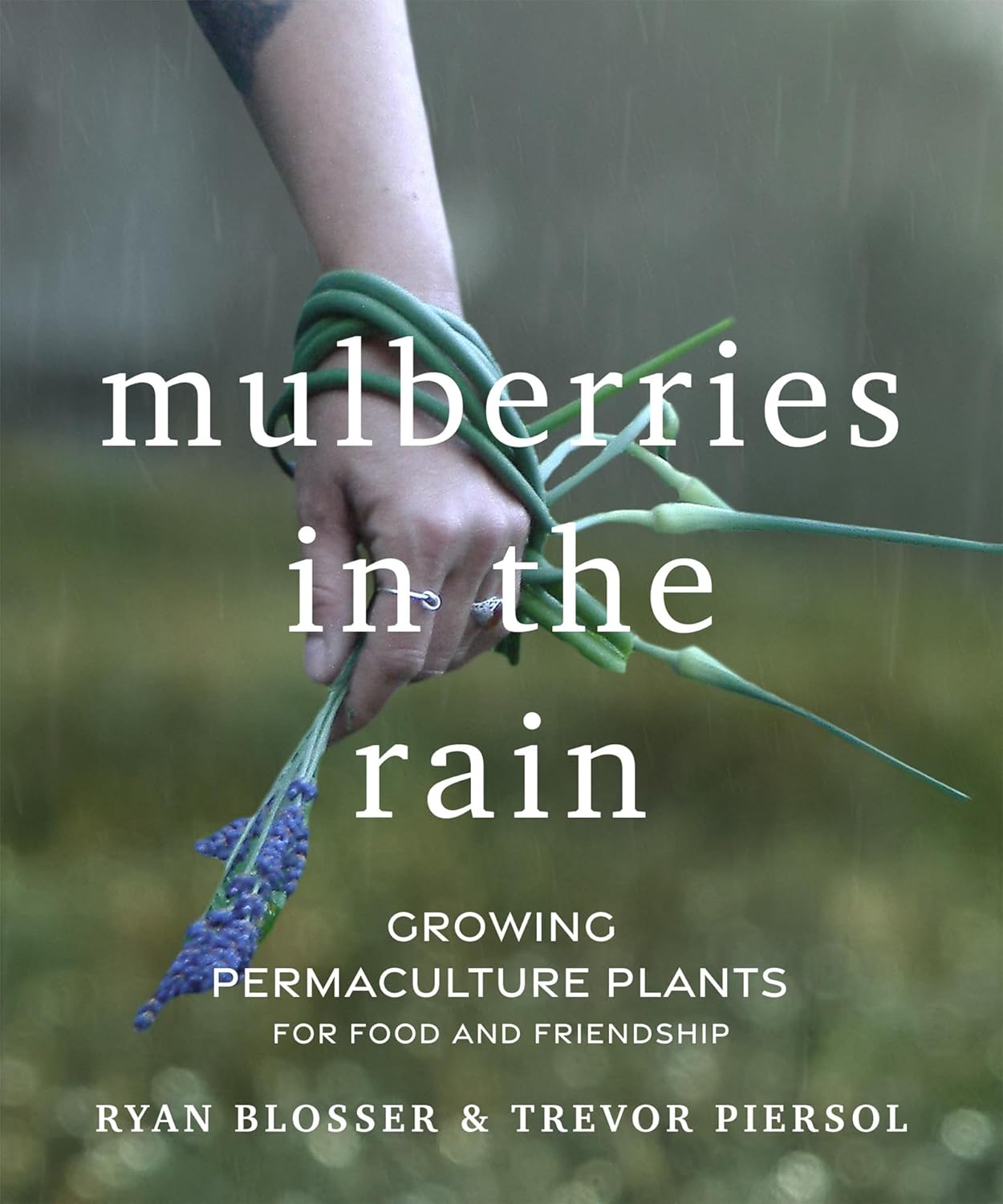
Mulberries in the Rain, is part memoir, part teaching guide, part love letter to plants. It follows two friends, Ryan Blosser and Trevor Piersol, as they build farms, communities, and a shared life of learning through Permaculture. The book blends personal stories with practical frameworks, from the Human Sector to food forests to plant guilds. It paints a picture of people shaped by land and relationships, and it shows how plants become characters in their lives. The authors invite readers to see plants this way, too, and the book moves between narrative, reflection, and guidance on growing dozens of species. It feels like an invitation to slow down and see plants as teachers.
I found myself caught up in the warmth of the storytelling. The tone is friendly. It is confident without trying to sound authoritative. I liked how the writers move between humor and sincerity. One moment, they poke fun at themselves. The next moment, they share something tender about belonging, failure, or learning to listen to land. Their voices feel lived-in and honest, and that drew me in. I also appreciated how deeply human the book is. For a book about plants, it spends a lot of time sitting with the mess and beauty of people, which surprised me in a good way. The Human Sector section especially resonated with me. It made me stop and think about how much our internal stories shape the landscapes we touch.
The loose, talky rhythm of the book has its own charm, and I enjoyed it most when the authors told personal stories. Every time they step into teaching mode, the tone shifts and the pacing slows. That said, the teaching sections still have heart. The reworked Scale of Permanence is thoughtful. The LUV triangle feels like something I could use tomorrow. The 8 Forms of Capital section is full of moments that made me smile, especially the groundhog au vin story. I caught myself nodding at the idea that recipes and jokes and small daily acts can hold entire forms of wealth. The book shines whenever it grounds big ideas in real people doing real work.
I would recommend Mulberries in the Rain to anyone who wants a different way to think about growing things. It is great for new growers who feel overwhelmed and want a gentler entry point or for longtime gardeners who crave a more personal, relational approach. It is also a strong fit for people who work in community spaces or who feel curious about Permaculture but are tired of dry instruction. Blosser and Piersol speak to folks who want stories, feelings, and a sense of connection as much as they want plant lists and guild diagrams.
Pages: 216 | ISBN : 978-1774060032
Easy-To-Use Tactics
Dr. Toad’s Short Book for a Long Memory is a guide that blends humor with practical advice, vivid examples, quirky illustrations, and down-to-earth explanations to show how memory works and how anyone can strengthen it. Why was this an important book for you to write?
Among several reasons, I wanted to be a physician because I receive tremendous satisfaction from helping people with challenges. No longer in clinical practice or teaching, I realized some time ago that everyone—no matter their age—worries about lapses in memory. I knew I could help by offering my simple, easy-to-use tactics.
What is a common misconception you feel people have about memory and learning to improve it?
If you are young, under 40 years old, you worry about looking dumb when you can’t remember someone’s name or phone number. If you are older, you worry about early dementia. A lot of people assume they have a memory problem if they can’t recall everything. Not true! As I describe in my book, forgetting things is common. Good memory does not require brilliance. It only requires a small effort to employ one’s imagination.
Learning to strengthen memory can be overwhelming. What were some ideas that can help readers feel more comfortable with starting this process?
Start with a name you want to memorize. Use your imagination to turn that name into a mental image that is outlandish. If that image makes you laugh, you are on the right track. This may sound silly at first, but it works! Turning one’s wristwatch over and linking it to an item or date is another simple technique.
What is one thing that you hope readers take away from Dr. Toad’s Short Book for a Long Memory?
I hope readers will believe that they truly can improve their memory for things that are important by using the simple, easy-to-understand techniques that anyone can use. They can DO it!
Author Links: GoodReads | LinkedIn | Website | Amazon
Dr. Toad’s Short Book for a Long Memory is the first book in the Dr. Toad series, created to share simple, achievable solutions for the everyday challenges we all face on the path to better health and well-being.



 LITERARY TITAN