Blog Archives
A Shroud Of Sorcery


A Shroud of Sorcery plunges the reader into first-century Romano-British Britain, where the fragile balance between tribal independence and Roman occupation teeters on the edge of war. We follow Alba, a mystic of the Cornovii tribe, and his companions as they navigate mounting Roman incursions, tribal politics, and the unsettling emergence of a cunning and ritualistic killer whose methods suggest dark, supernatural forces at work. Griffiths weaves a tale that shifts between tense skirmishes, eerie encounters, and moments of quiet reflection, building a world steeped in ancient magick, folklore, and the gritty realities of survival in a land caught between cultures.
This book was an immersive experience. Griffiths has a knack for painting landscapes that feel both tangible and ominous, from the shadowy forests of Wyre to the fortified hilltops of tribal strongholds. The opening scenes grip you with breathless pursuit and never quite let go. I found the interplay between historical detail and mystical elements especially engaging. Neither overwhelms the other, and both work in tandem to keep the stakes high. The pacing occasionally lingers in dialogue-heavy sections where tempers flare and egos spar. Still, those moments reveal the personal grudges, fragile alliances, and shifting loyalties that underpin the plot, giving weight to every confrontation.
The characters are the heart of the story, and they’re written with a mix of grit, stubborn pride, and surprising vulnerability. Alba’s blend of mystical insight and pragmatic warrior sense kept me invested, while Argyll’s sardonic humor balanced the darker beats. Even minor characters, like the prickly and insecure Duro or the calculating Roman officers, feel distinct. The antagonist’s presence, both human and possibly otherworldly, hangs over the story like a cold mist, and while not all mysteries are resolved, the sense of dread they bring is palpable. There’s a grounded cruelty here, both in Roman tactics and in the killer’s methods, that makes the moments of trust and camaraderie stand out all the more.
This book will appeal to readers who enjoy historical fiction laced with dark fantasy, as well as anyone drawn to stories where political maneuvering, ancient beliefs, and personal vendettas collide. If you like your battles visceral, your landscapes vivid, and your mysteries threaded with the supernatural, A Shroud of Sorcery is worth your time.
Pages: 324 | ASIN : B0F6KLHYQP

I Was On To Something
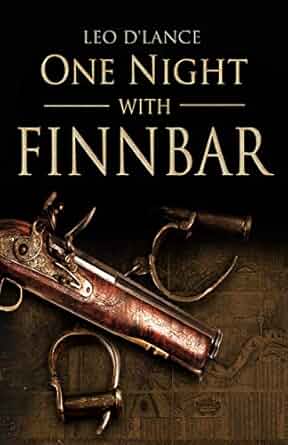
One Night With Finnbar follows a young aristocrat set to join the Royal Fusiliers who develops an unlikely connection with a stable boy, causing the course of his life to shift dramatically as he embarks on an emotional journey of identity. What was the inspiration for the setup of your story?
One Night With Finnbar came to me through the characters themselves. When I agreed to write their story, it was with the understanding that I would recount it honestly — warts and all. I always enjoyed studying history, but knew little to nothing about Georgian England. I relied upon the characters to enlighten me then followed up with my own research.
When I started writing, I had the basic facts of what happened in the 27 days of their time spent together. I was determined to bring their story to life on a canvas that felt both real and relatable. I wanted to anchor the story in actual events, using known historical persons and locations, some of which still exist today in modern-day London. While mining the judicial system and court records of the Old Bailey, I came upon the trial transcript of Elizabeth Brownrigg who murdered a young servant girl, Mary Clifford. As it happened, Brownrigg’s trial and execution (14 September 1767) precisely matched the dates key in my story. I knew then that I was on to something. I can’t count the number of times such coincidences occurred.
It seemed like you took your time in building the characters and the story to great emotional effect. How did you manage the pacing of the story while keeping readers engaged?
I have received critiques from opposite camps on the pacing issue. I believe it has more to do with the preferences of the individual reader than the actual pace itself. Fans of the historical literary genre seem okay with taking the time needed to flesh-out a credible backstory, as long as the pay-off is worth the wait. I never really took pacing that much to heart; instead focusing on crafting a believable world in which the story could flourish.
Martin and Finnbar are in the same city at the same time but are having two completely different life experiences. Boredom and restlessness cause Martin to fall back into the forbidden libertine lifestyle that, if discovered, would bring his downfall. Finnbar, a naïve country boy, struggles every day just to survive in a city that, given half a chance, would happily grind him to pulp. Where their lives do touch, calamity ensues.
What were some themes that were important for you to explore in this book?
Loyalty v betrayal is likely the first theme readers pick up on. Martin demands truth and fealty from Finnbar who has no choice but to comply, then selfishly betrays him.
Martin Atwater is not a likeable character. Born into a world of privilege, he manages to squander his advantage through a life-style of hedonism. He steals from his uncle right under the old man’s nose; racks up gambling debt, then embezzles from the family business, carelessly involving others in a cover-up scheme. He is unwilling to accept responsibility when his plans go awry, instead he blames his troubles on his meddlesome cousin Pierson. Worst of all, when Martin should have manned-up and protected Finnbar by standing up against pure evil, he caves and plays Finnbar as a ‘get out of blackmail free’ card.
This story which took place two-and-a-half centuries ago in the dark and monstrous streets of Georgian London could just as easily have occurred yesterday. Sadly, the innocent are not always protected and are frequently exploited. Finnbar’s low-born status made him a commodity ripe for sacrifice. Fifteen-year-old Irish Catholic boys in 18th century England were, as far as the elites were concerned, a nuisance factor to be dealt with through rigorous application of the 150 laws in the Bloody Code.
But I think there is another, deeper theme here. That being a faith in God that holds our world together when all else fails us. Finnbar’s abiding faith sustained him even in his darkest hours. Martin didn’t have a belief in God, and when he came to the end of his rope, there was no knot to hold on to.
What is the next book that you are working on, and when can your fans expect it to be out?
Currently I am working on a story which immediately follows One Night With Finnbar, but is not a sequel. Constable Bobbie Qualls, a minor character in the first book, works to rehabilitate his reputation for corruption in hopes of becoming a Bow Street Constable. I have also reprised the role of molly house keeper Violet Fennimore, and will be weaving in as much of the city’s colorful ambiance as the plot determines useful. These things take time, but hope to have it done in a year.
Author Links: GoodReads | Amazon
The Immortal Witness


The Immortal Witness is a sweeping and imaginative work that blurs the lines between fiction, philosophy, and historical commentary. Told through the lens of an enigmatic figure named Aamon, an immortal being who has observed every major empire rise and fall, the novel follows his haunting dialogues with a curious historian. From the pyramids of Egypt to the bureaucracies of Rome and beyond, Aamon recounts history not with clinical detachment but with emotional weariness. The book delivers a deep meditation on human nature, power, memory, and the eerie repetition of civilization’s self-destruction. It’s a novel of ideas, framed as a personal confession from someone who’s seen everything.
I found the writing to be rich and poetic but never bloated. Wilcox has a gift for vivid detail and pacing that never stalls, even when he’s unpacking centuries of context. The historical settings felt alive. The pyramids sweating under the sun, the Senate whispering in corners, the roar of the Coliseum crowds, it all pulsed with urgency. What surprised me most was how mournful the tone became as Aamon trudged through time, his immortality not a superpower but a sentence. There’s real beauty in how Wilcox captures that sadness. His prose walks that fine line between weighty but never preachy and intellectual but still emotionally grounded.
Aamon doesn’t just reflect on history; he holds a mirror up to us. His belief that civilizations crumble not from invasion, but from within, due to arrogance, greed, and a loss of humility. The parallels to our current world were impossible to ignore. At times, I felt uncomfortable, even accused, and I think that’s exactly the point. This isn’t a book that lets you off easy. It’s not trying to make history charming or grand, it wants to show you the blood, the rot, the recycled mistakes.
If you’re someone who enjoys historical fiction with a philosophical edge, this book is for you. But it’s not a breezy read. It asks you to think, to feel, and to look inward. It’s perfect for readers who enjoy reflection, who aren’t afraid of slow-burn storytelling, and who crave something that leaves a mark. The Immortal Witness is less a book you read and more a story you absorb.
Pages: 238 | ISBN : 1959624059
Moral Compromise
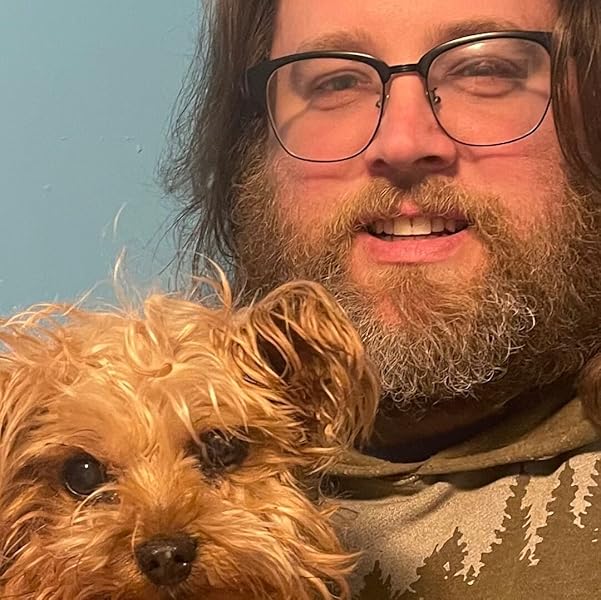
Rhino follows a research scientist who discovers her father has terminal cancer and is entangled with poachers and smugglers, leaving her in a race against time to find a way out for him and a cure. What was the inspiration for the setup of your story?
The inspiration for the setup came from wanting to explore the collision of two very different worlds: the clinical, evidence-based world of modern medicine and the desperate, high-stakes world of the international wildlife trade. I was fascinated by the question of what could push a fundamentally good, logical person to cross a line they never thought they would.
I made Linh a research scientist for a specific reason. Her entire life is governed by data, ethics, and reason. By putting her in a situation where science and medicine seem to be failing the person she loves most—her father, an oncologist, which adds a layer of tragic irony—her foundation is shattered. This is what opens the door for a desperate, irrational choice.
The rhino horn itself is a powerful symbol. It represents this clash between ancient belief and modern conservation, between a daughter’s desperate hope and a global ecological crisis. It’s not just a simple illegal act; it’s a moral labyrinth. For Linh to even consider it, she has to betray her own scientific principles and become entangled with the very darkness that characters like Inspector Le and Nguyen Vu are fighting.
So, the setup—the scientist, the dying oncologist father, and the criminal underworld—was designed to create the ultimate moral pressure cooker. It’s a story born from the question: How far does love compel us to go, and can we find our way back once we’ve
crossed into the dark?
Linh is a woman with strength and determination. What do you think makes her a valuable and worthy heroine?
Thank you, I’m glad her strength and determination come through. For me, what makes Linh a valuable and worthy heroine isn’t that she’s perfect or always makes the right choice, but precisely because she doesn’t.
Her heroism is rooted in something incredibly human and relatable: the fierce, unconditional love for a parent. She isn’t a trained operative or a hardened detective; she’s a scientist thrown into a world she doesn’t understand, armed only with her intelligence and a desperate need to save her father. Her initial strength isn’t about physical power, but about her refusal to accept defeat, even when all logical paths are closed to her. But what truly makes her worthy, in my eyes, is her fallibility. She makes terrible, morally compromising decisions. She lies, she steals, and she gets involved with a ruthless criminal. This is where her real journey begins. A perfect heroine doesn’t have to grow. Linh is forced to confront the darkest parts of herself and the devastating consequences of her choices.
Her true strength isn’t just the determination to save her father at any cost, but the courage to face what she has done and actively work toward redemption. By the end of the novel, when she joins Nguyen Vu’s conservation efforts, she isn’t just running from her past; she’s trying to build a better future, both for herself and for the cause she once harmed.
So, Linh is a heroine for our complex times. She’s not an idealized figure on a pedestal. She’s a real person who gets lost in the dark and has to fight her way back to the light. Her worthiness comes from that struggle—from her capacity for both terrible mistakes
and profound redemption.
What were some themes that were important for you to explore in this book?
That’s a great question, as the themes were really the foundation of the story. There were a few that were very important for me to explore.
First and foremost is the theme of moral compromise born from desperation. I wanted to put a good person, Linh, in an impossible situation. She’s a scientist, someone who believes in logic and ethics, but she’s faced with the absolute, emotional terror of losing her father. The central question I wanted to explore was: How far will love push you past your own moral boundaries? It’s about that slippery slope—how one desperate decision can lead you into a world of darkness you never imagined.
Building on that, another crucial theme is systemic corruption. The antagonist isn’t just the ruthless gangster, Khanh Pham. He’s a symptom of a much larger disease. The corruption infects the hospital through Dr. Duc, it threatens law enforcement, and as we eventually learn with Wong Min, it reaches the highest levels of international power. It was important for me to show that this kind of evil isn’t just the work of a few bad men; it’s a network that thrives in the shadows of our institutions, making it incredibly difficult for individuals like Inspector Le and Nguyen Vu to fight.
Finally, despite all the darkness, a key theme is the possibility of redemption. Linh’s journey doesn’t end when the main conflict is resolved. She has to live with her choices. Her decision to join the conservation efforts is her way of atoning, of trying to heal some of the damage she contributed to. It suggests that even when we make terrible mistakes, the path forward isn’t about erasing the past, but about using our experiences to build a better future. It’s a difficult and painful hope, but it’s hope nonetheless.
What is the next book that you are working on, and when can your fans expect it to be out?
I’m so glad you asked! It’s an incredibly exciting time, and I have a lot of new stories I can’t wait to share with readers across different age groups.
For my younger readers, I’m thrilled to announce that my publisher, Fabled and Bound, is releasing my new Zoo Collection. The first book, Bat Rocket Boogie, which is for ages 6-8, will be out in the very near future. And that’s just the beginning! We’re expanding that universe with two spin-off series starring more anthropomorphic animals. The first is Forest Friends Mysteries for ages 6-9, which we hope to release around September or October of this year. Following that will be Myths & Legends, a historical fiction
series for kids 8 and up.
And for my adult readers, I’m so excited to be working on a historical fiction novel, tentatively titled The Women of Ravensbrück. It’s set to be published in the UK by Legend Press in the spring of 2026, so there is definitely a lot coming down the pipe!
People sometimes ask how I’m able to work on so many different projects. As many of my readers know, I’m a retired ICU RN, and I live with PTSD from my time on the front lines. For me, writing every day isn’t just a job; it’s a form of therapy. It’s been profoundly healing and has become a vital part of my life. It allows me to build new worlds and channel my experiences into stories, and I’m so grateful to be able to share them.
So, all these stories are brought to you by a very busy, very proud, and very left-handed Canadian!”
Author Links: GoodReads | X (Twitter) | Facebook | Website | Amazon
Her search ensnares her in a bloody web of poachers, smugglers, and killers who traffic in extinction. As bodies pile up and evidence vanishes, a relentless inspector and a passionate conservationist close in from opposite sides.
Stalked by shadowy figures and haunted by impossible choices, Linh discovers a terrifying truth: saving her father may cost her soul—or both their lives.
In this high-stakes game where everyone is both hunter and hunted, survival demands crossing lines that can never be uncrossed.
Parental Love and Support

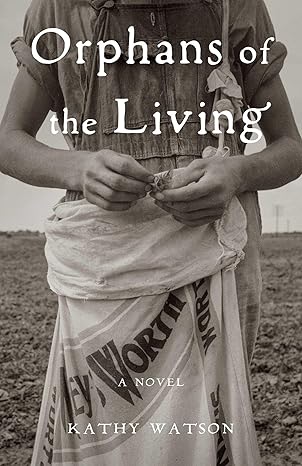
Orphans of the Living tells the story of a family’s complicated history spanning from 1920s Mississippi through decades of poverty and social change. What inspired you to write this novel?
The novel is based on my mother’s own family, of which I knew little. But things in the past have a habit of invading us today, and the more I researched, the more I realized my mother’s lived experiences influenced my life, and my children’s lives, in ways I had not understood. Yes, this is a novel, but the skeleton, the bones of the story, are real. It is a hell of a story, and I wanted to dig deeper into it.
Can you share with us a little about the research that went into putting this book together?
I really had three sources. Here’s how they came into play, for instance, in my grandfather’s sojourn in Mexico. I had the bits and pieces my mother gave to me in her life, between bouts of addiction and mental illness, such as “My father went to Mexico to grow bananas.” I explored the vast trove of information and connection at Ancestry.com and Newspapers.com, such as records of my grandfather’s trip to San Francisco, where he took a steamer to Mexico, and a manifest for a ship that brought him and his bananas to Galveston. And the third piece was how I followed what I learned from Ancestry.com and Newspapers.com. For example, I spent a lot of time learning how bananas were grown and raised in the tropics, and how United Fruit, then one of the largest corporations in the world — owned by men from the American South — employed Jim Crow tactics to control their labor force in Central and South America. Weaving all these sources together was an act of imagination and conjecture, and that’s why it’s a novel, not non-fiction.
What were some themes that were important for you to explore in this book?
So much about this era, and these people felt so current to me: the multi-generational impact of poverty, racism, inequality, sexism; the experiences of people who were at the margins, lacking education, perhaps confused about their gender or sexual orientation, long before there was any general knowledge of these issues; the impact of Western expansion and “manifest destiny” on how average Americans in the west thought about land and success; the importance of parental love and support.
What is the next book that you are working on, and when will it be available?
I have completed a memoir that is in many ways a sequel to Orphans of the Living. She Writes Press will publish it in spring 2027. And I’m way deep into writing a third book, another novel, a near-future political thriller.
Author Links: GoodReads | Threads | Instagram | Facebook | Website | Amazon
In the shadow of the Great Depression and Jim Crow south of the 1930s, an impoverished white family escapes—with the help of Black sharecroppers—from a vengeful Mississippi plantation overseer intent on lynching them. Arriving in California to start a new life, Barney and Lula Stovall are haunted by the past, the children they’ve left behind, and the daughter they cannot love or protect.
Orphans of the Living follows the peripatetic life of the Stovall family, woven from four parallel stories: Barney and Lula Stovall, and two of their nine children, Glen and Nora Mae.
Their California sojourn—from their hardscrabble dairy farm, to the brig at the San Francisco Presidio, to the building of the Golden Gate Bridge—lead them on paths toward each other and forgiveness. But redemption doesn’t come to them all.
Greed and Treachery
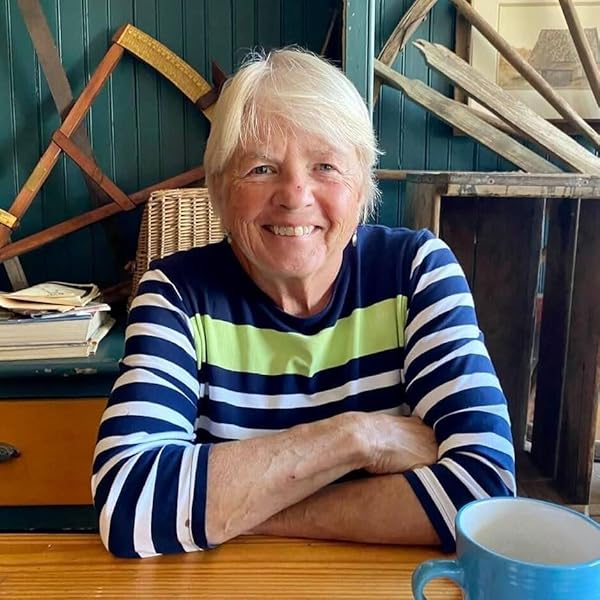
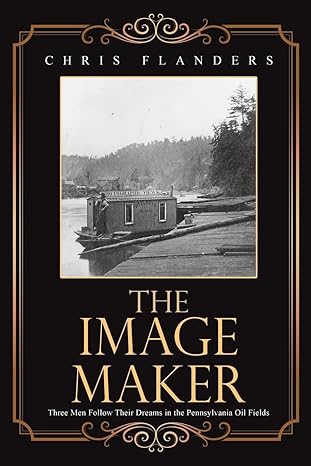
The Image Maker follows three men chasing opportunity, legacy, and identity in the Pennsylvania oil fields during the Civil War era, whose lives intersect during this pivotal time in history. What was the inspiration for the setup of your story?
The inspiration for the setup for the story told in The Image Maker was a conversation with a friend a couple of summers ago. Her family has a rich archive of information about their great-grandfather, who was an integral part of the processing of crude oil shortly after it was first pumped from the ground by Drake in 1859. Before this, oil was a commodity that the Indians used for salves, war paint, and to caulk their canoes. The early settlers found it a nuisance, contaminating their well water and always floating on the shallow oil creek waters.
I met, through the first family, another whose great-grandfather was a roustabout, doing all jobs required to get oil out of the ground. He became an oil scout, a spy for an oil company who hid behind bushes to find out whether the competitor’s well was a gusher or if it was a bust, often in peril of his life. He became the editor of the international oil newspaper, the Oil City Derrick, a resource for all oil people on current production, a breakdown of what was happening and where, and new tools invented on the spot to make oil production easier. Papers, photographs, and family tales from these two sources gave me the impetus to tell their stories. I added a photographer who became as famous, and Brady, who photographed the Civil War atrocities at about this same period. John Mather, glass negative by glass negative, taken in the fields, and often in danger from the gushing oil, documented the complete history of the infancy of the petroleum industry.
What intrigues you about this time period enough to write such an interesting and engaging period piece?
This time is within that of my grandparents and great grandparents, who were all alive when I was growing up, across the PA border from where this happened. Around 1880, oil was being found in the southern half of our county. So much of the background information needed to write about another period didn’t come from books or the internet, but from my 101-year-old father, a historian, who read the chapters, one by one, and helped my accuracy and added the smells and tastes of that time. His sharp mind and his love for history molded my writing career. My other books include the Book of Fretz, a 1750 historical novel on Kindle about one of my relatives coming at great risk to his life to America. I’ve also written a history book called The Bemus Point-Stow Ferry: A History about the early history of the Chautauqua Lake region. This Ferry started as a raft in 1811, crossing the narrows of the lake, and over the years became a barge carrying cars and people across the lake. It was fun showing how the whole history of our region was centered by this small ferry, now in her 114th year of continuous service. I gave the proceeds of the book to the Ferry to help with the maintenance of this aging piece of history.
What were some themes that were important for you to explore in this book?
The themes of this book included the prevailing greed and treachery of the early days of oil coming out of the ground in a very rural farming area, an area where the only export was wood from their hilly farms. The sudden wealth was mind-altering, making some folks very rich while others lost everything. The towns of only several hundred people were suddenly cities full of hotels, barrooms, brothels, and churches. Factories for processing the oil were along the shallow oil creek, while the barrels of oil, carried on barges, could only get to the deep flowing Allegany River by flooding the creek from the oil logging ponds along the way. Railroads were built, and when the independent drillers were at their best, along came Standard Oil and the underhanded buying up of all transportation, processing, and drilling businesses. You joined them, or you were doomed. The story is told from the three main characters and their families and friends. It gives the story an ability to relate to their feelings of hope, of despair, and of the importance of family. All three characters have flaws, but don’t we all?
What is the next book that you’re working on, and when can your fans expect it out?
I am currently writing a story, quite unlike The Image Maker. A friend read it and came to me saying her Great Grandmother was “something else, quite a character.” I was intrigued right away. She provided hours of family stories that I recorded, papers, short pieces written by Lila, and thousands of slides to plow through. Lila was born in 1906 in North Dakota. She got off the farm to live with her older sister in Chicago in 1930, working at Cook County Hospital in the typing pool. She was assistant to the CEO within 2 years. From there, after being jilted by her pilot boyfriend as WWII started, she joined the WACS. She went directly to Italy, where she was an administrative assistant to Patton as he took Italy and marched on to Germany. After the war, she took a job as an administrative assistant to the Army Corps of Engineers in Alaska, where she worked summers, spending her winters in San Diego. There she started going on trips, wherever the vessel went, on trawlers and freighter ships. She eventually circumnavigated the globe several times in her lifetime. She was never married but was seldom alone. What a setup! This should be out late 2027.
Author Links: GoodReads | Facebook | LinkedIn | Amazon
Literary Titan Gold Book Award: Fiction

The Literary Titan Book Award honors books that exhibit exceptional storytelling and creativity. This award celebrates novelists who craft compelling narratives, create memorable characters, and weave stories that captivate readers. The recipients are writers who excel in their ability to blend imagination with literary skill, creating worlds that enchant and narratives that linger long after the final page is turned.
Award Recipients




















Visit the Literary Titan Book Awards page to see award information.



 LITERARY TITAN