Blog Archives
An Incredible, Untold Story

Thomas Edison and the Purgatory Equation tells the story of Edison’s greatest invention and the struggle for the soul of mankind in the dead zone. What was the inspiration for the setup to your story?
One day, I accidentally learned that Edison had tried to create a machine that would communicate with the dead. A lightbulb literally flashed over my head. This forgotten bit of history had the makings of an incredible, untold story. Intrigued, I contacted the Edison estate in Fort Myers, Florida and the docent confirmed that, yes, Edison had attempted to invent just such a machine. I began my research and learned that his ‘attempt’ lasted more than several decades. As I began plotting out a timeline, two items caught my attention. In February of 1918 the United States was preparing to officially enter World War I – and Edison disappeared for the entire month. Once I locked those elements in, all the other details fell into place.
Your characters are interesting and fun to follow. What were some driving ideals behind your character’s development?
In 1918 Edison was 71 and too old to serve as a traditional action hero, so I relied on the formula of the Four B’s for my primary characters: Brains (Edison), Brawn (John Dawkins, his heroic young assistant), Beauty (Emily Auburn, a Ziegfeld Follies showgirl), and Best Friend (the teenaged George Gershwin who is Emily’s musical accompanist.) The mix makes for a lively quartet as each of them brings their perspective and often surprising resources to the quest. Because they’re willing to confront their challenges with valor, each of them finds what they need most: Edison: insight; Gershwin: confidence; Emily: true love; and John: faith.
This seems like a fun book to write. What scene did you have the most fun writing?
The great thing about writing historical fiction is that the history itself often confirms your speculative choices. Writing the novel was a pleasure; the action sequences spoke to the ten-year old boy in me and the contemplative scenes spoke to an emotional truth any writer aspires to. But my favorite scene is the one in which Edison relates an actual event from his youth which I believe was his defining, psychological moment. He had been hired to deliver a telegram to a remote, countryside location in the middle of the stormy night and became lost. He was terrified but forced himself to complete the task, and later comes to realize his entire life has been dedicated to ‘lifting the darkness.’ The night, deafness, ignorance, death–all forms of darkness.
What is the next book that you are working on and when will it be available?
This is a trilogy, so my next book will be the second edition in the series: Thomas Edison and the Lazarus Vessel. It takes place in 1933 and is more fantastic, although still grounded in the backstory of history, with new characters including Groucho Marx, Eleanor Roosevelt and Deputy Fuhrer Rudolph Hess. As for Edison, he died in 1931 but finds a way to come back, via an accidental discovery he makes during his real-life experiments with the untapped potential of rubber. The launch is currently scheduled for November, 2022, and you can visit http://www.edisontrilogy.com for updates.
Author Links: Amazon | GoodReads | Website
A Dramatic Re-interpretation
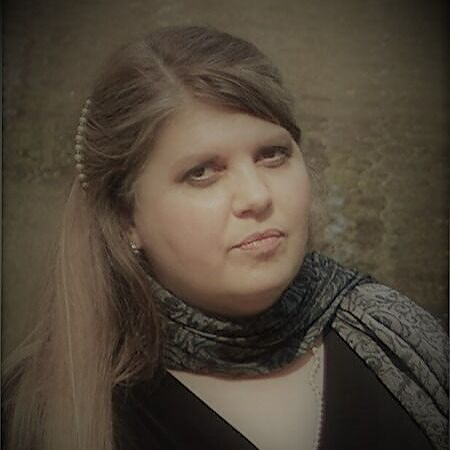
‘Silk: Caroline’s Story’ follows three women as they look for love, for themselves, and navigate the drastically changing culture of the south, some doing whatever it takes to get what they want. What was the inspiration for the setup to your story?
My own family tree! I’ve been obsessed with genealogy since I was a girl, and there are some unclear, unexplained branches that I’m fairly sure I’ll never discover the absolute truth about. Why did Caroline choose to marry whom she did? What happened to her? Many of the main characters are based loosely on real people, but I’ve changed names as it’s so fictionalized. Silk is a dramatic re-interpretation of my own family’s obscured past, in which Jessie was likely not so evil at all.
What were the morals you were trying to capture while creating your characters?
Hmm… I generally shy away from spelling them out, but you seem to have already gathered that my novels are rife with morals, if only because it’s simply how I think. Silk is flat, Lowcountry terrain compared with the mountains that exist of all my soapboxes!
Perhaps the most pervasive moral in the book, however, is one nearly universal for novelists: that it’s important to try to understand where others are coming from, to develop empathy—even for those with bats in their belfry, as Anne would say. That moral is not so much taught as experienced with all the head-hopping—and studies have shown that fiction readers do become more empathetic.
Honesty and fidelity, the value of friendships, the dangers of alcohol and extremism—these are other moral themes in Silk. I’m afraid, however, that many of the moral analogies I personally draw to today’s society are bound to be missed by readers. For instance, readers sometimes express their disdain for brothels and their understandable relief that brothels aren’t still widespread in America today. Rampant pornography is, however, now far more available than brothels ever were, is damaging to psyches and relationships, and objectifies people entirely.
Gracious, for all that I was hesitant to jump on an invitational soapbox, I’ve gotten started now! Countless moral ideas guided my writing of The Silk Trilogy—even if they barely brush the surface and are hardly mentioned. For example, broad-brimmed hats and parasols protect from the sun, which my characters do actively consider; this might not sound like a moral issue and certainly isn’t presented as such in the novel but, in fact, folks do need to protect themselves from skin cancer—I’ve personally had melanoma—yet most sunscreens are endocrine disruptors, even carcinogens themselves, while also damaging coral reefs. So as you can see, I can only relate a fraction of what’s relevant, just hoping to plant little seeds.
Other moral elements are briefly shared when Dr. Connor goes on about his dilemmas in practicing medicine—how to choose the safest, most effective therapies; being aware of the marketing ploys of pharmaceutical companies; issues with not being able to follow up with patients, etc.
One of my most heartfelt morals was difficult to flesh out satisfactorily, so to speak. I’m a vegetarian, quite against factory farming, so the meals feature casseroles, biscuits, cobblers, butterbeans, collard greens, pickles, etc. Reluctantly, I also include dishes like turtle soup and crabcakes, hoping to muster a traditional Southern table while not sending people salivating to their kitchens, inspired to throw on a pan of fried chicken. Jessie does eat barbeque in the first chapter, however, which helps set a Southern tone. Sigh… I tried, but I doubt that Silk helped my animal-rights mission one iota, except maybe through Caroline’s love for Julep.
I will say, however, that an overarching purpose/moral of the novel was to conjure up a fairly authentic Southern historic setting to help readers relate to Southerners a bit more. I’m thoroughly convinced that Southerners are one of the most maligned groups these days—so often parodied as ignorant, selfish, racist, bigoted, etc. Frankly, it’s now trendy to disparage Southerners, so I’m doing what I can with The Silk Trilogy to balk against that ugly bias.
What were some themes that were important for you to explore in this book?
One theme is dealing with women’s issues—how to exist as a woman in society, the joys and difficulties of motherhood and/or of having a career, clarifying and validating how difficult our choices can sometimes be.
Another theme is how extreme thoughts, fixations, and desperation can distort facts and lead to unspeakable acts, acts that perpetrators justify and too often entirely get away with.
What is the next book that you are working on and when will it be available?
Homespun, the last installment of the Silk Trilogy, is due to come out next St. Patrick’s Day, March 17th, 2023. It centers on Caroline’s granddaughter, Ginny. Jessie’s still as deadly as ever, but her energies are channeled in a surprising new direction.
Author Links: GoodReads | Twitter | Facebook | Website
It’s 1899, and Caroline Corbett is ready for the twentieth century. She’s excited to find work and meet new people—but gets more than expected when a rough-hewn Lowcountry farmer and a small-town doctor both engage her affections.
The broad-shouldered, genial farmer is clear about his desires, and he’s there for her. The doctor is sophisticated, educated, and obviously the right choice—but sees no reason to dwell on certain realities.
In trying to decide between them, Caroline fails to consider the girl Jessie. A young sociopath bent on her own way, Jessie Bell sees very good reasons to dredge up unpleasant realities—and to create new ones. Before long, this South Carolina landscape is riddled with the detritus of her intense jealousies, which have set astonishing and horrifying events into motion.
A Tribute To The Finnish Generations

Raspberry Red follows a young girl as her family flies from a war-torn country and eventually makes it back home to start over again. What was the inspiration for to your story?
The subject of this book has matured in my mind since I was a small child. As the 100th anniversary of the independence of Finland approached, it seemed to be just the right time to write “Raspberry Red”, as it is inspired by drastic periods in the history of our country.
At the same time, the book can be fitted equally well for any country, at any time. The topics are sadly current even today. Recent news proves it painfully. I still remember my conversation with the Greek illustrator Georgia Stylou about the book. After reading the script, she felt connected to the story through the developments in her own country throughout the years.
“Raspberry Red” is also a tribute to the Finnish generations before me. Over the years, I have listened to the personal experiences of many people about the war, leaving home, and adaptation to demanding situations. There have been threats, danger, escaping in haste, and joys and sorrows experienced and shared.
In addition, as a child, I lived in Eastern Finland in an area where a lot of evacuees from Karelia had been placed. Families no longer had a home and familiar regions to return to after the war.
I will never forget the stories of these people. They were telling about everything they had experienced or what they had to leave behind them. The tears were plentiful, and the songs were full of longing. The hospitality was present, although there was little to offer. The new life gradually began.
Aino is a strong young girl that stays strong for her family during these difficult times. What were some driving ideals behind your character’s development?
The book includes some of my mother’s experiences with her father going to war and how she waited for him to return. As a child, my mother-in-law also had challenges keeping the family village shop running together with her mother during the war. The most dramatic moment of Aino in the story is encountering the foreign soldier. That had taken place in real life for a deceased lady when she was young. Her perseverance and survival after the war showed great courage and determination.
Aino, the girl in my story, had to face highly demanding situations at a young age. Everything in her life changed in a short time. I wanted to highlight the child’s vulnerability and sensitivity, but simultaneously her ability to adapt to the inevitable. Aino doesn’t lose hope of getting father back home.
Fortunately, she gets to talk about father with other people close to her. She shares her feelings and expectations with her friends, mother, and grandparents – except for one event; meeting the enemy soldier face to face. It was such an overwhelming experience that only the father’s return frees her to reveal what happened. She feels safe and confident going through the situation only with her own father. He has been a soldier, too, and can understand the event’s significance for all parties.
What were some themes that were important for you to explore in this book?
I find it extremely important to pass on the experiences of previous generations to younger people. We must try to learn something from what has happened in the past. Maybe this would prevent the same mistakes from happening again.
The themes of war and peace are, in my view, among the most important stories of all – though telling them requires a sensitive mind and a skilled hand.
In the twists and turns of this story, we encounter people of all ages whose lives have been shaken utterly. I want to encourage the reader to believe that even during difficulties, good things happen, too. People help each other, and also, in the most challenging situations, it is possible to choose a humane option.
Stories that connect real experiences and increase empathy are valuable. They help us better understand people in different situations.
What is one thing that you hope readers take away from Raspberry Red?
Before I can answer this question, here are a few words about my general motivations for writing several children’s books about conflicts and wars. As an author, I find it necessary that my audience is left with hope even after reading such books.
I want to consider the needs of children as a target group carefully. Their ability to understand is essential for how the story is told, and their feelings must be respected and protected. They need wise guidance in meeting the most significant challenges of their lives.
We often say in Finland: As long as there is life, there is hope. The English saying “hope is eternal” means roughly the same thing. I find this thought very encouraging. The idea of keeping up hope to the very last moment is important. However, I want to attach another thing to it, overall respect for life. This attitude means a humane approach to other people’s lives, too, not just our own.
I want to believe that we can cherish humanity, even if life is challenging at times. I find it especially beautiful if a person respects the life of others, even if their own is under threat. It is probably the greatest gift you can give to another.
The foreign soldier in the “Raspberry Red” carried this warmth with him. He used the humanity of his heart in a most stressful situation and chose to save the life of the child of the enemy country, as his highest priority.
This message of love and respect is necessary for all ages, in all countries. I write about it in all my books, not just “Raspberry Red,” and plan to do it as long as possible.
Author Links: Facebook | Website
Late one autumn, Aino’s father sets off on the road with the other village men. Little Aino doesn’t quite understand why. During the cold winter days, scary noises start to echo from the nearby forest.
The family is forced to leave their home, their own village shop, and Aino’s playhouse. They leave for the train station in such a hurry that Aino can hardly keep up with the others.
Near the playhouse, the eyes of the child and a foreign soldier meet. When Aino escapes, her rag doll’s raspberry red apron is left behind in the snow.

The Product Of My Warped Mind

You Have The Right To Remain Silent follows a high-profile lawyer as he takes on a brutal murder case involving a congressman that challenges him on all fronts. What was the inspiration for the setup to your story?
I am usually inspired by an event in the news or cases I handled in my practice. You Have The Right to Remain Silent is the exception. The inspiration for the novel was a short article I read about a man who fell into a coma and could not participate in his own defense. I wondered (and then researched) how the legal system typically handled this unusual event. The result of my research (and novelist’s license) is You Have The Right to Remain Silent.
When you first sat down to write this story, did you know where you were going, or did the twists come as you were writing?
No, I had no idea. I hadn’t written a novel like this before. The closest example to this, in my portfolio, was my 3rd Zachary Blake legal thriller, Betrayal in Blue, which was not “ripped from the headlines” like the others. However, it was a follow-up to my 2nd novel, Betrayal of Justice, which was. In Silent, I wanted to introduce the concept of jury consulting, with the expert assistance of my good friend, Shari Belitz (a central character in the book), a real person and a great sport. She loves and approves her fictional self. I also knew the book would be a “whodunnit.” The rest, as I began to peck at my computer keys, was the product of my warped mind.
What kind of research did you do for this novel to ensure you captured the essence of the story’s theme?
For you aspiring novelists out there, my research consists of information available in a routine Internet search. As a lawyer, I might know legal concepts and specific laws that you don’t know, or use search terms or articles and materials that you might not be familiar with, but all of this information is available online. As a person who is old enough to remember “legal research” before computers and the Internet, I am constantly amazed on how technology has changed research. And, of course, this is a novel, not a court filing—if I fudge a bit, I enjoy, as I stated earlier, a novelist’s license.
What is the next book that you are working on and when will it be available?
As you may or may not know, I took a short detour from my adult legal thrillers. I just released my cookbook, The Blake-Lewin Family Cookbook of Traditional Jewish Recipes: L’Dor V’Dor—From Generation to Generation II and my first children’s social justice picture book: Happy Jack, Sad Jack: A Bullying Story. The next book, if I can ‘kidnap’ my wonderful illustrator, Melinda T. Falgaust, will be the 2nd book in the Children’s Social Justice/Safety Series, probably late Fall, early Winter. Stay tuned!
Author Links: GoodReads | Twitter | Facebook | Website | LinkedIn
Conservative talk-show host Mia Folger is in therapy with Dr. Harold Rothenberg. Mia and her husband, progressive Congressman Bradley Crawford, are not getting along these days, personally or politically.
When Crawford is found brutally dismembered and murdered, the evidence points to Mia as his killer. While the prosecutor pushes for a murder indictment, Dr. Rothenberg, convinced of his patient’s innocence, turns to an old friend—high profile attorney Zachary Blake, Detroit’s self-proclaimed ‘King of Justice.’
Blake will do anything for Rothenberg, the man who successfully treated his kids in their battle with a predator priest. Zack takes Mia’s case, but has his work cut out for him because Mia has been hospitalized, shocked into a catatonic state at the discovery of her husband’s mutilated body, unable to assist in her own defense.
Sensing he must prove Mia’s innocence to avoid an eventual life sentence, Zack enlists the aid of his crack investigator, Micah Love, and Micah’s cyber-specialist, Reed Spencer to dissect and poke holes in the case. But, for this case, Micah in convinced that Zack needs more—he recommends beautiful, sharp, brash, foul-mouthed, cocky-confident New York based jury consultant extraordinaire Shari Belitz and her team of mock trial/focus group gurus.
Shari is the best of the best. Her assignment in the Folger case? Flyspeck the evidence and unleash her arsenal of psychological techniques and predictive skills—use focus groups or mock juries to determine what evidence or circumstances would cause the real jury to declare Mia Folger innocent of all charges. Zack wants no part of Shari; one cocky lawyer-Zachary Blake-should be sufficient to prove Mia’s case. Blake knows what he needs for an acquittal; a brash jury consultant from NYC will only get in his way. But Micah persists and persuades Zack him to give Shari and her team a try.
Zack, Micah, Reed, and the irrepressible Ms. Belitz join forces in an all-out attack on the evidence, while evil characters lurk in the background, engaged in a sinister plot to assure Mia’s demise.
Expect the unexpected in this whodunit legal crime thriller, the 8th installment of the Zachary Blake Legal Thriller Series, featuring all your favorite series characters and one brash, exciting newcomer who gives Blake all he can handle.
Wandering In A Darkening Forest
The Tree House Night is a beautiful picture book with an inspirational message about friendship and supporting those you care for. What was the inspiration for the setup to your story?
As a child, I was eager to climb trees and build huts. “The Tree House Night” has undoubtedly been inspired by my own experiences sitting on the branches of trees by the house or further afield in the forests of Eastern Finland.
Admittedly, wandering in a darkening forest or climbing higher and higher in a tree sometimes felt too exciting – but survival boosted self-confidence. It was physically challenging, but the most important thing was the close connection with nature.
Most of my childhood adventures I did alone. It seemed most natural because I could make all the decisions when hiking alone. I wouldn’t be my current self without these adventures in nature. The hideaways in the middle of the forest, or high up in a tree, made me realize that I am enough and able to survive alone.
Now, as an adult, I realize what risks my childhood outings involved. Fortunately, nothing happened, and I could also gather authentic experiences for my children’s books! My books don’t recommend just one model for the families, but somewhat alternative ideas, because each family is different.
The individuals are of a great variety when it comes to skills, needs, and interests. Some children need a lot of encouragement. Some need to be protected from their wildest ideas! It’s not easy being a wise parent to support your child in the best possible way.
Childhood adventures have made me the person I am. The same curious child looks at me from the mirror, still ready to try something new and challenging!
What were some driving ideals behind your character’s in this story?
Friendships are essential for children. Experimenting together and sharing ideas and plans with peers is inspiring. Friends can also get support and security from each other as they try their limits.
For this book, I wanted to choose two children of different natures who also have much in common. The other one has more courage and optimism in her adventurous plans. She gets even her more cautious friend to participate in building her dream, a tree house.
It also brings the friends in the book to the limit where their perceptions of appropriate and permissible differ. Due to disagreement, only the braver child stays in the tree house for the night. She stubbornly wants to prove that she is independent and capable of surviving the night alone.
The children in the book are different but still need each other. Despite their controversy, they work together as a team. The friend keeping guard from her bedroom window adds a sense of security for the other child staying outside in the tree house. Testing their friendship in a conflict teaches the two an important lesson and reveals something essential about being a true friend.
What were some themes that were important for you to explore in this book?
The child must be able to make friends with different children. If they have been practicing cooperation since childhood, it helps them for a lifetime. In the end, real-life communities have a place for very different individuals. At least they should have. I like to emphasize how much various personalities, opinions, and skills enrich our lives.
I don’t think only similar kids play best with each other. The differences can also complement each other.
The enthusiastic and brave ones draw the more precautious ones into exciting activities. But a more careful and considerate person can prevent worse damage from occurring when a friend has too much momentum.
It is helpful for strong-willed and creative children to learn to accept that not everyone is enthusiastic about the same things. We have to respect the limits set by another person. For the stronger, louder, and faster persons, it is easy to – accidentally or on purpose – step on the toes of others and block their opinions.
Those who feel somehow superior should realize their individual weaknesses and the fact that they need the help of others, too. There is no weakness or shame in needing other people.
“The Tree House Night” belongs to the I DID IT series. A central theme in all these books is children’s enthusiasm and desire to implement their ideas even when others are not encouraging them. Sometimes children act on the gray zone of what is allowed and forbidden and test their limits. – Why not try to climb a little higher this time! The view might be fantastic.
What can readers expect in book three of the I DID IT series?
In the first book of the series, a child secretly grew her own sunflowers – from seedlings to heights. She even helped them survive the storm at night. The heroic act of this second book is building a treehouse and spending the night up there, against even the opinion of the closest friend.
The next book, “A Special Sweater,” talks about the protagonist who shows creativity and determination in knitting a woolen sweater. He’s not bothered too much, though his mother gives nothing but yarn leftovers. No one thinks he’s getting anything done, as this is his first large knitting – but he struggles to the end. Even the somewhat weird-looking result makes others suspect whether it’s suitable for school. Of course, it is!
So, my readers can expect some fun surprises again in the company of their active peers. And their parents get something to think about in their role as encouragers and supporters.
Author Links: Facebook | Website
It will be fun for the friends to build a tree house from some old boards and ropes. But how safe is it to sleep there at night—especially without permission to do so?
It Also Requires Great Honesty
Axel Washes the Rug follows a little boy that tries to hide his mistake and fix things himself, only to make things worse. What was the inspiration for your story?
This book about little Axel is part of a series where he invents this and that, mostly with her friend Ava. I like to write about initiatives where children’s willingness to experiment sometimes exceeds their skills and ability to handle different situations. It’s good to see that one can survive difficulties and understand that help is often needed and available.
This book focuses on Axel’s visit to Grandma and the problems caused by blueberries. Sounds harmless, but difficulties tend to pile up – especially if you start covering up mistakes. This series is for parents, too, because children learn to be independent and adventurous within reasonable limits with wise guidance.
Every adult is sure to remember similar events from their childhood. I’d like to share a memory from my early years. This case of mine also involves danger. I was five years old when my sister was baptized, and we had relatives visiting. Everyone enjoyed the coffee and cakes inside the house. But I slipped into a liter with wood to be sawn. I was very interested in trying a sharp tool, but it was more complicated than I thought. The result was a wound on my wrist. Luckily it was just on the surface but very sore! I didn’t dare tell anyone about the incident. I was ashamed, as I had taken a risk in secret and harmed myself.
Now, I wish I had talked to adults instead of keeping quiet. That alternative should always be open – even when the children feel they have been disobedient.
Do you think children’s books should have a message or lesson, or is it ok just to write something fun?
I appreciate the diversity of children’s literature. There is a need for very different books because, after all, children and their families have their particular needs and situations.
In my opinion, children’s literature is like nature, which I love. It should have a place for all possible creatures – big and small, tame and wild. For every kind of flower, berry, and tree. And it can adapt to all types of weather and all seasons.
The authors should have the opportunity to express what is important and natural to them. If the author has something serious or educational to say, perhaps that is the scene to focus on. If some writers are funny storytellers and like to make jokes and play with words, their pens will surely bring joy to many. In this way, the stores and libraries are filled with the best possible books, and readers have a lot to choose from.
I often choose even very challenging topics for my books – subjects that others rather avoid. I trust that I have something special to give on that side through my own life experience. Of course, I also write in a lighter style sometimes – about parenting, for example. But even then, there are relevant things between the lines.
What, to you, are the most important elements of good writing?
I want to emphasize the responsibility of the author in writing a manuscript. It also requires great honesty.
Good writing starts with a genuine desire to give something to your readers. The author must have something unique to offer. It may be a meaningful topic, verbally skillful or fun text, or something to boost the readers’ thinking or encourage them.
In addition, the author must seriously aim to ensure that the message is delivered as professionally as possible. No sloppy solutions or stories just for commercial purposes are acceptable. Children are morally a valuable target group, and they deserve the best building blocks for their lives.
How do you process and deal with negative book reviews?
To be honest, I am not such a well-known author that my works would be reviewed too often. I welcome all the feedback if sincere and profound enough. One always hopes that the critic has really read the book with an open mind and without prejudice.
Of course, I read each review very carefully. You must always be ready to develop your work. Not even a negative review hurts when I know I have given my best and try to get even better next time.
If you feel that you have been misunderstood or mistreated, it is always possible to kindly contact the reviewer. Few of us do so because that act would easily be interpreted as a mere sore mind and low self-esteem. Many years back, I got such a critic concerning my way of working as an independent publisher that I was annoyed. The writer of the critic had no understanding at all of how my small, independent publishing house worked and what was possible or not then. I felt offended but decided to prove my point by continuing my chosen path with good results!
Fortunately, the reviews I have got so far have been very encouraging.
One of the first book reviews that I still remember particularly well came from one respected literature professional. This critic said that my “Between the Walls” is a wise book. She had perfectly analyzed and understood my aims. I’ve been keeping this review in my mind as a driving force to write more.
I talked earlier about authors’ responsibility. The critics have a significant obligation, too, and they should never misuse their power. Professional and constructive evaluations are essential for the whole book business.
Just one last remark; the best evaluation of my books comes from the eyes of the children who are listening to my stories. I simply love the moments when I can witness the sparkle and interest there.
Author Links: Facebook | Website
The Fabric of Our Lives
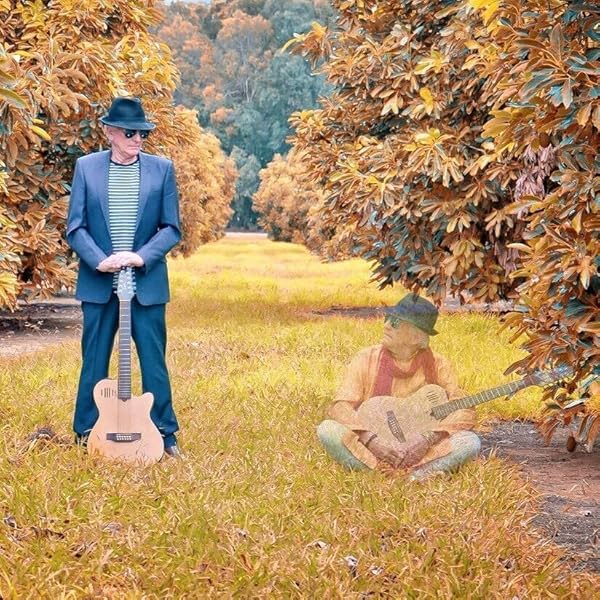
105 Steps is a memoir of not just the time your wife was in the hospital, but of your journey together in life, with all the ups and downs it took you on. Why was this an important book for you to write?
It’s often said that just before you die, your whole life flashes before your eyes. With my wife on life support in ICU, I knew regardless of the outcome, my life would also never be the same. As a songwriter, words and tunes have always been my chosen outlet, however sitting bedside and faced with losing my wife, I felt compelled to remember and relate every moment we shared together. The recollections, dates and experiences constituting the fabric of our lives together seemed to write themselves and, at times, I felt like it wasn’t me actually writing, I just painted the picture, immersed in and reliving each moment of our 51 year relationship. The journey we were on was too big for a song so 105 Steps was born and written in 6 weeks (on my iPhone), because I couldn’t bear to lose one single valuable memory.
I appreciated the candid nature with which you told your story. What was the hardest thing for you to write about?
I tried to be as honest as I could. My fear and vulnerability was exposed in the front pages when I wrote;
“Imagine yourself standing before a wide, deep, dark river. It’s night time but, for some unknown reason, you know you must cross the river. You are alone and afraid. A large, white stepping stone slowly rises from the deep and you step out. It’s firm and solid. Another white stepping stone appears in front of you. It too, is firm and solid. You take it. Then another, and another and another. The river is wide but your path is now long. You turn around to see how far you’ve come. There are no stones. There is only one stone, the one you are standing on”.
Readers familiar with ICU and long hospital stays will understand the metaphor of the river and the stones. After my fear had been exposed and, with nothing to hide, the words flowed freely. That one paragraph (above), was difficult to write, but established the parameters for the rest of the book. Emotionally, the time of most anguish and mental trauma was when we were, as a family, called into a meeting with Doctors, expecting we would have to make a decision on whether my wife might live or die.
What is one piece of advice someone gave you that changed your life?
“Never lose your childhood innocence”
… always a font for bravado and courage, often a call to not be afraid to “step up to the plate”. Told to me by Carlos Santana, but (loosely) a famous quote by Federico Fellini
After knocking on various doors (no particular person but thru books, meditation) … I came to understand that Space, Time, Energy and Matter are all manifestations of the same thing. This realisation freed my mind and opened up a lifetime source of creative positive energy and thinking. I could believe in and mould my own future.
What do you hope is one thing readers take away from your story?
There is always hope, and Love is the solution. We only have control over our own thoughts but, with that, comes great power. Power to only hold positive thoughts, positive images, positive outcomes. Power to refuse to entertain negativity. The human brain will manifest whatever is held within it and doesn’t differentiate between good and bad. No matter the adversity, readers can create their own future, readers can mould and manifest their outcomes. No matter how bad things appear, a positive outcome can always be had if readers nurture their thoughts in a sea of love and have faith.
Author Links: Amazon | Website
Steve sits bedside with his wife Glen, as she lies unconscious fighting for her life. Forced to face the prospect of a future without her at his side, he recalls their entire lives together, from the moment they met. In remarkable colour and detail, Steve cleverly intertwines a memoir and their 51 year relationship with the tension of real time hospital drama as it unfolds.
Beginning in the 1970’s, the story follows a young, long haired, guitar playing dreamer on a spontaneous and eclectic backpacking journey through Africa, the UK, Europe, Australia, Hawaii, mainland US, Canada and Mexico in a coming of age. Steve finds first himself, then faith and positivity, belief and, finally the love of his life and their place together in the Universe.
Besides telling a story of how love unfolds, 105 Steps reveals how life really is what happens to us when we are busy planning other things. Steve’s desperation as he diarises the events surrounding his wife’s condition is palpable but, through all of this, 105 Steps leaves an indelible feeling of positivity. It’s a tense but heartwarming tale of how adversity can galvanise an entire family to find love, strength and courage.
A seemingly ordinary life becomes a remarkable journey when juxtaposed against the tension of ICU and illustrates how life can be joyful … if you want it to be.
105 Steps will show you how the power of positive thinking and prayer really can make a difference.



 LITERARY TITAN