Blog Archives

Olympus or Oblivion

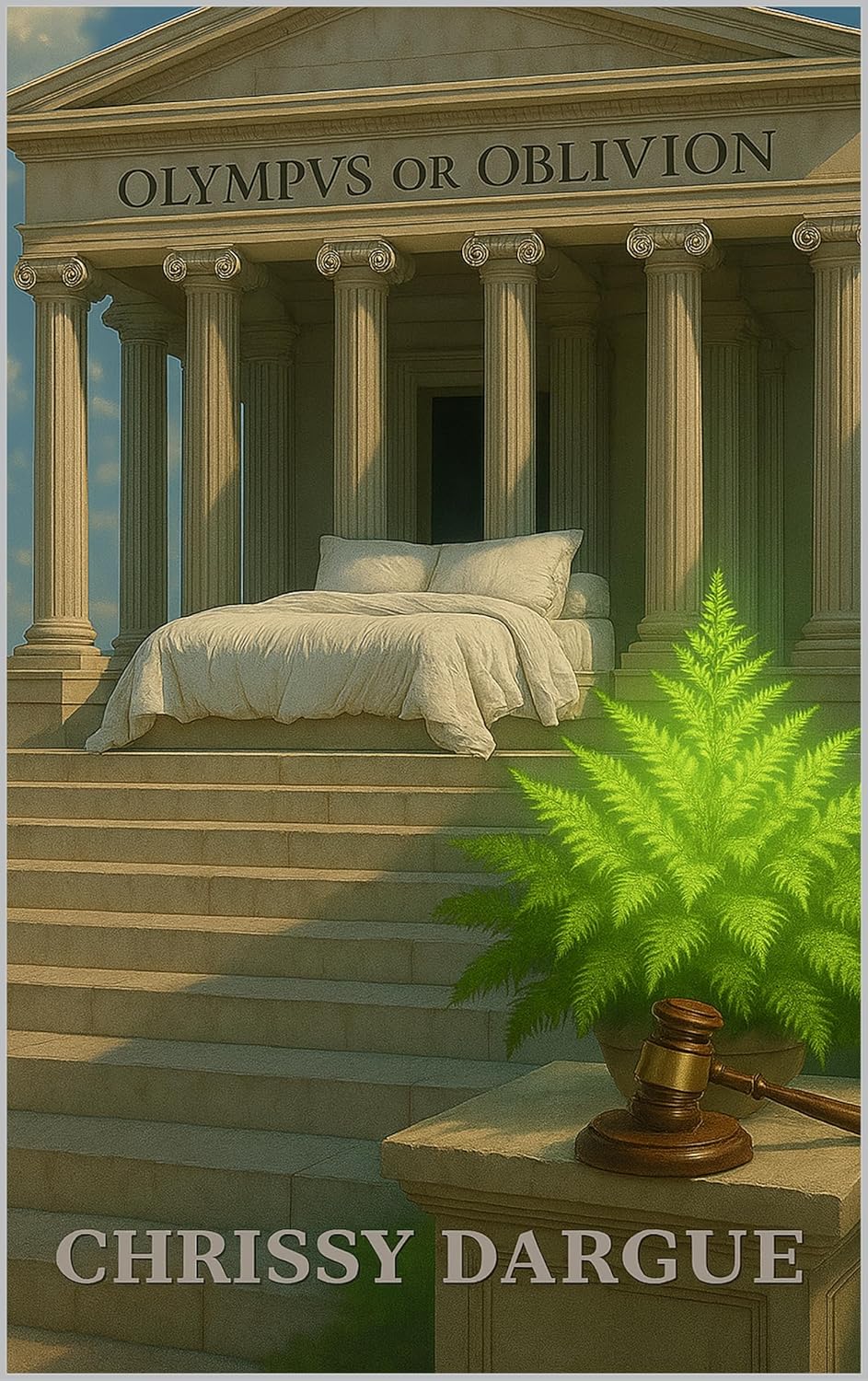
Reading Chrissy Dargue’s Olympus or Oblivion feels like being dropped into a wild, bawdy, self-aware pantheon where celebrity fantasy, personal philosophy, and unapologetic filth collide in the most chaotic way possible. The book introduces itself as an erotic satirical anthology, then immediately proves it can deliver on all three fronts. Each chapter follows a fictional sexual encounter with a different Hollywood icon, framed as both myth and judgment, and the voice that guides it is loud, human, furious, sentimental, and very funny. It moves fast, plays hard, and somehow manages to build a whole moral framework while describing sexually explicit escapades. The tone is intimate and irreverent and completely in control of its own madness.

As I read, I kept feeling a blend of admiration and “what the hell just happened” amazement. The writing is quick, chatty, and sharply observant. It has that feeling of sitting with a friend who tells a story so confidently that you follow, even when it plunges off a cliff into a disaster of sex toys, tree frog cigarettes, emotional vulnerability, or misplaced anatomy lessons. I loved the honesty here. The narrator is flawed and hilarious and often furious at the world, yet there is so much heart behind the jokes. The Henry Cavill chapter swings between worship, frustration, and affection with an almost musical rhythm. Depp’s chapter, on the other hand, crashes into surreal farce, tenderness, and genuine madness, and the contrast really shows off what the author can do. I laughed a lot. I winced a lot. More than once, I was slightly horrified, then impressed by how quickly the story made that horror feel warm. There is something bold about how the book refuses to hide the narrator’s desires or insecurities. It made the comedy sharper and the emotional punches landed harder.

What surprised me most was the philosophical streak running under the chaos. For all the sex and satire, the book is also a meditation on power, desire, loneliness, and the strange ways we try to judge the people we want. The Olympian framing is funny but also revealing. Every encounter becomes a test, not for the celebrity but for the narrator’s own values, boundaries, and hunger for connection. Even the absurd moments, like fainting from frog toxins or sketching a diagram of a vulva to keep a confused man on track, carry a sort of emotional grit. The narrator wants to understand people. She wants to be understood in return. I found myself weirdly moved between the jokes. Sometimes the writing gets messy on purpose. Sometimes it hits a poetic rhythm that blindsided me. The mix works because the voice stays genuine.

I’d recommend Olympus or Oblivion to readers who enjoy sharp humour, chaotic storytelling, sex-positive honesty, and big, unstoppable personality. If you like fearless writing, emotional whiplash, and stories that show both the ridiculous and the tender parts of being human, this book will hit the spot. It’s funny and vivid and unexpectedly sincere, and it left me feeling like I had just witnessed someone telling the truth in the most unhinged and heartfelt way possible.

Pages: 401 | ASIN ‏ : ‎ B0FLQL7VHN

Buy Now From Amazon

The Manglers of Carraig

The Manglers of Carraig drops readers straight into a city split by wealth, fear, and the eerie green glow of warding gems. It follows Conell Byrne, a boy fighting to keep his family alive in a world where monsters stalk the night and the rich hoard their safety behind iron fences. His desperate attempts to protect his sister and his mother collide with the power games of men like Garban the loan shark, and the story pulls that thread tighter as the dangers grow. Alongside this grim struggle is Riona, a jeweler whose bold designs using mangler claws spark outrage among the elite. Their stories move on separate tracks at first, one soaked in survival and the other in ambition, yet both expose the city’s deep fractures and the unseen costs of living in Carraig.

I found the writing fast and punchy. Scenes land quickly and hard. I especially liked how the book lets moments breathe right before everything goes sideways. Conell racing through dark streets with only gemlight to save him had me clenching my jaw. The author leans into sensory details that linger and refuses to clean things up for comfort. I felt the grit of the lower districts and the cold shine of North Hill. I felt Conell’s panic when he returned home and found the door broken open and the ominous quiet inside. The emotional hits come simply and directly, which makes them incredibly impactful.

The worldbuilding grabbed me, too. I appreciated how the author mixes small human choices with the big looming terror of the manglers. It all feels grounded even when the story dips into the grotesque. Riona’s chapters were a surprise. They twist into subtle power struggles and hidden desire. Her jewelry made of claws could have been a cheap gimmick, but it ends up saying something about the people of Carraig and what they choose to look away from. I enjoyed how these two storylines sit far apart but rhyme in the way everyone is just trying to survive something, even if the monsters look different.

By the end, I felt a strange mix of sadness and curiosity about where the story might go next. I would recommend The Manglers of Carraig to readers who enjoy dark fantasy with heart, quick pacing, and a world that feels alive even in its ugliness. If you like stories about people pushed to the edge and forced to make impossible choices, this one will stick with you.

Pages: 188 | ASIN ‏ : ‎ B0FX3WVJ1C

Buy Now From Amazon

Life, Love, and Happiness

Jane H. Wood Author Interview

Stikki the Squirrel follows a young grey squirrel who tumbles his way through one adventure after another and, along the way, makes some new friends. What was the inspiration for the setup of your story?

Some ideas for a book can come quite quickly, while at other times it can be a hard slog even to get going. But it was on this one rather memorable occasion, when I was standing beside my window gazing into our back garden, that I saw a family of squirrels climb tentatively over the wooden fence. A moment later, they were on the ground, moving slowly across our lawn, pausing to sniff and dig randomly in the grass. I watched their playful interactions quickly turn into a full-blown display of speed and agility as the youngsters abandoned the protection of their mother’s side to dart among our shrubs and trees with growing confidence, and of course, mischief. I smiled, then gasped, as a host of possibilities set my mind buzzing.

And so, Stikki the Squirrel was born – well, in my head to start with. I wanted to make the story light-hearted and entertaining for young children to read, and for them to imagine my little characters and the urban setting in which they live.

We, as a family, enjoy encouraging squirrels into our garden, filling their squirrel feeder daily with nuts and seeds for them to eat. We have witnessed several generations grow up and leave to find their way in the world. Ever since that day, we have been entertained by these intelligent, charming, furry little animals.

Although not every day, watching our squirrels is a happy, entertaining experience, because on occasion, urban foxes enter our garden on the hunt for an easy meal. Domesticated cats like to lie in wait among the shrubs, hoping to ambush a squirrel foraging on the ground. The squirrels’ acute senses warn them of danger, and they quickly climb over the fence or scale up the side wall of our house to escape. But when the three species meet, there is usually trouble. We have witnessed scuffles and near misses that have made us gasp in fear for the squirrels’ survival. But squirrels are quick and clever, usually evading these predators with ease.

We have grown very fond of our rodent visitors. Noting their athletic behaviour and individual personalities. They are adorable little animals that inspired me to write about a family of cheeky grey squirrels and the discoveries, dangers, lucky escapes, and the good friends they make along the way.

What were some educational aspects that were important for you to include in this children’s book?

Each of my characters in Stikki the Squirrel represents a unique glimpse into the world of nature from an individual animal’s perspective. I have combined a light-hearted tale with humour, interspersed with facts about squirrels’ lives, and their interactions with predators, including the natural habitat in which they thrive.

My little characters have hopes and dreams, which is quite normal as squirrels, like all animals, are intelligent, caring, and resourceful. Squirrels are good at problem-solving; we have all seen a squirrel navigate a maze, or climb a vertical pole, or scoot across a tightrope with ease in its determination to claim the food at the end of the man-made obstacle course. Squirrels show affection and anger, too. Squirrels are territorial and will respond to family members, warning each other of any approaching danger by issuing a rasping, throaty call that carries on the air.

Stikki the Squirrel carries a message about protecting endangered species to the detriment of others. A tale of adventure, learning about life, its pleasures, and its hazards. Whilst making wonderous discoveries, and friends who help and support each other on the road through life, love, and happiness.

What scene in the book did you have the most fun writing?

This is a hard question to answer because the entire book was such an enjoyable experience to write and illustrate. Without giving away any spoilers, I think one particular scene comes to mind that had me chuckling – it was when Stikki first met Rella. He was so awkward and unsure of himself. A typical teenager.

There were many other scenes in Stikki the Squirrel that end in a hilarious, eye-watering way. Read the book yourselves and see what happens to Stikki and his woodland friends.

What story are you currently in the middle of writing?

I am taking a break from writing at present, because I am busy finalising my new book. Title: Stikki the Squirrel: Tree Spirits, book two, publication date, February 28th, 2026. It is a very busy, exciting time, working with my publisher to get my new book and my illustrations ready for the printing press, plus tinkering with some weird and wild ideas for another book.

Author Links: Goodreads | X (Twitter) | Facebook | Website | Amazon

Silver Award-Winner in Author Shout’s Book Contest 2024.

Readers’ Favorite – 5 Star Review.

“We must always be wary of the longlegs for they are unpredictable and puzzling.”

Join Stikki the Squirrel on his madcap adventures as he leaves his nest and sets off to explore the world around him. Mischievous and a little reckless, Stikki manages to get himself into scrapes at almost every turn.

When Stikki and his sisters, Mollie and Tia, venture out of their familiar surroundings for the first time, life changes dramatically for our little explorers.

Danger and peril lay on their chosen path – and, as with every exciting adventure, there are spills and thrills and good friends to be made along the way.

A whimsical, heartfelt story of friendship, bravery and love for each other.

Beautiful Journey

Jasmine Kah Yan Loo Author Author Interview

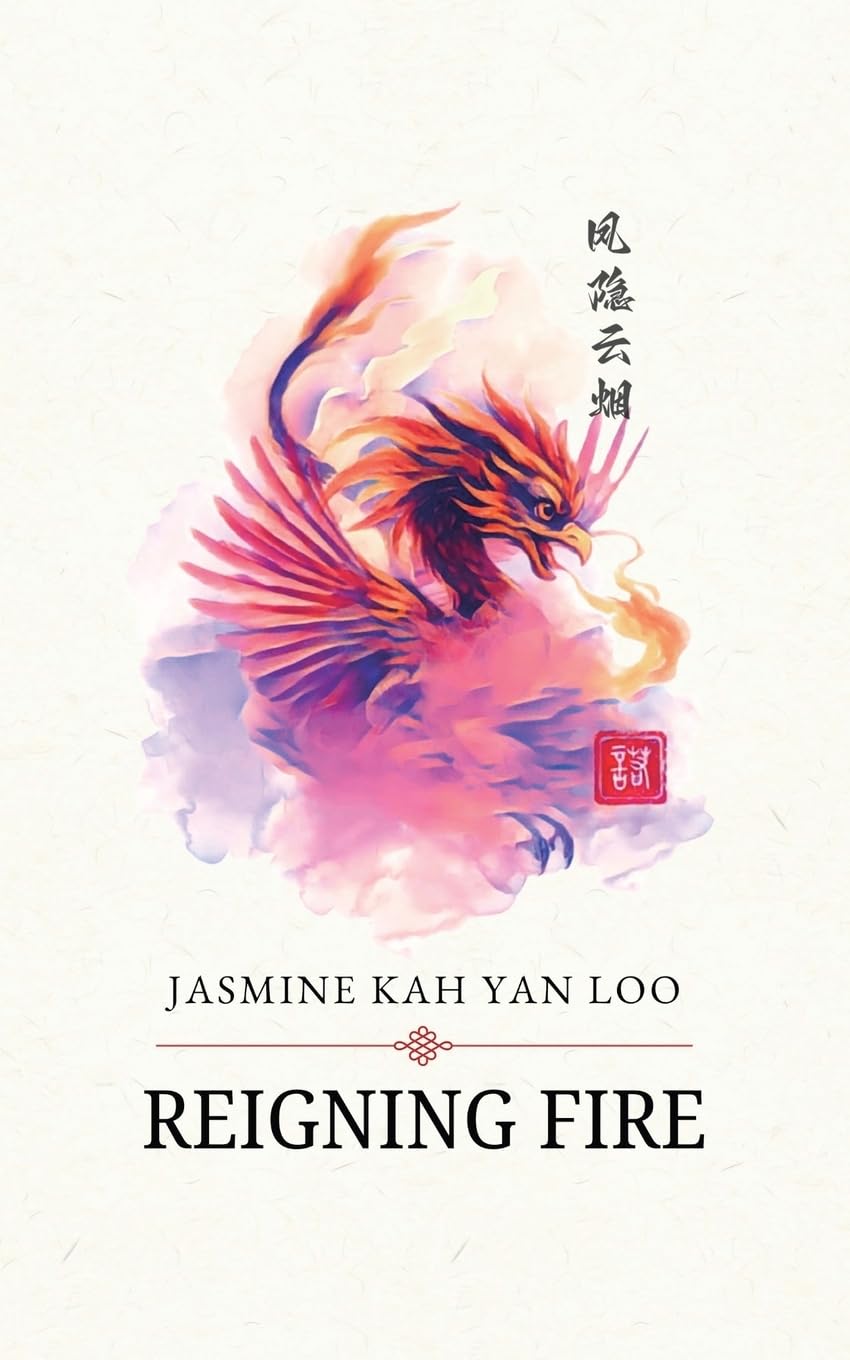
Reigning Fire tells the story of a princess raised in a world built on Smokeveil magic, rigid hierarchy, and brutal expectations, whose Emberkin arrives too early and in a form that is forbidden. What was the inspiration for the setup of your story?

Reigning Fire grew out of two long-standing fascinations: mythical creatures inspired by East Asian folklore, and the question of what it costs a person to exist in a world that often values conformity over authenticity.

As a late-identified neurodivergent writer, I’ve spent much of my life feeling out of sync with the rhythm everyone else seemed to follow. When I was younger, a head teacher once described me as “a square in a world of circles.” It took years to realize she was right, but also that I wasn’t a square at all. I was a triangle. And ultimately, the problem wasn’t my shape, but the assumption that everyone should be the same.

That realization shaped the world of Reigning Fire more than anything. The Emberkin system—smoke creatures that take the form of real-world animals and bond with Weavers—became a way to explore identity, hierarchy, and the rules we’re told to accept without question. Characters in this world are taught that the timing of the bond and the “acceptable” Emberkin forms dictate their social status. Through that lens, I could examine the tension between who we’re expected to be and who we actually are.

As children, many of us inherit a set of rules about “how the world works.” But as we grow, we start looking closer and asking: Who created these rules? Why do they exist? Who benefits from them?

Xun’s Emberkin arriving too early and in a forbidden form allowed me to explore what happens when someone’s identity refuses to fit the timeline—or the template—that society sets for them. It’s a fantasy world, but the emotional truth beneath it is very real: the quiet, painful, and sometimes beautiful journey of learning to take up space as you are.

What were some themes that were important for you to explore in this book?

Beyond the question of identity, Reigning Fire explores three main themes that felt important for me to write about: historical erasure, loyalty, and the politics of perception.

First, I wanted to examine historical negationism—specifically, how societies can outlaw an aspect of human variation and then gradually erase all record of its existence. In the world of Reigning Fire, certain Emberkin forms are not only forbidden but deliberately removed from documented history and rewritten as “abnormal.” That dynamic mirrors the way real-world institutions sometimes control which narratives are preserved, which are buried, and which are reframed as taboo.

The second theme is loyalty, especially the form that exists between child and parent. I wanted to explore what happens when that bond is used as a tool—when a parent treats a child’s love and devotion not as something to nurture, but as a vessel for achieving their own agenda. It’s a painful tension: the longing to honor the people who raised you, and the slow, shattering realization that they may not always have acted in your best interests.

The third theme centers on power and perception. Throughout human history, the most enduring form of power hasn’t always come from weapons or armies—it has come from whoever controls the narrative. In Reigning Fire, characters constantly navigate a world where truth is malleable and obscure, and those in authority will go to extraordinary lengths to maintain their version of events. I wanted to explore the quiet, insidious ways people manipulate stories, memory, and even “facts” to protect their position.

All three themes—erasure, loyalty, and narrative control—shape the emotional core of the book. Even in a world of magic and mythical creatures, the human consequences of these forces are strikingly real.

What were some goals you set for yourself as a writer in this book?

One of my biggest goals with Reigning Fire was to write a story that felt deeply human, even inside a world full of magic, myth, and political danger. To do that, I challenged myself not only to explore the emotional territory I naturally gravitate toward, but also to sit with characters who unsettled me. I would ask them, “Who are you underneath your facade? What drives you? And how exactly did you become this version of yourself?”

Writing from perspectives that diverged sharply from my own was unnerving at times. There were chapters where stepping into another character’s inner world genuinely messed with my head for a while. But those were also the moments I’m proudest of because they made the story richer and more honest.

Another goal was to portray human choices in all their moral complexity. I wanted to move away from clean categories of “good or evil,” “loving or cruel,” and instead explore how intentions, fear, loyalty, and survival instincts collide. In real life, choices rarely fall into neat boxes—even the most well-meaning intentions can sometimes cause harm. One question that guided a lot of my writing was: At what point do good intentions stop being able to justify the consequences they create?

If readers walk away from the book holding more questions than answers, then I’ve achieved what I set out to do. Complex questions aren’t meant to have simple resolutions—but it doesn’t make them any less important to ask.

What is the next book you are working on, and when will it be available?

I’m currently working on the sequel to Reigning Fire, which will be released in late 2026. Without giving away any major spoilers, this next book explores how Xun—now going by Ling—ironically grows more in her years as a fugitive than she ever did as a princess. Stepping outside that gilded palace cage gives her the freedom to redefine who she is when no one is scrutinizing her every breath, even when her path is still fraught with danger.

Readers can expect to encounter more mythic Emberkin and new characters, as the world expands far beyond the political and cultural boundaries of the first book. Some familiar faces from Reigning Fire will return, while others may be absent… and I’ll leave it to readers to decide which disappearances should worry them.

One of the core themes of the sequel is reclamation—of identity, of history, and of personal power. That’s all I’ll say for now, but I’m excited for readers to see where the story leads next.

Author Links: GoodReads | Facebook | Instagram | Website | Amazon

A sweeping debut inspired by ancient Chinese mythology, Reigning Fire is perfect for readers who loved the emotional weight of The Poppy War, the court politics of The Goblin Emperor, or the dreamlike defiance of She Who Became the Sun.

In a realm where power is sealed through smoke and blood, Yan Xun was born to inherit a crown-or be destroyed by it.

When her Emberkin arrives far too early, and in a form the world has no place for, Xun becomes a danger to the very empire she was meant to serve. As she uncovers long-buried truths and navigates a court built on silence, loyalty, and control, her existence alone threatens to unravel everything.

Set in an ancient Chinese-inspired empire of myth and ash, Reigning Fire is a lyrical fantasy about forbidden power, political unrest, and the ghosts we carry. Through richly layered worldbuilding and emotional depth, this debut novel explores the complexities of trauma, neurodivergence, and what it means to survive when your truth has no place in the world.

Perfect for readers who love introspective characters, slow-burn rebellion, and myth-infused storytelling, Reigning Fire blends co

The Adventure of Writing

Julie Fudge Smith Author Interview

The Beast Keepers follows a young veterinarian who takes a job in rural Ohio and discovers that his new patients include mythological creatures hiding in plain sight. What was the inspiration for the setup of your story?

Several years ago, while my flat-coated retriever, Mr. Bingley, and I waited at the holistic vet for a chiropractic adjustment, I studied the poster showing the acupuncture points for dogs. I wondered if animals such as turtles, frogs, snakes, porcupines, etc., had acupuncture points as well.

While the vet worked on Bingley, I asked him whether he learned acupuncture for animals besides dogs, cats, horses, etc. He replied that there were classes for “other” animals. Though I think he probably meant animals such as goats or sheep, there was something about the way he said “other” that caused me to think:

“You meant Gryphons? Centaurs? Fauns?” Showing a modicum of restraint, I did not ask that aloud. I did, however, spend the remainder of the day contemplating how you would treat medical issues in mythological animals. If a Gryphon had a lung infection, would you be treating bird lungs or mammalian lungs? Can centaurs get gout, and if so, how would it manifest? Can unicorns get laminitis?

Thus was born the idea of The Beast Keepers, an adult literary novel with a twist.

I enjoyed the depth of the main character, Jonathan, who is flawed and relatable, making him likable. What was your process to bring that character to life?

The first thing that helped me to get an idea of who Jonathan would be was getting his name right. I tried a lot of different names, especially for his first name, but Jonathan seemed to have the right sound, feel and be appropriate for his age. His last name is particularly dear to me. St. Roch is the patron saint of dogs (St. Francis of Assisi is the patron saint of animals, hence Jonathan’s middle name), and a favorite of mine since visiting a church in France where his story was carved into the staircase for the lectern. Being a dog trainer for almost 20 years, it seemed a fitting way to honor the many wonderful dogs and clients I had over the years.

Next, I fleshed out his character. The book Story Genius, by Lisa Cron, was really helpful in that process. I created a backstory and wrote about critical events and people in his life up to where the book started. Knowing him as a full person (with doubts, strengths, fears, longings, etc) helped me to shape his reactions, dialogue, and ultimately how he would respond to the challenges of the people, and events that he encountered.

I had a lot more of his background story in the first draft of the book, but my developmental editor helped me to trim it back so that it was suggested and you could see how it had shaped him, but it didn’t overshadow or interfere with the story being told.

What were some themes that were important for you to explore in this book?

One important theme is: What is the quality of mercy that we owe our enemies? And, how do we implement that mercy? Other themes include: How do we find balance in our lives? The importance of integrity in our actions and in our relationships, and how does one manage mistakes or difficult situations?

Will this novel be the start of a series, or are you working on a different story?

I have been asked to do a sequel (or a prequel explaining how the mythological animals got there), but I don’t have plans for either at the moment. Right now, I am working on a novel I’ve tentatively titled The Boy Who Danced For The Moon. I was about 2/3 of the way through it when I decided it needed to be revamped, so I am in the process of starting over. I have some parts I can save, but the adventure of writing a book is partly the process of finding your way to the story. Once I have the story, the writing tends to flow.

Author Links: GoodReads | X (Twitter) | Facebook | Website | Amazon

The Beast Keepers is the story of Jonathan F. St. Roche, a young veterinarian who takes a job in the rural Ohio town of Carrollton. He soon discovers it is a safe haven for a menagerie of mythical creatures (including a pregnant pegasus, a flying monkey with a sprained wing, a centaur with Cushing’s disease, and a unicorn with a sweet tooth) who rely on him for their medical care and shelter from the outside world. When a deadly basilisk threatens the town, Jonathan and his new friends must balance the dangerous creature’s needs against the risk to the community.


The Pressure of Testing

Michael Pronko Author Interview

Tokyo Juku follows an eighteen-year-old student in Japan who, while studying all night in her cram school, discovers one of her teachers has been murdered, leading to an investigation into the education system. What was the inspiration for the setup of your story?

The main inspiration comes from talking with my students. Their struggles inspired me to write about them. I teach at a university, so hearing from my seminar students about what they’ve been through really made me rethink the Japanese educational system from their perspective. One of the largest problems is the pressure of testing. Students hate tests. I mean, really hate them! My job entails evaluation, but more as individual feedback than standardized testing as social gatekeeping. Over the years, when I tell people that I teach at a university, they often cast their eyes down and mumble the name of their school, a little embarrassed at their past failings. Or, just the opposite, very proudly. That’s a sad reaction to what should be a life-transforming experience. In the novel, I wanted to take my students’ stories, my observations, and others’ experiences and condense them into the struggles of the main character, Mana. Like most Japanese, she has to learn how to navigate treacherous educational waters. As an educator and a writer, I’m on the side of improvement, but that’s easier said than done.

How has character development for Detective Hiroshi Shimizu changed for you through the series?

Hiroshi has evolved through the series. In the first novel, he had just returned from America and found the detective job through a connection. He works the job reluctantly but gradually finds he is pretty good at it, despite being resistant to crime scenes and the grittier aspects of the job. He reconnects with his college girlfriend, moves in with her, and they start a family in the latest novel. That idea of fatherhood causes him great anxiety because of what he’s seen behind the curtain. Does he want to bring a child into the world he’s glimpsed while working in homicide? But he has a knack for finding the pattern in the chaos of cases, and he’s needed.  
Was it important for you to deliver a moral to readers, or was it circumstantial to deliver an effective novel?

An effective novel comes first. The moral is something that occurs in readers’ minds. I think if you push a moral or make themes too explicit, it takes away from the beautiful ambiguity of reading. As a writer, I can nudge readers in specific directions, but they will draw their own conclusions. So, if you push a moral without a compelling story, it comes across as preachy. Nobody likes that. Readers have their own reactions to the characters’ conflicts, which might yield a moral they take away, but it might also be something more complex—a conclusion or understanding that doesn’t fit into the frame of a moral. The conflicts and confusions of characters are at the heart of an effective story. I focus on that. My job as a writer is to keep them turning pages, thinking, and enjoying the ride.

Can you tell us more about what’s in store for Detective Hiroshi Shimizu and the direction of the next book?

The next book will focus on the tourist industry, which has really taken off in Japan. I have culture shock—or maybe reverse culture shock—in parts of the city swamped with visitors from abroad. That’s changing the city. I’m not against that, but the influx of tourists and tourist money has not been clearly planned for. And much of Japan is highly planned. Japan is internationalizing, in good and bad ways, so that Hiroshi will be needed even more with his English and accounting skills. He’s got plenty more cases to work on.

Author Links: GoodReads | X | Facebook | Website

In Japan’s high-pressure exam world, truth is the hardest test of all

Eighteen-year-old Mana pulls an all-nighter at her juku, a private Japanese cram school that specializes in helping students pass the once-a-year exams. She failed the year before but feels sure she’ll get it the second time—if she can stay awake. The Japanese saying, “Four pass, five fail,” presses her to sleep just four hours a day, and study the rest.

When she wakes up in the middle of the night, head pillowed on her notes, she takes a break down the silent hallway. A light comes from an empty classroom, and still sleepy, she pushes open the door to discover something not covered in her textbooks. Her juku teacher, the one who got her going again, lies stabbed to death below the whiteboard, with the knife still in his chest and the AV table soaked in blood.

Detective Hiroshi Shimizu is called in, and though he’s usually the forensic accountant, not the lead detective, he’s put in charge of the case. With the help of colleagues old and new, he’s determined to find the killer before the media convicts the girl in the press, the new head of homicide pins it on her, or big money interests make her the scapegoat.

Hiroshi follows up on uncooperative witnesses, financial deceptions, and the sordid details of some teachers’ private lives. Even as he gets closer, the accumulating evidence feels meager amid the vastness of the education industry, and the pressures and profits of Japan’s incessant exams.

At the outset of the investigation, Hiroshi listens as an education ministry official lectures him on how education holds the nation together, but he soon discovers how it also pulls it apart, and how deadly a little learning can be.

Faery Academy of QuillSnap: Night of the Purple Moon

Faery Academy of QuillSnap unfolds as a sparkling adventure that blends the everyday world with a secret realm full of faeries, magic, and danger. The story follows young Tansy WaterSprite, who escapes a harsh guardian and discovers she was destined for a faery academy. Meanwhile, a grandmother and granddaughter in the human world stumble into an enchanted mystery of their own. The book weaves these threads together with colorful scenes, playful creatures, and a sense of wonder that feels constant.

I found myself charmed by the author’s imagination. The imagery pops. The descriptions of enchanted forests, shimmering potions, and glittering wings gave me that warm feeling you get when a story sweeps you away. At times, the writing leans into whimsy, but I never felt lost. I liked the cozy tone and the gentleness in the way magic appears. It feels like the book invites you to go along instead of pushing you. I appreciated that.

I also had strong feelings about the emotional beats. Tansy’s fear around Merkel really resonated with me. The shift from dread to hope felt genuine. The scenes with Mimi and Rose left me with a sweet ache because of the love between them. Some moments wandered a little, yet the heart of the story always pulled me back in. I enjoyed how the narrative threaded humor through the tension. It kept me invested and curious about what would happen next.

I feel the book would be a great fit for readers who love gentle fantasy, vivid worlds, and stories that carry a sense of childlike wonder. It would be perfect for middle-grade readers and also for adults who enjoy whimsical escapes. If you like books that mix warmth with adventure, I would recommend giving this one a try.

Pages: 414 | ASIN : B0DJCTXDK9

Buy Now From Amazon

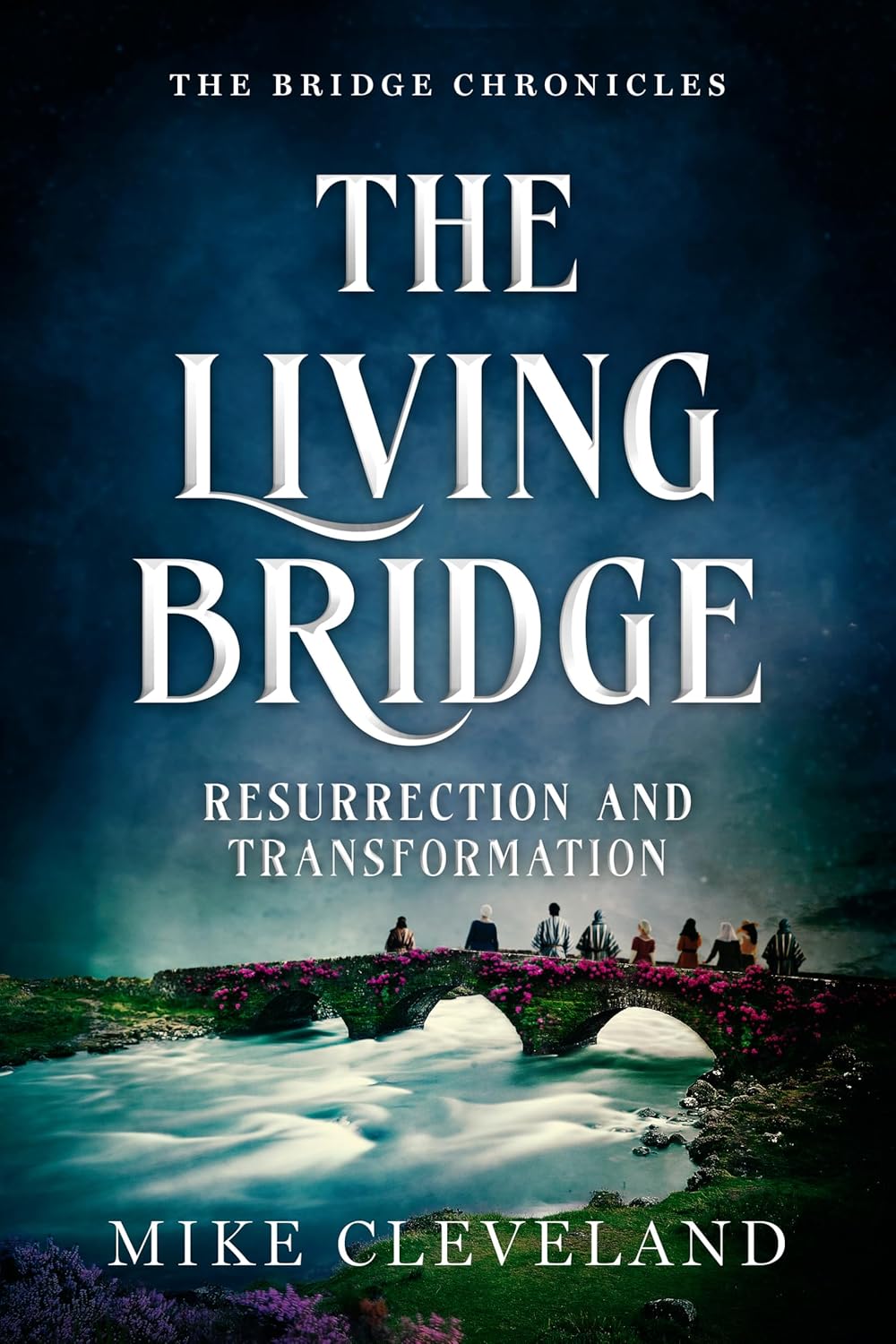
The Living Bridge

The Living Bridge is a work of Christian allegorical fiction that weaves together the stories of five broken people whose lives intersect in the shadow of a shattered bridge between Eastlight and Westshore. The book follows Mary, Lydia, Matthias, Cleopus, and Tamar as each carries grief, guilt, or despair to the riverbank where everything once fell apart. Their stories unfold in three movements that chart their journey from damage to darkness to eventual restoration, all centering on the arrival of a mysterious teacher named Geshriel, whose presence begins to mend what the earthquake destroyed. The opening chapters set the tone well, especially Mary’s torment under “Legion” and her stunning moment of deliverance, and Lydia’s aching exile from her family across the broken river.

As I read, I found myself reacting less to the plot mechanics and more to how the author frames suffering. Cleveland writes with a kind of steady compassion, letting each character’s pain breathe before offering any hint of resolution. Mary’s chapter in particular struck me. Her inner world felt raw and believable, and the moment her mind finally quiets when Geshriel calls her “beloved” is one of the more affecting scenes in the book. The prose is simple, almost plain at times, but it works because the emotional beats land without being dressed up. It felt like sitting with someone who has been wounded for so long they’ve forgotten anything else is possible. The author doesn’t shy away from darkness, but he also doesn’t exploit it. Instead, he uses it to build a kind of slow, patient hope.

There were moments when I paused, not because the story demanded it but because something in the writing touched on familiar human questions. Lydia’s longing for her daughters across an uncrossable river is written with a tenderness that feels lived-in rather than symbolic. Matthias’s crushing guilt over the collapse he caused, and the way he interprets every failure as further proof of his curse, could have felt melodramatic, but it didn’t. His scenes carried the weight of someone who can’t imagine forgiveness applying to them anymore. Cleveland seems most comfortable when exploring how shame isolates people, how grief reshapes their days, and how mercy begins as a voice they aren’t even sure they heard correctly. Sometimes the metaphors are quiet, sometimes they shine brighter, but they always feel in service of the characters rather than the other way around.

The book’s message is clear without being heavy-handed. The “living bridge” isn’t just a rebuilt structure but a person, a sacrifice, and a way back home. This won’t surprise readers familiar with the genre, but it still lands because the characters’ journeys make the message earned rather than assumed. If you enjoy faith-centered fiction, particularly stories that blend biblical echo with imaginative narrative, this book will likely resonate. Readers who appreciate character-driven arcs of healing and gentle spiritual allegory will find plenty here to sit with. And for anyone who has ever felt stuck on the wrong shore of their own life, the book offers a quiet reminder that bridges can be rebuilt, even when you’ve forgotten how to hope.

Pages: 227 | ASIN : B0FX5WS62Y

Buy Now From Amazon