Blog Archives
When The Patient Is Not The Sick One!
![Vera Mortina: When the patient is not the sick one! (Dangerous Doctors Series) by [Markov, Dimitri]](https://images-na.ssl-images-amazon.com/images/I/512iDijyzVL.jpg)
Dimitri Markov Author Interview
Vera Mortina is a medical fiction novel about a sordid doctor that begins work at a medical practice where strange and deadly things begin to happen. The tag line, ‘when the patient is not the sick one’, is chillingly appropriate. What was your inspiration for Dr. Vera Mortina’s character and her troubled disposition?
I interact with a number of professionals who have rather troubling dispositions, some are physicians, some are nurses, administrators, patients, lawyers and others. How little do we really know about those “difficult” people we have to work with every day? This led to a fictional account developed on the theme of Dangerous Doctors.
There was a lot of time spent crafting the character traits in this novel. What was the most important factor for you to get right in your characters?
The most difficult and yet the most crucial characteristic of Dr Vera Mortina was to convincingly portray how she could function so well as a medical professional and yet be so dangerously disturbed. How she could create such a believable façade that even her partner wanted to get closer to her, and not run away. Her partner was so skilled in his profession, yet he was really blind for a long time, he was drawn to Dr Vera like a moth attracted to the candle light.
I felt that there were a lot of great twists and turns throughout the novel. Did you plan this before writing the novel, or did the twists present themselves as you were writing?
I conceived the general outline and worked on the development as a thought project for a long time before writing it down and developing from an outline. It all revolved around Dr Vera, and she led me to uncover some of the dangerous things she was really up to.
Vera Mortina is a part of your Dangerous Doctors series. What will the next book in that series be about and when will it be published?
At this point, my writing efforts are going to frequently revisiting the writing of the other three Dangerous Doctors, to refine the presentations and address many of the questions you asked above. This includes the theme of excess commercialization of in vitro fertilization clinics in The Surrogate, how the paranoia of aging could effect a physician in Her Charm was Contageous, and the relentless desire for immortality and money in a biotech researcher in BloodBird. Fostering believability is always an issue.
Author Links: GoodReads | Amazon
Chosen in a rush, Dr. Vera Mortina joins a small medical group, but without adequate exploration of her rather unusual background. Her sudden arrival is accompanied by acrimony, odd and disturbing idiosyncratic behaviors, and the unexpected deaths of several patients and staff. The closer Dr. Richard Bates looks into Vera, with her violent thoughts and bizarre hobbies, the more imperiled his own life becomes.
What if a Hoax Became Terrifyingly Real?

Robert Stava Author Interview
By Summers Last Twilight focuses on the nefarious work of the villain, Steven Crowley, who is building a secret cult. What was your inspiration for the cult that he is secretly building?
The cult was modeled after both the Hermetic Order of the Golden Dawn and Aleister Crowley’s Thelemite order “A∴A∴”, the later which he co-founded in 1907. I also drew on Umberto Eco’s “Foucault’s Pendulum, which is a masterpiece on these types of cults and Hermetic Orders like the Rosacrutions. I leveraged their rituals & practices into the story as well as Crowley’s own teachings which were intriguing: to me it was as if it was all an elaborate joke/game to him, while at the same time he was truly searching for some higher mystical reality. Crowley may have been having us on, but he was exceedingly smart, if something of a lunatic. The ‘what if?” came in the form of “What if someone actually applied the techniques using current Quantum Physics theories…what if something that was half a hoax became something terrifyingly real?”
The Sacred Order of the New Golden Dawn comes back in this novel. Do you feel that you were able to explore all the chaos they can bring?
There was a conscious decision to be merciful to the reader and keep it under 300 pages. You could write volumes on this stuff.
I felt that the actions scenes of violence and mayhem were expertly crafted. I find that this is an area that can be overdone in novels. How did you approach this subject to make sure it flowed evenly?
Really? Now that’s a compliment! I can only tell you I try and write those parts cinematically, visualizing them like a choreographed movie scene. I find older movies where they relied purely on acting and directing useful for that, as opposed to most current ones that overly rely on CG effects and flashy editing.
There is a band of quirky characters through the novel that I enjoyed, especially CID detective John Easton. What was your favorite character to write for?
John Easton. When I originally conceived of the character, I knew I wanted a variation on the classic British Detective, but had no idea how to avoid the usual tired cliché’s. The answer provided itself on a red-eye flight to London when I found myself jammed into a seat next to this restless guy who turned out to be a CID Detective Superintendent from Royal Turks and Caicos Islands Police Force. Something I’d never heard of or ever thought of before. He was going on leave after suffering a gunshot wound in the leg the day before and was half-zonked on Cabernet & Percocet to handle the pain. It was definitely a ‘Bingo!’ moment. We ended up in an engrossing conversation most the flight and I got a good piece of my character’s backstory effectively handed to me from the real McCoy. When I got to the hotel I couldn’t sleep so turned on the TV and the first image was a a movie with Callum Keith Rennie in it and thought, “Bingo #2 – and that’s what he looks like!”. Then it was a question of mixing in a few of my own traumatic experiences, a latent psychic ability (based on a woman I once dated) and a dash of the original James Bond and he pretty much stepped out of the pages ready to go. He’s a recurring character who pretty much writes himself – sorry I can’t explain that better – and since he’s a capable guy it’s I’m always curious how he’s going to get out of any particular mess I throw him in.
Author Links: Website | GoodReads | Facebook | Twitter
Some nightmares refuse to stay dead… In the sleepy Hudson River village of Wyvern Falls, something dark and corrupting has re-emerged from the shadows, a secret cult seeded by the infamous Aleister Crowley. A cult that was supposedly struck down on the eve of the Great Depression: The Sacred Order of the New Golden Dawn With them will come nightmares and chaos, opening portals to horrifying dimensions . . . By Summer’s Last Twilight. A new chapter in Horror has begun…

Sanctuary: A Post Apocalyptic Thriller

 Ian Page has written a book that will change the readers view of how the typical apocalypse novels play out. This is unlike anything I have read before. One key difference is the apocalypse is not triggered by zombies, or a nuclear war that leaves the planet desolate. Instead there is a sickness that strikes in what appears to be a random selection of people. It is taking over the world, people and animals. Another refreshing difference is the main characters are not your typical white Americans. The first two characters that you meet are women, Deeta Nakshband, a doctor that was born in India and whose family moved to the US, and Janelle Jefferson, also called JJ, a bodybuilding black women from Bridgeport Connecticut. Both women have military experience. This breaks from the traditional lead characters you find in novels and puts this book in it’s own category from the start. Another key difference in Sanctuary is Ian Page’s ability to write like you are living with the characters. Most books focus on the action and fast track the reader though one action scene to the next throwing in some personal information in-between, sometimes feeling awkward or like you are looking back in time. Page brings the characters to life through their interactions with each other in the mundane day to day activities. Things like making a cup of tea, eating dinner, or working out are all part of the daily interactions that make the characters come to life. You really get to know them as they live and not just a quick bio to push the plot along. This personalization of the characters is what draws the reader in and keeps them turning the page to see how they all interact. I kept wondering, who will make it through this alive.
Some of the other characters in the book are Gary, who is a Buddist monk, adventure climber, and skilled fighter, the couple of Wesley and Hakura, that bring their own set of servile skills to the group, and various other doctors and family members. The world is coming apart all over. There is another world war brewing and hate crimes are skyrocketing. Reminiscent of the internment camps that were created in WWII for the Japanese citizens, Muslims are being rounded up as terrorists and detained for questioning. Deeta’s family tries to hold together despite many losses and terrifying close calls. She realized she needs to get her family and friends to a safe place. All the preparations that her collection of friends have been making are put into action and they set out for what is called the Sanctuary.
Santuary is a realistic contemporary story that plays off many of society’s current fears. Page talks about the conflict between North and South Korea, the conflict in Muslim countries, the fear and hate that infects society all through the world. All these modern and current issues are played out this this complex novel. The underlying message I feel though is that there are still good people out there that want to help others and are willing to do what is needed to keep society from falling into total despair.
If you are interested in modern timelines and current events this is a great novel. It is gruesome in its details at times. The murder scenes are vivid and plentiful. It’s an interesting look into the human mind and how people handle the stress and complex situations that the mass sickness brings out. Ian Page gives readers a glimpse into what humans are capable of, both good and bad. Sanctuary ends in a way that leaves room for a sequel and there is more than enough action left to happen, and many questions left unanswered as the book draws to a close.
Pages: 540 | ISBN: 192504792X
Vera Mortina | Dangerous Doctors
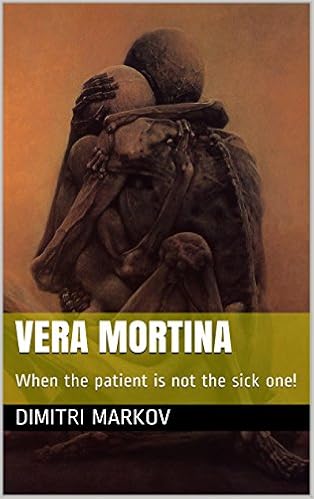
 Vera Mortina continues the Dangerous Doctors Series by Dimitri Markov. The story is about Dr. Vera Mortina who has a sordid background. She was chosen to be a part of a medical group, but the staff did not delve into her background to find out more about her. Soon after she starts work at the practice she begins to display odd and troubling behaviors. Patients die in mysterious ways after her arrival. When Dr. Richard Bates begins to look into his partner’s past he discovers thoughts of violent behaviors and savage hobbies. And now he knows too much. His life is in danger.
The idea for this spine-chilling medical fiction is interesting. The character descriptions in this novel were fantastic. Markov’s descriptions are detailed and vivid; one can easily picture the characters and their surroundings. There is a lot of time spent crafting what each character felt and thought about each other. In any fiction story where the character is emotionally disturbed it’s important to have a fully realized character that readers can understand, if not sympathize. Dr. Vera Mortina was very well executed in the characters development and display of odd behaviors.
The story itself is interesting, gripping and holds the reader’s attention throughout the novel. There is a life or death situation or choice to be made at every page turn. I enjoyed the suspense in this novel, I was never sure where the characters would end up and the thrill kept me at the edge of my seat. It is not predictable, honestly I thought it would be when I began the story, but there were moments when I was pleasantly surprised. It is evident that a lot of time and care went into crafting this story, it just needs a few more edits.
Vera Mortina has a lot of potential and could be an exceptional book.
Pages: 419 | ASIN: B01B0MS6DO
By Summers Last Twilight

 By Summer’s Last Twilight is the latest novel from horror author Robert J. Stava, set in the deceptively sleepy New York state village of Wyvern Falls. The book continues a long line of Stava’s work set in Wyvern Falls, and as such contains a great deal of information that may not be clear to the newcomer reader. Characters emerge, engage, and disappear – or get killed, since according to Stava that’s his favorite thing to do in a horror novel – without much in the way of apparent rhyme or reason, though there is a core group of heros and villains to tie the story together.
The nexus of the plot focuses on the nefarious work of the villain Steven Crowley, the latest descendant in the line hailing from the Occult provocateur Alistair Crowley – the latter infamous for his no-holds barred orgies and invocations of arcane rituals. In this story, though, the orgies and rituals have a sinister metaphysical purpose, shattering the membranes that separate our dimension from that of maddening demons who want to feast upon our flesh and our very sanity.
Steven Crowley has managed to worm his way up to the top of this quiet little town, his arcane calculations proving that this town would be the optimal spot to perform his ritual. A hurricane late in the summer washes a body out into a tree, catching the attention of the local plucky teenage gang of racial stereotypes who inevitably get to the bottom of things.
A man named John Easton is the grown-up that helps them get to the bottom of this, facing off against snakelike thugs like Razor and Weatherman who seem more motivated by violence for its own sake rather than any kind of humanity, however perverse it may be. Easton has numerous torrid affairs – this book drips with explicit sex, if that’s your thing – all of which end in bizarre disaster and let him sort of elbow the reader and go “women, right?”
Easton’s affairs include a near-sexual encounter with the breathy 15 year old French girl which, while going uncompleted, remains the most horrifying event in the entire book. Women don’t really get to do too much in this book except be lovers or mothers or crazy ex-girlfriends or literal objects of sacrifice, but so it goes in the world of Wyvern Falls.
There’s plenty of violence too, which would be remiss of a horror book to forget. The violent scenes are some of the most lovingly crafted and passionately executed sections to be found, giving the book a clear claim to the genre.
However, there’s too much of everything else. The horrific moments of the book are few and far between, interspersed with vast sections where characters sit around and explain things to one another.
Such lengthy exposition can somewhat be forgiven, given the by-design arcane nature of the source material. Crowley’s cult drew upon vast swaths of information that would be unfamiliar to the average reader today (or indeed to anyone ever) and Stava does an admirable job with providing expository backstory through the several interludes that intersperse the main story line.
All in all, though, the book remains in its own little world – if you are the type of reader who already enjoys this genre or Stava’s work in particular then you’ll find yourself right at home.
Pages: 288 | ISBN: 1515150747
The Horror of Nachos and Hamantaschen | Podcast

The Hungry Monster was given the opportunity to interview JR Hamantaschen and Derek Sotak, the hosts of a horror podcast. We discuss the horror genre, how Queens NY is not the quietest place to record a podcast, and I find out where I can get a 5lb plate of artisanal nachos.
What inspired you guys to start a podcast about horror culture?
Derek: I had always wanted to do a podcast about weird movies, and separately always enjoyed the horror genre, so when one of my favorite authors asked me if I wanted to do a horror podcast I said “Yes Stephen King, more than anything.” That podcast never panned out because he was too busy, so later when JR came to me with the same idea I thought the second time would be the charm, and here we are today.
J.R. Well, I’ve written a couple of dark fiction collections now and have had my hand in editing some others. I felt a bit burned out on writing horror and have been pursuing other subjects, but still want to keep a toe in the genre, so to speak, and, honestly, see if I could rekindle my interest. Also, Derek’s a pretty cool guy and it was an excuse to hang out in some capacity.
How do you two know each other? How did you two meet?
Derek: I was reading JR long before I ever met him in person, becoming enraged upon reading his bio that he was so much younger than me and writing such excellent stuff. When years later we met at a convention it turned out that he was wasn’t so young anymore and a pretty radical dude in general, so I let my rage go. Sometimes that’s all it takes for a magical friendship to blossom.
J.R.: We met at the NecronomiCon Convention in 2015 in Providence, Rhode Island. We were both separately friends with Chris Lackey and Chad Fifer of the H.P. Lovecraft Literary Podcast, and we all went out to lunch. Then the sparks flew. A couple handjobs later and here we are.
You are now 13 episodes into the podcast, what is one thing that you’ve learned about the podcast process that you never considered before?
Derek: Unfortunately a podcast is not as easy as pressing record and shooting the shit for an hour. As part of the Faustian bargain I made with JR at the crossroads at midnight under a full moon I do the tech side of the operation, which involves the editing, syncing, posting, website stuff, and all the other various jazz that a “real” podcast has interns do for them, which was all more than I bargained for. BTW, we will be announcing the Horror of Nachos and Hamantaschen internship contest shortly, and Max Fun or Earwolf, we we are eagerly awaiting your call.
J.R.: This might be the height of spoiled laziness, but fitting in two movies per week or reading a book in a week and trying to think of interesting commentary or insights is harder than I thought it would be. Also, one thing I never noticed before is that it seems a lot of other podcasts pick out or select things that they already know they might like, whereas we don’t, so there’s a decent chance we will dislike what we are commenting on and rag on it. Also, I live in Queens, New York, and it seems the ambulances, taxis and people who hang out on my block must have advanced notice of when I’m recording so they all gather in full force to be as loud as fucking possible. One time while we were recording there was literally a goddamn whistling noise coming out of my pipes. So editing those sounds out has been a challenge (and by that, I mean a challenge for Derek, since he’s the tech guy).
What is your favorite decade for the horror genre?
Derek: The 80’s. I think a lot of the stepping stones for horror these days was laid then, along with the greatest wave of horror movie icons since the Universal Monsters. All my initial horror reading forays in the early 90’s were of books from then as well; King, Koontz, etc, and those are as solid a foundation to get yourself into the genre as you could ask for.
J.R. I don’t really know the answer to that. I’m inclined to say the 70s or 80s for horror movies, but there are enough things I’ve liked over a large enough expanse of time that I can’t commit myself to a decade. Maybe even in the 1920s, when Lovecraft was writing the Call of Cthulhu and a lot of “weird fiction” was of high literary merit.
A question for both of you: XBOX One or PS4?
Derek: PS4, but I grew up in a PS family so I might be biased. I’m not sure if for the most part it matters anymore rather than for a few games, and realistically a good PC is probably the best and most versatile game playing platform out there. It is a lot harder to sit on your couch and kick back with your keyboard and mouse rather than a controller though. I will always gives props to the Virtual Boy though.
J.R.: I was a Nintendo fanboy growing up, so I lived in denial about how superior the PS2 was compared to the Gamecube. I eventually got a PS2 and realized the error of my ways. I currently have an XBOX One that I bought on the advice of a friend, but if I were being honest with myself I should have gotten a PS4. Graphics are marginally better, there are more Japanese RPGs, some exclusives I want to play, and the controller is better.
Do you enjoy horror movies that are more campy slashers or thought provoking mind benders?
Derek: A campy slasher will always have it’s place in my heart, and on my TV if I’m in the mood for something I don’t need to really pay attention to. If I have the time for sitting down and giving something my full attention though, I’ll go for the provoking mind bender any day.
J.R.: I’d like to say thought provoking mind better, but in reality, the campy slasher is more of a safe bet in terms of enjoyment. If we were talking fiction, then of course the mind bender, but movies are a visual medium and there’s more room for error in a visual medium with something that – such as a nuanced, interior, contemplative work – might be better suited for fiction.
I find that horror is different in different cultures. For example, Japanese horror, I find, focuses more on psychological horror and poltergeists. What is your favorite horror culture and why?
Derek: I really like the whole Coffin Joe series and ultra weird and violent horror movies that came out of Brazil in the 60’s. Extremely subversive for the time in Brazil and 10 times that compared to what was going on in America at the same time. Even today if they would be considered a bit much for American audiences.
J.R.: that’s a good question, one that I don’t know if I have any answer to. Unlike Derek and his nacho-loving ways, I don’t know much about horror from Mexico, Central or South America.
Derek, your the author of The Field Guide to Nachos. If you were to create a bucket list of nachos to eat before you die, what would be on the top of the list?
Derek: The two best nachos I’ve ever had are the Big Foot’s Nachos Ur Way pulled pork nachos at Bigfoot Food and Spirits in the Seattle-Tacoma airport (I almost missed my plane getting those, but it would have been worth it) and Mount Nacheesmo at Tios in Ann Arbor Michigan. Mount Nacheesmo is the largest order of commercially available nachos in the US coming in at 5lbs, and while a lot of places would just throw together a bunch of cheap ingredients and try to pass that off, Tios artfully crafts an order that is delicious as you eat it, and while you munch on the leftovers for the next few days. Plus, if you can eat it all in an hour there you get a shirt and your picture up on the wall which is one of the greatest glories one can achieve in this life.
J.R. you’re the author of, You Shall Never Know Security. What do you find appealing about short stories?
J.R.: I suppose I write mainly short stories, though I’ve been working more on novellas recently. My second collection, “With a Voice that is Often Still Confused but is Becoming Ever Louder and Clearer,’ is largely novellas. I write short stories because I think that’s the idealized form for horror and dark fiction. I don’t really need many horror novels, and most of the ones I have seem padded, or would have worked better as shorter pieces. Also, realistically, when I am pressed for time with my day job and side jobs, so short fiction has just been more realistic and manageable. I want to get in and get out.
What are the subjects for upcoming episodes. Are there any that you’re really excited about?
Derek: Our culturally mandated Christmas episode is going to be something really special, but you won’t be able to experience that for some months yet. OR WILL YOU? No. No you won’t, but there are a bunch of pretty cool ones coming up as well.
J.R.: I enjoyed our nostalgia episodes, which we recorded but hasn’t been released yet. We both picked two horror movies we enjoyed as kids and re-watched them with our jaundiced, cynical eyes. I chose Demon Knight and Scream, and Derek chose Evil Dead II and Dead Alive. Surprisingly, we still both liked our selections.
Join marginally popular dark fiction author J.R. Hamantaschen and Derek Sotak as they discuss the world of horror in a light-hearted, frivolous and irreverent way. Expect horror fiction, horror movies, horror culture, and interviews / hang-out sessions with authors and creators in the field.
Listen to The Horror of Nachos and Hamantaschen podcast available every Wednesday of the month streaming on their website thehorrorofnachosandhamantaschen.com or on:


Against the Backdrop of the Apocalypse
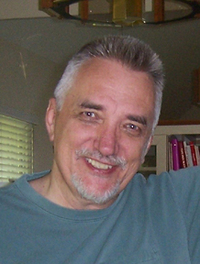
Russ Melrose – Author Interview
Jacob’s Odyssey is a post-apocalyptic novel taking place shortly after a zombie outbreak, but I find that the story is more character driven. How did you create Jake and Sarah’s characters in a way that contrasted yet still supported their development?
While I understood Jake’s issues arising from his childhood prior to writing the novel, Sarah’s troubled past came to me about midway through. I wanted–actually needed–them to push each others buttons so their issues would come to the forefront. That way, they would have the opportunity, against the backdrop of the apocalypse, to confront and heal their personal demons.
A major turning point in the novel is when Jake’s brother contracts the virus and Jake has to make the difficult decision of ending his life. What was your inspiration for Jake’s emotional turmoil during and after that event, and how he handled it?
Jake killing his brother in the first chapter helps define his greatest character flaw–a selfishness born out of a grasping neediness. It’s really what sets the whole novel up. Jake didn’t kill his brother out of compassion or necessity. In that moment, his only concern was for himself and his need to survive. His brother didn’t factor into his decision to pull the trigger. The guilt Jake feels in the aftermath and throughout the novel brings his childhood issues to the surface in a painful way and forces him to seek what he believes will be redemption.
The novel takes place in Salt Lake City. Are you familiar with that area?
Actually, I live in SLC. Love it. The familiarity with the valley made the logistics of the “journey” across the valley easier to write and describe in detail.
There is a lot of zombie novels out there today. How do you think Jacob’s Odyssey stands out from the rest?
I think, as you mentioned in your review, this is a character driven novel. Not really a lot of those out there in the field of zombie literature. I wanted to write an intelligent zombie novel. When my daughter was younger, we used to watch zombie movies together. We lamented the fact that so many of them were terrible and made no sense. I thought then that I would someday write an intelligent zombie novel that actually made sense. Hope I’ve accomplished that.
Jacob’s Odyssey is the first book in the Dead Dayz series. Can you tell us what the second book will be about and when it will be available for fans to purchase?
The second book will be called Finding AJ. Same apocalypse but with different characters, setting, and story line. Despite being caught up in the apocalypse, former Former FBI agent, Jules Vandevelde, continues her search for a brutal, psychopathic serial killer known as the Calligrapher. Her search leads her to a small town in Southern Utah called Gideon. There, she must ferret out the serial killer from amongst the survivors while helping the people of Gideon survive the apocalypse. It will be available in the first part of 2017. No date set yet.
Author Links: GoodReads | Facebook | Website
A terrible virus has struck and the world has deteriorated into chaos. And with the infected now outnumbering their human counterparts, chances for survival lessen with each passing day. After running out of food in his condo, Jake must make his way across the Salt Lake Valley to reach the safety of the mountains, and he must use his wiles to avoid the packs of infected roaming the streets. But Jake is haunted by a devastating personal tragedy he can’t let go of, and his journey of survival quickly turns into a quest for redemption.
Jacob’s Odyssey
 Jacob’s Odyssey by Russ Melrose is about the beginning days after the Zombie apocalypse has occurred. When you hear Odyssey, most people think of the famous work by Homer detailing Odysseus’s adventures returning to Ithaca after fighting in the Trojan Wars. The more generic definition of odyssey is a long trip filled with notable experiences and challenges. Both of these apply to Jacob in this novel. The novel starts out with Jacob on his way to see his brother Alex. The zombie virus has hit world wide and they have plans to wait out the trouble at their cabin in the woods that they have been prepping for emergencies. Things go bad right from the start, Alex who is a local police officer has contracted the virus. Jacob stays with him through his finial hours praying it’s just the flu. When it’s clear that his brother has turned Jacob starts his transformation with the hard choice of killing his brother. This novel takes you through Jake’s transformation of a passive easy going fifth grade teacher to the killer and hero he becomes.
The beginning chapters, after Jacob realizes he is on his own, detail his plans for escaping from the Salt Lake Valley that has been his home. The story takes place in the Salt Lake Valley neighborhoods. The zombies are everywhere and thanks to barricades and mass exodus of people trying to escape all the roads are blocked with abandoned and crashed vehicles. This makes driving out of the Valley impossible. There is a lot of narrative on Jacob’s mindset and his plans. It can get tedious at times reading though this but it builds up so you understand who Jacob is, and how his transformation in the second half of the book takes place.
Running for your life from zombies can be a lonely experience. Jake is fine with being on his own. He has to survive finding homes that are empty and learn how to avoid the zombies that are learning to hunt in packs, also he encounters an “alpha” that is more human than most zombies, making him more deadly. Jake has a good plan and it works out well for him, right up till he gets a call from Sarah. From there on his solitary journey is now mingled with Sarah, her daughter Becky, and their friend Raj. This is where the book turns from being strictly survival and you go deeper into Jake’s personality, his history, and see his growth. The relationship dynamics between Jake and the other three main characters develops quickly, as they are together less than a week. This is not a romance story but the depth of the relationships parallels the danger they are all in.
Russ Melrose does an excellent job providing the reader with the fear and thought process involved in surviving the zombie virus. He touches on the source of the zombie virus being anything from a terrorist action to an intentional population control action by the government. I didn’t care much for the conspiracy theory Russ interjects but I can see how it pushes the plot along, and leaves the story line open for further books should he choose. Overall Jacob’s Odyssey is a well written novel, original, and has enough action to keep the reader turning pages.
Pages: 308 | ASIN: B00PDED4RY



 LITERARY TITAN