Blog Archives
Tracking Ariana
Posted by Literary Titan

Tracking Ariana opens with a quiet spring afternoon that turns into a nightmare. Ariana Wilkinson, a young Afghan immigrant and mother of two, is detained after an Eid celebration, swept up with other families by ICE despite carrying full legal documentation. Her husband Joe, a newly retired Air Force colonel returning from deployment, arrives home to find his wife and children missing, sparking a desperate search. Meanwhile, attorney Seth Bodner and private investigator Dan Burnett begin uncovering the political machinery and secrecy behind the detentions. The story moves quickly, shifting between Ariana’s terror, Joe’s rising panic, and the investigative puzzle unfolding around them.
I felt pulled in by the writing’s straightforward, almost unvarnished style. The chapters move fast, and the scenes stack tension one on top of the next. The emotional beats land without feeling forced. Ariana’s fear hit me hardest. Her instinctive scanning for danger. Her remorse at wearing a hijab. Her panic as ICE officers question her. These moments felt raw and personal, and they gave me a knot in my stomach. Joe’s chapters brought a different kind of emotional punch. His transition from joyful anticipation to helpless dread felt honest, especially when he struggles to calm his children or walks into an empty house that should have held a reunion.
I also liked how the story brings in bigger themes without sounding preachy. There’s anger simmering under the surface. There’s confusion, too, and the sense that the characters are caught in a machine much larger than themselves. Watching Seth and Dan pull together scraps of information while the government stonewalls them made me feel both frustrated and invested. The narrative balances personal drama with political suspense in a way that feels accessible. I found myself rooting for everyone to just catch a break. The pacing keeps rising, and even the quieter scenes carry tension because the stakes never let up.
By the end of what I read, I felt fully locked into the characters’ emotional worlds, and that’s what made the story work for me. If you enjoy thrillers rooted in family, justice, and real-world tension, this book is a strong pick. It’s especially good for readers who like fast pacing, clear writing, and stories that weave personal stakes with political complications.
Pages: 272 | ASIN: B0FYZNJ81B
Share this:
- Click to share on X (Opens in new window) X
- Click to share on Facebook (Opens in new window) Facebook
- Click to share on Tumblr (Opens in new window) Tumblr
- Click to share on Reddit (Opens in new window) Reddit
- Click to share on Pinterest (Opens in new window) Pinterest
- Click to share on Pocket (Opens in new window) Pocket
- Click to share on Telegram (Opens in new window) Telegram
- Click to share on WhatsApp (Opens in new window) WhatsApp
- Click to share on LinkedIn (Opens in new window) LinkedIn
- Click to print (Opens in new window) Print
- Click to email a link to a friend (Opens in new window) Email
Posted in Book Reviews, Five Stars
Tags: author, book, book recommendations, book review, Book Reviews, book shelf, bookblogger, books, books to read, crime fiction, ebook, fiction, goodreads, indie author, kindle, kobo, Larry Terhaar, literature, nook, novel, read, reader, reading, story, suspense, thriller, Tracking Ariana, womens fiction, writer, writing
Drinking from the Stream
Posted by Literary Titan

Drinking from the Stream follows two young men on the run from themselves. Jake, a Nebraska kid turned Louisiana roughneck, flees the guilt of a killing on an oil rig. Karl, a disillusioned American student at Oxford, escapes the wreckage of the sixties and a painful relationship. Their paths cross, and they drift through Ethiopia, Uganda, Rwanda, Burundi and Tanzania in the early seventies, bumping into coups, massacres and love affairs as they go. The book stretches from the Gulf of Mexico to the Great Lakes region of Africa and on to Chile, and it ties private coming-of-age stories to state violence and postcolonial chaos.
I felt like the writing landed with real weight. The prose has muscle and rhythm, and it keeps a steady pace through long stretches of travel and talk. Scenes on the road, in trucks, on ferries, and in cheap guesthouses felt vivid to me. Dialogues carry a lot of the load. Characters argue about politics, race, faith, and guilt, and the conversations feel relaxed on the surface but tense underneath. I could sense the author’s years in Africa in the way a village lane or a border crossing appears in a few sharp strokes. The flip side is density. Historical detail piles up. I stayed invested in Jake and Karl, and in Beatrice, Bridget and the others, because the book lets them be flawed, funny and sometimes selfish, not just mouthpieces for a lesson.
The novel looks at racism and antisemitism inside Jake’s own story, then places him in countries where mass killing happens out in the open and on a terrifying scale. It plays with the dream of revolution and tears it apart. Young Westerners arrive full of ideals, then watch soldiers and militias burn those ideals along with villages. The book keeps asking who gets to walk away and who does not. Jake carries private guilt from the rig into places where guilt comes in rivers. Karl drags his Vietnam-era anger into a world where America is almost irrelevant. I felt anger, shame, and sadness while I read, and also a stubborn hope, because the story keeps circling back to friendship, loyalty, and small acts of courage. The novel does not pretend to solve anything. It simply puts you close to the fire and forces you to look.
I would recommend Drinking from the Stream to readers who enjoy historical fiction with grit, to people curious about East Africa in the early seventies, and to anyone who likes character-driven travel stories with real moral stakes. The book asks for patience and a strong stomach. It pays that back with a rich sense of place, big emotions, and a set of memorable characters.
Pages: 377 | ASIN : B0DXLQTN5M
Share this:
- Click to share on X (Opens in new window) X
- Click to share on Facebook (Opens in new window) Facebook
- Click to share on Tumblr (Opens in new window) Tumblr
- Click to share on Reddit (Opens in new window) Reddit
- Click to share on Pinterest (Opens in new window) Pinterest
- Click to share on Pocket (Opens in new window) Pocket
- Click to share on Telegram (Opens in new window) Telegram
- Click to share on WhatsApp (Opens in new window) WhatsApp
- Click to share on LinkedIn (Opens in new window) LinkedIn
- Click to print (Opens in new window) Print
- Click to email a link to a friend (Opens in new window) Email
Posted in Book Reviews, Four Stars
Tags: 20th century historical fiction, action, adventure, author, book, book recommendations, book review, Book Reviews, book shelf, bookblogger, books, books to read, coming of age, Drinking from the Stream, ebook, fiction, goodreads, historical fiction, indie author, kindle, kobo, literature, nook, novel, read, reader, reading, Richard Scott Sacks, story, suspense, thriller, writer, writing
Pandora’s Box Has Been Opened
Posted by Literary_Titan

Liberator: The People’s Guard follows the Liberator as he faces off against two new super villains, one has the ability to take any form, both organic and not, and a being that absorbs the life force of others. What was the inspiration for the setup of your story?
It was really just the natural evolution of the story. Volume 2, left off with the idea of the various nations ramping up their eugenics experiments, so it naturally led to the question of “what would happen if someone were accidentally exposed to this super soldier serum?” Like the book says, Pandora’s box has been opened and there’s no closing it now. Plus it was also a case of creating a rouges gallery for the hero. A hero is only as good as the villains they fight. The Liberator really doesn’t have a main adversary the way Superman has Lex Luthor, Batman has the Joker, or the Ninja Turtles have Shredder. I just needed some more villains for him to fight and I decided to make these two female for a more gender balanced story. Incidentally, several months ago I was in a store at a mall, talking with one of the staff about my books. When I told her about Oksana and her ability to absorb the life force of others, she loved the irony of the fact that women are the live givers, and here’s this woman who’s essentially taking that life force energy back. Something I never even thought about when writing, or at least I wasn’t consciously aware of it.
What were some ideas that were important for you to personify in your characters?
In the case of the villains, as stated above, it was really just a matter of creating a rouges gallery for the hero. Upon creating the villains the first question was “How did they get these powers?” Then I went from there. With Oksana, it was about a plant operator who hated her job, her life, who was under constant stress and upon getting her powers her reaction was basically, “Now’s my chance to get back at everyone who ruined my life.” As for Mistika, I’ve often read about how in the Soviet Union they would brag about how they evolved beyond “capitalist/materialist greed”. While that was the official government stance, the reality was quite different. For Mistika it was just a case of, “With these powers I can have/do whatever I want and no one can stop me!” As for Tovarich, it was really hammering home the fears and doubts in the back of his mind. The idea that maybe he’s not the hero everyone thinks he is. He’s the guy who’s staying up at night wondering “What if the state I’m supposed so serve is actually the REAL bad guy here?”
How did you balance the action scenes with the story elements and still keep a fast pace in the story?
I always put the story first. For me it’s a question of “does this scene serve the overall story?” I’m not the type of person to just put random action scenes just for the sake of having an action scene. It’s like with a movie, having gratuitous violence, sex, language, CGI, special effects for no reason other than “Hey, look what we can do,” doesn’t make for a good story. It’s like my script writing teacher in college (the late Michael Monty) often said, if your story is garbage, no amount of violence, special effects, sex and so on will save it. Basically I play the scene out in my head as if it were a movie, then I try to find the words to properly describe what I’m seeing in my mind, so I can give you as clear a picture as possible when you’re reading the book. Particularly when the Liberator was fighting Oksana. When it begins, you’ve basically got Superman fighting a normal woman only for it to end with him being the normal man fighting Supergirl. It was a case of how do I realistically make her drain his powers without him figuring it out too soon. The idea of her messing with his mind seemed like a logical way to throw him off. That and I like it when a story goes into the character’s heads; what are they thinking? Why do they think/feel this way? What do they believe in and so on. For me personally, that’s more exciting than giving them cool powers and seeing what they do with them.
Will there be a follow-up novel to this story? If so, what aspects of the story will the next book cover?
Oh yes volume 4 will continue the story. (Don’t tell me you didn’t notice the “sneak peek at volume 4” part in the book!) I actually wrote both together as one story, but I was having a bit of writer’s block, so the story as a whole wasn’t finished. I was debating, “should I wait until I finish it all, or just put out what I’ve got so far and make it like a two-part episode of a TV series?” In the end I decided, since I’ve got most of the first half done, I’ll finish that part up and come back to finish the rest later. I don’t write in a linear fashion. I’ll often just jump between parts in no particular order, writing and playing connect-the-dots with the different scenes in the book. If I can’t think of something, I’ll just write down “add more later” in brackets, then come back to it. While I don’t want to give away too many spoilers, it will feature some unexpected twists and a villain team up with Mistika, Oksana and the Intellectual.
Also I naturally have to throw in a plug for my other series “Mystical Force”, as I’m currently writing volume 7 of that one. That will introduce a character I’ve been teasing for the last few volumes, the “descendant of the darkness” mentioned in the prophecy all the way back in volume 1. Hopefully that one will be out around spring of 2026.
Author Links: Twitter | Facebook | Instagram | LinkedIn | GoodReads | YouTube | Website
While trying to fight her, she ends up draining the Liberator of his powers, leaving her the super- powered being while he’s nothing more than an ordinary man. The Liberator’s super-strength and invulnerability left many criminals cowering in fear. Now it seems he’s about to find out what it’s like to be on the receiving end.
Included in this book is a special bonus story: “The Misadventures of Captain Communist,” a humorous parody of the Liberator series. Meet Vladimir Prokov, dictator of the Soviet Union and its greatest hero (by decree of the Central Committee), Captain Communist, along with his trusty sidekick (and real hero of the story), Socialist Boy. Together, they fight to protect the workers of Russia from the icy hand of that cold-hearted capitalist, Mr. Free-Enterprise, who wants to run his own business selling frozen treats. It’s camp comedy and political satire blended with superhero shenanigans for flavour. See good triumph over evil, or evil triumph over good, or one form of evil triumph over another form of evil. It really all depends on where your social/political/economic views lie . . .
Share this:
- Click to share on X (Opens in new window) X
- Click to share on Facebook (Opens in new window) Facebook
- Click to share on Tumblr (Opens in new window) Tumblr
- Click to share on Reddit (Opens in new window) Reddit
- Click to share on Pinterest (Opens in new window) Pinterest
- Click to share on Pocket (Opens in new window) Pocket
- Click to share on Telegram (Opens in new window) Telegram
- Click to share on WhatsApp (Opens in new window) WhatsApp
- Click to share on LinkedIn (Opens in new window) LinkedIn
- Click to print (Opens in new window) Print
- Click to email a link to a friend (Opens in new window) Email
Posted in Interviews
Tags: author, book, book recommendations, book review, Book Reviews, book shelf, bookblogger, books, books to read, Craig Weidhuner, ebook, fiction, genetic engineering science, goodreads, indie author, kindle, kobo, Liberator: The People's Guard Vol. 3 Metamorphic-Humans, literature, nook, novel, political thriller, read, reader, reading, story, superhero fantasy, suspense, writer, writing
The Goldilocks Effect in Prescription Drugs
Posted by Literary Titan

The Goldilocks Genome follows an epidemiologist investigating the death of her best friend, who uncovers more suspicious deaths that can be linked to the Goldilocks effect in prescription drugs. What was the inspiration for the setup of your story?
I heard an NPR interview with Irv Weissman, a leader in stem cell biology, was asked, “How does the lay public learn about science?” His answer: “Fiction.” Weissman’s insight inspired me to use my knowledge and background in pharmaceuticals, genetics, and epidemiology to craft a medical thriller to introduce the lay public to the importance of personalized medicine.
What were some themes that were important for you to explore in this book?
One of the most important themes I wanted to explore in The Goldilocks Genome was the concept of the Goldilocks effect in prescription drugs. Meaning the prescribed dose of a medication can be “too little”, “too much”, or “just right” depending on a person’s individual genetics. Today we have the tools to discover how our genes process prescription drugs and initiate a discussion with their healthcare provider or physician to get a prescription or dose that is right for them.
What is your background and experience, and how did it help you write the medical thriller, The Goldilocks Genome?
My doctoral research was in biomedical anthropology where I used epidemiology to study the natural history of infection with hepatitis B virus. My post-doctoral studies focused on human genetics. I then went on to build a career in pharmaceuticals where I was learned the basics of pharmacology. The Goldilocks Genome combines all of these skills and passions while using antidepressants as the drug of choice to showcase why personalized medicine is important and necessary.
What is the next book that you’re working on, and when can your fans expect it out?
My next book is a memoir, Mud, Microbes, and Medicine that goes into depths of solving the problem of how infants in a remote Melanesian culture become chronic carriers of hepatitis B virus. Beyond the science it is also my coming of age story set in the 1970s across Melanesia, Philadelphia, the Silicon Valley, and Basel, Switzerland. Mud, Microbes, and Medicine will be published April 21, 2026 and is available for pre-order on Amazon and other booksellers.
Author Links: GoodReads | X | Facebook | Website | LinkedIn | Instagram | TikTok
To unravel the puzzle, Carrie assembles a team: some talented post-doctoral fellows, a quirky pharmacologist, an unctuous chemist, and a skeptical FBI agent that she can’t help her attraction for. Together, they follow the data through the twists and turns, eventually uncovering that the Goldilocks effect in prescription drugs—the premise that people are inclined to seek “just the right amount” of something—is central to understanding these mysterious deaths. Through the twists and turns, Carrie and her team enter a race to uncover the truth . . . and catch a killer.
Grounded in real data analysis techniques, real science and pharmacology, and actual current psychiatric practices, The Goldilocks Genome is simultaneously a taut, race-against-time thriller and a condemnation of the psychiatric industry’s failure to implement genetic-based “personalized medicine”—a problem that persists to this day.
Share this:
- Click to share on X (Opens in new window) X
- Click to share on Facebook (Opens in new window) Facebook
- Click to share on Tumblr (Opens in new window) Tumblr
- Click to share on Reddit (Opens in new window) Reddit
- Click to share on Pinterest (Opens in new window) Pinterest
- Click to share on Pocket (Opens in new window) Pocket
- Click to share on Telegram (Opens in new window) Telegram
- Click to share on WhatsApp (Opens in new window) WhatsApp
- Click to share on LinkedIn (Opens in new window) LinkedIn
- Click to print (Opens in new window) Print
- Click to email a link to a friend (Opens in new window) Email
Posted in Interviews
Tags: author, book, book recommendations, book review, Book Reviews, book shelf, bookblogger, books, books to read, ebook, Elizabeth Reed Aden, fiction, goodreads, indie author, kindle, kobo, literature, medical thriller, nook, novel, read, reader, reading, story, suspense, The Goldilocks Genome, thriller, writer, writing
The Relentless Lure of Greed and Power
Posted by Literary Titan

Polar Deception follows a man living in a time of environmental collapse and geopolitical fractures who steals rare crystals from a remote research center and murders his colleagues to secure himself a lucrative deal. What was the inspiration for the setup of your story?
It’s interesting that you characterize the story as following Carlos, the antagonist. Carlos represents all that is wrong with the world—the relentless lure of greed and power. While he doesn’t steal the crystals, he hides them to double‑cross his prospective buyer, China. That act underscores his manipulative nature and the destructive choices people in power often make. History and current events remind us that unchecked ambition and exploitation lead to suffering for the many and lasting damage to our only home in the universe. Diana’s struggle against Carlos is symbolic of humanity’s broader fight to resist those forces.
For me, the heart of Polar Deception is Diana’s story—a smart, adventurous woman who has endured profound personal tragedy, from a difficult childhood to the loss of both her mother and husband within just a few years. Her journey is about resilience and finding the courage to stand up to someone like Carlos.
What character did you enjoy writing for? Was there one that was more challenging to write for?
I especially enjoyed writing Angie. She’s a lively, fun companion for Diana, yet she carries her own inner demons that I hope to explore more fully in the next book.
Carlos, on the other hand, was the most difficult. I envisioned him as a narcissistic sociopath, but early (and even recent) feedback suggested he came across as cartoonishly evil. To balance that, I gave him a more nuanced background shaped by personal tragedies, and even a faint conscience—he avoids harming those he believes “don’t deserve it.” Writing such characters is tricky: while narcissistic sociopaths exist in real life, their behavior can feel unbelievable in fiction. Still, if we are to understand and deal with such sociopaths in reality, at the very least we must be able to acknowledge that they have a role to play in fiction.
I felt there was a clear warning in these pages about the direction Earth is headed. What were some themes that were important for you to explore in this book?
The central theme is the butterfly effect—how a single action, whether natural or human, can ripple across the globe for good or ill. The Russian earthquake is one example, echoing the real-life 2011 Japanese earthquake and tsunami that impacted Antarctica. It’s a reminder that it only takes one event in one corner of the world to reverberate thousands of miles away in mere hours
Another theme is the outsized influence of individuals. History shows us how one person—Hitler being a stark example—can alter humanity’s course through threats or promises of power. Carlos embodies this danger, justifying his actions as serving the “greater good.” But Diana ultimately strips that power from him, at least for now, preserving the fragile balance.
What will your next novel be about, and what will the whole series encompass?
Without giving too much away, the next book begins with a global event that sends Diana and Angie to Greenland, where a crisis is brewing. Book 2 is set in 2053 and will explore sustainable alternatives to today’s technology—solutions that are based on existing innovations but not considered economically feasible. The series as a whole will continue to examine how humanity’s choices, both large and small, shape our shared future.
Author Links: Amazon | GoodReads | Website
And Thwaites—the infamous Doomsday Glacier in Antarctica—has collapsed. Submerged coastlines and yesterday’s technologies are the new normal. But deep within Antarctica’s mountains, revolutionary magnetic crystals hold the key to resurrecting the modern era. There’s just one problem—with Thwaites gone, mining will unleash a catastrophic chain reaction, shattering Antarctica’s ice, and reshaping Earth’s future forever.
Dr. Carlos Perez doesn’t care. Prestige and profit are all that matter. After collecting crystal samples at a Chilean research station, he murders three colleagues under orders from his Chinese buyer—then hides the samples until he can cut a new deal. To avoid detection, he returns to the facility aboard a pleasure cruise.
Also aboard is Diana Harris, a recently widowed sustainability advocate with a background in geology, traveling with her spirited best friend, Angie. Diana hopes for healing—but after she stumbles upon a mysterious red crystal and a trail of hidden agendas, she’s pulled into a deadly conspiracy. The CIA is watching. China is listening. And Carlos is ready to kill again.
When Diana and the other campers are left stranded in the icy wilderness, the countdown begins. A rare cyclone is closing in. The truth is cracking through the ice. And Diana must summon her strength to stop a man-made disaster that could redefine civilization.
The truth lies beneath the fracturing ice.
And if it surfaces—nations will kill to control it.
Share this:
- Click to share on X (Opens in new window) X
- Click to share on Facebook (Opens in new window) Facebook
- Click to share on Tumblr (Opens in new window) Tumblr
- Click to share on Reddit (Opens in new window) Reddit
- Click to share on Pinterest (Opens in new window) Pinterest
- Click to share on Pocket (Opens in new window) Pocket
- Click to share on Telegram (Opens in new window) Telegram
- Click to share on WhatsApp (Opens in new window) WhatsApp
- Click to share on LinkedIn (Opens in new window) LinkedIn
- Click to print (Opens in new window) Print
- Click to email a link to a friend (Opens in new window) Email
Posted in Interviews
Tags: author, Barbara Clark, Barbara Hanson Clark, book, book recommendations, book review, Book Reviews, book shelf, bookblogger, books, books to read, ebook, eco thriller, fiction, goodreads, indie author, kindle, kobo, literature, nook, novel, Polar Deception, read, reader, reading, story, suspense, thriller, writer, writing
The Dark Retribution Series (2 book series)
Posted by Literary Titan
From Book 1: A cop is in desperate need of help. A serial killer, a true mastermind, has been on the loose for months, leaving no evidence behind. The task force assigned to catch him is at a loss, but the cop knows the killer’s next target: his own sister-in-law.
Desperate for a solution, the cop turns to a man with a reputation for getting the job done: Smitty, a legendary hitman with a hundred different names. As the clock ticks down, the cop and Smitty must team up to take down a killer who has eluded the police for too long. But can they outsmart the elusive serial killer and save the cop’s sister-in-law before it’s too late?
Full of heart-pounding suspense and unexpected twists, B.R. Stateham’s ‘Smitty’s Calling Card’ will keep you on the edge of your seat until the very end.
Share this:
- Click to share on X (Opens in new window) X
- Click to share on Facebook (Opens in new window) Facebook
- Click to share on Tumblr (Opens in new window) Tumblr
- Click to share on Reddit (Opens in new window) Reddit
- Click to share on Pinterest (Opens in new window) Pinterest
- Click to share on Pocket (Opens in new window) Pocket
- Click to share on Telegram (Opens in new window) Telegram
- Click to share on WhatsApp (Opens in new window) WhatsApp
- Click to share on LinkedIn (Opens in new window) LinkedIn
- Click to print (Opens in new window) Print
- Click to email a link to a friend (Opens in new window) Email
Posted in Book Trailers
Tags: author, book, book recommendations, book review, Book Reviews, book shelf, book trailer, bookblogger, books, books to read, booktube, booktuber, crime fiction, ebook, fiction, goodreads, indie author, kindle, kobo, literature, murder mystery, nook, novel, read, reader, reading, story, suspense, thriller, trailer, writer, writing
The Pressure of Testing
Posted by Literary_Titan

Tokyo Juku follows an eighteen-year-old student in Japan who, while studying all night in her cram school, discovers one of her teachers has been murdered, leading to an investigation into the education system. What was the inspiration for the setup of your story?
The main inspiration comes from talking with my students. Their struggles inspired me to write about them. I teach at a university, so hearing from my seminar students about what they’ve been through really made me rethink the Japanese educational system from their perspective. One of the largest problems is the pressure of testing. Students hate tests. I mean, really hate them! My job entails evaluation, but more as individual feedback than standardized testing as social gatekeeping. Over the years, when I tell people that I teach at a university, they often cast their eyes down and mumble the name of their school, a little embarrassed at their past failings. Or, just the opposite, very proudly. That’s a sad reaction to what should be a life-transforming experience. In the novel, I wanted to take my students’ stories, my observations, and others’ experiences and condense them into the struggles of the main character, Mana. Like most Japanese, she has to learn how to navigate treacherous educational waters. As an educator and a writer, I’m on the side of improvement, but that’s easier said than done.
How has character development for Detective Hiroshi Shimizu changed for you through the series?
Hiroshi has evolved through the series. In the first novel, he had just returned from America and found the detective job through a connection. He works the job reluctantly but gradually finds he is pretty good at it, despite being resistant to crime scenes and the grittier aspects of the job. He reconnects with his college girlfriend, moves in with her, and they start a family in the latest novel. That idea of fatherhood causes him great anxiety because of what he’s seen behind the curtain. Does he want to bring a child into the world he’s glimpsed while working in homicide? But he has a knack for finding the pattern in the chaos of cases, and he’s needed.
Was it important for you to deliver a moral to readers, or was it circumstantial to deliver an effective novel?
An effective novel comes first. The moral is something that occurs in readers’ minds. I think if you push a moral or make themes too explicit, it takes away from the beautiful ambiguity of reading. As a writer, I can nudge readers in specific directions, but they will draw their own conclusions. So, if you push a moral without a compelling story, it comes across as preachy. Nobody likes that. Readers have their own reactions to the characters’ conflicts, which might yield a moral they take away, but it might also be something more complex—a conclusion or understanding that doesn’t fit into the frame of a moral. The conflicts and confusions of characters are at the heart of an effective story. I focus on that. My job as a writer is to keep them turning pages, thinking, and enjoying the ride.
Can you tell us more about what’s in store for Detective Hiroshi Shimizu and the direction of the next book?
The next book will focus on the tourist industry, which has really taken off in Japan. I have culture shock—or maybe reverse culture shock—in parts of the city swamped with visitors from abroad. That’s changing the city. I’m not against that, but the influx of tourists and tourist money has not been clearly planned for. And much of Japan is highly planned. Japan is internationalizing, in good and bad ways, so that Hiroshi will be needed even more with his English and accounting skills. He’s got plenty more cases to work on.
Author Links: GoodReads | X | Facebook | Website
Eighteen-year-old Mana pulls an all-nighter at her juku, a private Japanese cram school that specializes in helping students pass the once-a-year exams. She failed the year before but feels sure she’ll get it the second time—if she can stay awake. The Japanese saying, “Four pass, five fail,” presses her to sleep just four hours a day, and study the rest.
When she wakes up in the middle of the night, head pillowed on her notes, she takes a break down the silent hallway. A light comes from an empty classroom, and still sleepy, she pushes open the door to discover something not covered in her textbooks. Her juku teacher, the one who got her going again, lies stabbed to death below the whiteboard, with the knife still in his chest and the AV table soaked in blood.
Detective Hiroshi Shimizu is called in, and though he’s usually the forensic accountant, not the lead detective, he’s put in charge of the case. With the help of colleagues old and new, he’s determined to find the killer before the media convicts the girl in the press, the new head of homicide pins it on her, or big money interests make her the scapegoat.
Hiroshi follows up on uncooperative witnesses, financial deceptions, and the sordid details of some teachers’ private lives. Even as he gets closer, the accumulating evidence feels meager amid the vastness of the education industry, and the pressures and profits of Japan’s incessant exams.
At the outset of the investigation, Hiroshi listens as an education ministry official lectures him on how education holds the nation together, but he soon discovers how it also pulls it apart, and how deadly a little learning can be.
Share this:
- Click to share on X (Opens in new window) X
- Click to share on Facebook (Opens in new window) Facebook
- Click to share on Tumblr (Opens in new window) Tumblr
- Click to share on Reddit (Opens in new window) Reddit
- Click to share on Pinterest (Opens in new window) Pinterest
- Click to share on Pocket (Opens in new window) Pocket
- Click to share on Telegram (Opens in new window) Telegram
- Click to share on WhatsApp (Opens in new window) WhatsApp
- Click to share on LinkedIn (Opens in new window) LinkedIn
- Click to print (Opens in new window) Print
- Click to email a link to a friend (Opens in new window) Email
Posted in Interviews
Tags: author, book, book recommendations, book review, Book Reviews, book shelf, bookblogger, books, books to read, crime, crime fiction, ebook, fantasy, fiction, goodreads, hard boiled mystery, indie author, international mystery, kindle, kobo, literature, michael pronko, murder mystery, mystery, nook, novel, Police Procedurals, read, reader, reading, story, suspense, Tokyo Juku, Tokyo Zangyo, whodunit, writer, writing.
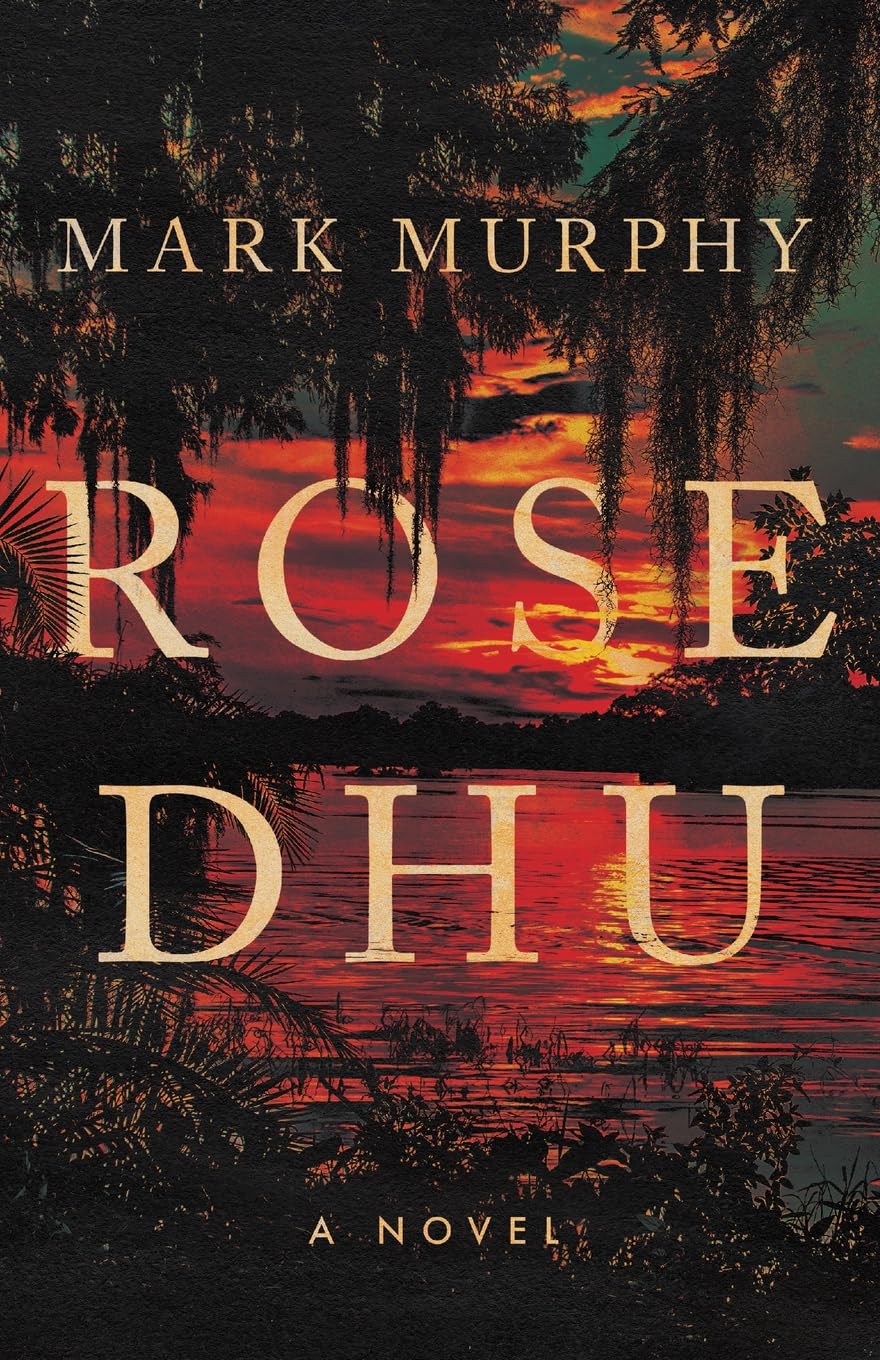
Rose Dhu
Posted by Literary Titan

Rose Dhu follows the disappearance of Dr. Janie O’Connor, a brilliant surgeon whose sudden vanishing rattles Savannah. Detective Frank Winger takes the case, and his search uncovers secrets that coil through old money, family loyalty, and violence hidden in plain sight. The story widens from a missing person case into something heavier. It becomes a portrait of power and the people crushed or remade by it. The final revelation, in which Janie reemerges alive under a new identity as Alice Tubman, lands like a quiet shock and changes the emotional color of everything that came before.
Scenes move quickly and often hit with surprising force. I felt pulled in by the atmosphere of Savannah. The place feels damp, shadowed, and tangled with history. Some chapters made me slow down because the emotional weight crept up on me. I found the depictions of trauma raw, but never careless. The book wants you to sit with pain, not look away. That kind of blunt honesty made me connect with Frank more than I expected. His flaws feel lived in. His memories of Afghanistan haunted me in ways I did not anticipate.
There were moments when the story’s intensity nearly overwhelmed its subtler pieces. Still, the ideas underneath the plot stayed with me. What people will sacrifice for those they love. What power looks like when twisted by entitlement. How a life can fracture and rebuild itself into something new. The book is bold about those questions. It pokes at uncomfortable truths, and I appreciate that kind of nerve. By the final pages, I caught myself rooting fiercely for Alice and for Frank.
Rose Dhu reads like a blend of Sharp Objects and Where the Crawdads Sing, only with a darker pulse and a tighter grip on the shadowy power games that shape a Southern town. I would recommend Rose Dhu to readers who enjoy mystery that leans into emotional depth, stories about moral gray zones, or Southern gothic settings with teeth.
Pages: 384 | ISBN : 1967510709
Share this:
- Click to share on X (Opens in new window) X
- Click to share on Facebook (Opens in new window) Facebook
- Click to share on Tumblr (Opens in new window) Tumblr
- Click to share on Reddit (Opens in new window) Reddit
- Click to share on Pinterest (Opens in new window) Pinterest
- Click to share on Pocket (Opens in new window) Pocket
- Click to share on Telegram (Opens in new window) Telegram
- Click to share on WhatsApp (Opens in new window) WhatsApp
- Click to share on LinkedIn (Opens in new window) LinkedIn
- Click to print (Opens in new window) Print
- Click to email a link to a friend (Opens in new window) Email
Posted in Book Reviews, Four Stars
Tags: author, book, book recommendations, book review, Book Reviews, book shelf, bookblogger, books, books to read, crime, ebook, fiction, goodreads, indie author, kindle, kobo, literature, Mark Murphy, murder, mystery, nook, novel, Organized Crime Thrillers, read, reader, reading, Rose Dhu, southern fiction, Southern United States Fiction, story, suspense, thriller, writer, writing