Blog Archives
The Shift Worker’s Paradox


R.E. Hengsterman’s The Shift Worker’s Paradox lays out a clear and unsettling picture of how shift work breaks down human biology, piece by piece. The book moves through personal stories, science, and practical guidance, weaving together research on circadian disruption, metabolism, hormones, and the daily realities of working against the clock. It explains how sleep loss, mistimed eating, and chronic stress grind away at the body over time. The tone blends clinical insight with lived experience, and the message is steady and stark. Working nights or rotating shifts has a cost, and that cost shows up everywhere from cognitive performance to metabolic health to emotional stability.
The writing is plainspoken, almost blunt at times, and that worked for me. I never felt lectured at. Instead, I felt nudged, reminded, and sometimes warned. The book mixes biology with stories of real people in a way that hits harder than any abstract health advice. I could feel the frustration in the author’s voice when describing tragedies on the drive home, and I could feel the weight of his decades in healthcare shaping every paragraph. Some chapters made me pause, especially the parts explaining how the body’s internal clocks fall out of sync. I knew shift work was rough, but I didn’t fully grasp how many systems it drags down at once.
What surprised me most was how personal the book becomes. When the author admits to his own struggles, the tone shifts from educational to intimate. It felt like someone pulling up a chair and telling the truth that usually gets swallowed in break rooms and morning commutes. The mix of scientific detail and emotional honesty felt unique. Shift workers aren’t dealing with one problem. They’re dealing with an entire stack of them, and the writing mirrors that tangled reality. I found myself moved, sometimes unsettled, and sometimes hopeful when the author talked about small changes that can help realign a life that’s drifting.
This book is a lifeline for nurses, factory workers, first responders, warehouse workers, and anyone else who trades daylight for survival. It’s also helpful for families who want to understand what their loved ones go through. I would recommend it to anyone who works outside a typical schedule or cares for someone who does. The book is honest, practical, and quietly compassionate, and it might be the first time some readers feel truly seen.
Pages: 394 | ASIN : B0G2SK9QDM

Sustained Courage

The Price of Nice lays out a sharp argument that our cultural obsession with being “nice” keeps us stuck in cycles of false comfort and stalled progress that preserves the status quo at home, in workplaces, and across society. What is the Think–Feel–Do–Revisit framework, and how does it help people break the cycle of niceness?
The Think–Feel–Do–Revisit framework was born out of my work in behavioral communications, not theory for theory’s sake, but years of studying how people actually change.
In my professional work, we borrow heavily from sociology, psychology, and behavioral science to answer very practical questions: What do people believe? What do they feel? Who do they trust? And how does that shape what they will do, and keep doing? We know that behavior doesn’t change just because information is correct or presented. It changes when beliefs and emotions are addressed first.
What clicked for me is that those same tools apply individually, especially when it comes to niceness.
When people stay “nice” in moments that require courage, it’s rarely because they don’t know better. It’s because of what they’re thinking, often unconscious stories about risk or belonging, and what they’re feeling, fear, obligation, loyalty, or discomfort. Those two things quietly determine what they do, usually nothing, and then the cycle repeats.
This framework helps interrupt that pattern. It gives people a way to name what’s happening internally before defaulting to silence. By revisiting the outcome, they build awareness and agency over time. That’s how mindset shifts stick. Not through one brave moment, but through understanding and practicing behavior change on purpose.
What were some ideas that were important for you to share in this book?
One of the most important ideas I wanted to name is that niceness is not neutral.
Growing up and throughout my career, I was praised for being “easy,” “gracious,” and “not difficult.” But I realized those compliments often came up just as I was quietly absorbing harm. Niceness became a way for the system to stay comfortable while I paid the price.
I also wanted to challenge the idea that courage has to look loud or reckless. In the book, I introduce the idea of nerve as sustained courage. Not the big speech once, but the daily practice of choosing yourself, again and again, even when there’s pushback.
And finally, I wanted to make it clear that this isn’t about becoming harsh or cruel. It’s about replacing performative niceness with intentional kindness, the kind that takes action, tells the truth, and is willing to disrupt.
What is one thing you hope readers take away from The Price of Nice?
I hope readers walk away knowing that the discomfort they feel isn’t a personal failing. It’s often a signal that they’re outgrowing the rules they were given.
So many people, especially women and people of color, think they’re broken because being “nice” isn’t working anymore. What I want them to see is that their instincts are intact. They’re just bumping up against systems that rely on their silence.
If readers take away one thing, I hope it’s this: You’re not required to be palatable to be powerful. And choosing nerve doesn’t make you dangerous. It makes you daring.
Author Links: GoodReads | Website | LinkedIn | YouTube | Instagram | TikTok | Bluesky | Amazon
“What’s wrong with nice?!” A simple and powerful question. It demands we interrogate the unspoken rules that shape our lives, often without our realizing it.
“It costs nothing to be nice!” What a travesty of logic. Niceness is not free—it comes at a steep price. It’s a velvet glove over an iron fist, stifling dissent, prioritizing comfort over progress, and conditioning us to accept the status quo. Niceness is one of the most insidious social constructs, keeping us compliant, silent, and complicit in inequity. If we don’t question it, we stay exactly where power wants us—agreeable, easy to manage, and stuck.
The Price of Nice is about breaking free. Amira Barger deconstructs our cultural obsession with niceness, exposes its hidden costs, and offers a practical framework for real change. With sharp analysis and personal insight, she helps readers disrupt the narratives that keep them stuck and reclaim their power.
Guided by four dimensions rooted in social psychology—think, feel, do, revisit—this book offers immediate, adaptable practices for creating change. Because breaking free isn’t only what you know—it’s what you do next.
If you’re tired of “good enough,” this book will challenge you, change you, and call you to more.
The Marvelous Adventures of Lucas Bard
In a world where the lines between reality and fantasy blur, an imaginative boy named Lucas faces more than the usual middle school dilemmas. His life takes a wild turn when he inherits his late grandfather’s enchanted monocle. The lens is capable of opening gateways to a fantastical realm. Thrust into a bizarre dimension with enigmatic automatons, Lucas discovers all kinds of mysterious happenings. Dive into a tale of adventure, friendship, and self-discovery, where every moment is a step into the unknown, and each moment a test of courage and wit.
Love Yourself

Indra’s Net offers readers a spiritual guide that blends personal experiences and grounded spiritual lessons within a Tarot-inspired structure. Why was this an important book for you to write?
For my own growth.
Is there anything you now wish you had included in Indra’s Net? Any additional anecdotes or bits of wisdom?
No.
What is one thing you hope readers take away from your book?
Love yourself.
Can we look forward to more releases from you soon? What are you currently working on?
Ideas, but nothing definite.
Author Links: GoodReads | Facebook | Website
Adult Nonfiction Book of the Year, San Francisco Writer’s Conference
FOR THOSE WHO SEEK ANSWERS, UNDERSTANDING, INSPIRATION, & INNER PEACE
Indra’s Net is a collection of themes about learning to live an awakened life and opening one’s mind and heart to the Self. It is for those who seek answers, understanding, inspiration, and inner peace. It discusses topics such as vulnerability, codependence, arrogance, impermanence, gratitude, and failure, and contains wisdom and teachings from many paths.
This book can be used as daily inspiration, a tool for self-improvement, a spiritual lesson plan, and a source of divination. Full of helpful techniques, hints, humor, and love, all oriented towards making sense of our human experiences and discovering a cosmic home here on Earth, it is a how to do and how to be manual.
The format mirrors a traditional Tarot card deck, although it offers a new take on both Tarot meanings and spiritual discovery outside of Tarot readings. The book can be used as a modern guide to reading and understanding Tarot card meanings.
In the two-thousand-year-old tradition of Indra’s Net, each perfect faceted jewel reflects every other jewel and is reflected by that jewel. It’s an image of interdependence, in that everything is connected to everything else. Indra’s Net is not a poetic or a philosophical idea, it’s the way life functions.
Indra’s Net is a product of author Indra Rinzler’s 50+ years of living on the spiritual path, assembled from decades of study, wisdom paths, practices, experiences, and revelations.
How we view life is our choice. This book is meant to encourage one to choose from a higher wisdom and connection to the truest Self. That which we wish to understand and become, transforms us in the very process of seeking. As we open to awareness, we awaken to the significance of all dimensions of reality.
Emotions as the Catalyst
Seasons of Life and Love takes readers on a journey through themes of loss, regret, longing, and joy in a collection of poems centered on the complexities of human emotion. Can you share a bit about your writing process?
I never force my thoughts or words. Something very simple may trigger a thought: a sunset, a breeze, a cloud, a flower. A single flash from a firefly at evening. Then I form an idea in my mind and begin a mental journey.
How do I feel when I look at that sunset? What has my day been like? Do I have any regrets? I put myself in the picture. I ask myself: What simple thought do I want to express? If I can answer that question, then I proceed slowly. I write from developing emotions and elaborate point by point and try end the final stanza with a powerful thought, to let it linger in the reader’s mind.
.
When I begin to write poetry, I have one rule in mind. Use simple words, paint clear mental pictures, and write so that the reader can easily grasp the message. If my words strike a common chord with the reader’s feelings, then he/she can figuratively “own” it and call it to mind at will. Powerful thoughts can be expressed with simple words. I want the poem to reflect upon the reader, not upon the poet. Words can last forever; poets do not.
Did you write these poems with a specific audience in mind, or was it a more personal endeavor?
It began as a personal experience. When I experienced personal tragedy, I went for long walks. I noticed that the weather resembled my life. It was sunny one day, stormy the next, life-threatening occasionally, and afterward, peacefully calm. I had no audience, I wasn’t writing a novel, I was describing my feelings as they related to the weather.
Sometimes I just wrote about the weather. Nature is a very moving experience if one stops to sense its changes. I wrote about losing love, and finding love; and the doubt that comes to mind, questioning the wisdom of signing up for more pain; and that overwhelming sense of euphoria one experiences when the universe aligns with your heart. But it can also be temporary, and when that came, I wrote about that, too. Not all poems were about me, though. Sometimes I would use a personal feeling and generalize a poem, using my emotions as the catalyst. For example, the poem “Jewels,” a romantic poem about a lover returning home in the early morning hours after visiting his love, was developed around the idea of a modern-day Romeo and Juliet.
I rarely write with a specific audience in mind. I write to express inner feelings. If they find an audience (and who hasn’t lost love?) then, that is my audience. I don’t want my poems to be or sound contrived. They must be genuine. If I sense I am slipping into contrivance, I stop and discard the poem. Do I know what I will write about next? No. I have no idea. If asked to write about a certain subject, I cannot. I can only describe what I feel.
Do you have a favorite poem in the book, and if so, why does it hold special meaning for you?
Do I have a favorite poem? I have many. They must all reach the same standard. “A Ray of Sun” – This was one of my first poems written after losing my family. I was walking a path that took me across a floating bridge over a stretch of water. The day had been cloudy, reflecting my disposition. Midway across the bridge, the sun broke through the cloud, low in the sky. The effect caused me to stop and feel better. It inspired hope. It was the first time I linked the weather to my emotions. Hence: “I knew if I could wait, if I could hang on long enough, I’d see the sun appear.”
“Everything is Beautiful” – this poem was inspired when I visited a retirement home. As I walked along the
hallway, I saw old men and women sitting alone in their rooms with the doors open, virtually abandoned
in a retirement home at the end of their lives. I asked myself: What do they feel inside, and what are their
dreams? I felt sad that someone should end their days like this.
“Hooked” – I love this poem because it is short and sweet and expresses in two stanzas how I felt when I fell in love.
“I Thought of You” – This poem describes perfectly how I felt when I had lost love. Because love lingers long after The Departed have departed.
“Jewels” – I have always loved this poem for the word pictures it elicits and the power of love to push one to great lengths and dangers to experience it.
“Love Whom You Wish” – This is a cautionary poem directed to the one who is leaving the relationship. I love the last stanza. It encapsulates the warning of the one abandoned.
“The Cost of Love” – This poem perfectly reflected my feelings when my relationship crumbled, and it juxtaposes the value each placed on the relationship.
“The Flood” – I wrote this poem with a smile on my face. I was reflecting upon the wonderful experience I had and the intensity of the relationship.
“The Fool” – I think this is one of my most lingering poems. How many have lost love, only to long for its return and be viewed as a fool for remembering it the rest of his/her life?
How has this poetry book changed you as a writer, or what did you learn about yourself through writing it?
I have hundreds of poems. This is my first published book of poetry. Most of my poems are written in the same style. I have been able to express more clearly my feelings of finding love, basking in love, and losing love. Those are experiences shared by many. I found I was able to describe succinctly my feelings without becoming philosophical. I have simply described human nature.
But life is more than just love. We can find delight in living a day, watching a sunset, experiencing a rainstorm, and seeing the seasons change. I think my poetry has made me more keenly aware of the simple things that life has to offer and that are occurring around us all the time. Often, we overlook them. Don’t. They have been here longer than we. They comfort us. Stop and take note of the emotional treasures they bestow.
Author Links: GoodReads | Amazon
A collection of poems about finding love, losing love, the change of seasons, and moments in the day. In short – it’s about life and love.
Ghost Brother
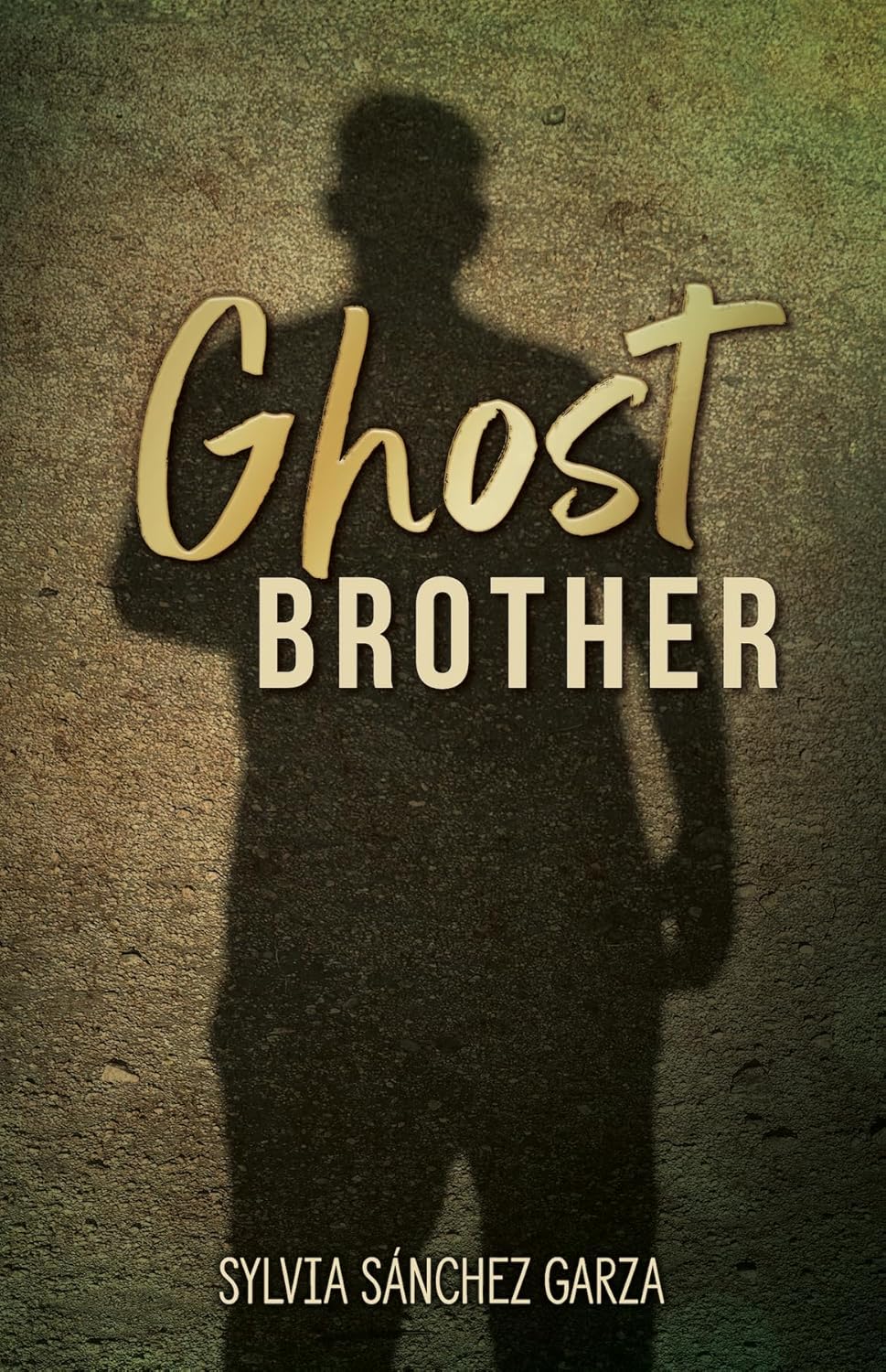
Ghost Brother is a young adult novel that opens with twin brothers, Cris and Carlos, heading to a school dance in South Texas, only for a violent storm, a pair of bullies, and a disastrous crash to shatter their lives. Carlos dies instantly. Cris survives. What follows is a story told in both of their voices, one alive and drowning in guilt, the other watching as a ghost who can see everything but cannot be heard. The book blends grief, memory, and mystery as the brothers struggle, separately and together, to face what happened and what it means for their family.
Reading it felt like sitting with someone who is trying to talk through the hardest moment of their life, stopping and starting, sometimes whispering, sometimes spilling over. The writing is simple and direct, which fits the teen voices. I liked that the author didn’t rush past the emotional fog after the accident. Cris moves through the world as though he’s wrapped in wet cotton, and Carlos drifts with this strange mix of clarity and longing. Their alternating chapters make the tragedy feel bigger and messier because you’re seeing it from both sides of the veil. Some scenes hit with sharp force, like the mother collapsing when she hears the news or Carlos watching her cry and being unable to touch her. Others move slowly, the way real grief does, circling the same memories again and again.
I was also drawn to the author’s choices around culture and community. The book is rooted in Mexican American traditions, beliefs, and rhythms that shape how the characters mourn and how they make sense of death. There’s a spiritual layer here that never feels like decoration. Carlos isn’t just a ghost for plot convenience. His presence echoes the stories their grandmother told, the prayers their mother whispers, the sense that the dead stay close. The supernatural moments glide in quietly, almost like a breeze shifting the curtains. At other times, they feel heavier, especially when Carlos tries to warn his family that the sheriff may twist the truth about the accident. The blend of realism and the supernatural makes the book feel like a hybrid of contemporary fiction and ghost story, but always grounded in teen experience.
By the end, I felt like I’d spent time with a family trying to hold itself together. The story doesn’t pretend grief is tidy or that answers neatly appear. It sits in the uncertainty, in the fear that justice may not come easily, and in the hope that love still stretches across impossible distances. If you like young adult fiction that honestly explores loss and adds cultural depth and a touch of the supernatural, this book is for you. It’s especially suited for readers who appreciate emotional stories that explore family bonds, healing, and the invisible threads that connect us even after death.
Pages: 182 | ASIN : B0CZPLPB7P



 LITERARY TITAN