Category Archives: Interviews
Skilled At Handling Lies

Angus Sliders follows Max as he struggles to remember what versions of history are real and what is made up from Mirror’s effects, causing history to fracture further, and possibly in irreparable ways. What was the inspiration that created the journey Max goes on in this book?
Max’s journey in Angus Sliders originates from a core question. What happens to a spy when his most trusted asset, his memory, fails him? The Mirror has always posed a threat because it warps time, but the greater threat is psychological. I aimed to examine how an experienced intelligence officer, skilled at handling lies, disinformation, and shifting loyalties, would react when his internal compass fails him.
The inspiration came from three connected ideas. The first is the fallibility of memory in espionage, where spies operate within constructed realities such as covers, legends, and half-truths. The second is what could be called post-war trauma. The fear of misremembering. Lastly, there’s the ethics of changing history. If altering one moment could save lives or end them, how does someone like Max resist the temptation or cope with the guilt of decisions made in unstable times?
So, his journey ultimately revolves around identity under pressure. Max becomes a man forced to navigate through multiple versions of his own past, aware that each step could deepen the cracks. The tension in Angus Sliders comes from whether he can hold onto the truth long enough to repair the present, or if the Mirror will completely overwrite him.
I find that authors sometimes ask themselves questions and let their characters answer them. Do you think this is true for your characters?
Absolutely. For me, that’s one of the engines behind the entire Sliders universe. I often start with a question I’m unsure how to answer, for example, what would it feel like to step into a version of history that remembers you differently? How much of your identity remains when memory becomes negotiable? What does loyalty mean when time itself can be rewritten? Then I stop answering as the author and begin listening to the characters.
Max and Alicia are both shaped by the worlds they navigate. Max, for example, rarely gives the easy answer; he provides the necessary one. Alicia responds with accuracy and restraint, revealing the cost of knowing more than she can admit. So yes, my questions start the conversation, but the characters finish it. That’s the value of writing in this universe: the characters live close to points of fracture such as history, memory, and time, and their answers often reveal truths I wouldn’t have reached on my own. In that sense, I’m not just writing them. I’m discovering what they’re willing to tell me.
I felt that there were a lot of great twists and turns throughout the novel. Did you plan this before writing the novel, or did the twists develop organically while writing?
The honest answer is both. I always start with a skeleton. The main plot points, structural pivots, and key revelations that the whole story depends on. In a book like Angus Sliders, where the narrative twists around time distortion and espionage, those anchors are crucial. Certain twists must happen for the story to have the right impact. But the best twists are the ones that seem inevitable in hindsight yet are surprising in the moment. They tend to happen naturally. They appear when characters react honestly to pressure. They surface when a secondary detail suddenly becomes essential. They occur when the logic of the world requires a new fracture in the timeline.
As I write, the characters often reveal parts of the story I didn’t fully see during the outline stage. Max, for example, rarely acts like someone who wants his arc to stay linear. The Mirror’s influence almost encourages unexpected angles. Alicia makes choices that challenge the neat structural plan, deepening the stakes. So, the process becomes a balance. Plan the structure and, to some degree, let the characters decide how to move through it. That’s where the twists come from. Structure supported by surprise, and surprise supported by character truth. If I’ve done it right, the reader feels both the inevitability and the shock.
Can you tell us more about what’s in store for Max Calder and the direction of the third book?
Without revealing too much, the third book pushes Max into the most dangerous territory he’s faced yet. Not because the enemies are stronger, but because the consequences of what he’s already survived finally catch up with him. Cuban Sliders, based in the Caribbean, leaves Max standing at the edge of a world where the Mirror has been dismantled, but its influence hasn’t disappeared – it’s just increased. The third book poses a more complex question: What does a man do when the past he fought to fix begins rewriting itself around him? Max has learned to navigate fractured histories. But now he must decide which version of himself he’s willing to live with. The third book will force him to confront timelines he thought he’d closed and choices that refuse to stay buried.
Max no longer knows if he’s fighting for the right side or if the right side even exists. If the first book broke Max, and the second tested him, the third questions whether he can survive the truth he’s spent his life trying to uncover.
Author Links: Facebook | Instagram | GoodReads | Website | Amazon | Apple Books
It’s 1948. Max Calder thought he’d escaped the Mirror’s grip. But when an encrypted MI6 radio message pulls him from the shadows, he finds himself trapped in a deeper conspiracy involving Kim Philby – one that spans timelines, and versions of himself he can no longer remember… or trust.
Partnered once again with Alicia Rayes, Calder races from Lisbon to London to Edinburgh to uncover Project Oracle, a secret MI6 experiment buried at a black site called ANGUS beneath a loch at Invershiel. There, an unstable Mirror still hums. And waiting for him is Variant 6F… a doppelgänger who might be the last warning before history fractures for good. As enemies close in and memories slip through the cracks, Calder must face the truth: the timeline isn’t broken – it’s being rewritten.
Angus Sliders is a taut, cerebral spy-fi thriller steeped in Cold War tension, noir grit, and mind-bending science fiction.
We Are All Travelers
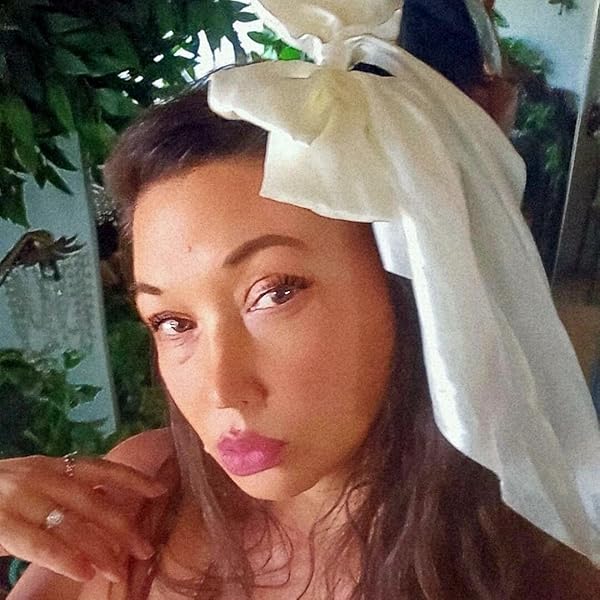
The Hundred Lives of Ashfern the Fox follows the journey of a wise fox from an enchanted forest who, from the moment of his birth, is marked by innate wisdom and an awareness of the past lives he has lived.
The writing in your story is very artful and creative. Was it a conscious effort to create a story in this fashion, or is this style of writing reflective of your writing style in general?
Though The Hundred Lives of Ashfern the Fox is only my twelfth publication, my path has already wandered through many genres. For years I have been drawn toward a more lyrical, breath-like style of writing—words that move with the quiet rhythm of wind through leaves. This book felt like a natural deepening of that evolution.
So yes, the artistry was intentional, but it was also instinctive—my prose simply following the currents it was always meant to follow.
Was it important for you to deliver a moral to readers, or was it circumstantial to deliver an effective novel?
My intention was to illuminate the gentle spirit of animism—the understanding that every stone, river, creature, and tree carries its own life and dignity. I hoped readers might feel a tender reverence for the world around them.
Additionally, the deeper messaging of The Hundred Lives of Ashfern the Fox rose from a very personal place: I wanted to write the book I have needed to read my entire life. I have died a thousand deaths in my own ego, heart, and mind to bring this story into the world, fully illustrated and fully alive.
Beyond its lessons, the book is meant as a lantern for the wandering heart: a source of quiet comfort, a glimmer of hope, and a reminder that we are all travelers in this strange, marvelous, ever-unfolding world.
What is the next book that you are working on, and when can your fans expect it to be out?
My next children’s book, Delilah’s Dreamlight Candles, will arrive on December 1st—a small offering of light for the winter season. Alongside it, I am shaping Books Two and Three of my Godslayer Trilogy, both set to be released in 2026.
The first book, The Infinydon, was my debut novel and was honored with the Literary Titan Silver Award in 2022, a milestone that still fills me with quiet gratitude.
Author Links: GoodReads | Facebook | Website
“IN A FOREST older than thunder and younger than sleep, where moss whispered secrets and the stars forgot to wink, a silver-furred fox was born beneath a lunar eclipse…”
So begins the unforgettable journey of Ashfern the Fox, a creature both wild and wise, born of starlight in a lush, enchanted forest. In this luminous, thought-provoking tale, award-winning author and artist MC Lorbiecke invites readers of all ages into a world where every river stone, fern, and fallen feather holds a spirit of its own.
Told in lyrical, poetic prose and brought to life with rich, fantastical illustrations, The Hundred Lives of Ashfern the Fox gently explores the beauty of impermanence and the eternal rhythm of life, death, and renewal. Rooted in the indigenous concept of animism, the story reminds us that nature is not a backdrop but a living, breathing presence, one that sees, remembers, and loves.
As Ashfern moves through a hundred quiet lifetimes , forgetting, remembering, and becoming, readers are offered a comforting vision of a world where loss is not an ending, but a transformation. This book speaks softly to those carrying grief, reminding them that nothing is ever truly lost; it is only changed.
A perfect companion for quiet moments, thoughtful hearts, and curious minds, The Hundred Lives of Ashfern the Fox is a timeless fable for anyone learning how to let go while holding on to wonder.
The Spiral Can Be Reversed
The Path from Hell to Heaven is a philosophical and psychological map of the ego, tracing how people spiral downward into “Hell” through fear, shame, and denial, and upward toward “Heaven” through trust, openness, and renewal. Why was this an important book for you to write?
Because ego explains nearly every human collapse and ascent, yet most people never receive a practical map for it. I wanted to translate psychological chaos—fear, shame, denial—into a recognizable model anyone could use, the same way we map complex systems in software or business architecture. This book is that missing human blueprint: a self-debugging framework that moves readers forward instead of leaving them looping in abstraction.
How did you come up with the concept of the two-sided spiral of the ego and develop this into a process that readers can implement into their own lives to find clarity and understanding of themselves?
I analyzed patterns before individuals. Ego contracts or expands; there’s no true neutral. Avoiding truth descends, openness creates lift. The spiral metaphor stuck because it captures momentum and acceleration.
To make it implementable, I structured it as an RPM self-awareness loop:
- R – Recognize the ego state you’re operating in
- P – Pause the automatic reaction loop
- M – Move with intentional correction or openness
It’s diagnostic and reversible, giving readers a clear exit path whether they’re descending or rebuilding upward.
I found the ideas presented in your book relatable and appreciated the actionable steps that readers can take to find their own clarity. What were some ideas that were important for you to share in this book?
The concepts that mattered most to me were:
- Ego itself isn’t the problem → closed ego is
- Narcissism is often unprocessed fear wearing armor
- Pain isn’t identity, it’s a turning point
- Ambition without self-awareness becomes self-sabotage
- Recognition of the loop always comes before the escape
And above all—I wanted a book that doesn’t just sound smart, but gets applied and changes outcomes.
What is one thing that you hope readers take away from The Path from Hell to Heaven?
That their ego has directions, and so do they. If they feel stuck, defensive, ashamed, or overwhelmed—it’s a state, not a life sentence. The spiral can always be reversed, rebooted, and climbed. The only real trap is believing the descent is normal and permanent.
This book is a Map of the Ego’s Double Spiral — a journey every individual, family, and society travels between Hell (closed ego) and Heaven (open ego).
Through vivid metaphors and grounded psychological insight, LANOU unveils how pain becomes protection, how protection turns to illusion, and how awakening begins when trust cracks the shell.
You’ll see yourself, groups, and even nations in these patterns:
The wound that starts the descent.
The mask that hides pain through control.
The collapse that breaks illusion.
The trust that starts renewal.
The open ego that frees love and truth.
Structured as a fractal spiral, the book reveals six repeating steps across all scales — from individuals to groups to the world itself. It blends the clarity of psychology with the simplicity of spiritual truth: hell is repetition; heaven is renewal.
Once you see the map, you cannot unsee it.
Comfort and Risk

In Dead Reckoning, a group of detectives and their families find themselves embroiled in a mystery complete with missing passengers and eerie mysteries on what should have been a relaxing Mediterranean cruise. Where did the inspiration for this mystery come from?
I’ve always been interested in how a normal setting can suddenly turn dangerous. Cruises are supposed to be fun and relaxing, but they’re also closed‑off worlds where people can’t just walk away. That mix of comfort and risk gave me the idea for Dead Reckoning.
How do you balance story development with shocking plot twists? Or can they be the same thing?
For me, they go hand in hand. A twist works best when it grows naturally out of the story. I like to drop little clues along the way so readers feel surprised but also realize the twist makes sense.
What do you find to be the most challenging aspect of writing a trilogy? What is the most rewarding?
The hardest part is keeping everything consistent from book to book — characters, details, timelines. The best part is being able to spend more time with the world and the people I’ve created. It lets me go deeper and give readers more to enjoy.
Can fans of The Stanton Falls Mysteries look forward to more work from you soon? What are you currently working on?
Yes! Dead Reckoning is a stand‑alone mystery, separate from the Stanton Falls trilogy. I wanted to give readers a fresh story with new characters and a different setting. At the same time, I am continuing to develop future projects — including more mysteries — so fans of Stanton Falls can look forward to new work from me soon.
Secrets from an Older Generation
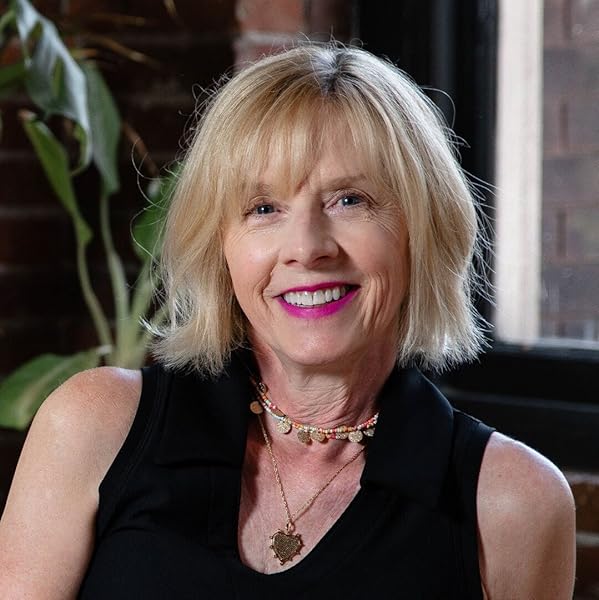
All Fired Up follows two strangers who meet on the way to a small island in the Pacific Northwest and discover a shared history while trying to solve an old mystery shrouded in dangerous secrets. What was the inspiration for the setup of your story?
Secrets that can’t stay hidden forever. Once they are discovered, they can trigger an avalanche of trouble, including rekindling long-held resentment. In my story, these are secrets from an older generation. My main characters, Jack and Marianne, discover that their grandfathers knew each other and did something long ago that now has repercussions, and another individual feels it’s time to get even.
I enjoyed the slow-burning romantic relationship between Marianne and Jack. How did their relationship develop while you were writing it? Did you have an idea of where you wanted to take it, or was it organic?
It was very organic. Although I knew that in the end, I wanted them to be together, I didn’t want it to be easy or rushed, and I didn’t always know what would happen next. I understood each of my characters, but I didn’t always know how their personalities would respond to each other. I would write a scene and initiate some action, and see how each personality responded to it and to each other. They became real people to me. But I did have some control. 😊 I wanted them to be tempted, but I didn’t want them to play around with each other. They are two mature adults with responsibilities, and they led two very different lives. So, I tried to write about their relationship as it might be in real life, with two people circling each other cautiously, feeling that there is a connection, but also reeling a bit because this came at them out of the blue: this connection. I also wanted them to be aware that it might not work with the others’ lives being incompatible with theirs at present. Jack is used to life in special ops, never being home and he wants to return to the army because it’s a life he is familiar with and one he does best. Marianne is realizing she wants a home life and her own family. I used the comforts of a home, meals together, and a homeless teenager to further connect Jack and Marianne, giving them both another purpose in life other than what they each currently pursue. It’s what could happen in real life for two people, life showing them what really matters and what truly fuels the heart.
Was there a reason why you chose this location as the backdrop for your story?
Yes. I love the San Juan Islands, and Orcas Island is one of those in that chain of islands in the Pacific Northwest. When I was young, my family would go boat camping around these islands. We would go into the Deer Harbor marina on Orcas to use the laundromat and buy supplies. To this day, I still visit Orcas Island for hiking or a weekend getaway. The ferry ride from Anacortes takes just over an hour to get to Orcas, and during that time, the world just slows down, and you are transported to another pace of life. It’s magical. It’s also beautiful with the wildlife, the evergreen trees, and the rocky beaches. I also like the idea that a serene-looking island can have its secrets.
I hope the series continues in other books. If so, where will the story take readers?
The series will continue. There are currently four friends in The Barefoot by Moonlight writers’ group, and each gets their own story. The next book, All You Desire, is set in LaConner and is due out in 2026. In book 1, you met Marianne’s brother Ian Dunaway and her best friend Fiona Sanchez, who is also a member of The Barefoot by Moonlight writers’ group. Ian and Fiona had their eye on each other in book 1, and we’ll see what happens next when a mystery brings them together in the idyllic town of LaConner. Books 3 and 4 are in development, where you’ll meet the other 2 writers in the group, where they, too, will discover a romance and a mystery.
Author Links: GoodReads | Instagram | Website | Amazon
When Marianne and Jack meet on the ferry to Orcas Island, it couldn’t be more awkward—for Marianne, that is. Jack has no problem with a woman landing on top of him. It’s a case of opposites attract. But they each have their reasons not to get involved.
But on this small island, avoiding each other isn’t to be.
An old tale of stolen jewels has resurfaced, revealing a dangerous secret kept by both of their grandfathers. It will take Marianne and Jack together to uncover the truth before one of them gets hurt. But solving the mystery means working out an arrangement. Jack needs a place to stay. Marianne has rooms to spare.
In close quarters, it’s soon apparent that solving the mystery might be easier than trying not to fall for each other as they realize that they both long for the same thing.
Who says nothing ever happens in a small island town?
Romance and mystery readers alike will love this page-turning romance set in the ruggedly beautiful Pacific Northwest where an island slowly gives up its secrets.
Refuge for Human Civilization
Fragments of Light follows a young Archivist named Keela as she uncovers relics of a forgotten civilization while ancient machines awaken beneath the ice. What was the inspiration for the setup of your story?
Winter. It all started with that. I live where winter is a VERY present concept, and as much of an avid reader as I am, rarely did I ever find a compelling SciFi story that took place in winter or somewhere where winter was the norm. So I figured that starting everything there would be something that could generate a different type of texture to the narrative. And one of those threads is the impact – or I should probably say “impacts” – of climate change. As harsh an environment as the Arctic is, climate change has a disproportionate effect on it; everything seems magnified. So to me, that area would likely be a natural refuge for human civilization should the World go to Hell in a handbasket…
Keela’s emotional journey feels incredibly intimate. Was her character shaped by any personal experiences or themes you wanted to explore?
No personal experience per se. However, being a parent, I see that many young people – and having been one myself – are unsure of the potential in them; of the strength that inhabits them. Sometimes it’s easier to wait for someone else to do what needs to be done, but most of the time, YOU could do it, and you could probably do it better. As for the archivist part, that’s purely projection: I’m a big history nerd! I just find it fascinating – good and bad – how technology throughout the ages shaped humans; how it creates a virtuous (or perverted, depending on where you stand) cycle where humans create technology that changes them and allows them to create more “advanced” or different technology that in turn changes them again, and so on and so forth.
What were some themes that were important for you to explore in this book?
Resilience. Ambiguity. Adventure. Friendship. And as corny as it sounds, humor. Because I really do not want to live in a world where even during the worst of the worst we are not able to smile or laugh. Maybe not at what’s happening, but surely at how we deal with ourselves and others.
The machines beneath the ice feel both mythical and scientific. What was your process for designing their nature and purpose?
Well, in Fragments of Light, machines are not generally “under the ice.” Some are, but it’s more because of their purpose, really. In the subsequent books, we see that Keela and Anina need to go outside the safety of their known world – the Arctic – and cross entire continents to continue their quest and get to interact with many different societies, machines, and people.
.
Without spoiling too much, let’s just say that machines are left over from a technologically advanced world that existed pre-Fracture. One where geo-engineering was seen as the way to stop/reverse/curb global environmental collapse. Think huge sun reflecting mirrors, carbon catchers, water purifiers, methane gas processors, etc. These would need to be massive, on a scale that would blow your mind, in order to affect the climate of a system as big and complex as the Earth. And you are right, as with anything that is old, eventually they did drift into mythology or quasi-myth.
Author Links: GoodReads | Amazon
Keela was meant to guard the past, not be claimed by it. In the frozen city of Lumik, she touches a relic that hums with memory, and nothing stays buried. Her quiet life shatters, pulling her into a truth no one else will face.
With Anina, a gifted technician who reads machines like language, Keela follows its call across a fractured Earth. Engines stir beneath snow. Salvage-built cities whisper of healing long abandoned. Wonder ignites, but so does danger, as rivals twist awe into power.
This is not destiny. It is choice. And when no one else steps forward, Keela must.
For fans of Skyward, Scythe, The 100, and Ship Breaker. Discovery-driven sci-fi with brave heroines, hidden tech, and the courage to do what must be done. Scroll up to begin.
Creation Unfolding

Nothing and Blank Save the World and Other Tiny Works follows a constellation of poems and stories that intertwine cosmic creation, human vulnerability, and the beauty of connection into a single, awe-filled tapestry. How do you balance scientific wonder with emotional truth in your writing process?
As the second-to-last poem, “A Scientist with an Arts Degree” hints—or, rather, outright states—I have both a science (Biology) and arts (English and Creative Writing) degree, obtained in that order. I think the order matters. For as long as I can remember, I have always been fascinated in the sciences; the theories and explanations of the unknown, and the possible answers to impossibilities. That curiosity, and perhaps a tiny bit of staring at and learning about the night sky, is what fueled many of the works in the collection. The physical world can be explained in complex terms that people read in textbooks or academic journals. Elements of the human experience, much like atoms, chemical compounds, and even space dust, are also tangible, universal (no pun intended), and can be explicated.
But what if, I thought, it was more than that?
As a person of faith, one of my favorite things in the world is things that are unseen. Faith is the evidence of it. Evidence of the unknown, the not yet, the maybe. How can we as humans answer unknown questions or give unknown answers? That, I believe, is the vehicle of this collection that the fuel powers. There is what we know, there is what we don’t know, and then there’s us, smack in the middle of the two. I wanted to write about both together—to form that ever-so-peculiar balance. I pick an idea or concept or person and just… think, and write down my thoughts. Take, for example, a star. We know it’s there. We know what it’s made of, we think. But… how did it get there? What is it, really? Can it think like we can? What if it could? How does it spend its life? What if, what if, what if? The exact same thing goes for people. Everything is a wonder, and, with the right words, they can be explained further or explored from different angles. I’ve, as someone I talked with recently put it, “allowed myself to feel” this sense of wonder and curiosity, and the very human emotions behind them. Writing them down was the next logical step. Somehow, it all fits into two hundred thirty-six pages. And curiosity fuels the cat.
The title story feels allegorical and foundational. What inspired the beings who created the world out of light and darkness?
The characters Nothing and Blank are probably the earliest concepts that have come from this book. Over a decade before the publishing of the book, I wrote a little bit about the two in a smaller version of the final poem. In the early stages of my fixation on space, I fashioned small beings in my brain made of stardust, just floating somewhere in the universe with nothing to do but play around. I came to the conclusion that the two were children, curious about the world around them. So curious, in fact, that they would want to participate in their surroundings after watching it all happen for some time. Nothing and Blank simply watched creation unfolding. At some points in life, that’s all we as humans can do. Watch beauty form. Watch things change and grow. And, when given the opportunity to make something of our own, we use what we have and what we know to mold something else. Nothing and Blank are the embodiment of cosmic inquisitiveness—in many ways, my cosmic inquisitiveness, and my own quest for creation from childhood to adulthood.
It’s not easy for me to describe what exactly the light and darkness are in the poem, and what connotations are connected to them. They are both powerful forces coexisting. But I think it was important that the two characters were not one-hundred percent light or dark, and that there was a little bit of each other within. Balance. Equilibrium. Order. A more neutral version of yin and yang. I think writing “the balance thereof is life” was the moment I reached an epiphany concerning the ideas of the poem. The two beings, with their light and darkness, worked together to make a world, to save a world.
The balance of light and darkness as a concept is present in many beliefs and symbols on Earth. Neither can exist without the other, so to speak. There is good in bad; there is bad in good. The balance thereof is life. Everything that was created, I think, is a result of that concept. In my own life, I’ve had to sort of come to terms with this, more especially the good in the bad. Maybe I longed for the balance when creating the poem, or I wanted to know where the balance came from, or what it felt like. Both light and darkness were used to create in the poem. It gives me assurance in a weird sort of way.
Your imagery is vivid and recurring. Are there particular symbols you return to intentionally, or do they emerge organically as you write?
Sometimes I look back at my own work and, while laughing, I notice quite a few recurring ideas: life, death, space, and the unknown human experience. All things I love writing and learning about. All things I have never fully understood or participated in myself, save for a few decades on Earth. I look at my surroundings, again with laughter, and find that I am bombarded by these ideas every single day. I know of life. I know of death. I read about space all the time. I hear stories from people I could never be doing things I could never do.
Sometimes, I come up with thoughts and scenarios about these ideas in hopes that I am close to an answer for them, or at least something that makes sense to me. I’ve never died or stepped outside of our galaxy. I’ve never gotten married (yet?) or been to Washington state. I’ve never seen a constellation up close or run away from home.
What would it be like?
It’s really convenient that these ideas are, in many ways, both constant and changing continually. I think they’ll stick with me for a very long time.
What part of this collection challenged you the most to share with the world?
Though most of the poems and short stories are fictional, there is a little piece of me laced in some of the letters. I was most afraid of… doing that. A good writer will place themselves somewhere in their work to make it more relatable, either through characters, plot, or other story elements. But me? The hardest thing to write about is myself. If I were to place myself in this book, what would happen? Would people understand? Would people get it? Would they paint a picture of me and pass some sort of judgment? I was afraid of writing about my experiences and thoughts in their raw form. I was afraid of revealing so much about me, even in subtle ways. I didn’t want people to know (the real) me. For months, I struggled with pouring out my heart into the pages as I typed and being honest and open about myself. But I realized that it was the only way to breathe life into the poetry and stories and make the language authentic. Short stories like “Coffee Stains” and poems like “6/8” or “Sussan’s Sonnet” became much easier to craft.
The review of my book called me “brave.” I think that’s the word for it. It took a lot for me to be as vulnerable as I was, allowing myself to be myself. Allowing myself to be. It was okay to be honest and expressive. I didn’t have to limit my emotions or interweave my diction with superficial statements or imaginary sentiments. I could be genuine. It sometimes feels, in real life, that I can’t. But on paper, I can.
Now that this book is out, readers can catch a glimpse of my mind, of me as a person. And, ultimately, it was a great decision to make.
Author Links: GoodReads | Website | Amazon
Self-Worth in God’s Love

Identity Crisis: Who Am I, Really? shares my journey from abandonment and anger to spiritual renewal, offering readers a thoughtful, faith-centered examination of identity. Why was this an important book for me to write?
Writing Identity Crisis: Who Am I, Really? was profoundly important because my personal journey from confusion about who I truly was to clarity about my ultimate identity mirrors a struggle that I believe is universal. The book is the story of how God took me—a man defined by the lies of his past, which was marked by abandonment, neglect, and abuse—and taught me who I truly was.
My motivation stemmed from my understanding that the “spiritual chains” that bound my heart were from society’s definition of who I was, and the deepest help I could offer to others was to show them the path away from this cobweb trap. I wanted to give my readers the euphoria of their own enlightened journey from a life of angry entitlement to one of humble gratitude, from anxious performance to restful security. By surrendering my story to the “divine Author,” I found that my entire path from early childhood, including my former orphanhood, abuse, and anger, could be transformed into the very tools of faith that could help others discover their own freedom. In short, the book was necessary for me to share – I felt a deep obligation to offer a roadmap that others might use on their quests for their own true identities.
What were some ideas that were important for me to share in this book?
I emphasized several foundational, Christ-centered ideas designed to dismantle a performance-based identity in favor of establishing true self-worth in God’s love. Key ideas that are important for me to share include:
- Identity is Found in Divine Design, Not Self-Creation: The central truth is that everyone’s identity must begin with the Creator, rooted in the Bible telling us we were created in the Imago Dei (Image of God). This inherent value is endowed, intrinsic, and immutable, and it cannot be increased by success or diminished by failure. True self-discovery comes not from looking inward, but from looking up to the Creator.
- The Radical Nature of Divine Adoption: A paramount idea is that as a believer, I am not merely forgiven, but am legally and lovingly adopted as a child of God. This concept, drawn from the irreversible Greco-Roman legal practice of huiothesia, means my old debts and legal ties have been erased, and I gain all the rights of a natural-born heir. This status is permanent, unbreakable, and the ultimate antidote to spiritual orphanhood and shame.
- The Freedom of Resting in Christ’s Finished Work: Crucially, the book aims to show that the only remedy for the soul-crushing performance trap is the reader learning how their identity is obtained by stripping away old facades with the freedom obtained through grace. Their righteousness is not earned but imputed (credited) to their accounts through the substitutionary work of Christ on the cross. Because Christ bore the divine wrath, each and every one of us is given the credit of having rendered perfect obedience to the law and thus is declared righteous by God. No earthly accomplishment can achieve that! Our standing is secured by Christ’s perfection, not our own, and certainly not by how we are evaluated or judged by others.
- The Battle for the Mind: It is essential for readers to understand that the enemy’s primary tactic is deception, accusation, and distortion of truth. This will never go away, and so our ongoing work is to continuously renew our minds by demolishing all the strongholds of lies and replacing them with the truth of God’s Word. My book shows how we can do this through Scripture, prayer, and community.
What was the most challenging part of writing your memoir, and what was the most rewarding?
- Most Challenging: The most difficult aspect involved confronting, and then allowing myself the vulnerability of exposing, the raw experiences of my childhood—the horrible feelings of abandonment and being neglected by those who were supposed to love andcare for me, the “searing, silent language” of being branded with negative names, and myabsolute, deep-seated anger toward God for all of it. It was very difficult going back to reveal this journey, all the way from being an unwanted foster child to my role, striving to become a respected police officer who was trying to earn his own sense of worth, all the while finding a way to silence those “old, familiar names” with all their various earthbound identities. This process required immense spiritual meditation and emotional honesty.
- Most Rewarding: The most rewarding element was clearly the process of discovering and then presenting to others the glorious truth of my new identity in Christ. This “new journey” transformed my path from a life of anxious performance to one of a restful and secure identity. The reward turned out to be knowing that my most painful chapters—my orphanhood and abuse—were used by God to give others a “roadmap” to their own God-given identity and the freedom which comes from their true name as a child of the King.
What do you hope is one thing readers take away from your story?
The single most important takeaway I hope for my readers is that they will understand they are created in God’s image and must stop searching for any identity in worldly evaluations, that by stripping away secular manifestations of identity, they can immediately reveal the truth of their own perfect identity already given to them through God’s love and sovereign design.
I am praying that my readers will:
- Hear God’s quiet and still voice, which cuts through every one of the competing voices.
- See themselves as God sees them: not as an orphan, but as a legal heir and child of the King.
- Understand at their core that their identity is not bound to anything from their past or anything related to achievement or performance, but that they are seen as righteous and deserving in God’s sight, forgiven and freed through the actions of His Son.
My final call to action is for readers to reject the exhausting slavery of performance and step into the joyful freedom of grace, living fully in the light of their true identity in His name, and now theirs, as well.
Author Links: GoodReads | X (Twitter) | Facebook | Website | Amazon
Why I Wrote This Book
My childhood was a chaotic collage of broken places and broken people, defined by the searing, silent language of abandonment. I learned the cold linoleum hallways of foster homes, where I tried to survive by becoming invisible, believing the cruel labels hurled at me: “stupid,” “worthless,” and “trouble.” For years, my identity was forged in a furnace of neglect, and I was utterly alone, desperately fighting for a sense of worth. I tried to seize control, to write a new story for myself through performance and success, even choosing to become a police officer as the ultimate expression of control and strength. But beneath the uniform, the armor was heavy and hollow—my self-made identity was a painkiller, not a cure.
I spent years looking around and inside me for the answer to the fundamental question, “Who am I?” It wasn’t until I stopped trying to write my own story and started looking up that I found the truth. Through His relentless grace, God took a man who was defined by the lies of his past and taught him who he truly was. The Bible became a mirror that shattered my self-made identity and revealed a glorious, God-given identity I never knew was possible.
This book, Identity Crisis: Who Am I, Really?, is a roadmap born from that journey. My prayer is that my story of moving from an angry, anxious life of performance to one of restful, humble security will help you, no matter your past failures or struggles. It is an invitation to every person asking to fill an inner void to discover that the struggle for identity ends in the heart of the God who made you. He sees you not as an orphan or a failure, but as a child of the King, beloved and secure. It’s time to stop striving, surrender your story to the divine Author, and finally come home to your true name.



 LITERARY TITAN