Blog Archives
Passion and Fear are Close Bedfellows

Another Slice of Fear is a collection of short stories that explore fear in different ways. What inspired the theme behind this collection?
This is the second collection of horror short stories. The first was “A Slice of Fear”. The central theme of fear is complex since people do not share the same fears, nor can they be inspired by the same approach. Instead each of the stories tends to play on another approach inside of how people find fear. From fear of the unknow, fear of being powerless, to fear of other people they try to find at least 1 commonality that can see inside a persons mind.
What were some driving ideals behind your character’s in these stories?
It is funny. I also write daily about passion and the positives in life. Passion and fear are close bedfellows and I would suggest that fear is a type of passion, a near uncontrollable emotion. With that in mind things like revenge, survival, and greed are strong motivators to the characters inside the book. For the story “Monster” there is a sense of purpose that was missing that came out. Originally I planned 16 stories but in the first book “A Slice of Fear” I received many letters on “The Edge” a story that was written for my daughter who has a form of MD. When she found a sword in a second hand shop she was restored and it pushed me to add one more story to this anthology, the follow up “Edges”.
My favorite story from this collection is ‘Stung’. Do you have a story that stands out to you from this collection?
I like Stung as it explores a different type of greed and there is a substory about a crime free city. I suppose if your pet giant scorpion eats all the bad guys it becomes a good city. Monster has surprised me. It was originally a 600 word flash fiction that called to me and I expanded it. I have gotten several wonderful reviews on it and it made my editor cry. It pulls at a great many emotions. Those two stand out but each of the stories has a special place with me.
What is the next book that you are working on and when will it be available?
I am currently working on “Curious Cousin”, books 6 in my action adventure series “The Masterson Files”; “Stealth Drive”, a story about a man who find a way to let go of the material; “Morgan”, book 2 in “The Eternal Forever” series; “Burial Ground”, a YA thriller; and “Yet Another Slice of Fear”, my third set of 15 stories of suspense and terror. I have to decide with the last if it will be 16 again or even 17 as some have suggested “Monster” and “Stung” deserve a follow up. It will be fun non matter what!
Author Links: GoodReads | Twitter | Facebook | Website
A man finds the secret to immortality, or does he? A selfish woman gets eternal servitude, for a price. A monster awakens and has to decide who is the monster? A family fortune is saved by unlikely allies. A scene unfolds from three different perspectives and creates a problem for Kate with exciting results. A man wins a special vacation for the newly almost divorced.
All this plus a new installment of the story from A Slice of Fear “The Edge”.
Are you ready to see how deep the rabbit hole can go? Another Slice of Fear contains 16 original short stories from the mind of Andrew Allen Smith that may help you get there!
I Love To Write About The Struggle
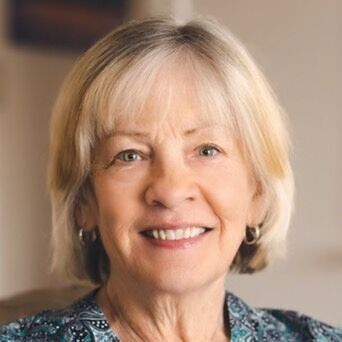
Miranda Writes follows a disgraced attorney who must choose between going after the defendant that got away or pursuing her new career. What inspired the idea behind this story?
Miranda Writes is my sixth novel, and despite varying ages and backgrounds, all of my main characters share at least one thing; a desire for a do-over or a second chance at a happier, more satisfying life. I love to write about the struggle, the efforts that we go through to make that happen. My dearest friend, to whom the book is dedicated, was a lawyer and I wanted to honor her legacy with Miranda, a woman who believes in justice and tries to make sense of the world. RIP LGC
I was completely wrapped up in the mystery behind this story. Did you plan the mystery or did it develop organically while writing?
Right from the beginning, I had an idea that there was some sort of a coverup at a fairly high level and that both Miranda and Becky would be threatened. But the details came to me as I wrote, and the twists and turns evolved along the way. That’s what I love most about writing: the surprising path that a novel can take you on!
Miranda is a character I loved following. What were some questions you kept asking yourself as you were creating her character?
My main goal was to keep Miranda’s character authentic. Despite her years of experience as a successful prosecutor, she suffered a serious setback and I felt that she would naturally question many of her professional and personal decisions going forward. I hope that her renewed confidence in her abilities was apparent as the story progressed.
What is the next book that you are working on and when will it be available? Could we see more stories with Miranda?
I had been working on a historical novel, but I couldn’t get Miranda out of my mind. I felt that there was more to her story and the words just started to flow. I expect you’ll see a sequel to Miranda Writes in 2023!!
Author Links: GoodReads | Twitter | Facebook | Website
Former Assistant District Attorney Miranda Quinn is on the brink of a career comeback when she gets a phone call. It’s a witness who disappeared three years earlier, resulting in a violent criminal going free. Miranda got fired as a result, but the witness has re-surfaced with a shocking story to tell; one that implicates Miranda and her ex, defense attorney Adam Baxter. And now, there’s a new victim.
Miranda’s legal advice blog-turned-podcast Miranda Writes is about to become a daytime TV show, but the negative press could destroy her credibility. Will the network stand behind her?
When it comes to the law, Miranda has all the answers, but the questions are getting harder and the stakes are getting higher. The dangerous web of lies and cover-ups she exposes leaves her questioning just how much she is willing to risk. She has the right to remain silent, but needs to speak up… doesn’t she?
Miranda Writes is a story of how far we’ll go to protect those we love and the power of second chances.
The Interplay of Memory and Dream
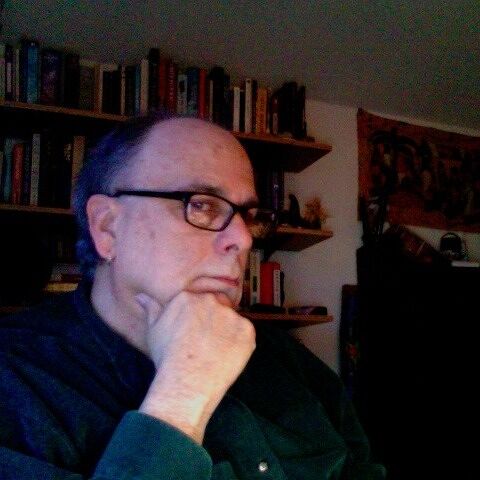
Skyrmion follows a man who enters a virtual world for the first time and navigates through dangers and dangerous relationships to find his daughter. What was the inspiration for the setup to your story?
The Dreaming Earth by John Brunner had a big influence on me when I read it years ago as a teenager. The idea that you could be transported to another world by a street drug seemed translatable to the realm of virtual reality. Another book that influenced me in my youth is John Steinbeck’s In Dubious Battle. Despite all of your doubts, in the end, you do the right thing.
Joe Larivee is an intriguing and well developed character. What were some driving ideals behind his character’s development?
First of all, I wanted my protagonist to be an ordinary man, not a cop or an ex-military hero, or any of the common tropes in this sort of fiction. I knew he would be conflicted and a tad cynical and have regrets over a past betrayal. And the child of radical parents who have left him with a social conscience. He also loves his daughter very much and tries to do what’s best for her.
What were some themes that were important for you to explore in this book?
I wanted to explore a few themes that have been important to me over the years: utopia v. dystopia, and the impossibility of either one; the role of (social) memory and dream in reproducing our everyday world; and my own indigenous roots, a theme which doesn’t show up so much in this first novel but is a major factor in the full arc of the Sweetland Quartet. Using the realm of virtual reality to address these themes, particularly the interplay of memory and dream, seemed like a natural to me.
This is book one of the Sweetland Quartet. What can readers expect in book two?
I can’t say too much without it being a spoiler for Skyrmion. But it takes place seventeen years in the future in a utopic society on the verge of invasion. It follows Jessie Larivee and her half-sister, Molly Whitedeer, as their family is torn apart by the machinations of New America Corporation.
Author Links: GoodReads | Twitter | Facebook | Website
Joe Larivee believes he has seen the other side, and now he must decide: is Sweetland real, and, if so, does he follow his daughter and lover and escape from the hell Earth has become, or does he stay and fight for the unfortunate ones he has spent his life serving, and, in the process, just maybe redeem himself for the betrayal which eats at his conscience?
Joe Larivee is an Everyman, a single father, a tireless social worker trying to help the growing legions of the poor while keeping his own head above the water, and in 2038 the water is rising fast, fed by global warming and collapse of the ice caps. America is on the verge of war and economic disaster. For the starving many, rumors of a new answer have arrived. It’s Sweetland, a newly-discovered earth-like world. And there’s a novel way to get there — through the virtual reality called New Life.
Fourteen-year-old Jessie Larivee wants to go to Sweetland. There is no future on Earth for children like her. She has been taking virtual training classes at an online university, and she is determined to emigrate, no matter the cost. But she hasn’t figured out how to tell her dad, who is a bit of a luddite. She desperately wants him to go with her, but how can she convince him?
Meanwhile, virtual private eye, Claire Deluna, has been hired to spy on a mysterious corporate upstart by it’s parent company, New Life, Inc. Now she has the big players on her tail, but is it the mob, the government, the Bolivarians, or someone else? More worrying, why are bodies of mostly poor, young people turning up everywhere? And what does it have to do with the Temple of New Life and something called Sweetland?
A Contrary Voice Of Reason
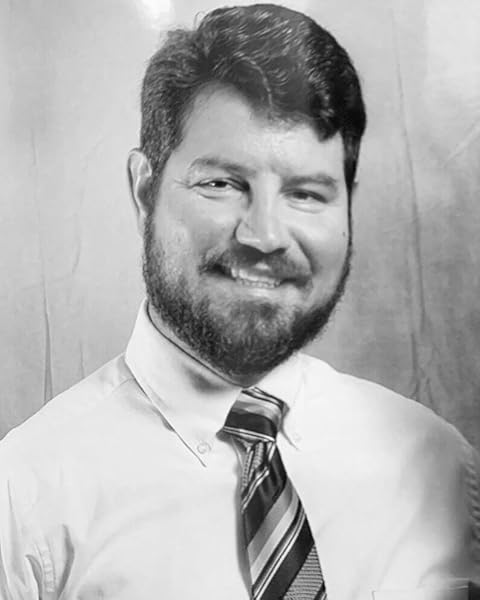
Meditations for Modern Man provides wisdom on morality, ethics, and everyday life. Why was this an important book for you to write?
I wrote this book at my son’s request. My book is a contrary voice of reason to an increasingly emotional and reactionary leftist society in America. For two decades I have been a parent, led Boy Scouts, and supervised military members. I have lived in several countries in Europe and Asia. I witnessed a severe decline in American critical thinking, rational thought, and historical facts. Contrary opinions to leftist (mostly Marxist and anti-Capitalist) dogma are literally being prosecuted as violating newly implemented company policy or worse prosecuted as a criminal without justifying the policy/law with facts, scientific studies, or logical argument. This is extremely dangerous and anathema to a free society.
What is one piece of advice someone gave you that changed your life?
An old adage military leaders once professed was “I Disapprove of What You Say, But I Will Defend to the Death Your Right to Say It”. This maxim is no longer in vogue and is not a tenant of current Academia ideology. Contrary opinion is silenced and individuals espousing it are censored or de-platformed. “Right is right even if no one is doing it; wrong is wrong even if everyone is doing it,” attributed to St Augustine of Hippo.
There are a variety of quotes I found valuable like, “When Logic fails, Emotion reigns.” What quote in the book do you find you most often refer to?
The quote I most often refer to is “An emotional mind is blind to reason, quick to anger, and intolerant of contrary thoughts.” This is the crux of the problem. Emotional people who cannot or will not think logically are easily manipulated. Rational people, on the other hand, question beliefs and behaviors while demanding those who profess them to logically justify them. Challenged emotional people quickly turn to anger.
What do you hope is one thing readers take away from your book?
Everyone must be able to challenge what they’ve been told, justify what they think, and logically defend what they believe. As Socrates wrote: “The unexamined life is not worth living”. Most critics of my book assume it is a “conservative viewpoint”. It is not. It is an unemotional logical viewpoint of traditional American values and principles. I hope people who were never exposed to contrary viewpoints are open-minded enough to entertain a rational belief.
Author Links: GoodReads | Twitter | Website
… this is the book you wish your parents gave you.
Have you ever questioned what you believe to be true?
Many unasked questions are answered from nine topics: Leadership, Morality, Logic, Facts, Liberty, Criticism, Character, Education, and Politics.
Do you regret not asking a parent, grandparent, or mentor about certain life lessons?
Get this book now for the answers.
TRIGGER WARNING
This book contains unapologetic content that could be emotionally and intellectually challenging to the reader.
If you are easily triggered, this book provides the opportunity to contemplate your strongly held beliefs and question your cultural conditioning.
An open mind is a free mind. Recent studies published in Clinical Psychological Science “suggest a trigger warning is neither meaningfully helpful nor harmful.”
A must-read for parents and children alike. Meditate on maxims developed by a loyal follower, moral leader, and compassionate parent.
Get it now.
LEGAL DISCLAIMER: The views presented are those of the author and do not necessarily represent the views of the Department of Defense or its components.
They Paved The Path On Which I Tread
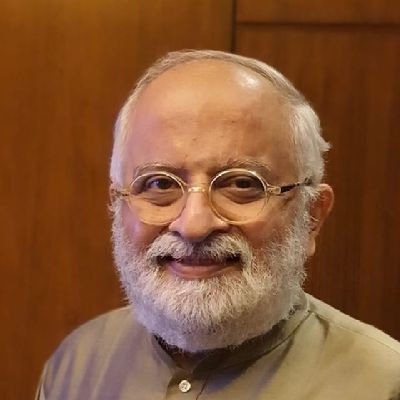
Healing Strings follows an ex-pat from India who is forced to take shelter after Tokyo is rocked by two major natural disasters. What was the inspiration for the setup to your story?
“Healing Strings” is a work of fiction with some autobiographical elements. I was living in Tokyo, when an earthquake of 9 Richter struck the Tohoku region in Japan on March 11, 2011, followed by a Tsunami at 14.46 JST. These two major disasters occurred at a time when I was diagnosed with “Takayasu Arteritis” – a fatal autoimmune disease. The Japanese doctors did an exceedingly good job of saving me. These major events after a few years triggered my imagination to write a novel. As this would be my first attempt at novel writing, I took admission in an online Novel Writing Course in the Faber Academy, UK. This novel my project in Faber Academy developed into the present stage with the guidance received from my Professors and Authors in Faber Academy, i.e Emily Barr and Mark Jervis. They paved the path on which I tread and expressed my imagination, experiences and dreams into words.
I must admit that what follows the earthquake in the novel is fiction, though I am a keen lover of the mandolin and music therapy is a major theme of this work. The location of the novel as well as description of Japanese culture in Tokyo and Kyoto as well that of Bekal in Kerala is what I have experienced first-hand and so is the medical treatment imparted to the protagonist for “Takayasu Arteritis” by the Japanese doctors.
Raj is an interesting character. What were some driving ideals behind your character’s development?
Raj is a character which developed through me as we both suffer from the same physical ailment. However, our lives may have taken different trajectories as Raj is a figment of my imagination. His value system which he has imbibed is what I cherish. He is a ‘family man’ with immense love and affection for his wife, son, and daughter. Though he is a marketing professional in a corporate firm in Tokyo, his roots and magnetic pull is towards his family in New Delhi in India.
Another trait of his character is his sense of humour and empathy which is reflected in his relationship with the staff of Trinity Advertising, his friend Bikram, and the nurses in the hospital.
A major theme of the novel is music, and this germinates from Raj’s love for the mandolin. Playing on the mandolin’s strings not only is a source of communication with Ayana but also helps in subsiding the aneurysms in his body. As Music Therapy worked in his case, he tries to replicate the same by opening an institute of Music Therapy in Bekal in Kerala. He wants to share with society, what has worked in his life.
The love he develops for his mandolin teacher and the respect he has for her husband and his own wife depicts his level of maturity in handling such a situation. An attempt has been made to portray him as a good human being, a fine friend, a virtuous life-partner, a platonic lover, and a concerned parent.
The reader on reading the novel may wish to imbibe some of his traits.
What were some themes that were important for you to explore in this book?
There are various themes which run concurrently in “Healing Strings”. One of the major themes in this work is disaster at the personal level and national level and how it effects an individual, society, and the entire nation. To overcome a disaster, requires resilience and expertise and these aspects are delineated in the reactions of Raj, scientists, medical fraternity, as well as the local population of Japan.
The second theme which is predominant is love and that love can bloom even without verbal or written communication. Love has only a beginning…. and that love can rise above the physical. Music can bring the hearts together and convey more to the lovers than any language.
The third theme is Music Therapy, and this is depicted in the blooming feelings of Raj and Ayana as well the cure of Raj’s ailment. It is not surprising that in today’s world modern medical science has accepted the role of Music Therapy and many hospitals world over have a Music Therapy wing. The famous American novelist Jodi Lynn Picoult states, “Music therapy, to me, is music performance without the ego. It’s not about entertainment as much as about empathizing. If you can use music to slip past the pain and gather insight into the workings of someone else’s mind, you can begin to fix a problem.”
What is the next book that you are working on and when will it be available?
I am presently working on two books simultaneously. The first book is a compilation of short stories titled “Thirteen” which will depict various scenes of life which we overlook and consider as natural happenings, but they play a major role in the character’s life. I personally feel that every human being is a compilation of experiences, stories, and anecdotes. We just need to be keen observers and empathise with what another human being undergoes. This book should be ready for release in 2023.
The second book I am working on with a co-author is non-fiction and is tentatively titled “Tourism Marketing in India”. The focus of this book is on the post-pandemic era, the marketing strategies required to revive tourism in India and usage of social media tools to position the destination in the potential tourist’s psyche in various key markets across the globe. The world has undergone a sea change because of the onslaught of Covid 19 and almost all destinations need resuscitation and revival at the grassroot level. Hence, the strategies to promote a destination which will now emerge with the new travel trends are going to be different. I sincerely hope I can complete this work in 2022.
Author Links: Twitter | Facebook
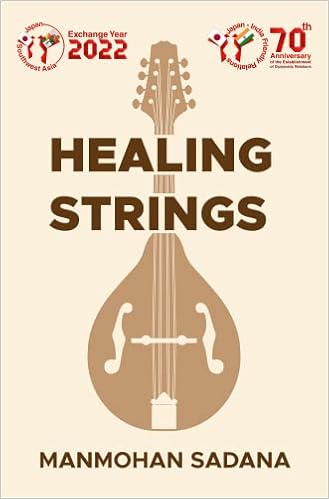
“Healing Strings” 14:46 hrs, 11 March, 2011, Tokyo is hit by a massive earthquake. The city is still reeling with the aftershocks when an unprecedented Tsunami hits its shores. This wake of destruction is reflected in the life of Raj, an expat from India. 50-year-old Raj has been diagnosed with Takayasu Arteritis, an incurable disease in which the blood vessels develop blockages which can burst at any moment. Raj had nine such aneurysms all over his body. The Japanese Doctors are trying their best to prevent them from bursting. Much like scientists in Fukushima trying hard to prevent the nuclear reactors from exploding. Out for a random stroll, an antique Mandolin catches his eye. He ends up buying the instrument, hoping to learn how to play it. This item on his bucket list, takes him to the threshold of an elderly Japanese musician. She hesitantly takes him under her fold. She only speaks Japanese, of which Raj does not understand a word. Transcending language and cultural barriers, a rare friendship develops between the two. In a scenario of disease and disaster, does the will to survive and make new beginnings assert itself, amongst the Japanese and Raj………. Reviews ” A fascinating debut! Love blossoms in an ambience of disaster, Japanese culture and resilience, and ends in the beautiful environs of Bekal in Kerala. Creativity at its best! Truly captivating. – Amitabh Kant, CEO, NITI Aayog, Government of India. ” Music heals – how true and how well this book brings it out. And provides succour to the protagonist, the lovers and the nation. A great read” – Ashwani Lohani CEO, GMR Services Business, Former CMD, Air India & ITDC, Former Chairman, Railway Board. “the story is truly heart-warming and enlightening, definitely an original tale that I have not had the pleasure of hearing anything similar before.” – Literary Titan

Pursuing Love Rather Than Fear
Moonlit Skies is book two in your EverGreen Trilogy. What were some new ideas you wanted to explore in this book that was different from book one?
Moonlit Skies is definitely a little darker than EverGreen. It’s not in any way as dark as Fallen Snow, but it’s somewhere between the two. In Moonlit Skies, I really wanted to highlight Jack, because I thought everyone deserved to know about his redemption arc. Many of my readers really love Jack, and I wanted them to know that his life isn’t permanently filled with sadness. I also felt the need to show a different side of Giselle, one that I think is very relatable to many teenage girls who struggle with mental health problems.
I also really wanted to elaborate on the Watchers. Obviously they were included within EverGreen, but I really needed to show the extent to which their radicalism could take them. Cults have always interested me. One thing I’ve found is that they are always motivated by two things: a desire for power, and uncontrollable fear. The Watchers are no different than any other cult. But the hopeful side of the story is that LeAnne is capable of seeing past her family, and pursuing love rather than fear and violence.
Moonlit Skies really delves deeper into the world of EverGreen, and is definitely relatable to a lot of my readers. People can connect their own lives to Jack and Giselle’s. It takes the story to a whole new level.
Your characters are intriguing and well developed. What were some driving ideals behind your character’s development?
A big part of making my characters well developed and intriguing is not taking away their humanity. They are flawed, broken, and sometimes evil people. Each of my characters can be connected to someone or something in the reader’s life. That’s what makes them feel real. I treat them like real people, and I don’t hide their flaws.
Giselle is so relatable to women. She’s insecure, fun, dramatic, and loving. She’s a hopeless romantic with dreams of love and a happy life. Women see themselves in her. I think that’s wonderful.
Jack is the funny, slightly lost friend that everyone has. Maybe you see him as your brother, son, friend, or partner. No matter who he is to you, he’s the kind of person you can’t help but love. Jack will always be an incredibly important character to me, because he’s inspired by someone within my own life.
What were some themes that were important for you to explore in this book?
The EverGreen Trilogy as a whole centers around eugenics. Of course, the series is YA Paranormal Romance, but there are also other meaningful aspects. Mental health is an important theme within Moonlit Skies, as well as loyalty. These themes continue to be relevant in Fallen Snow.
What can readers expect in the final book of the EverGreen Trilogy?
Fallen Snow completes the EverGreen Trilogy in a bold way. It strays from the sweet, innocent nature of EverGreen. EverGreen provides a glimpse at first love, and two people, Lily and Rowan, who have to fight to be together. It is, in many ways, a very pure love story. Moonlit Skies follows the lives of two minor characters in EverGreen, showing that even in a loving, magical community, there is darkness. Fallen Snow then completes the story, showing the most raw aspects of the characters’ lives.
Author Links: GoodReads | Facebook | Website
One year after the events of EverGreen, Jack finds himself lost, both physically and mentally, with nowhere to go. When he unexpectedly meets a few strangers, his life erupts into chaos. Meanwhile, Giselle struggles with depression and insecurity in the weeks leading up to Ginger and Drew’s wedding. Everything changes when she meets a compelling stranger who appears to be infatuated with her. When a terrifying threat begins to loom over Lily, Rowan, and their unborn children, Jack and Giselle will work together in an attempt to save the lives of those they love.
Poetry is Powerful
Rosebud is a book of poems that is characterized by its beauty and accurate representation of what it’s like to be alive. What inspires you to write poetry?
I call writing my ‘pressure release valve.’ As a highly emotional, passionate person ever under internal duress, bouncing from ecstasy to agony, writing is my foremost mode of self-therapy. Without the ability to write, especially verse, I’m convinced that I’d be a resident of a mental health institution, similar to the one in which I worked for four years here in Bend, Oregon, which has most definitely influenced my writing. Also, I consider myself an extremely romantic person who has a propensity for ‘falling in love easily,’ as a former coworker and friend told me. I gain crushes easily, and seem to collect muses, all of them representing unrequited affections. The question is whether or not I’m the one creating the conditions that keep them unrequited, or whether I’m fated for it, or both… I can’t help but think of the early romantic poets, many of whom commented on the fact that their words reflect an ardent longing for something or someone, yet they doubt they actually want it, for if they had it they’d be pacified, losing the painful passion compelling their best writing.
What were some themes that were important for you to explore in this collection?
Thematically, Rosebud is very much widespread. I didn’t write it with any themes or target readership in my mind. Rather, as with most of what I write, it arose organically, and so sprouted every order of flora, so to speak, which seems to have annoyed one reviewer, who called it ‘intriguing but uneven.’ Here I am thinking, Yeah, that’s the point. Poetry isn’t meant to be consistent and stoic, or hemmed into a single category or definition; it’s about a release of the most profound ideas and pent-up emotions, entirely disloyal to definition. That said, if I were to pick some prevalent themes, the obvious ones are unrequited affections, in this case for two women I fell in love with at different times (the last one of whom betrayed me in the worst way); wrestling with personal pains in the desire to uncover their long-term purpose; philosophical and spiritual rumination, especially in matters of prevailing societal value systems that I consider to be oppressive; and the divergence between religion and spirituality, which the majority of people do the grave disservice of conflating. I’m philosophically-minded by nature and have been highly spiritual since my twenties, when I began conversing with the divine, as we all do, but which I believe I understand and acknowledge in a way that most don’t. I have serious issues with religion, believing it to essentially be a narrowing corruption of spirituality intertwined with a history of Church and State collusion controlling the masses; this is a sub-theme of the philosophy and spirituality.
My favorite poem from this collection is ‘All the Time’. Do you have a poem that stands out to you from this book?
First off, I sincerely appreciate the fact that you chose a favorite. ‘All the Time’ was written while thinking of the muse that I worked with who ultimately stabbed me in the back, reflected towards the end of the book. It’s about the aching loneliness threatening to consume me, and yet the salvation seeming so simple: her. Looking into those gorgeous eyes; her presence permitting a forgetting of all my troubles. I’m not sure I have a favorite poem… excepting the fact that a number of them were highly cathartic to write, which is a primary motive for writing in the first place: releasing emotions which might otherwise tear me asunder. ‘The Trouble With the Heart’ is about this, generally, about the heart being the ultimate double-edged sword. ‘Presence,’ ‘Each of the Knot,’ ‘Overgrowth’ and ‘Starting’ are in the same vein: the promise of the simplest, sweetest salvation coming from someone who can wield the sword away from cutting me, towards being my champion. Yet the poems on spirituality and its near mutual-exclusivity with religiosity (like ‘True Gospel,’ ‘Spirit’s Inquisition of Religion’ and ‘Forever Bound’) are favorites of mine from another, more analytical perspective, as I firmly believe that nothing grants humankind greater potential for healing and unification towards our mutual best interests than pure spiritual revelation, starting with the ‘non-dualist’ revelation: we’re all finite manifestations of the one eternal being, God, or Spirit, and to divide Spirit from ourselves or any of us from any other is to be a victim of the worst ignorance: a misunderstanding of true Self, which conservatism and religion promotes, as divide and conquer is profitable for the few at the cost of the many.
Do you have plans to publish other works of poetry?
I actually have two other books of poetry that have mostly been unread, which I published through Amazon’s KDP platform years ago. They’re called ‘Love of Wisdom (2017)’ and ‘Thin Line Between (2020).’ They’re both highly philosophical, reminding me of my favorite line from Emerson: “The true philosopher and the true poet are one, and a beauty, which is truth, and a truth, which is beauty, is the aim of both.” ‘Thin Line Between’ is largely about my inability to purge one particular muse from my heart, who is dug in there like a tick still, four years since we last saw one another. Beyond this, I imagine I’ll be collecting poems and compiling them into books forever, until it somehow loses its cathartic power. I go through phases with what I write and why, but I can’t imagine I’ll ever actually stop. I’m currently readying ten more poems for the next compilation, including this one, which I wrote two days ago, during an intense rainstorm that hit us here in Bend, Oregon:
The Oldest of Friends
Oh cleansing, comforting, blanketing beauty
Born of the fraternity of condensing pressures
Of the friction foretelling the fortune of fall
Of the force for change, eroding the unstable
Of the crackling electricity thundering above
Of the rivulets running between chasms below
By the gods, the oldest, most ancient of friends
Feeding our food, forgiving our misfortunes
Gifting us the renewal of tomorrow’s growth
Taking from us the entrenchment of trouble
Seeding our hope with the sound of our tears
Rhythmically resounding, multitudinous magic
Rain, how I love your cool, caressing visitation
Author Links: GoodReads | Website | Facebook
Desperately buds sought in vain
Watering beyond drenching rain
Fertilization far past every need
Foolish ever more killing creed
By legend, by lore, a bud doth show
Gripping, crushing, before it can grow
Overly needing of the absent flower
Prettily alluring, myself I devour
In this book of poems, the writer uses poetry for manifold purposes, from wrestling with his inner demons, to seeking that elusive angel amongst his muses, to evoking every color of the emotional spectrum, to pulling progressivism from the greed and controls of prevailing culture and politics, to seeking the nature and imparted wisdom at the very source of all truth and being: the eternal Self: Spirit, or God.
Really Stretch My Creativity

Ashes, Ashes follows a teen magi who is juggling family drama, school crushes and magical responsibilities when she draws the attention of a banished goddess seeking to restore her power. What was the inspiration for the setup to your story?
There wasn’t one “moment” of inspiration for this story. Each part morphed and clicked, adding pieces until I had a solid foundation on which to build. I’ve always loved creature stories, and werewolves in particular, but I didn’t want to write a run-of-the-mill werewolf story. I started looking for similar creatures to use instead, and landed on hellhounds. Originally the hellhound was connected to a witch, but as I did more research looking for historical witches to base my antagonist on I came across Hecate, and she took the place of the witch. With Hecate, the connection to ancient Greece built itself.
The family drama and school issues arose as I moved forward in my draft. My favorite characters to write are teens, and even though my teens have magical abilities, they still live in the modern world and face the same struggles and challenges that normal teens do. Balancing those struggles with the added magical responsibilities was definitely a challenge.
Adrienne Young is an intriguing and well developed character. What were some driving ideals behind her character’s development?
By nature of her position and responsibilities, Adrienne needed to be strong, both physically and emotionally. The same attributes that strengthen her as a magi also ostracize her from her peers, giving her a degree of isolation and social awkwardness. Throughout the story I tried to put her into situations that would help her to see and value her own strength and allow her to come into her own as the leader I knew she could be.
What scene in the book did you have the most fun writing?
I had a lot of fun writing Adrienne performing the soul searching ritual in the hidden cave. The pacing is somewhat slower in that scene, which allowed for more observation and expository writing. Since everything occurs within her mind, there were no physical or magical rules I had to follow, and it gave me a chance to really stretch my creativity.
This is book one in your Mortals & Shadows series. What can readers expect in book two?
Book two is going to shift gears a little bit and focus on Mason’s adventures instead of Adrienne. Mason has a fairly abrasive personality, and I want him to have the chance to grow as a character into someone readers can root for and maybe even like. The other characters will still have their part to play, but they won’t take center stage again until later in the series.
Author Links: GoodReads | Twitter | Facebook | Website
When Hecate sets her sights on Liza, Adrienne’s sister, the fight turns personal. With a band of unlikely allies and time running out, Adrienne may have to choose between saving the world or saving her sister.



 LITERARY TITAN