Blog Archives
Off-Off-West End

Sally Roger Author Interview
Stage Door Comedies provides a cheeky glimpse into the quirky characters surrounding theater life. What has been your experience in the theater industry and how did that bring you to writing a collection of stories?
I trained as an actor in 1985 then undertook what would nowadays be called ‘an internship’ as an unpaid stage manager/lighting/sound operator on the London, England Fringe (professional Off-Off-West End). Fast-forward twenty years and I started writing plays. When I had an offer from two London Fringe theaters to premiere my first play Limehouse I knew I had broken into the business as a writer. That was my calling card.
The book is based in England and Paris, with each providing a unique backdrop that flavors the stories with each local’s unique atmosphere. Was there a reason why you chose these locations as the backdrops for your stories?
The story about my casting in Paris is true; I did approach theaters – including American outfits – for an English-speaking cast and did hit a brick wall. London is fortunate to have so many small-scale venues for new play tryouts and so many ‘pop-up’ comedy venues. I put Paris in Stage Door Comedies because my drama school Artistic Director studied there with Louis Jouvet at the Theatre des Champs Elysees. You could say it’s my school.
In this book you show us the underbelly of the theater industry and all the weird happenings and intricacies of the individuals who call the shots. Were there any characters that you especially enjoyed writing for?
Limehouse and A Suitable Lover are play-to-fiction adaptations of my first two plays which received offers of production on the London Fringe: others, I workshopped in rehearsal for conversational ‘say-ability’ (a comedic craft I honed in stand-up comedy). I directed and acted in Limehouse, an autobiographical twosome about quitting the theater, in a short run. It marked a return to a small-scale London venue. Would I direct again? No thank you, very much, at least, not for stage. In America you don’t have the British class system. What is success? Why do we pursue it? I guess as they say there is a bit of all the characters in the author of Stage Door Comedies.
What was it like to be an alternative comedy monologist at Steve Strange’s Cabaret Futura?
The 1980s was the era of the New Romantics and Karma Chameleon figure Boy George in the London clubs. At Cabaret Futura I did a one-person duologue playing both the comedian Jack Benny and his wife using two chairs back-to-back on the stage as props. I was also an MC at a comedy cellar near to the Royal Opera House Covent Garden.
I understand Stage Door Comedies is your first published book. Are you planning to continue writing? If so, when is the next book due out?
I have some more stories up my sleeve on the theme of the random nature of Fame – many are called but few are chosen. Why is one actor on the West End or Broadway while another is fated to ply their trade in a seedy, backstreet pub theatre? As Oscar winning actor Michael Caine said, it’s the years of rejection and humiliation they pay you for.
Author Links: GoodReads
For the admirers of those entering the stage door, the attraction is in what they represent. In London’s Notting Hill, a BAFTA award winner is sick and tired of people using him as a stepping-stone or step-ladder to the the big time instead of putting in ‘the hard slog’. The hustlers find that talent is not enough – it is a serious game.
I wanted to See a Change

James Eaton Author Interview
Bodybuilding for Weight Loss seeks to help people not only lose weight but sculpt their body as well. What has been your experience with bodybuilding and weight loss that lead you to writing a book?
I have been an avid weightlifter for over two years now which has allowed me to lose over 100 pounds of fat.
In this book you seek to change the way people look at food. What is one common misconception that people have about food while on a diet?
People normally think that they can’t enjoy all their favorite foods while on a diet but they can as long as the foods are organic. For example in the mornings I would recommend eating organic fruits, vegetables, and meats to jump-start the metabolism.
What is your daily workout routine like?
I usually wake up at 6:00 am, eat an organic breakfast, and then off I go to the gym. When I get to the gym I start by spending 30 minutes on the treadmill, and a variety of weightlifting exercises.
I felt like you brought a lot of your passion and experience into this book. How did you first get started in bodybuilding?
I first started bodybuilding with my brother. He was always into fitness so I finally went to the gym with him one day because I wanted to see a change in my physique.
James Eaton is a passionate Self-Help, Fitness, & Education Author who resides in Hinesville, Georgia. He is also a seasoned Affiliate Marketer, Entrepreneur, and Private Protection Officer. Hailing from Selma, Alabama, James’ love of helping people and all-things fitness began early on and it has stayed with him ever since.
Why do you think that weight loss with body building is the best way to lose weight?
You really can’t have one without the other once someone begins a bodybuilding regimen they will shed unwanted fat and build muscle mass especially when they apply what I teach in my book Bodybuilding for Weight Loss.
Are You Ready to Uncover the Secrets to Getting the Body You’ve Always Dreamed of? This guide will show you how to lose weight and sculpt your body into the toned shape you have always wanted. If you have tried and failed fad diets before, this is the book for you. Once you apply the principles in this book you will begin to lose weight and keep it off. Bodybuilding works to help you lose fat and gain muscle. The problem with most diets is that they are not designed to make permanent changes to your body. When you do bodybuilding properly, you change the chemistry of your body. You turn into a fat burning machine. You convert calories into toned muscles.
Bodybuilding for Weight Loss: Facts About Weight Loss Through Body Building That You Did Not Know About

 Want to lose weight and look great but don’t know where to start? We’ve all heard that to get that perfect summer body we need to exercise right and eat well – but where to begin? How do we get there? Is simply jogging and eating a few more vegetables enough?
Bodybuilding for Weight Loss by James Eaton seeks to answer those questions. Eaton takes the workout regimen and diet typically used by bodybuilders and shows how anyone can lose weight and look great by following their lead. Eaton organizes and breaks the information down into digestible chunks that even those with no gym experience can understand and apply. While occasionally he jumps from one topic to the next a bit too frequently you can get lost in all the information he presents. His book is a solid building block for learning how to lose weight through bodybuilding.
Eaton starts by giving a rapid-fire history of bodybuilding, tracing its roots from ancient Egypt and Greece to the 20th century when professional bodybuilding competitions really came into their own. After that historical introduction though – it’s all business.
Taking a holistic approach, Eaton stresses the importance of coupling appropriate exercises with the right foods. To see results, you’ve got to give your body what it needs and then work it appropriately. Eaton walks through the raw foods consumed by bodybuilders, such as onions, apples, and brown rice, and explains why each is such a great option for building muscle and losing fat. However, it’s not just about what you eat, it’s when you eat as well. He points out that eating certain foods before or after working out will help build muscle faster. For example, eating foods higher in carbohydrates just before getting your pump on will keep you powered throughout your work out. But, those same carbs eaten just before bed will simply turn to sugar in your body, undoing your hard work at the gym. It’s this sort of insight, Eaton’s explanations of the reasons behind his recommendations, that really keep you reading.
Healthy eating is only one side of the coin; it’s got to be balanced with aerobic exercise and weightlifting to really see the body you desire. Eaton doesn’t leave us in the dark here either: He provides us with step by step instructions for several weightlifting exercises and walks through how to perform them correctly. Barbell bench presses, seated dumbbell press, bar curls, and even the Arnold press (yes, named after that Arnold) – it’s all here. And for those of us who’ve never picked up free weights before, the pictures and texts are easy to follow and make you want to grab some soup cans and try them out.
The book provides valuable insight and a clear path to losing weight through exercise and diet. Eaton’s passion for the subject clearly shines through.
Pages: 47 | ASIN: B00T3ETMIU

Translate Statistics into Individual People
Jason Hensley Author Interview
Part of the Family examines the experiences of the children who came to England from the Kindertransport during the Holocaust. I believe you delivered a compassionate view of this dark time in history. Why was this an important book for you to write?
Before this book, there was one document that attempted to set out in detail the Christadelphian involvement in the Kindertransport––and that was Dr. Chana Kotzin’s thesis that evaluated the reaction of a handful of Christian groups to the Jewish refugees in the 1930s. She was able to go through a lot of the correspondence that took place and really examine the refugee committee side of the Christadelphian involvement––but she was not able to look into the individual stories themselves and how the children lived when they eventually did come to a family. When I attended the Belfer Conference in 2015 at the United States Holocaust Memorial and Museum, the instructors emphasized 10 methodological principles when teaching about the Holocaust, and one of those standards very much resonated with me: translate statistics into individual people. History is not simply about statistics and generalities, but is rather about the lives of individual people. We constantly hear about the six million, and yet so often, the number loses its meaning, not simply because it is such a huge number, but because it is not focused on the individual. When the six million Jews who perished in the Holocaust is mentioned, it should be remembered that these people were fathers, mothers, brothers, sisters, sons, and daughters. When we realize the individuality of the people that we are learning about, it makes them much more relatable and the lessons from their experiences become much more relevant and powerful for us. This was huge for me, and being a writer, lecturer, and teacher, I very much feel a responsibility to tell their stories. A number of the stories told in this book have not been recorded in any way before. As I interviewed the “children,” one of the major things that stood out to me was that they constantly used the phrase “I was part of the family.” Over and over, they emphasized to me that they felt loved and cherished. There were certainly exceptions, as there always will be––but I was amazed at the things that I heard from them. One man, whose story will hopefully be included in volume 2, when I asked him what he would say to the family that had housed him, if he could say one final thing to them, without hesitation, said “I love you.” Though he had not seen them for decades, he still felt that feeling very acutely and strongly––he had become part of the family. Thus, I began to ask myself why these people had such experiences–and the answer came out very clearly, as you mentioned in your review. The Christadelphian families did this and cared for these children because they felt a kinship and a love for the Jewish people. Their beliefs brought them to action––and for me, that was a very powerful statement about the importance of beliefs. In today’s world, it feels as though beliefs are often downplayed and that many are trying to put our the statement that doctrines and beliefs don’t matter––as long as someone is good. While I certainly stand for the idea of tolerance, I think that in attempting to all get along, we cannot lose the lesson that beliefs really do make an impact, and that they can influence us for good or for ill. Therefore, I hope that this book will not only inspire others to help one another, but will also encourage all of us to look at our own beliefs and ask ourselves what kind of influence our beliefs have on our own actions.
The Christadelphians were a small christian group who helped many children during this time. Do you think their compassion and determination were reflective of their religion or their personal moral character?
I think that the answer is certainly both. Recently I had the privilege of interviewing a woman who had come to England from Germany––and who had actually lived with two different families after coming to England. I think her story helps to explain the way in which the Christadelphians acted both based off of their strong beliefs about the Jewish people, and also personal moral character: This woman told me that when she first came to England, she was chosen by a family and completely ignored. This was not a Christadelphian family––and the woman didn’t know what religion they were, if any. But, they brought her to their house, put her in her room, and never spoke with her. Eventually, she said, she went hysterical. She started screaming, banging on the floors, banging on the walls––because she had no interaction with anyone. Because of that experience, the Jewish refugee committee was contacted, and she was removed from that family. From there, she went to live with a Christadelphian family in Birmingham. She stated that the first day that she met them, they had a German/English dictionary and tried to talk with her.
When she got to the house, they tried to help her learn English––pointing at their dog and saying “Billy” (subsequently, she thought that all dogs were Billys…).
She stated that she felt like part of the family. I think that the dichotomy between her two experiences can show what life with Christadelphians could have been like if they had acted simply out of a belief that they should help the Jews. When the Jewish children came to England and lived with the Christadelphian families, they did not have to treat them like family members. They did not have to try to learn German. They did not have to tell them bedtime stories. They did not have to try to correspond with the child’s parents back in mainland Europe. But they did. I think that housing the children and in that sense “saving them” could have been considered enough to say “I helped the Jews.” But, the Christadelphian families, for the most part, out of their moral character, attempted not only to help the children, but to give them the best life that they could provide––just as they did with their own children. We were privileged enough to get together with a professional videographer and put together brief interviews (5 minutes each) with Mrs. Ursula Meyer and Mrs. Rella Adler. Both of them share how the treatment that they were given was as though they were daughters:
Ursula
https://www.youtube.com/watch?v=XsxFaBBwyeU
Rella
https://www.youtube.com/watch?v=5G7iXMkyPT0
Part of the Family is not only well written but it’s also well researched. How much research did you undertake for this book and how much time did it take to put it all together?
Oddly enough, I began the research for this book last December. I was simply blown away at how well things came together. Ursula Meyer was the first person that I was able to contact, and we conducted our interview on January 19th. From there, the project just came alive. I had Christadelphian families from all over the world contacting me to tell me that a Jewish refugee had lived with them throughout the war. One of my major rules, however, is that I don’t write about someone and publish it unless I can get their approval for what I have written. And thus, hearing about all of these Jewish children that had lived with Christadelphians presented a problem––how to contact them? A number of Christadelphian families had kept in contact with the Jewish children, and so they could actually get me in touch with them, but in other cases, once the Christadelphian parents passed away, and sometimes the children, the younger generation only knew that their family had housed a refugee, but sometimes didn’t even know their name. Attempting to find the refugees and interview them about their experiences was simply amazing. I’ve called all over the United States, Canada, and the United Kingdom. I’ve had conversations with people in Israel, Australia, Spain, and Sweden. Yet, perhaps one of the most exciting experiences was when I was presenting on the Christadelphians at a meeting of Kindertransport survivors, and one of the men seated at my table explained that he come to this very meeting because he had lived at Elpis Lodge, the hostel set up in Birmingham by Christadelphians! I had no idea––and here I had been having lunch with him! This book came together in a matter of months––something which still astonishes me. Yet at the same time, as things kept coming together, I found myself working at it all the time––often getting up at 4:30, just because I was so excited that another survivor had emailed me, and so I couldn’t sleep anymore.
Part of the Family is the first volume in a series. What will the next volume be about and what will the whole series encompass?
Lord willing, I hope to have the second volume finished this December, as well as an audiobook for this first volume at the end of August. The goal of the entire series is to tell the individual stories––and thus, my hope is that I can keep contacting survivors and their families to tell about their experiences when they were saved from Hitler by coming to England and living with Christadelphians. Thus, volume 2 will be more stories, and so will volume 3. I currently have about 35 testimonies that I would like to write!
Author Links: GoodReads | Facebook | Webite
In 1938 and 1939, via a movement known as the Kindertransport, thousands of Jewish children were taken from Nazi-occupied territories to safety in Great Britain. They came to a new family, a new country, and a new life. Approximately 250 of these children were sponsored by Christadelphians, a small Christian group. Often the Holocaust is considered in terms of statistics: how many perished and how many were affected, so much so that at times the individual stories are lost in the numbers. This series examines the experiences of the individuals who came to England as children, and lived with Christadelphians. Ten of these child survivors, and their families, participated in the effort to bring about this first volume. These are their stories.
Systems Theory

 Systems Theory is a collection of philosophical systems created by the author, Nathan Coppedge. Before the table of contents, the author specifies that a friend once theorized that “systems can be formed about anything”. Coppedge seems determined to challenge this assertion by creating as many systems as possible.
This set of systems is broken down into subsets, including formal/logical, archetypal, applied, psychological, aesthetic, and many others. Throughout his text, he seeks to enlighten readers with his definitions of these systems and provide copious examples of these systems at work. While the text is physically over 400 pages long, the text inside is not as long, due to the formatting. So, if you are intimidated by the page length, it is not representative of the amount of content between the covers.
While I’m not one to spend much time on philosophy, I found that some of the systems seemed quite acceptable, while others were derivative of common truths. The ones that did not sit well with me were, perhaps, over my head, but I did find the acceptable systems to be well explained. Regardless, there are probably systems which will mean more to some than to others. It is safe to say that any reader will find something with which they can consider in depth, even if they cannot think in depth about some of the other topics that are a bit tougher.
For example, Coppedge introduces an “Ancient Book Design Program” with the subheading of “Secret Books Formula”. He uses his knowledge of literature and how a book functions as a storytelling device to create a system that helps to name a book and introduce a proper moral. This system, although seemingly unnecessary, puts a framework to the building blocks that writers often use to create stories. It works as a set of ideas and I can understand how this system came to be.
On the other hand, especially in the mathematics portion of his text, Coppedge creates several of his own mathematical operators and explains their uses in detail. However, much of it only holds purpose inside the realm of philosophy. As an example, he creates a “God Variable”, which is equal to infinity plus one or “any value including infinity for each variable”. It serves its purpose inside of the discussion, but examples are not provided for it’s possible uses.
Overall, this text might provide some philosophers with interesting topics of conversation and consideration as they peruse through the lists of systems. Each system has a brief explanation and examples where necessary, allowing most to understand the meaning behind each one.
Pages: 392 | ISBN: 153316858X
Part of the Family

 Jason Hensley has taken a very difficult subject, filled with darkness and sorrow and brought forth a glimmer of light. There have been many history books written on the Holocaust from many perspectives, but Hensley has taken a fresh approach to the subject. Anyone studying this period of history knows the horrors that awaited the Jews under Hitler but few history books talk about the children that do survive. Even fewer talk about the people that made it so children of Jewish families could have a chance at life. Hensley’s focus in Part of the Family is on the children that were taken in by the Christadelphians families and their stories. Part of the Family is not your traditional history book filled with facts, rather it gives you a brief overview of who the Christadelphians are, and than a collection of mini biographies of some of the children. This is also the first book in a collection that Hensley is working on to fill the gap in this area of history.
Part of the Family gives a brief overview of who the Christadelphians are, and what they believe. It does not go deeply in-depth to make this a history of religion, rather just enough to give the reader an overview of the mindset of the families that foster these Jewish children. It documents the lives of nine children and their experiences with the Kindertransport. The families are not just from Germany, included are also families from Czechoslovakia, Austria, and Poland. The general format of the biographies are: brief overview of the climate that the children were born into for their time/location, the decline of their families situation, the Kindertransport, meeting their new families and their life with them, than after the fact. Hensley tries to give as much information on what happened to the families of these children, in some cases the children are reunited years later, however in most cases, the families do perish at the hands of the Nazis.
In describing the Christadelphians Hensley makes sure to emphasizes that despite their devote and very structured Christian beliefs, none of the families ever forced or pressured the children to convert. They lived with the families as if they were their own children, participating in all the activities, including daily bible readings and attending meetings with the family. However, none were forced to be baptized into the Christadelphians faith. While some did ultimately choose that path, it was of their own choosing when they were near adulthood. For the families that took in the Jewish children, this quote seams to sum up the way they treated the foster children, “Perhaps, then, one of the most important questions to ask ourselves is how our own beliefs affect our actions – and whether these beliefs are truly influencing our actions for good” (Hensley, 2016, p.182). This mentality of showing the children kindness and good in the world despite all the misery they had faced, influenced them all in positive ways. The children in this collection all went on to have fulfilling lives of their own and often kept in touch with their foster families.
This book gives a compassionate overview into this period of history. It shows that there are good people out there that do things simply because it’s the right thing to do. These are not children that went on to be famous or necessarily do great things, they are every day kids that suffered deeply and came out on the other side to make a life for themselves. Overall a great supplement to the standard history texts on the Holocaust and the start of a great project by Hensley to bring these stories to light.
Pages: 442 | ISBN: 1532740530
Worth Holding On To
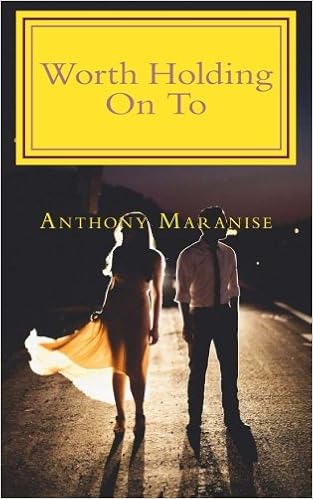 Worth Holding On To is the memoir of Anthony Maranise. He guides his readers through one of the best moments in life; finding his love; Cyrena. They were introduced through a mutual friend and hit it off. Together the couple shared many memories and experiences, until sadly the harsh realities of life drew them apart. The book also delves into the months after a break-up, and the lasting impact that Cyrena had on the author’s life. The things that she had taught him are thought provoking and moving as well. While the book is short, there is a lot of content to ponder. The author doesn’t need a lot of words to get his point across, and make an impact on his readers.
There is a sense of innocence and love within the words of this memoir. Maranise’s words makes readers rethink their own definitions of love and what makes a relationship worth holding on to. His words are filled with love and positivity. Looking back, Maranise, has nothing negative to say about his time with and without this woman. Even as they sit side by side during a dinner after they parted ways, his feelings and emotions remain the same. One learns that sometimes feelings for someone never end even if the relationship happens to end. The reader gets the idea that Cyrena truly was a beautiful soul and had immense spiritual beauty as well as physical beauty. One can only imagine that the author left the same imprint on her life as she did his. In turn this book leaves a lasting impression on its readers, making them want to learn more about the author.
Maranise’s words resonate off the page, flying with emotion. He creates something that buries itself into the readers’ minds and sticks with them. Readers can see how much this woman meant to him, as the emotions saturate the pages. Maranise provides a colorful view in his life and opens up about something so intimate and private. He allows his readers to see a portion of how he became the person he is today. The story flows like a river of love and understanding. He cultivates true essence of love and what it means to accept someone, helping readers take a look at their own relationships and whether or not they are seeing their partner the same way he had seen Cyrena.
After reading this book a few times, I would give Anthony Maranise’s memoir a 5 out of 5 because I was honestly moved by what he had to say within it. There is so much to be said about love in this small book that anyone in a relationship or even in the beginning stages of dating should read this book. It truly is a beautifully written reflection on love and love lost. If there is one book you read this year on love and the impact that first love could have on your life, make sure that it is this book.
Pages: 124 | ISBN: 1530658675
Finding A Cat Through A Dream ~(^-^)
 Chicken: A Comic Cat Memoir is about a girl named TJ who grew up allergic to cats, but over time, the allergy faded. As an adult she finds a tuxedo cat with bright green eyes. It’s a beautiful story of life, cat’s, and loss. What was your inspiration for this story?
My daughter who, when she was 5-years-old, repeatedly wanted to hear this true story about how we found our cat, Chicken. I told her every night for a year, at which point she suggested I “make pictures” for it. That lead me down an unexpectedly long path to finally officially publishing.
Do you have cats? If so, what are their names? What do you think your cat named you?
Yes, we now have Cha-cha who, like Chicken, also found me in a dream. I’d have to say Cha-cha named me “hu-mom” (made up word for human mom) because she wanted me to find her as much as Chicken did. She’ll be the star of the next story!
Through the story there are little doodles and background decorations that tell a different story. Can you tell us more about that story and why you chose to weave that in?
About halfway into creating the artwork, it hit me that through telling the cat’s story, I was telling my own. I think that every life is multi-layered and wanted to communicate some of those other layers that coincided with the one of finding a cat through a dream that then materialized. While I wanted to offer a “nod” to some of the details of my life as a relatable subtext, I didn’t want it to take over the primary cat story as told to my daughter. I think this may be why much of the positive feedback I’ve been getting is essentially saying it’s “fun for all ages.”
I liked the artwork through the story. I thought it went very well with the story. Were there any panels that you didn’t include in the story? What was the biggest challenge in creating the art for the book?
As the author/illustrator, I did all the writing and artwork. Once I did the rough sketches and managed to capture the accurate mood of most of the panels, I was preparing to ink them in the way that traditional cartoonists work. However, I faced a rather daunting creative block in taking that next step. I didn’t do anything for about two whole years and then my daughter and I made a mini book called The Frizzball from Outer Space. The fun of working on that project and getting it done so quickly, gave me the courage to begin the Chicken illustrations. Once I got ball rolling, I quickly realized that I wanted to include some photography and collage so it made more sense to to all of it digitally. My background is in graphic design—both practicing and teaching it—so I know how to use the tools of the trade. What I hadn’t done before this book, was create artwork on an iPad. While I’m always up for learning something new, it took so long to get up to speed that by the time I reached the end, I had to start back at the beginning and re-do most of those first panels. Also, there are limits to digital tools and, in some instances, such as creating the front cover title art for the word “Chicken,” I was only able to attain the look and result I wanted by doing it by hand with brush and ink then scanning it in. In the end, keeping track of and backing up the thousands of files it took to create this was a real accomplishment in and of itself!
What is the next book that your fans should be on the look out for?
When you get to the end of Chicken, the next character presents itself. It’s very small, but if you look closely you’ll see the star of the next book.
Author Links: Twitter | Facebook | GoodReads | Website
A great book to read to cats (and kids: -)!
A true tale about the magical meeting of a cat and her person told in 72 full-color illustrations in a rustic, cartoon, doodle, collage style. A cat allergy sets the stage for this colorful romp in which a cat named Chicken finds her way into the arms and affection of TJ, an artist in search of adventure and meaning. Brought together by seeming divine intervention, the storyline ranges from funny to emotional, sweet to silly, thoughtful to mystical, as readers travel with TJ and Chicken between coasts, encountering diverse friendships along the way.



 LITERARY TITAN