Blog Archives
An Incredible Experience

You May Conquer: Facing What Others Have Met takes readers on a journey into the lives of biblical figures and modern leaders who, when faced with adversity, did not crumble but rose higher and shared the lessons learned from their struggles. Your book highlights the transformative power of adversity and how it can be channeled into a positive experience. How have you experienced this in your own life, and what lessons did you learn from it?
I found that as I began to work with my mother at her job, there was a lot of pressure on me, because she is a supervisor. So I didn’t want people to think I was a nepotism hire. I worked hard, very hard. And I earned my place alongside my co-workers. I felt the initial adversity, but surprised myself with how hard I worked.
Did you find anything in your research of this story that surprised you?
I had always heard good things about the life and times of Reverend Doctor Martin Luther King, Jr., but the more I researched, the more I was truly impressed. He had to be willing to give his life for ideals. I was truly surprised at his life’s record.
What is one thing that you hope readers take away from You May Conquer?
That we are in this world living an incredible experience that is greater than all of us. That when we realize how much responsibility we owe, I hope readers too see that we should never back down from adversity, we should exhibit bravery and courage, and surprise even ourselves.
Author Links: GoodReads | Facebook | Website | Amazon
In You May Conquer: Facing What Others Have Met, Devon J. Francois & Woody R. Clermont take readers on a sweeping journey through scripture, history, and modern life, uncovering how ordinary people and world-changing leaders alike found strength in struggle. From Joseph in Egypt and Job’s unwavering faith, to Harriet Tubman’s courage, Nelson Mandela’s resilience, Martin Luther King Jr.’s perseverance, Helen Keller’s vision, Malala Yousafzai’s bravery, and beyond—these stories show that trials do not define us, but how we respond to them does.
Blending timeless wisdom with contemporary insight, this book explores:
How obstacles can become teachers rather than enemies
Why authority without humility collapses under its own weight
The inner battles that often matter more than external ones
Lessons of leadership from figures as diverse as Abraham Lincoln, Gandhi, Robin Williams, Jean-Jacques Dessalines, Oprah Winfrey, and Volodymyr Zelenskyy
Practical encouragement for living the lessons “out loud” in your own life
Written with clarity, conviction, and compassion, You May Conquer is not about avoiding adversity—it is about transforming it. It is a book for anyone who has been tested, knocked down, or underestimated, and who still believes that the struggle can produce something greater.
The message is clear: adversity is not the end. It is the training ground. And you, too, may conquer.
The Universal Struggle

When the Boss is Not Right is a searing novel set in Mumbai’s chaotic media world, following a young journalist who battles toxic mentorship and systemic corruption in his fight to stay human and honest. What was the inspiration for the setup of your story?
When the Boss is Not Right emerges from the harsh realities of Mumbai’s media landscape, where idealistic journalists confront powerful forces of corruption daily. The characters inhabit a world drawn from real encounters – mentors who normalize ethical compromises, colleagues who sacrifice principles for career advancement, and the rare individuals who stand for truth regardless of consequences.
The newsroom depicted serves as a battlefield where journalistic integrity clashes with commercial imperatives and political pressure. The story unfolds through layers of frustration, hope, and the raw wounds that form when truth becomes negotiable.
The protagonist’s journey reflects the universal struggle faced by media professionals: that disorienting moment when trusted guidance leads toward ethical quicksand. The corruption portrayed often pales compared to the disturbing realities of modern newsrooms.
This novel confronts essential questions that define modern professional life: Where does healthy ambition end and corruption begin? How can personal integrity survive in systems designed to undermine it? What separates necessary compromise from fundamental betrayal?
The fictional story offers no simple solutions. Instead, it creates a world where readers might recognize their own workplace dilemmas – the difficult superiors, the moral crossroads, the choice between advancement and values. Success for this book isn’t measured in sales figures but in moments of recognition when readers pause to question what “just how things work” truly costs.
What personal experiences, if any, informed your portrayal of Deep Kakarpathi and the toxic newsroom environment?
Creating Deep Kakarpathi and the newsroom of When the Boss is Not Right was an exercise in pure imagination. The character emerged not from personal experience but from countless “what if” sessions wondering how someone might respond when idealism collides with institutional corruption in a completely invented setting.
The fictional Bombay Chronicle newsroom sprang fully formed from creative exploration of workplace dynamics. Every character, situation, and ethical dilemma was carefully constructed to serve the narrative without mirroring any real people or events. Satyajit’s journey through this fabricated pressure cooker environment allowed me to examine universal themes of integrity, ambition, and moral courage from a safe fictional distance.
What readers connect with isn’t recognition of specific real-world parallels, but rather the emotional authenticity of the protagonist’s struggle. Through this entirely fictional narrative, I wanted to create a space where readers could contemplate complicated questions about professional ethics without the baggage of real-world reference points. Satyajit’s fictional ordeal becomes a lens through which we might examine our own relationship with truth, power, and personal integrity.
The novel operates purely in the realm of “what could be,” not “what is.” Any perceived resemblance to actual newsrooms or media personalities is entirely coincidental—the product of touching universal human experiences rather than specific real-world inspiration.
What were some themes that were important for you to explore in this book?
In When the Boss is Not Right, I aimed to explore the complex interplay between power, morality, and identity in the high-pressure world of journalism. One of the primary themes that emerged was the struggle for integrity in a corrupt system, where the pursuit of truth is often compromised by personal gain or institutional pressures.
The book also delves into the nuances of mentorship and its impact on personal and professional growth. The toxic dynamic between Satyajit and his superior serves as a catalyst for exploring the blurred lines between guidance and exploitation, highlighting the devastating consequences of unchecked power.
Furthermore, the novel touches on the theme of resilience and resistance in the face of adversity. The journey of the characters serves as a testament to the human spirit’s capacity to persevere and adapt, even in the most challenging environments. Perhaps most importantly, the story examines resilience not as simple perseverance but as the complex process of reconstructing personal identity after disillusionment.
Ultimately, the book is a thought-provoking exploration of the human condition, encouraging readers to reflect on their own values and the importance of standing up for what is right, even when it’s difficult. By weaving together these themes, I hoped to create a narrative that would resonate with readers and spark meaningful conversations about the importance of integrity, accountability, and personal agency.
What message or emotional response were you hoping readers would walk away with after finishing the book?
With When the Boss is Not Right, I hope readers would walk away with a profound sense of empathy and understanding for those navigating toxic work environments. I wanted to ignite a spark of recognition, encouraging readers to reflect on their own experiences and the importance of standing up for what is right, even in the face of adversity.
As readers close the book, I envisioned them carrying with them a renewed sense of purpose and conviction. I hoped they would be inspired to challenge unjust systems, to support those who are marginalized or oppressed, and to cultivate workplaces that value integrity, compassion, and respect.
Ultimately, I desired for readers to experience an emotional resonance that lingers long after the final page is turned. I wanted them to feel the weight of Satyajit’s struggles, the sting of injustice, and the triumph of resilience. By sharing this story, I aimed to create a ripple effect, inspiring readers to become agents of positive change in their own lives and communities. In doing so, I hoped to leave a lasting impact, one that would continue to resonate with readers long after the book is finished.
Author Links: GoodReads | X (Twitter) | Facebook | Website | Amazon
Great for Bilingual Families
Chato, the Puppy-Cat follows a homeless puppy who is adopted by a loving woman who thinks he is a cat, and he is afraid to show her he is a dog. What was the inspiration for your story?
The story presented itself in my head one day, as if it wanted to be told. It wasn’t until later that I realized it came from childhood experiences, and from watching both children and adults around me having to conform and behave in ways that went against their grain.
Chato struggles with wanting to belong and with showing his true self out of fear of being accepted. Was there anything from your own life that you put into this emotional story?
I was born with a vision disability which affects various aspects of my life, and I often had to conform to fit in and not inconvenience others. I had a lot of trouble in school because I couldn’t see the board or read small print. The bright lights indoors and sunlight outdoors blinded me so recess and gym class were torture.
Also, I can’t see color. I debated about doing the illustrations as pencil sketches or ask someone to help me with the colors. I was told that black and white would limit the commercial appeal of the book, but I had to think of my brave main character, Chato. What would he do? And I knew I had to stay true to myself.
What were some educational aspects that were important for you to include in this children’s book?
Going back to the previous questions, I think it is good for kids to see that they are not alone if they feel different. Also, it might be educational for them to learn about how someone can still think the world is a beautiful place without color vision.
As a language teacher, however, I love rhythm and rhyme and I believe it can help kids (and adults) learn and remember things. It helps them learn how words with the same sounds can have different spellings, and can also engage them while being read to; predicting the next words based on their sounds. The fact that the book is bilingual English/Spanish makes it great for bilingual families or for children learning one language or the other.
What is the next book you are working on, and when will it be available?
I have just finished a collection of short stories for adults and a few more picture books, one of which helps kids learn to tell time. I hope they will be available soon!
Author Links: GoodReads | LinkedIn | Todostuslibros
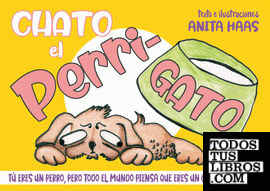
Tú eres un perro, pero todo el mundo piensa que eres un gato. ¿Qué haces? Una fábula animalista sobre el derecho natural a la personalidad propia.
You are a dog, but everyone thinks you are a cat. What are you doing? An animalistic fable about the natural right to one’s own personality.
Walking Their Walk

All About Us follows a young woman living in the height of the Jim Crow era as she and her siblings fight seemingly endless obstacles in search of a brighter future. What was the idea, or spark, that first set off the need to write this book?
As flight attendants, we often had nice layovers in New Orleans. It was 1995. I flew with a co-worker who was from Yazoo City, Mississippi, a place I had never heard of. My co-worker asked that I ride the three-hour drive with her to visit relatives. Upon entering the city, I was surprised. I could see how downtrodden the area was. Yazoo City’s downtown is a place with colorful dilapidated buildings surrounded by poor areas. I knew growing up that my family, like many other black families, was poor. However, the city was shocking.
The residents were poor, poorer, and poorest. I witnessed families without running water and electricity. Sagging tin roofs appeared to be the norm. Thick plastic used as makeshift barriers for windows and doors. Houses without indoor plumbing. The need for infrastructure was visible.
This was a wake-up call for me to write a story about poor blacks. Of course, I knew I would insert in this story a few experiences of my own growing up poor, as well as friends and neighbors I once lived around. I knew I had a story to tell and blending other’s experiences with my own would, maybe just maybe make a great novel.
What was your approach to writing the interactions between Caiti and her siblings?
Realizing that siblings play an important role in the development of social skills, I wanted to incorporate pretend-play interactions between younger and older siblings. I felt this could teach empathy, sharing, and cooperation between the characters.
It was important that nonverbal interactions be established early on. I did not want too many speaking interactions with the younger siblings until later in the story. After making that decision, I decided to showcase the younger siblings by taking their personalities, and rather than have dialogue, their physical mannerisms would lead mostly until they were a little bit older.
There is a lot of time and care spent with descriptions and building the setting and tone of the story. Was this out of necessity to develop the depth of the story, or was it something that happened naturally as you were writing?
Definitely a necessity. Giving vivid descriptions was an attempt to make the reader feel as if they were right there with the characters, walking their walk and experiencing their pain, joy, and their surroundings.
What is the next novel you are working on, and when will that be available?
Tainted Money, how it ruins lives, relationships, and at times murder, is about a young male Venezuelan, named Vincent, in the United States illegally. He meets Riley and falls in love with her. Months later in a convenience store, he purchased a lottery ticket and won two million dollars. Apprehensive about having anyone cash his ticket was wearing him down.
He finally selects Riley as the one person he could trust with the winnings. He would often think of the things his winnings could mean for him. He would hire an attorney to help him obtain legal status in the USA. Start his own business and perhaps purchase a house and marry Riley.
Riley cashed in the ticket and disappeared. After a few days, he set out to find her. He visits the places they had ventured together. He sought out her friends and relatives and they all claimed to have no knowledge of her whereabouts. He was becoming angrier and angrier at Riley. Why and how could she do this to him?
It now becomes a manhunt for Riley who was skilled with firearms. Although Vincent was not one who was interested in firearms. He had migrated from a country where guns were laid out like your favorite coffee mug.
It soon becomes a cat-and-mouse game. The one thing Vincent was good at was a slingshot. It had saved him and Rico, his traveling buddy, from a brutal attack as they made their way through the dangerous jungles of Venezuela.
Stay tuned, the book will be out in the summer of 2024.
Author Links: Goodreads | Amazon
Horrible conditions beat down the older kids, buckling their spirits. Their strong determination to protect their family while simultaneously being pulled in opposite direction resulted in a life of early labor, despair, anxiety, and subsequent murder. One child, scarred for a lifetime, something Pres and Caiti must keep to themselves. A best friend admits at a youthful age a secret they both must keep until their friend tragically meets his death.
Determined to remove themselves from their troubling past, was not an easy thing to do, particularly during the height of the Jim Crow era. One by one each of the Morris children left home in search of a better life, gambling on their dreams but not without obstacles. Their adult lives came with tragedies they never imagined.
All About Us


All About Us, by Priscilla D. Johnson, revolves around Caiti Morris, offering an intimate chronicle of her upbringing within a complex household during the 1950s. Alongside her older brother Preston and their younger siblings, Caiti navigates the challenges of their deteriorating living conditions. The story unfolds within the confines of cramped apartments, where the weight of familial responsibility rests heavily upon their shoulders. Amidst conflicting circumstances, they confront despair, anxiety, and enduring hardships. Despite their trials, the Morris siblings embark on individual journeys toward a brighter future, resolutely pursuing dreams while confronting unyielding obstacles. As they transition into adulthood, unforeseen tragedies test their resilience.
Johnson’s story is engrossing and captivating, drawing readers into her evocative world. The author’s writing style, simple yet engaging, compels one to delve deeper into the narrative. The depiction of the struggles inherent in a dysfunctional family is executed with great skill, with the characters’ words and actions serving as poignant reflections of the impact of a challenging environment on children’s well-being. The characters’ authenticity shines through as they evolve and reveal their imperfections, creating a deeply personal and meaningful reading experience. Their relatability fosters empathy, allowing readers to connect with their hardships and triumphs. Each turn of the page reveals new insights, transporting readers to a bygone era. While the intricate details add depth to the story, it’s worth noting that they might be overwhelming based on individual preferences. The writing style, though simple, effectively conveys the characters’ journeys and the emotional landscape they traverse.
All About Us is a testament to resilience, family bonds, and the pursuit of hope amidst adversity. Priscilla D. Johnson’s narrative paints a vivid picture of lives unfolding against the backdrop of societal and personal challenges. It’s a book that leaves readers enriched, having journeyed alongside characters who mirror both the vulnerabilities and strengths that make us human.
Pages: 425 | ASIN : B0CGMSB54P

My Breaking Point

Robert Crown Author Interview
Suffering Ends When Awakening Begins is the story of your dark childhood and how you overcame tough obstacles with the power of positive understanding and purposeful thought. Why was this an important book for you to write?
As I wrote in the Chapter “Facing Timeless Truth” this event pushed me to my breaking point after all these years. I did not care if I lived or died any longer I was ready to leave this world. The thought of writing a book ignited a spark within and brought me back to life. A reason to live, a reason to give, so others would not have to suffer as much as I did.
What’s more, my intention and the only reason for writing Suffering Ends When Awakening Begins was that when the world reads my story, it will give people hope, faith, and courage to overcome the challenges they face in their own life. I went through a variety and numerous intense traumatic events in my life. I know all too well what it means to suffer. If people read what I went through, realize I made it through to the other side, and now that I’m thriving living a life I choose, they will also know they can do the same.
Knowing that sharing my story has improved the quality of someone’s life, brings me a tremendous amount of joy, happiness, and purpose. This is my passion, my purpose, my reason for being born into this world.
This was a very emotional novel, and I felt you held nothing back. What did you feel was important to get right in your retelling of events?
I have a profound understanding of what it means to suffer immensely. If exposing the intimate details of my life will help people avoid what I went through, so they can improve the quality of their life, I’m all in. I firmly believe this is why I came into this world. To give faith, hope, and courage to millions of people in the world.
People need to know they are not alone, despite what happened in their past. They need to love themselves, know they matter to other people in their life and to this world. Everybody is worthy of living this life, they are also worthy to be empowered, go within, and discover who they truly are.
Life happens, but it happens for a reason. When we are able to discover this reason, tune in with our higher-selves, this is when our life will change for the better, forever. When this happens, it’s so magical, liberating, and empowering. There’s no going back.
My experiences are my teacher. Since I have been through numerous, and various amounts of trauma, I learned a tremendous amount which no university, no book, no one, can teach you about. This allowed me to put it all together. Although it took me a while and it wasn’t easy, I finally figured out how to overcome hardship, adversity, and suffering and live a life that thrives. Better late than never.
From my experiences and studying spirituality for thirty years my understanding is out of the box. This allows me to view the suffering one goes through in life as an opportunity or is intended for us to awaken to who we truly are. This is the purpose of life for humanity. To awaken that we are multidimensional beings living in this third-dimensional world. Once we have a profound understanding of this, awaken to the powers, abilities, and divinity within, our suffering will end.
I believe it’s important to be the best we can be, to accept ourselves for who we are regardless of what has happened to us in our past. The past no longer matters only the present moment matters.
It’s more than just okay to be who we really are, it’s the purpose of life. I’ve been through hell and back a few times, but regardless of what I’ve been through, regardless of what people may think of me, or even what I have thought of myself in the past, I love and accept myself as I am. I love and accept others as they are too. This is an essential step in being able to change.
I just want others to realize that no matter what they go through in their life, they matter. People can enjoy a life which thrives if only they learn to control and use their thoughts intentionally to create the experience they want.
What do you find is one reason many people have for keeping themselves down? And how can they overcome it?
That’s easy. It’s the belief systems we hold onto, whether learned or programmed into us while we were young. Anyone can overcome any challenge in life. All they need to do is learn how to think properly.
Most people today live their life by default, instead of by intention. Meaning they let their thoughts run wild throughout the day. When you learn how to harness your thoughts, like placing reins around a horse, then you direct them to where you want to go, you can create the reality, the life you choose to have for yourself.
What is the next book that you are working on and when will it be available?
My next book is going into detail on how to overcome hardship, adversity, and suffering. Along with practical solutions on how to change old belief systems and negative thought patterns so you can thrive in your life.
Author Links: GoodReads | Twitter | Facebook | Website
![Suffering Ends When Awakening Begins by [Crown, Robert]](https://images-na.ssl-images-amazon.com/images/I/517ASFNXk0L.jpg)
How Does a Child’s Life Change When His Mother Tries to Murder Him? It’s one of the most profound betrayals imaginable, and it can follow the victim into adulthood, into all he does with his life, tainting his sense of self and his relationships with others. How does a man’s life change when he discovers that with his thoughts, his imagination, and his ability to listen to his higher self, he has the power to overcome the devastating events of his past and build a new life and a family?
This is The Inspiring True Story of Robert Crown’s amazing journey out of the darkness of his childhood and into a world brightly illuminated by the power of positive understanding and purposeful thought. It’s the story of rejecting the victimhood he once embraced and finding the answers that allowed him to embrace the power to create a new life using universal spiritual laws.

Embrace Adversity

Annella Metoyer Author Interview
Dare to Be the Change tells the story of your life and how you overcame adversities to be the change you wanted to see in the world. Why was this an important book for you to write?
It was important for me to write this book to give the readers a glimpse into some of the adversities that women and people of color face in corporate America. More importantly, how to embrace adversity and make it your advantage by becoming the voice for others.
You grew up in a small town in Louisiana, in a time where racism was prevalent in the community. How has your perception changed of that time and place now that you’re an adult?
I do not feel my perception has changed now that I am an adult. However, as an adult, I do understand the WHY behind why some things happened.
I found this book to be inspirational and motivate me to help others seek change. What do you hope readers take away from your book?
Since the book published, I have received countless emails, phone calls, text messages from all cultures. The book is doing exactly what I hoped it would do. First, giving individuals a platform to talk to each other about a sensitive subject versus talking at each other. Secondly, it’s an opportunity for each person to tell their own story. And finally, its reenergized individuals to stand up and be the voice in the room.
What is the next book that you are writing and when will it be available?
My next book Stronger than Fear is a children’s book scheduled to be published late summer 2018. It’s about a boy named Christopher and his dog Loki experiencing bullying by members of their species.
Author Links: GoodReads | Twitter | Facebook | Website | LinkedIn
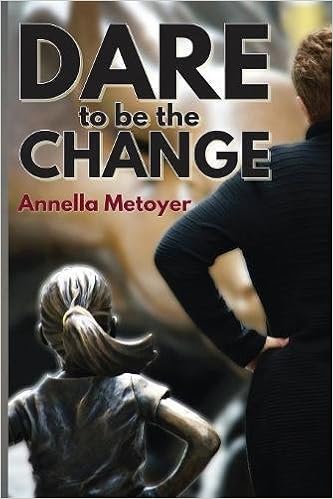 In Dare to be the Change, Annella Metoyer courageously shares the details of her life’s challenges, her family’s dedication to positive change as well as offers hope for readers through her struggles and accomplishments. Starting with the integration of her small town public school, she encounters a life-changing experience that sets her on a path of “being the change.”
Not only did she face the challenges when women were not the voice in the room, but she also did so as a person of color. From coworkers to disgruntled customers’ discrimination, she lived the evolution of attitudes. With each adversity, she became more determined to take the challenge and turn it into an advantage.
Annella Metoyer was blessed to experience many firsts. She was the first person of color employed by a local bank and ultimately became the City President for a large corporate bank. Her journey later took an unexpected turn when she transitioned from employee to entrepreneur.
Dare to be the Change will resonate with anyone that has ever faced adversities. As you read the story, you will rejoice in the strength that Annella finds within to help others and to make this world a better place.
The Adventures of Fawn: ‘Til the Last Snowflake Falls
![The Adventures of Fawn: 'Til the Last Snowflake Falls by [Boy, Al E.]](https://images-na.ssl-images-amazon.com/images/I/511ka7Bn%2B1L.jpg)

Do you still believe in magic? Do you still believe in Santa and his elves up at the North Pole? Comet and Vixen have a new little fawn that unfortunately is very bored and lonely at the North Pole. There are no other children to play with or keep her company. Fawn secretly discovers how to leave Santa’s village and escape to the outside world. There she meets a Snowboy, and a bunny. They decide to become best friends ‘Til the last snowflake falls. What happens though is that they discover that animals are going missing out of nowhere. Baby animals are left parentless and afraid. There is a new human, Dr. Mary Weather, a veterinarian that has come to the artic to study and help animals. With the help of Dr. Weather the inhabitants of Santa’s village look to solve the mystery of the missing animals and reunite all the families.
The Adventures of Fawn ‘Til the Last Snowflake Falls by Al E. Boy is listed as a children’s book, however it is novel. The writing is easy to understand, not a lot of challenging words. The scenery descriptions are colorful and entertaining but kept short to appeal to childrens shorter attention spans. There is a lot of funny interaction between the animals that will have you laughing and rooting them on. The personalities are well written and appealing, they have a mischievous streak, not a “bad kid” one but just kids being kids exploring and playing pranks. One funny scene involves two elves, known as the Forgetful Twins, and a bunny scatters who straw behind the elves as they’re sweeping, and the elves can’t figure out what is going on. The book than goes into deeper plots and themes. The bad guys that are kidnapping animals are mean to both people and animals. While there isn’t a lot of violence, the hostilities are implied.
The constant theme of friendship and sticking together is weaved deeply into the plot. At every turn characters are bonding and helping each other. The concern for their fellow companions is heartwarming. It shows that despite all the differences, human, snowman, reindeer, elf, bunny, it doesn’t matter, they all bond together. This is a great lesson for children, and adults. It doesn’t matter how different we all are, we can come together to solve a problem and help each other in times of need.
While the story takes place in the North Pole, it is not a Christmas story. It is a compelling story about friendship and overcoming adversity. Fawn is a loving character that is easy to relate to, and the magic of Santa’s Village and talking animals is sure to draw in readers of all ages. I loved being able to escape back to a childlike innocence and for the course of this book just believe in the magic of Santa and the North Pole again. It makes me happy and reminds me to appreciate the little things in life and share these moments with my own kids. This would make a great family reading novel with lots of topics for discussion.
Pages: 349 | ASIN: B00NRZO920



 LITERARY TITAN