Blog Archives
How Many Do You Think Can Survive?

Motherhood follows a young physician who finds a child in her bathroom that ignites the motherly desire inside of her. What was the inspiration for the setup of your story?
I have to say that divorce is more prevalent these days than marriage, and most marriages will lead to divorce soon. In post-revolutionary Iran, fundamental changes have taken place in such areas, which are sometimes very negative. People in many villages and small towns have turned to cities, especially Tehran, the capital. You may know that we started the revolution at a time when satellites, the Internet, mobile phones, and technologies like that did not yet exist. Therefore, the connection of cities with villagers and small towns was very limited and sometimes did not exist at all. Urban life and urbanization could not have any effect on them, but when the revolution started, the villagers rushed in millions to big cities, including Tehran. As a result, they brought along to the cities all their traditions and behaviors. They also tried to make themselves like city people, but with the misconceptions they had about the city and urbanization.
One of these misconceptions was to give up family and ancestral professions and turn to administrative jobs. Administrative jobs require literacy and education, and so by any means necessary they quickly threw themselves into universities. But because it was not easy to enter universities, they founded their own, which are called free universities. These universities take money from you and admit you to the university, and as easily as you enter it, you can leave with a doctorate degree. This greed for obtaining a degree was not unique to men; women also saw freedom in education and degrees. Many people have been able to start their own family businesses with government loans after graduation, and now consider lack of economic independence to be the main reason for their lack of freedom. So the idea now is that if they have economic independence, they will also have freedom.
When men and women both study and have a doctorate degree, and both work from morning till night, it makes sense for them not to find any room for marriage. That is why in today’s Iran fewer people get married and if they do, they have fewer children because not only do they have less time, they have also decided that in order to achieve their goals marriage and children are not a basic necessity of life and that those things make women dependent on men hence hindering their independence and freedom. For this reason, Iran, which was once one of the youngest countries in the world, is becoming one of the oldest today.
Dr. Shahverdi has somehow accepted an arbitrary change of nature, and its very consequence is her lonely and soulless life at the beginning of the story. This story is short but in this short span, it covers many details. So it was very difficult to achieve such a goal in such a short time. However, I tried my best to make it as natural as possible.
Dr. Mitra Shahverdi is an intriguing character. What were some driving ideals behind your character’s development?
I got to know many women during my student days and then during my artwork years, and Dr. Shahverdi is a collection of some of their most interesting features. I say “the most interesting” because each of these features was very natural in the women I knew. When someone tries to imitate a behavior from others and pretend that it is their own behavior, it can actually be quickly perceived to be fake. But an authentic behavior quickly gives you a good impression. I did my very best to make these behaviors real for Mitra, not imitative and fake, and I think I was able to do so because those who have read the story have not noticed any fake and unnatural behavior in this character.
What were some themes that were important for you to explore in this book?
Everyone has the right to be free and to live freely, whether they are men or women or the whole society, but the first condition is to recognize freedom and its uses and the need for it. What good is freedom to me when I neither recognize freedom nor its uses and I do not even need it?
When we do not recognize something, we do not know its values or applications, and this is what happened in our revolution. The villagers came to the cities when they knew nothing about living there and once they had benefited from their facilities, they tried to make up for many of their shortcomings, and did so in the wrong ways, one of which was to get rid of the bond of marriage. Why should they consider marriage a kind of bond? Before the revolution, marriage was arbitrary in the cities. Two people would meet and get to know each other, and if they also liked one another, they would get engaged and stay that way for some time, and then they would get married if everything went well. Also, getting divorced – not in all cases but in most – was easy. But in the villages, families were the ones who chose wives for their sons and husbands for their daughters, who never saw each other until the night of their marriage. It made sense that such a marriage could not be desired, and now that the villagers had the facilities of the cities, they tried to break this bond. But they did so with extravagance and extremism, i.e. by denying marriage and childbearing, or in other words, by changing their nature. The views were rural but the tools and facilities were urban. They did not know this, and they still do not know that in order to change the situation, they must change their views, and not their nature.
But they came to the cities without changing their views and by the use of urban facilities they tried to show themselves as urban, however not only could they not become urban, but they even lost their rural and urban characteristics, and now they are neither rural nor urban. They are in such a purgatory that millennial traditions and beliefs are shattered and everything loses its original meaning. In this purgatory, nothing has a true meaning, not traditions nor beliefs nor even morality. No one is bound to anything anymore, and that is why all those things that were once considered bad are suddenly allowed, and lies, hypocrisy, theft, and the like increase. Parents who were once greatly respected in their villages and towns are now sent to nursing homes as soon as possible, with the excuse of the difficulties of modern life. They do not know that it is not modern life that has brought this disaster upon them, but the sudden cutting off of the roots and the sudden loss of all those precious things that had shaped their lives and relationships over thousands of years. It is just like suddenly dropping a bunch of polar bears in the deserts of Saudi Arabia. How many do you think can survive?
It is one thing for modern life, with all its features, to quietly reach cities and villages, and it is another thing for villagers and townspeople to suddenly find themselves trapped in the hustle and bustle of modern life; the former can be constructive, but the latter will always be destructive. In this story, I rejected this unnatural method with an unnatural event, which means that Dr. Shahverdi tries to change or deny her nature in an unnatural way, and nature tries to keep that nature alive in her in its own unnatural way. This is not to say that I can believe such events in real life, but when it comes to art, and in this case the story, I believe that these methods can be used.
What is the next book that you are working on and when will it be available?
My next book, which I am almost done rewriting, is a science-fiction novel. It is about a spacecraft that for some reason is present in our solar system and has been seen by those on Earth. Humans have not contacted them and want to get to know them, therefore they invite them to come to earth.
This story has three main points. First, the ship’s commander suffers from insomnia, and nonstop events do not allow him to sleep either. Still, he does his best to perform his duties well. The life of this commander is between sleep and wakefulness and the past and the present. Memories of his distant and recent past invade his mind, constantly keeping him separated from the present. One of the memories of this commander is the love he lost in a distant past and now this love has found the chance to be constantly revived in his mind.
The second point is that the characters are just like us, both physically and outwardly, and in terms of inwardness and connections among themselves. I believe that if there are intelligent creatures on other planets and galaxies, they are certainly like us because progress in culture and civilization on the one hand and progress in industry and technology on the other cause space creatures to be like us – albeit with differences in detail. For example, let us consider E.T: He is a space creature with that particular appearance and body and is of course so advanced that he is able to come to earth on a spaceship. Even mentally, he seems much more advanced and evolved than us, because he is able to heal the injured finger of the boy in the film with a light that radiates from his finger. The question is how with such a body (with which he can not walk properly) and such fingers has he managed to produce technology? It is true that today he may use robots and computers, but initially, you have to be able to produce basic technologies yourself. I mean with such fingers how could he put the delicate gears of a watch together and how with such fingers could he have sent a text message to someone else? In one of Arthur C. Clarke’s short stories, an octopus pilots a small spaceship. Can you imagine this octopus producing sophisticated technologies? That is why I imagine if intelligent beings existed in space, they must be something like us. Of course, it goes without saying that if we consider the world of movies, creatures like E.T or Predator can be more attractive than beings like us.
And the third point is that our scientists have long spent billions of dollars to find space creatures and make friendly contact with them. And now that these aliens are in the solar system, even terrestrial politicians are urging them to accept their invitation and come to Earth to get to know each other. These aliens, while in the solar system, have been able to obtain good knowledge about us with the help of their satellites, and now they wonder why the races on Earth have not yet been able to accept each other well and live together peacefully. These races are still killing each other and looting each other’s property. Can they be trusted? What will a race that does not have mercy on itself do to them? Besides, why does a race that does not know its neighbor and tries to eliminate it seek to get acquainted with new races? Can one trust the friendship and relationship with such a race?
The rewriting of this book will be finished soon and I will publish it if the publisher likes the story.
Author Links: GoodReads | Twitter | Facebook
The boy doesn’t remember anything. The woman calls the police. The police can not take him to the station because he is just a little boy, and they cannot find his parents because he does not remember anything. Due to the holiday, the police can not take him to the nursery or anything similar. So the young physician has to care for him till after the holiday. In the few days ahead, she cares for the boy but the questions are: who is this boy? Where has he come from? Why in her bathroom? Is he real or just a sparkle of her passion she has tried to ignore for a long time? And, finally, can this incident wake the motherhood up deep inside her?
In Motherhood, by Siamak Vakili, we experience the universe playing a trick to wake the nature that lies deepest inside, and shows that it’s very hard to escape from who we really are.
Wondering Is A Fun Place

Gertie Saves the Day is about a groundhog competition to be the next Groundhog Day celebration groundhog. What was the inspiration for your story?
I have always loved Groundhog Day. I always found it fascinating that animals were able to indicate to farmers whether or not they should begin planting their spring crops. As a child I was always hoping for an early spring!
It bothered me that only male groundhogs were selected to celebrate Groundhog Day. I began to wonder what it might be like to have a female groundhog celebrate this special day. What would the selection process look like? How would the selection be made? Wondering is a fun place when writing children’s books.
The art in this book is fantastic. What was the art collaboration process like with the illustrator Daniela Massironi?
The art collaboration process with my illustrator, Daniela Massironi, was amazing. Daniela is a talented illustrator who captured my attention with her portfolio of cute animals with beautiful facial expressions. For me, facial expressions are important when telling a children’s story. We worked together as a team. Daniela first concentrated on the main characters, then she moved on to the page illustrations. Daniela made some great suggestions along the way and was open to my suggestions. It truly was a team effort. I may have written the story, but Daniela’s illustrations made the story come to life!
What were some themes that were important for you to explore in this book?
This book began as an introduction to Groundhog Day and as the story grew there were several childhood themes that developed. Competition and disappointment are themes that children can understand and relate to in their own lives. Sharing how Gertie handled her disappointment let’s children know it’s alright to be disappointed and there are different ways to handle disappointment. The book also has themes of friendship, kindness and teamwork. Each of these themes give parents and teachers the opportunity to have meaningful discussions with children.
What is the next book that you are working on and when will it be available?
I am writing a series of books for young children about Kindness/Bullying, Sharing, Diversity/Inclusion and Patience. This series should be available late summer, early fall. My next project will be co-authoring a children’s book about acupuncture.
Author Links: GoodReads | Twitter | Instagram | Website
Gertie Saves the Day is more than a book about Groundhog Day. It is a story that explores the excitement of a special event, competition, disappointment and friendship. It is a book that children will want to read over and over again and will make a wonderful addition to any classroom or home library.
To grow, we have to release.

Becoming Truitt Skye: The Cave of Souls follows a woman torn between her past self and who she is now while being overwhelmed with the responsibilities that are placed on her. What was the inspiration for the setup to your story?
What a terrific question! Thank you. The series reflects my desire ( read: obsession) with the journey we take as women to “become” who we are, which to me, is self-possessed and in love with the life we have lived, are living, and will live. To grow, we have to release. As always, I take most of my inspiration from nature. Like the seed, we break through the casings protecting us, then we have to get through the earth, rocks and all, in order to slowing unravel, grow stronger and stronger in our stems/cores, expand with our leaves and blooms, rest when the sun goes down and continue the next day until the winter returns and we die/transform and begin again, a wee different the following spring. Change means part dies for new growth to emerge. I wanted to express that aspect of growth in this series.
Truitt goes through a lot of emotions in this novel as she adapts. What were some driving ideals behind your character’s development?
Another awesome question! Thank you. The Cave of Souls falls in the middle of Truitt’s journey. And like all of us in the middle of our story, she knows the only forward is to let go of the past and she DOES NOT WANT TO/fears the unknown. I wanted it to be explosive. I wanted massive resistance, and pain. In fiction, we can overindulge to give the reader an experience. They can potentially have this hyper-experience so that their growth feels do-able. Or at least that is my dream for the reader… “if Truitt can, I can,” kind of love logic. Truitt is fighting the change she must make to become more, like we all do. We see the dream we want to live, and yet, we sabotage ourselves for fear we don’t deserve it. She is meant to be a role model for all of us to let ourselves express, and be, and live and die, and become more. Always more.
What were some themes that were important for you to explore in this book?
I love a theme! The main theme I explored in Cave (my short name for the book), was “you have to feel your way there.” To me how we feel dictates who we are and what we do. It is the vibration beneath the action. So, of course, to take Truitt and the reader on the experience, I had to make Truiit attempt to avoid her feelings… which never works, but we forget that because we “think” that are thoughts will save us. My truth is that feelings come first, then thoughts. Mastering, by which I mean loving, our emotions, includes/requires expressing, celebrating and owning our feelings . This is the path to living the life of our dreams. Another theme of T2 was, “nothing we do is wrong. It is clarity in motion.” We are all so hard on ourselves for our mistakes and failures… it drives me insane that we are so terrible to ourselves.. I wanted to show that when we fail, we earn clarity and clarity is a superpower. It’s a classic theme that we can never hear too much!
What is the next book that you are working on and when will it be available?
I am in the process of editing the final book of the Becoming Truitt Skye series: The Equation for Imagination. It will release later this year.
Author Links: GoodReads | Instagram | Facebook | Website
A Very Cathartic Ending

Under an Azure Sky follows a young woman that seeks retribution for the death of all she loved, in the process, she discovers she can still feel love. What was the inspiration for the setup to your story?
It’s partly a homage to the greatest fantasy writer of all-time (that nobody in the west has heard of), Louis Cha, who wrote many epic wuxia novels in his native Chinese language.
For years, I always had this notion that I wanted to write a medieval epic fantasy, but I lacked intention and purpose. I was always too scared to try in case I failed miserably, but the jury’s still out on that. It was all very ethereal, without any solidity. I find that I work best from the premise that I can “see” who my characters are, and I didn’t have the required details to give Elysia any form… until I spotted a muse on TV, and she became Elysia (that’s where the cavernous dimples and imperfect nose comes from)! My methodology is to put real actors through scenes in my mind, and then they develop nuances, quirks and character, and that can help to drive the plot forwards. Every character is developed in this “method acting” way.
Also, Elysia is a woman traipsing through an old medieval, fantasy world ruled by men, but she does it on an equal footing. I just wanted to continue the propagation of equality and feminism (although feminists may say that it’s impossible for a man to champion feminist ideals…which is kind of true, but I persist). Going forwards, in subsequent books, she is going to be challenging this medieval glass ceiling in more profound ways.
Elysia suffers a lot in her younger life making her closed off to everyone. What were some driving ideals behind your character’s development?
Her teenage years are, dare I say, a far more melodramatic version of what many teenagers go through. Their lives are changing and maybe they don’t know where they fit into a changing world. Children remember life as being bright and rosy, and when that phase is over, it morphs into the darker and more unforgiving boundaries of adulthood. When childhood ends, you have to deal with the inevitability of responsibility and loss. I like looking at everyday things, then turning up the volume in a totally faux setting. Truthfully, writing her flashback story was much easier than her relationship with Isabella.
What were some themes that were important for you to explore in this book?
The psychological and emotional aspects were just as important to me as things that happen in physical world. In terms of plot, I do have milestones that I adhere to no matter what, but the rest of it I can play around with depending on my own emotional state. It was meant to be more life-affirming, and that was the initial intention, but as I wrote, the plot made me more morose (during that time I was affected by the pandemic as well), so I made Elysia more and more melancholic, and that in turn affected me more, so it metastasized into a very cathartic ending. So, in the second book, it will be a case of building her back up from her lowest ebb.
What is the next book that you are working on and when will it be available?
I’m working on “Shadows Under the Shade,” which is the second Elysia Dayne book. If anybody has read the first book, I have a tendency to muse and write side-stories. One of these Elysia Dayne short stories became hefty to the point where it will work better as a standalone book (hopefully a lighter, fun read in the tone of an Indiana Jones movie). It’s also as a response to some criticism that my first book is too long, too detailed, and too purple.
I would love to write in different genres. I’m trying to write a non-YA dystopian sci-fi (a ‘Hunger Games on speed’)!
In terms of timetable, I’m still doing this as a hobby. And a part-time one at that. If it can one day become an occupation, that would be a dream come true. But today is not that day! Having said that, I am hoping for three books before the end of the year.
Author Links: GoodReads | Website
But that wasn’t always the case.
There was a time when I thought that dragons were beautiful…
During my childhood, I believed that I was friends with a dragon, except the dragon never knew of this friendship.
Days after my thirteenth birthday, my secret was no longer mine to keep. Soldiers arrived to slay the dragon so that a feudal lord could make his name amongst the Nine Kingdoms. It ended in abject failure. They were left to soak in a bloodbath of their own making.
In a rage, the dragon destroyed the place that I called home, and killed the people that I called family. She also dismantled a thing that I called love.
Reborn under a mound of ashen corpses, my empty shell vowed vengeance, forging a fiery path of retribution that could not be undone.
Not by my own design, I inadvertently became a slayer of dragons. Curiously, dragon slaying isn’t my next job…
A princess is being held for ransom at a goblin fort. Wearing the stolen armour of a goblin knight, I attempt to rescue her to claim my prize.
When I met her, she was Winter. Now, she is Spring. Maybe I can learn to love again…
I Found Something New And Exciting
Muddied Waters: Coda follows several characters as they explore different paths in life. What was the inspiration for the setup to your story?
In our previous interview concerning Muddied Waters, I mentioned how it didn’t feel right abandoning Chelsea’s character to the cutting room floor. Now that the novel is finished and I’m beginning to see the feedback, I’m very glad I wrote Coda. She is the most badass female character I could ever concoct and it was mostly to make things right for her, in my mind. Another big inspiration was my research on the Haitian Revolution, which felt like the missing piece I needed to set Coda’s atmosphere. Under no circumstances was I interested in retreading themes from the first book- I’d said all I was going to say about pirate culture. With this important piece of history, I found something new and exciting: musings about motherlands and their colonies, with comparisons to family dynamics, parents and their progeny.
What is one pivotal moment in the story that you think best defines Teague?
Excellent, excellent question! I never fully considered what defines my characters, likely because I’ve never really had that kind of introspection with myself. That being said, I believe a person’s character is defined many small moments, rather than just one or two cataclysmic events. Because Teague had seen and done so much in life, because he couldn’t think of a single thing left to carry on for, he spends the novel trying to find a way to die right, whether it’s by his own power or someone else’s. The terrier scene is directly inspired by a personal experience, so that holds a special place in my heart. I’m quite proud of the gallows scene as well. But when I read or watch movies, my favourite moments always tend to be the ones that at first glance are inconsequential, so I’ll say it’s when Teague throws Viceroy Belo’s destroyed pommel into Puerto Bello’s harbour. It’s the first real step he takes on his journey, and the first step is always the most important.
Were you able to achieve everything you wanted with the characters in the novel?
I believe so. I’m happy with how I wrapped up Teague’s saga, and positively overjoyed that I could present Chelsea to you all! Jonathan began as a sort of last-minute addition, and I hope he rose above the literary tool I initially created him as to better flesh out Chelsea’s arc. I purposely kept Rafael and Bernal bare-bones, to make it feel as if the reader was on the outside, witnessing a conflict that was none of their business. Teo Quintana was the perfect replacement for Ross Stone. The only character that I’m still not sure about is Alger: he seemed removed from the main story, though if I’m honest, he should be, given his circumstances. I had a very difficult time developing his perspective as it related to Saint Domingue; I wanted him to represent the social progress in Europe at the time (ie. powerful white men benefitting from the status quo who also recognize the societal cost), but not so much that he came off as bleeding-heart or…dare I say it…”woke”. Regardless, if I was going to properly conclude Teague’s story, I had no choice but to provide Alger the same service. I did my best to do that.
What is the next book that you are working on and when will it be available?
I have a major project, still in its early stages. It will be my attempt at a fantasy. I also have an experimental novella that explores solitude and paranoia. That one is more of a psychological horror. There is no timeline for their completion and if I do end up finishing them, I don’t see myself coming up with anything else. Never say never, though!
Author Links: GoodReads | Facebook
Years after pillaging the Nossa Senhora Do Abismo, ex-pirate Jackson Teague continues to struggle with the costly fallout from the ill-fated galleon’s bounty. Half a world away, a grownup Alger Moore finds equal difficulty in reconciling their shared past. But when a ruthless and diverse crew of bandits begin rampaging across the Caribbean, both will be inexplicably pulled back into a world they thought had been effectively ended by Europe’s perceived social progress. Navigating around a burgeoning culture of independence within the New World’s colonies, both will be afforded the rare opportunity to find closure with each other and themselves.
The Erebus Tales Series

Gifts of a Dark God follow a group of friends trying to stop the colonization of Antarctica while running into some dangerous hurdles. What was the inspiration for the setup to your story?
See the first two books in the Erebus Tales series, Stone Fever and The Color of Greed, for more background on how a climate-changed Antarctica becomes the focal point of this story.
Which character in the novel do you feel you relate to more and why?
Every major character has a bit of me in it: Keltyn the loner nerd geologist, Joaquin the gimpy but plucky gaucho-wannabee, Luz the impetuous organizer, Fay the defender of the downtrodden, even Helmut Ganz the corporate toady, hiding a fatal character flaw.
What was your favorite scene in this story?
The horse-breeding scene in Chapter 13, though I owe a word of thanks in the conception of that scene to a similar one in Tom Wolfe’s A Man in Full.
What is the next book that you are working on and when will it be available?
No further fiction planned at this time. Readers are referred to the first two books in this series, previously published by Iguana Books.
Author Links: GoodReads | Facebook | Website
Meanwhile, activist Fay Del Campo, sprung from detention, vows to fight Sir Oscar Bailey’s domination of world commerce, even if it means joining forces with a shadowy group of saboteurs. Bailey’s storm trooper Helmut Ganz plots to stop her. Only one of them will survive, and Erebus, the dark mountain god, will have the final say.
Stories Of Experiences
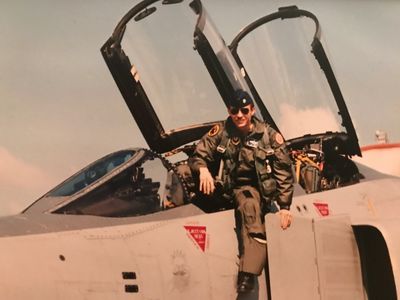
Betrayal in the Casbah follows a military attaché as he sets out on a rescue mission to save a downed pilot being held by terrorists. What was the inspiration for the setup to your story?
Most of my inspiration in writing the book came from my military background and experiences while serving for almost three decades. Being a fighter pilot experiencing combat, a base commander in NATO, leadership roles at the highest levels at the Pentagon, and the intrigue of being a military attaché in an extremely unstable country in North Africa. But actually, I combined events of my last two years as a military attaché in Algeria in writing the book. The attempt to rescue a downed American pilot was an actual mission and I used much of what happened while attempting to accomplish that mission in the fictionalized story.
What is your background and experience in writing and how did it help you write Betrayal in the Casbah?
I have always loved the written word and periodically would write little stories of experiences in my life, but nothing serious. Most of my previous writing was of a military nature. Briefings, reports, after action documents, evaluations, etc….. The only formal background would be my bachelor’s degree in English and Political Science.
What were some themes that were important for you to explore in this book?
Terrorism in North Africa, Al-Qaeda, the Barbary Coast pirates, and ancient Roman cities in Algeria.
What is the next book that you are working on and when will it be available?
Escape from Algiers, which is the sequel to Betrayal in the Casbah. Hopefully it will answer many questions that persist after reading my first book. I anticipate the sequel being available at the end of this year or early 2023.
Author Links: Website | Instagram
Nursed to health by the beautiful and mysterious Abella, Mitch returns to duty and is approached by the CIA with a covert mission: to rescue and bring home a downed American pilot being held by terrorists in Algiers. As he plans and prepares for the mission, Mitch and Abella become confidants and lovers, and Mitch discovers she is more than just a nurse working in a military hospital. Together with longtime friend and French colonel Yves Dureau and Mitch’s assistant, Army Warrant Officer Dave McQueen, Mitch and Abella will risk their lives to bring the American POW to safety.
What Makes Artists Tick
Brushed Off follows a group of artists and detectives that try to find out who is killing artists before they strike one of their own. What was the inspiration for the setup to your story?
All of the wonderful books by Raymond Chandler, Ross Macdonald, Walter Mosely, Michael Connelly and many other great authors of murder mysteries. Plus my desire to provide readers with a expose of the contemporary art community; allow them to discover how it functions; reveal how gallery directors earn their commissions; bare why collectors are passionate about art; and most important, I wanted to help readers to realize what makes artists tick and how they survive while disclosing that the art world is not filled with just drug eccentric, sex crazed, weirdos.
How did the mystery develop for this story? Did you plan it before writing or did it develop organically?
I am definitely an organic writer. I do not plan anything before I begin writing. All I knew was I wanted to start with an artist working in his studio. Once I visualized him there I had him walk outside and look around … it turned out he was on the beach and it was after midnight. The story grew from there. Each day I write, I begin by reading, out loud, the pages I wrote the day before and that makes the next few pages just erupt out of me.
What was the hardest part about writing a mystery story; where you constantly have to give just enough to keep the mystery alive until the big reveal?
I seem to have an intuitive sense about the flow of a story, when to make it seamless, when to be dynamic. The most challenging aspect for me is to limit how much art talk I subject the reader to. This is the main reason why I selected to have the main character earn his living as a videographer for PBS. In that position, he translates the art jargon into everyday English. Part of the mystery for the reader is to determine how that process reveals clues as to who the killer is.
What is the next book that you are working on and when will it be available?
The sequel to Brushed Off is tentatively title Off Kilter and it is almost finished. It includes all the same main characters plus a vivacious young woman and several new meanies. It starts where Brushed Off ends and comes to just as the pandemic starts to spread. I would love to see the sequel out before the end of the year.
Author Links: GoodReads | Website
When another artist is murdered, she joins the hunt for the killer. A leading art collector is attacked. Cisco is pressured by influential city movers and shakers. Young emerging socialite Camille is up to her neck in strife so James and Nicole make a deal to protect her. Cisco discovers a smuggled exotic drug used by all the suspects including a stealthy porn star. James keeps everyone from knowing his health is precarious. The killer and an secret accomplice targets James, Nicole and Camille.



 LITERARY TITAN