Blog Archives
Family and Community
Morocco: A Remembrance of Childhood is a nostalgic journey through your early years living in Morocco as the son of a U.S. Navy pilot and the impact the culture had on your outlook on life and beliefs. Why was this an important book for you to write?
For reasons I couldn’t initially explain, I have retained many vivid memories of my formative years, ages 5-7, in Morocco. Although I’d never considered writing a memoir, the more I thought about those years, the more I became convinced that my adult perspectives on life had been determined largely by my experiences in Morocco. From that point forward, writing the book became somewhat of a compulsion, albeit one that took over three years to complete given the research involved as well as a one-year hiatus resulting from the sudden and unexpected death of my wife of 46 years.
What were some ideas that were important for you to share in this book?
On a personal level, I wanted to capture the wonders and joys that we all experience during the process of maturing, as well as the ecstasy and agony of growing up as a military brat. The former resulting from the opportunity to experience many different people and places and the latter resulting from constant need to move on and leave all such people and places behind. With regard to Morocco, I wanted to capture its colorful, fascinating and incredibly long history, as well as the unique religion and culture of its Berber and Arab populations, all of which have combined to produce what is arguably the most open, friendly and egalitarian population of humans on the planet. Finally, given my time in Morocco, during the mid 1950’s, I wanted to track the way in which the country’s Arab/urban population and it’s Berber/rural population became united in their efforts to rid the country of French colonists who had taken over their country as a result of the Treaty of Fez, executed in 1912–an effort that in numerous ways paralleled the struggle of Black Americans to attain their civil rights during the 1950’s.
What is something that you think will surprise readers the most in your book?
Unless you’re well-versed in medieval history, most readers will probably be surprised to learn that for a time Morocco was one of the richest and most powerful nations on earth, financed by camel caravans, transporting a river of wealth from sub-Saharan Africa, and pirates, plundering both European ships and coastal towns. Riding on the crest of such wealth, Berber horsemen captured much of northern Africa, all of modern-day Spain and even a small part of modern-day France. However, with the advent of modern shipping in the 1500’s, the river of wealth from the caravans gradually dried up and Morocco’s focus turned inward.
What do you hope is one thing readers take away from your story?
The Moroccan ethos, which is centered on family and community, provides humanity with a far better path forward than one focused on individual power, prestige and wealth.
Author Website
I hope you enjoy reading this book half as much as I enjoyed writing it. It was a labor of love for me to reach back and re-create my formative years, ages 5 to 7, growing up as the son of a U.S. Navy pilot in Port Lyautey, French Morocco, during the mid-1950’s, at a time when Morocco was the epicenter of the United States’ Cold War efforts to deter and contain the Soviet Union through aerial reconnaissance and nuclear weapons.
During my time in Morocco, the country’s Berber/rural and Arab/urban populations became united in their efforts to rid themselves of the French colonists who had taken over their country as a result of the Treaty of Fez, executed in 1912—an effort that in numerous ways paralleled the struggle of Black Americans to attain their civil rights during the 1950’s.
In addition to relating my personal experiences, both humorous and telling, dealing with the family dynamics of a Navy brat, I describe the many ways in which my life intersected the cross-currents emanating from the Cold War and colonialism.
To explore the unique relationship between the country’s Berber and Arab populations, I delve into Morocco’s incredibly long, colorful and interesting history, as well as the religious and cultural beliefs that have combined to produce what is, arguably, the most open, friendly and egalitarian human population on the planet.
Finally, I make the case that the Moroccan ethos, which is centered on family and community, provides humanity with a far better path forward than one focused on the attainment of individual power, prestige and wealth.
Morocco, A Remembrance of Childhood


Morocco: A Remembrance of Childhood is a nostalgic journey through the author’s early years spent in various locales, with a significant portion dedicated to his time in Morocco. This memoir captures the essence of a childhood filled with adventure, discovery, and the bittersweet transitions that come with growing up in a military family. The narrative begins with James Farmer’s vivid recollections from as early as three years old, setting the stage for a life marked by constant movement and rich, diverse experiences.
Farmer’s writing is imbued with a sense of warmth and authenticity, making the reader feel as though they are sitting across from an old friend, listening to stories of bygone days. One of the strengths of this book is its ability to transport the reader to various settings, from the mundane routines in small-town America to the exotic landscapes of mid-20th century Morocco.
The book excels in painting a vivid picture of the time and places it covers. Farmer’s portrayal of Hutchinson, Kansas, as a quintessentially American town of the 1950s is rich with details that evoke a strong sense of place and time. His reflections on the cultural and social norms of the era provide a valuable historical context that enriches the narrative. Similarly, the descriptions of Morocco, with its contrasting landscapes and unique cultural milieu, offer a fascinating glimpse into a world that many readers may find unfamiliar yet captivating.
While I thoroughly enjoyed this heartfelt and engaging memoir, I feel that some of the author’s reflections may not resonate with all readers. Farmer’s ability to recall his early years with such clarity and emotion is truly commendable, and his stories are likely to strike a chord with anyone who has experienced the joys and challenges of a roaming lifestyle. The book is particularly well-suited for readers who enjoy memoirs and historical narratives, as well as readers interested in the cultural contrasts between mid-century America and North Africa.
James B. Farmer’s memoir is a poignant and evocative exploration of a unique childhood. I would recommend this book to anyone looking for an intimate, personal account of growing up in a time of great change, both at home and abroad.
Pages: 573 | ASIN : B0D2B21Y5V

Power Through Dubious Means
The Sacred Passage is the story of one man’s relentless pursuit of power, the questionable tactics he uses to achieve greatness, and the destruction he leaves in his wake. Where did the idea for this novel come from?
Post-colonial Africa has witnessed a trend of leaders aspiring to be among some of the longest-serving presidents hanging on to power through dubious means and some of the examples are: Bongo, Biya, Dos Santos, Nguema, Museveni, and Nguesso. The idea was born out of this trend.
What were some of the emotional and moral guidelines you followed when developing your characters?
In my local language, we say, ‘Chikomo shata divi rimwe ritambire pwere.’ So I made sure that there must always be room for some goodness in an evil character. While an evil character has been developed in the book, I always moderated it by bringing in some good elements in an attempt to pacify a reader and lessen emotions.
What are some things that you find interesting about the human condition that you think make for great fiction?
It is the expectation of having a hero, a villain. or a happy ending which I find as a common theme. This must be spiced up with an exciting storyline. Based on the readers’ expectations, the work of fiction is cut out for a writer and what remains is which storyline will excite a reader. Is it a love story, action-packed story, family feud. or war?
What is the next book you are working on, and when will it be available?
The next book will be available for publication review in about three months. It is about a dispossessed people fighting against the oppressor to regain what they lost. Countless lives are sacrificed as a war is waged to achieve their goal. The oppressor relentlessly fights back to maintain his oppressive position.
Author Links: GoodReads | Twitter | Website | Amazon
Friendships crumble as Runo sows seeds of discord, creating factions that tear each other apart while he remains untouchable. Those who dare challenge his authority are dealt with ruthlessly – used and discarded when their political utility expires. For those who still pose a threat, he employs the insidious honey trap to silence them forever.
In The Sacred Passage, Mwana waMusikavanhu unravels the intricate web of Runo’s sadistic reign, leaving readers in awe of the depths of his depravity. With every turn of the page, you’ll be drawn into a world of ruthless politics and relentless ambition, where no elimination trick is too foul in the pursuit of power.
Peace, Joy and Love: Christmas in Africa
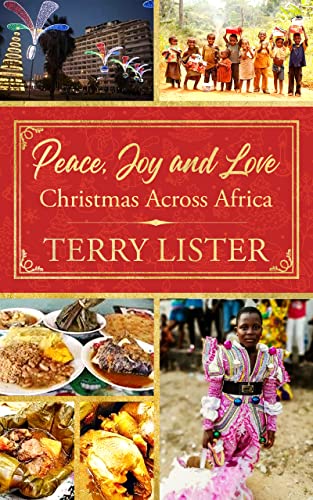

Author and traveler Terry Lister brings back the true meaning of Christmas in Peace, Joy, And Love: Christmas In Africa. In this short page-turner, we go on a journey across Africa and discover the Christmas traditions of African countries. From folklore-based traditions to unique holiday cuisine, there is something to learn on every page. Throughout the book, we are reminded of the true Christmas spirit and how to reshape how we view and celebrate the holiday.
We often forget that Christmas is more than Black Friday shopping sprees, taking pictures at a mall, and opening lavish gifts on a random December morning. If I could sum up the impact of this book in one word, it would be “enlightening.” Lister lays bare the wholesome, unique, and sometimes overly simplistic traditions of many impoverished African communities in an honoring and respectful manner. He does not see these communities as lacking but rather admirable. That gives the reader a more positive perspective on a Holiday that has been taken over by global marketing giants. I appreciated the respect he showed to each African community in his writing.
Lister does a fantastic job at sharing facts in a simplistic but entertaining fashion. It felt easy to retain the information; I often let chapters simmer in my mind before moving on to the next. The photographs were a beautifully added touch. Although many were not high-quality in the traditional sense, they showcased rawness and the natural state of these festivities as if they were happening in real-time. It also added a feel of a travel diary to the overall writing and book that I thoroughly enjoyed – we went on the journey with Lister to discover these traditions.
My reading of Peace, Joy, And Love: Christmas In Africa left me feeling humbled, joyful, and ready to enter the season ahead with a new perspective. If you are looking to switch up your holiday reading from the traditional classic tales, I recommend diving into the Christmas spirit-filled pages of this book.
Pages: 90 | ASIN : B0BGQGC82G
COVID-19 AFRICA, HAITI, AND THE U. S. VIRGIN ISLANDS
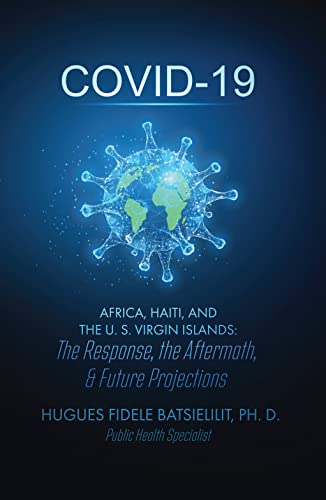
The Covid-19 pandemic took the world by surprise. Nations were caught unaware and people scrambled to find ways to slow down the spread and stop the rapid loss of lives. There was a lot of misinformation, technical information mixed in with the truth. Scientists were busy studying and passing on information as quickly as they could to a world of people trying to grasp what was going on.
Dr. Hugues Fidel Batsielilit watched with the rest of us as the world crumbled from what seemed like a common flu. The only difference is that he watched with an expertise’s eye. He saw how the world reacted and the different measures countries took to protect their citizens. Dr. Batsielilt focused his interest on Africa, Haiti and the US Virgin Islands. His aim with this book is to analyze the response of both people and governments as well as the lull after the height. He also aims to make some projections, provide the reader with some idea of what the future might look like from an expert’s point of view.
The one thing you will note about this book is the detail with which this book is written. The author is direct and provides all the information to his readers. He makes sure that readers have the full story and the data to fully grasp what he is discussing. This combined with in-depth research leads to the revelation of interesting discoveries. Not all the discoveries he found were beneficial, he uncovered a lot of conspiracy theories and discusses those as well in order to debunk the myth for readers.
COVID-19 AFRICA, HAITI, AND THE U. S. VIRGIN ISLANDS by Dr. Hugues Fidele Batsielilit approaches the pandemic from a critical and scientific eye. As someone that has a medical and emergency management perspective the author has provided readers with information in a nonbiased and objective manner with a logical flow and clear explanations. These are important qualities in a book about a sensitive subject whose available information is either too technical or insufficient and designed for sensationalism. He has provided the reader with a simple explanation and analysis of the situation.
Pages: 251 | ASIN : B09JQ9QLSV

What Could Have Been
Before The Origin follows Amy who is hurled into a world of mystery and magic that is deeply rooted in ancient African folklore. What was the inspiration for the setup to this exciting story?
I have always wanted to write science fiction that is set in dystopian Africa. My tribe (the Hausa’s of Sub-Saharan Africa) is the biggest inspiration for the set up. Hundreds of years ago, before religion and colonization, they believed in spirits, they were partly nomadic in nature and had a whole lifestyle around that, unfortunately, it has been gradually erased and forgotten. My book just explores what could have been if a part of that was still alive.
Amy is an intriguing and well developed character. What were some driving ideals behind her character development?
Due to her role in the story, Amy’s character development was a well thought out process. I feel like there is always a part of the author in the main character, and that is where her imposter syndrome comes in, but it was very important to have the reader experience the events of her first day at work through her eyes, which is why she is such a blank slate at the beginning of the story. Her relationship with other characters in the story is also a backdrop for the events in the next book.
I enjoyed the African folklore embedded in the story. What kind of research did you do on the topic to ensure it was accurate?
Thank you! I am always happy to hear that a reader particularly enjoyed the folklore aspect of Before the Origin because I completely made that up. Being African, I grew up listening to stories passed down from generations to generations very much like Xari in the story, but I never heard anything that explained different races or how the continents came to be. African folklore is always rich in the battle of good against evil, so I guess that is something I held on to.
What is the next book that you are working on and when will it be available?
I am currently working on the sequel to Before the Origin which is grander in scale and characterization, book one was just a set up to our main characters’ journey as they find themselves in a battle against time and it will be available next year.
Author Links: Facebook | Website
Agent Amy Taff has moved through the world unnoticed until the recent disturbances in an otherwise perfect utopia require her expertise. Desperate to make her mark, Amy is hurled into a world of mystery and magic, deeply rooted in ancient African folklore. Discoveries that threaten her life and could not only change her reality but hold far-reaching implications for everyone on the face of a lone continent. Follow her into an epic tale that begins with accepting a new job at Scythe. Where it ends could swing the scales of balance toward life or death.
The Ambitious Pyramid Of Kush – Trailer
Resilience and Hope

Ted Neill Author Interview
Two Years of Wonder is a memoir detailing your journey towards recovery after an attempted suicide. Why was this an important book for you to write?
Initially writing the book was part of my healing process. Post hospitalization I didn’t have too many intentions of ever publishing it, just to complete it as a way to give a shape to what I had been through. But then as I began to share it with people who were curious about it they kept saying to me “this story has to reach a wider audience.” Then when the kids themselves told me they wanted their stories shared, I felt an obligation to finally get it out there.
Throughout this book you interweave stories of orphan children you helped in Nairobi. What were some themes you felt were important to capture in this book from their stories?
Resilience and hope. While the book contains some of the harrowing experiences of the kids which–I know–are painful for a lot of people to read, throughout even their worst experiences so many of these children demonstrate such a fierce determination to survive and even thrive. They do even to this day which is why I wanted proceeds from the book to go towards their further college educations so they can continue to have some of the same chances I had.
I found this book to be inspirational. What do you hope readers take away from your book?
I want to shine a light on the suffering of these children and how that is a stand in for the suffering all around us. As Dr. Helene Gayle says in the foreword, we don’t need to go to Kenya to find suffering an inequality our world today. A lot of us can just walk down the street. To that end, I hope it makes everyone a bit more compassionate, whether its for vulnerable children in Africa, at our southern border, or the addict/alcoholic on the street corner.
What is the next book that you are working on and when will it be available?
My next book will be available later this summer. It is called REAPER MOON: RACE WAR IN THE POST APOCALYPSE. It is my attempt to take on the toxic nature of white supremacy and white nationalism which have become resurgent in the United States right now. Link to the preview page on my website is here: Reaper Moon — Tenebray Press.
Author Links: GoodReads | Instagram | Facebook | Website
![Two Years of Wonder: A Memoir by [Neill, Ted]](https://images-na.ssl-images-amazon.com/images/I/51VJktul49L.jpg)
September 25, 2012 Ted Neill picked up a knife to cut his wrists open and kill himself. Post hospitalization and treatment for major depressive disorder, he wrote Two Years of Wonder, a memoir based on his journey towards recovery. In it, he examines the experience that left him with such despair: living and working for two years at an orphanage for children with HIV/AIDS in Nairobi, Kenya.
Neill interweaves his story with the experiences of Oliver, Miriam, Ivy, Harmony, Tabitha, Sofie, Nea, and other children, exploring their own paths of trauma, survival, and resilience. In prose that is by turns poetic, confessional, and brutal, Neill with the children he comes alongside, strive to put the pieces of their fractured lives back together as they search for meaning and connection, each trying to reclaim their humanity and capacity to love in the face of inexplicable suffering and loss.
About the Author: In addition to his time living in Kenya, Ted Neill has worked for CARE and World Vision International in the fields of health, education, and child development. He has written for The Washington Post and published multiple novels. His share of proceeds from Two Years of Wonder are donated to the children featured in its pages as well as other Kenyan based organizations that support vulnerable children and youth.



 LITERARY TITAN