Blog Archives
Marathon Man


Marathon Man by Alan Corcoran is an inspiring story about a long-distance runner who prepares to conquer a series of goals, including consecutive marathons within a month, while experiencing unexpected changes in his personal life. When Alan’s father has a stroke, this propels him to take greater control in a challenging situation and focus on the positive, creative options available to support his father. Alan’s ability to adapt and take charge of a difficult situation makes this story a fantastically uplifting read.
As Alan plans to accomplish an incredible feat by running 35 marathons in a row, every day for 35 days, he becomes determined to apply his ambition to raise funds for cancer and stroke charities. He continues to support his father through this process while focusing on his goal to become the first person in Ireland to achieve consecutive marathons. While Alan remains focused on his physical goal, he quickly works to combine his running challenges with fundraising, achieving multiple goals at once.
The author narrates a lively and motivational tale about taking the reigns of in an emergency and shows how Alan made the most of his father’s recovery with quick-thinking, action and creativity. Alan’s sense of humor and generous nature are endearing and authentic and that heartfelt emotion comes off the page. He offers a humble but uplifting story that will keep readers eagerly turning pages to see what happens next because, as we learn more and more about Alan, we know that whatever comes next he’ll tackle it with surprising vigor. The author demonstrates an impressive resilience for a twenty-year-old, with a determined effort to raise awareness about heart and stroke health.
Alan Corcoran’s Marathon Man is an inspirational memoir that’s easy to read and will leave you feeling like anything is possible. This book offers a glimpse into an incredible personal journey. The author is able to to shift a tragic experience into a light-hearted story about determination and resilience. Marathon Man is a well-written account of one man’s ability to make the most out of a challenging experience with excellent results.
Pages: 287 | ASIN: B08TTBKV9M

How Did I Do That?
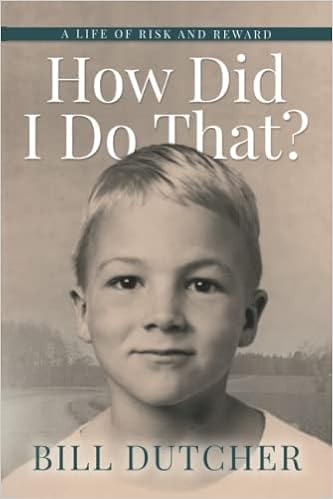

How Did I Do That? is a witty and charming memoir of author Bill Dutcher. The book follows Dutcher as a young man who is the middle child of three boys. Born in Oklahoma to Harris and Louise Dutcher. His father was a chemist who worked in research and development, and his mother was a housewife who did more than the average housewife. She was involved in club activities such as Toastmasters and Lion Tamers, but she was also a secretary during the depression. In the 50’s, a husband was thought of as incapable of providing for his family if his wife worked.
Bill is a mischievous little boy as he goes through his school years and then goes on to college. Throughout his school career, he finds a love for basketball. He marries Terry despite her parent’s objections, and he gets a job as a journalist. He then joins the Navy for four years where he spends time in the Philippines and plays basketball in the Navy. After different positions as a speechwriter and lobbyist, Bill is introduced to the world of oil and gas. From there, he creates his own company, and throughout these years, he still has a love for basketball and makes several comebacks.
Author Bill Dutcher’s memoir is compelling, engaging, and takes the reader back in time. It is interesting to see how different things were in the 50’s, especially with the mention of the end of World War II, to sharp observations of Richard Nixon and the presidential campaign, to children playing outside and not having electronics to occupy them.
I would’ve liked for Dutcher to have taken a deeper dive into these critical events in history and his experiences, especially growing up during segregation, because what is presented is intriguing and makes me want to learn more. I enjoyed seeing pictures of Bill as he grew up playing basketball, being in the Navy, and of his wife and daughters. This allowed me to connect with the author. I found it amusing that the author admits that, like many adults, we don’t realize how great we had it with our parents until we have to start paying our own bills and get a job. Dutcher’s writing comes off conversational, so it feels like you are having a conversation with your grandpa. It is safe to say that Dutcher has lived an exciting life and has a wealth of knowledge and experience to share.
How Did I Do That? is a fascinating memoir about the life of a man that took risks and never settled for the ordinary. His experiences and insights into historical events are captivating to read. In addition, his love for basketball is infectious.
Pages: 398 | ASIN : B09L5HTNHJ
Angels Are Real

Angels, of Course tells the story of being visited by angels and how they have impacted your life. Why was this an important book for you to write?
I felt strongly compelled to share these experiences with people, and could not relax until I had it published.
I appreciated the candid nature with which you told your story. What was the hardest thing for you to write about?
The hardest thing to write about was making the angels believable. That is why I went into such details. I had to take art lessons to paint the illustrations.
What is a common misconception you feel people have about angels?
I believe people think angles only came to earth during biblical times.
What do you hope is one thing readers take away from your story?
If angels are real then so is heaven. So is God. And so is Jesus Christ.
Author Links: GoodReads | Website
In Angels, Of Course, she offers a collection of stories and paintings that share her varied experiences with heavenly angels. It chronicles twenty visits by angels beginning with her childhood and continuing to the present day. Tuck-Gleason isn’t sure why she’s been blessed with angelic encounters, but she communicates that their presence is comforting to her, they give her confidence, and they deliver a positive atmosphere when they’re around.
Angels, Of Course describes the different shapes and sizes of angels and the circumstances in which they visited. Tuck-Gleason tells how they fill her life with love, guidance, and protection, just when she needs it.
Crying Out To Be Told!
Unfinished: The Inspired Life of Elisabetta Sirani follows a young female artist from the 17th century and the obstacles she had to overcome to show her work. What was the inspiration for the setup to your story?
I write historical fiction novels and was interested in expanding from the Anglo Saxon period. I studied art history and worked at one of the largest museums in the world, The Victoria and Albert Museum in London, England and was always taught about the men, the focus on the male artist, particularly during the Renaissance. I did my own research and discovered so many amazing female artists. Elisabetta’s tragic story was crying out to be told!
There is a lot of art history in this book. What research did you do for this novel to get it right?
Other than my background in art history and my museum work, I’ve continued my art studies (including intensive study of Nazi art repatriations, a particular interest of mine) throughout my life. I was fortunate when the author of THE book about Elisabetta Sirani replied to one of my emails and graciously replied to my queries. Oh, and I also relied on her book, the absolute bible of Sirani’s life. I also researched the art palettes of the time, which colours and pigments were available and at what cost, and studied paint techniques, brush making, paper available at the time (FYI, the town of Fabriano is on my list of places to visit! Mentioned in my novel, they made and still make paper purchased by Michaelangelo!), and the techniques used for making and mixing paints. This may seem excessive but I feel I have a responsibility to get the details correct.
Did you find anything in your research of this story that surprised you?
The vehemence with which men at the time defended their belief that women’s brains weren’t capable of original composition and thought. I had an inkling but wow, it shocked me.
What is the next book that you are working on and when will it be available?
My next novel is about Caterina Sforza, kick-ass ruler from fifteenth-century Italy. Vilified by history, her life has been completely misunderstood and I plan on changing a few minds!
Author Links: GoodReads | Twitter | Facebook | Website
Elisabetta Sirani was a talented and prolific artist in Seventeenth Century Italy. Trained by her father, she was running his studio by the time she was sixteen and earned her first official commission the following year. Over her short career she produced more than 200 paintings, etchings, and prints, had patrons that included royalty and noble Italian families, and founded one of the first art schools in Europe exclusively for women. When she died aged only 27 of a mysterious ailment, all of Bologna mourned.
Her fame has been eclipsed by her male counterparts, and her work often claimed as theirs. Doubted, scorned, admired, copied, and misunderstood, this is her story.
Two Daughters, One Hero
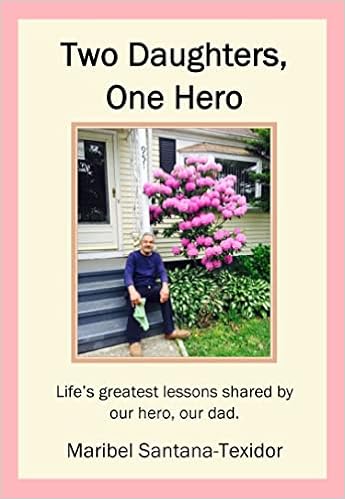
Two Daughters, One Hero, by Maribel Santana-Texidor, is an interview with Papi, the adopted father of Marisol and Maribel as well as a memoir of his life. Both daughters admired their father, he is their rock, the one they look up to in all things. In their words, he is the most important person in their lives. They wanted to honor him and share his story so others would know the kind of man he is and share his insights that gave them so much comfort, with others. This beautifully written memoir tells of Papi’s childhood, hard work, getting married and many life lessons and wisdom Papi shared with his family.
I enjoyed reading the interview between Papi and his daughters because this allowed me to feel more connected to Papi and his experiences. He is honest and direct in his answers often leading his daughters to ask him to explain more and give more details. This touching book is not solely an interview, it is also a memoir, where Maribel tells readers stories about Papi’s life. The stories Maribel adds are inserted in ways to give readers a better understanding of who Papi is and why he has made such an impact on their lives, and the people that know him. Maribel doesn’t sugarcoat Papi’s life experiences, she is honest and open with the reader and because of that, you admire the person Papi is.
I also admire the fact that both daughters see their dad as a hero with so much wisdom to pass down. The passing of knowledge from one generation to the next is a time-honored tradition, this book is the living history for their family that can be passed down for generations to come. Reading this memoir warmed my heart because you feel the love both girls have for their family.
One thing that greatly added to the story is all the photos that were included. It gave readers a visual making the stories more real to the readers. Reading about Mami and Papi’s relationship is one to be admired as you can tell they genuinely loved each other. They embodied the vow of “in sickness and health.” He never left her side while she battled with Alzheimer’s. I enjoyed reading about this family and watching their family grow over the years. Their life was filled with love, hardship, loss, and such a strong bond.
Two Daughters, One Hero is a passionate telling of one man’s life. His words intertwined with stories from his daughter’s perspectives create a life story worth reading, and a testament to the strength of family. This beautifully written memoir will touch the hearts of those that read it leaving them with memories and wisdom that can only come from people that have experienced a full life.
Pages: 100 | ISBN : 1736901923
Literary Titan Book Awards March 2022
The Literary Titan Book Awards are awarded to books that have astounded and amazed us with unique writing styles, vivid worlds, complex characters, and original ideas. These books deserve extraordinary praise and we are proud to acknowledge the hard work, dedication, and imagination of these talented authors.

Gold Award Winners


Silver Award Winners


Visit the Literary Titan Book Awards page to see award information.
For Us Who Were Abused

Life Growing Up shares your experiences growing up and dealing with abuse. Why was this an important book for you to write?
To be completely honest, I wanted to relieve myself of so much anger. While writing this book, I felt much tension alleviate and less stress.
There are a total of twelve of us siblings, eight brothers and three sisters, and each one of us has a story to tell and share, this one was mines. I also wrote it because of how angry and bothered I was with Child Protective Services who ignored our cries for help over the years that we were growing up. I believe their involvement could of made a difference and would have saved us from daily abuse.
I appreciated the candid nature with which you told your story. What was the hardest thing for you to write about?
The hardest part for me was writing about the abuse itself. I hated reliving the sexual abuse parts along with the times my father physically hurt me as well as my siblings. I don’t like talking about it because it brings back very heartbreaking memories. The hardest part to write about was when my Nine year old brother “Quithoberto” died seven days after falling from a wonder bread and hitting his head on the concrete. Just a week before he died, my father had beaten him up pretty bad. I loved him very much, still do. I never forget him, I miss him dearly even until this very day. Though I wrote in the book that he was one of the lucky ones, because he would never get hurt again by our father, unlike us.
What is a common misconception you feel people have about child abuse?
Some of the misconceptions that people have about child abuse is that it only happens in lower socioeconomics families which is not true. It also happens in both middle and upper class prejudice and self-deceptions and fueled by statistics derived mainly from sources involved in the treatment of child abuse in lower class families. In reality, both mid and upper class families are more difficult to obtain, but current literature demonstrate and or prove that child abuse occurs in all socioeconomic levels. The belief that abuse occurs only because parents misjudge their strength when physically disciplining their children is a simplistic view of abusing behavior that fails to consider the complex dynamics underlying parental abusive patterns. The preferred or main view that children are sexually abused primary by assailants unknown to them is undetermined by statistics showing that the majority of sexually abused children have been victimized by someone known to them, often being relatives. The misconceptions that child abuse occurs most frequently in school aged children is challenged by statistics showing that almost half of those abused are under the age Six. Unfortunately, while some argue that criminal prosecution is the best way to handle child abusers, the difficulty of gaining a conviction and the need of abusing parents for rehabilitation argues for civil action’s being the most effective one.
What do you hope is one thing readers take away from your story?
Well I know that I am not the only one to have experienced child abuse in anyway, there are thousands out there. Why do you that think some children who grow up with severe inflicted child abuse turn of the system? Many of them just like us, were let down by Child Protective Services. Many children have died under the watch of Child Protective Services and this is the reason why now in our present times Child Protective Services have improved in their methods. If you are one of the fortunate lucky ones that were never abused by your parents, then you have absolutely no idea was it is like for us who were abused. So I encourage you to do research on the topic or subject at hand and see for yourself how bad it is. Also, report any kind of suspected abuse, don’t keep silent, help the child. I wish someone had cared enough to help us out of a life of misery, because that’s exactly what it was, a life of misery, day in and out, for years.
Author Links: GoodReads | Twitter | Facebook | Website
This Long-Suffering Literary Endeavor
Paris Blue tells the story of your first love. Why was this an important book for you to write?
Such a big question, and such a good one.
I might start by quoting a line I recently discovered from Maya Angelou in which she said, “There is no greater agony than bearing an untold story inside you.” For over forty years I knew I had a story I would need to tell some day. Readers have recognized that there is something about this tale that goes beyond a simple story of first love. It follows the arc of my life over thirty years, into adulthood, happy marriage, and children, so it is also very much about the role of memory in our lives.
Also, the book describes how I searched for answers and closure for so many decades from the trauma at age twenty-two when the romance suddenly ended, and in a way, I essentially had to write my own ending, which brought about its own sort of catharsis.
I appreciated the candid nature with which you told your story. What was the hardest thing for you to write about?
Oh, another great question. At one point in my decades-long journey of trying to tell this story, I changed the book into “fiction,” or at least I tried. I made it into a novel in which I tried to fictionalize certain parts and detach myself from the more personal parts. And I did this in order to protect my family, most notably my wonderful husband. Even though he has been unbelievably supportive about this long-suffering literary endeavor, I didn’t want to put in first-person writing the intensity of emotions that first love generates. Or draw attention to the music and poetry that I shared with the Frenchman that I don’t share in the same way with my husband. In the end, however, I realized that writing a memoir was the correct, most honest form and genre that this story had to be.
What is one piece of advice you wish someone had given you when you were younger?
HA! I really don’t know how to answer this! Even though this story caused me a great deal of suffering at age twenty-two, I probably don’t wish it had happened any other way. If I answered something like, “I wish someone had told me that married men stay married” or “I wish someone had advised me to read the signals,” that would be way too simplistic and would not do justice to the subtleties of this fairytale (and I wouldn’t have a book).
What do you hope readers take away from your story?
That, when an intense, romantic and passionate “first love” ends suddenly without answers, it can take a lifetime to get over.
That words, music, and Paris can drive love to madness.
That our memories are not to be deleted and canceled, but treasured, whatever the outcome, and that they are our “life and food for future years.” (Wordsworth)
Author Links: GoodReads | Twitter | Facebook | Website
Against a magical backdrop of Paris and classical music, Paris Blue is true fairy-tale memoir (with a dark underbelly) about the tenacious grip of first love.



 LITERARY TITAN