Blog Archives
Unusual “Visions”

Mallory O’Connor Author Interview
Epiphany’s Gift follows one young girl through her life as she struggles to cope with an extraordinary gift. What was the inspiration for her gift and the struggles she faced?
As a child, I had several powerful “visions” and/or paranormal experiences. Because the experiences were so exciting and so unusual, I was surprised to find that when I talked about these experiences, adults didn’t want to hear about it. They told me it was my imagination. Or worse. So, I stopped talking to anyone and kept my experiences to myself. Later, I began to read about other people who had unusual “visions.” I began to study the writings of religious mystics and found many similarities to my own encounters with “another level of existence.” In 1979, I met a psychic medium and we became friends. Although my “mystical” experiences were not the same as her “impressions,” we found we had a lot in common and have remained friends ever since.
I really enjoyed the well developed character in the book. Was there anything taken from your own life and put into the story?
Along with my childhood experiences, I included a number of “autobiographical” elements in the story. One is my work as an art historian and my fascination with artists such as William Blake and his visionary illustrations, especially the works he did of Dante’s Inferno. I also incorporated my interest in Asian art and culture in the character of Maro Guido, an art crimes investigator who is half Japanese. I wanted to explore his views about art from a non-Western perspective. And, I set Epiphany’s Gift in southern Ohio where I lived for four years while attending Ohio University. I was fascinated with Appalachian culture and wanted to immerse myself in the area and its special landscape.
This book blends several genres exceptionally well. Was this your intention or did this happen organically while writing?
When I first started writing Epiphany’s Gift, I intended to create a series of stories that combined paranormal events with art crimes. I wanted my readers to understand the problem of art theft and the significance of taking cultural treasures out of the public arena and into private collections where they are only seen by a few individuals. I believe that art has a lot to teach us about how our civilization developed and why we are who we are. So, I think that art belongs in a larger world that is open to the public.
But I also wanted to explore the issue of climate change and environmental degradation. I was encouraged by Dan Bloom, a climate activist and editor of the Cli-Fi Report, to explore various aspects of global warming and its consequences in my writing. In Epiphany’s Gift I take on the issue of fracking and its consequences. In subsequent books, I plan to focus on a number of climate-related issues including the spread of tropical diseases, effects on water resources, and catastrophic weather events.
So, my stories will be about paranormal events, art crimes and global climate change. Something for everyone!
When will this book be available and where can readers pick up a copy?
I’ve just sent the manuscript off to the publisher, so I expect the book will be available in May or June 2019. It will be available on Amazon, through Archway Publishing, and on my website: www.mallorymoconnor.com. Hopefully, it will later be available at libraries and bookstores. Connect with me through my website and I’d be happy to answer questions.
Author Links: GoodReads | Facebook | Website | Amazon

For thirty years, Epiphany Mayall has worked as a psychic medium in the small Spiritualist community of Cassadaga, Florida. But when she returns to her childhood home in Mt. Eden, Ohio, to visit her aging mother, she finds that the rural community is reeling from a series of alarming events. The pristine world of her childhood is being destroyed. Wells and creeks are polluted, and earthquakes have become a frequent danger.
Epiphany’s former professor and mentor, art historian Dr. John Bernhardt, believes that the problems are the result of fracking operations that are being carried out by an energy corporation in the region, and that someone from the company is also connected with the disappearance of an illustration of Dante’s Inferno from the university museum. Bernhardt writes an article for the local newspaper about his theory, but the next day he is found dead. When John’s ghost appears to Epiphany and tells her that he was poisoned, she becomes determined to find the answers to several questions: who is responsible for the environmental disaster, who stole the illustration of Dante’s Inferno from the university museum, and who murdered Professor Bernhardt?
Aided by art crimes investigator, Maro Gaido, and by Blake King, an eccentric local artist, Epiphany tries to put together the pieces of a disturbing puzzle, but finds her efforts thwarted at every turn. Even a State Senator cannot help. As the earthquakes escalate, Epiphany begins to wonder if even her psychic gifts are enough to find the answers before it’s too late to save her loved ones from disaster.
www.mallorymoconnor.com
Escape From Kolyma
![Escape from Kolyma: Aborigin Is a Bear Region by [Litvin PhD, Chester]](https://images-na.ssl-images-amazon.com/images/I/51iGty7PlPL.jpg)

Chester Litvin, PhD has woven together an Orwellian world of doctrine, dogma, and propaganda in his book, Escape from Kolyma: Aborigin is a Bear Region. Psychological warfare has run rampant in the form of super-viruses that attack the psyche. Citizens are forced to beg, steal, borrow, and worse just to get by. Concentration camps and dictatorship have come back into fashion, and the people of Aborigin are suffering. The super-viruses are turning good people bad, and stripping the people of their personalities. They are being brainwashed and turning on each other. Professor Kryvoruchko is aware of the widespread infection, and may be Aborigin’s and the world’s only hope.
Many parts of the book are reminiscent of Hitler’s Germany, complete with propaganda and concentration camps. The cultural rift present is also indicative of a Hitler-like state. Convince one man he is better than another and he will let you pick his pocket. Give him someone to look down on, and he’ll empty his pockets for you. That’s a paraphrase of a Lyndon B. Johnson quote about racism, but it applies here. Readers will draw many similarities between the culture of Litvin’s Aborigin and racism and “otherism” still found present all over the world. This is a divide-and-conquer mentality that worked wonders for Hilter, and still works in politics and socially in other areas.
The book is scary to me in its realism. I don’t believe that these are things that could never happen. I think psychological warfare isn’t a half-step from where we are now. In America, in particular, racism is still alive and well. People still continue to look down on groups of people they see as “less thans.” In the book, groups of people are stripped of every possession and jailed. They are killed. This kind of hatred for others is contagious. This kind of infection continues to spread if it isn’t stopped. I’m afraid we are closer to this kind of thing happening than I’d like to admit.
A part of the book that particularly bothered me was the children emulating the adults that they watched. Apparently, the children were also infected. They, too, were brainwashed. They mimicked what they saw being done before them down to raping and killing others. The children became thugs. There seemed to be an entire loss of innocence. This may be disturbing for readers, but it’s important. Children become what they know. They imitate what they see. This serves as a reminder for people to be worthy of emulation.
I will say that the book is complex. This wasn’t an easy Sunday afternoon kind of read, and with its subject matter, it shouldn’t be. I found myself re-reading parts that I didn’t understand. It was not always easy for me to follow. It requires some time and thought to get through. With that being said, sentence structure, grammar, and spelling were pretty impeccable.
Litvin delves into some unpleasant scenarios for the sake of opening eyes it seems to me. He gives some reminders about how easily it is for us, as humans, to lose our humanity or to follow blindly as sheep. He keeps some underdogs in there for us to cling to as we grapple through the book. It’s not an easy read, but serves as an important reminder. As Churchill once said, “Those who fail to learn from history are condemned to repeat it.” This sentiment echos through these pages.
Pages: 432 | ASIN: B07N3SXLYV

Her Stories Are Universal

Sylvia Sanchez Garza Author Interview
Cascarones follows the life of a Mexican American girl in Texas that must balance her culturally rich heritage in a whitewashed school. Why was this an important book for you to write?
It was important for me to write and share my story since I believe that diversity is so important to all of us. Everyone needs to know that being different is a gift― especially our young readers. They need to be able to see themselves, their culture, and their traditions in books, music, and movies. Since reading has always been one of my passions, I realized that there was a lack of published stories that reflected Mexican American families such as mine.
When I was growing up, I loved it when our teachers would take us to the library to check out books. As I grew older, I started to realize that most of those books were about people that I couldn’t relate to. The characters weren’t anything like my family or friends. They didn’t look like us and definitely didn’t talk like us. When I started visiting bookstores, the same seemed true. Even today, it is still difficult to find books written by Mexican American authors in libraries or bookstores. I felt it was important to write about my beautiful culture and traditions so that readers would be able to experience the rich and colorful experiences that I was so privileged to grow up with.
We get to explore Suzy’s character all the way to adulthood. What were some driving ideals behind her character?
Cascarones is about a Mexican American girl growing up in South Texas always surrounded by family and friends. Love, faith, and simple fun are seen through her character. In a way, her stories are universal because everyone has their own version of Suzy’s story.
She grew up surrounded by people who left a huge impression on her just by being in her life. Her character is able to change and adapt to the situations that change in her life. Many of the characters in Cascarones are based on people who passed away at a very young age. They are vital to Suzy’s life and helped to shape who she becomes. Since Suzy grows up in a large extended family that is surrounded by love, she realizes that everyone in her life is important even though she is faced by challenges.
Each story gives more insight into the family as well as their culture and history. What were some themes you wanted to explore in this book?
The title Cascarones represents the cycle of life. The cascaron starts out as an egg with so much promise for life. The gold yolk inside symbolizes the life that we all have since we all start our journey as an egg. However, in order to make a cascaron the egg is removed, and the shell is then decorated in the most beautiful and artistic way possible. It is then cracked, falls to the ground and becomes part of the earth. It fertilizes the dirt and is reborn with the grass, trees, and flowers. That is what happens to us. Our life begins as an egg. We all have a gold yolk that represents our inner soul, but at the end our body goes back to the ground. The shell or the cascaron represents us, for we are all here only temporarily. In an instant we could be gone, for we do not know when our time will come. Life is fragile, just like a cascaron.
Everyone has a story inside of them waiting to be written. If there is not anything out there that reflects who you are, then it’s up to you to do something about it. Whether it’s about one’s religion or no religion, culture, or even sexual orientation it’s important to share one’s own story. Start writing and get the message out to everyone else. Once the writing starts, the rest will fall into place.
What is the next book that you are working on and when will it be available?
My next book is titled The Golden Egg and should be released next month. I’m really excited about it because it will be a bilingual chapter book. One page will be in English and the following page in Spanish. Even though Cascarones has some Spanish in it, many people have asked about a bilingual version.
I also have a poetry book that is forthcoming. Poetry is something that I truly enjoy, and it’s a beautiful way to express feelings in an artistic way. I have several selections that I’m excited to share with readers.
Author Links: GoodReads | Twitter | Facebook | Website
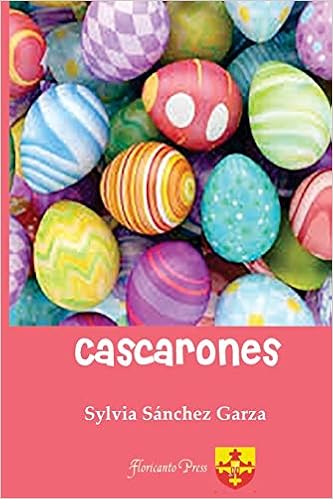
Cascarones is a young adult bildungsroman, a coming of age story narrated in a non-linear fashion that revolves around the life of a Mexican American family living in the Rio Grande Valley in Deep South Texas. The main character, Suzy, as well as her family and friends are encircled by rich traditions and culture of the region, shaping who she becomes. There are many beautiful people depicted in this novel who helped transform Suzy. The narrative shifts from present to the past to connect the reader with cultural traditions that changed through the years. It exposes how Easter was and is currently celebrated in the Rio Grande Valley and growing up during the sixties and seventies as a Mexican American amidst discriminatory undertones.
Sylvia Sánchez-Garza was born in Mercedes, Texas and raised in Weslaco, Texas. As a young girl, her family moved to Houston, Texas for a few years while her father worked on his doctorate at the University of Houston. She returned to and settled in the Rio Grande Valley. “I knew that it would always be my home,” Dr. Sánchez-Garza confessed. She and her husband live in Edinburg, Texas and own a real estate business. She has four sons, who make her very proud. She holds a B.A. in English, an M.A. in School Administration, and a Ph.D. in Leadership Studies. Cascarones is her first novel.
The Gift of the Seer
![The Gift of the Seer by [Laugheed, K.B.]](https://images-na.ssl-images-amazon.com/images/I/51jGcqsJFGL.jpg) When you tire of the overload of digital and technology tools within our 2019 era, K.B. Laugheed’s The Gift of the Seer will expedite time travel back with you, and this author will have you writing with a feathered quill by the end of this literary journey! Put on your cultural anthropologist boots and allow this novel to cleverly weave historical yet fantastical plot elements, interestingly complex characters, and a rugged setting that will definitely transport and immerse readers. You will face cultural nuances, norms, spiritual beliefs, worldviews, philosophies, goals, life lessons, conflicts, natural connections, romances, and myriads of adventures via an Indian perspective. Our protagonist, Katie, provides uncensored reflections and stories spanning from the years 1748-1778. Yet Katie, the book’s protagonist, is not the docile, silent, subjugated, stereotypical, domesticated wife and mother that many heroines from her time era typically portray. Instead, she is a literary and cultural badass-think Katniss from The Hunger Games -but Katie encompasses more maturity, carnal pleasures, and complexities as a woman struggling to survive among different cultures, determined to sustain her love for her husband against all odds, and abandoning the feelings of guilt and condemnation based on her feeling that she’s living a big lie!
When you tire of the overload of digital and technology tools within our 2019 era, K.B. Laugheed’s The Gift of the Seer will expedite time travel back with you, and this author will have you writing with a feathered quill by the end of this literary journey! Put on your cultural anthropologist boots and allow this novel to cleverly weave historical yet fantastical plot elements, interestingly complex characters, and a rugged setting that will definitely transport and immerse readers. You will face cultural nuances, norms, spiritual beliefs, worldviews, philosophies, goals, life lessons, conflicts, natural connections, romances, and myriads of adventures via an Indian perspective. Our protagonist, Katie, provides uncensored reflections and stories spanning from the years 1748-1778. Yet Katie, the book’s protagonist, is not the docile, silent, subjugated, stereotypical, domesticated wife and mother that many heroines from her time era typically portray. Instead, she is a literary and cultural badass-think Katniss from The Hunger Games -but Katie encompasses more maturity, carnal pleasures, and complexities as a woman struggling to survive among different cultures, determined to sustain her love for her husband against all odds, and abandoning the feelings of guilt and condemnation based on her feeling that she’s living a big lie!
In short, adventures, dangers, thrills, and chills will bombard you on every page. Yet instead of feeling defeated and exhausted, you will experience the triumphs and evolution, right alongside Katie, as if you were a passenger in her canoe! The book is brilliant in terms of its vivid, sensory details that paint a no-nonsense picture of life during this era. The characters also conjure feelings of fables and folk tales via the author’s unique, authentic style. At times, I noticed hints of magical realism, which further add pizazz to this riveting book. While there are so many positive qualities about this book, especially the way in which the author develops her vast array of characters and executes her dramatic dialogue, all with cultural relevance and sensitivity, I was a bit overwhelmed with the plethora of social, historical, political, cultural, marital problems and themes that she tries to address all at once. At times it was slightly too ambitious for me to keep track of all the family members, neighbors, friends, and foes. Although they are important, especially to comprehend the larger scope of the historical fiction milieu, some of the symbols were slightly perplexing and some plot events were mentioned but not fully explained.
All in all, because readers can sense the imminent danger on every page, as evident from the great use of foreshadowing and cautionary notes to build suspense throughout the text, as in “til the ocean wave of Colonists comes crashing down upon us—then we will see which of us is right,” We not only learn cultural and historical information through characters with real vulnerability and authenticity, but we also find solace in our own journeys about how to fit into this world and all its challenges! We obtain a true sense of empowerment within this challenging piece of art. Try this time travelling and cultural anthropological plight by K.B. Laugheed in The Gift of the Seer!
Pages: 308 | ASIN: B07L7FHTFC
Cascarones

Cascarones by Sylvia Sánchez Garza is a book that feels more like a conversation between friends. Garza follows the life of a Mexican American girl living in Texas and straddling the world of her culturally rich family and a whitewashed school she winds up going to in Houston. This isn’t the only aspect of her life that Garza delves into. She also explores the girl’s relationship with family members, her church, family traditions, and general everyday life. The book is a nice collection of individual stories about the same family with the same cast of characters.
This was a nice, easy read. It is simple without being boring. The individual stories make nice bite-size sections. This made it a fun, leisurely read. The book feels light. It doesn’t have that heavy, daunting feeling that some books do.
As previously stated, the book feels like a conversation. It feels like sitting and listening to someone reminisce about their childhood. I prefer first-person writing as a rule, and this book delivers. It makes it feel so much more personal and relatable. Readers will identify with pieces of Suzy’s stories and may see themselves in her experiences. Reading this book felt like getting to know a new friend.
I feel like I got to know the characters better through each story. Each story gave a better feel for the family. Even with short stories that could stand alone, the characters were well developed. It also gave a lot of insight into the culture of Mexican American families. It showed their strength and pride in their clinging to their traditions. There were quite a bit of Spanish words and dialogue in the book. I know very little Spanish and looked up a few words, but the vast majority of the meaning comes out in the context.
My only complaint is that I might have liked the stories better in a different order. I think I would have liked them to be in chronological order rather than jumping back and forth in time. It threw me the first time I realized Suzy was speaking as an adult. It took me a second to understand what was happening since it jumped from her being a kid to having kids, and back to a kid again. I lost my bearings a little but recovered quickly.
Cascarones by Sylvia Sánchez Garza is very well-written. There are very few errors, if any. It had a nice pace and flow. I liked following Suzy navigate between two worlds as she is pulled between her large Mexican family and living in America. It taught me a lot about the Mexican American culture that I didn’t know. I’d like to read more by Garza.
Pages: 162 | ISBN: 1724622889
Mandarin Ducks
![Mandarin Ducks: Kaifeng Chronicles, Book Two by [Campbell, Robert]](https://images-na.ssl-images-amazon.com/images/I/41ugh9XngfL._SY346_.jpg)
In the year 1630, in Hangzhou, China, two families were getting set to join with the marriage of Li Bing and Xiaoyun Wang. Marriage is taken very seriously and there are many traditions that must be observed in order to ensure a prosperous marriage to the couple. Li Bing is the city’s celebrity of sorts as he prepares to take the exams to become an important civil servant for the city. This causes his father to receive many gifts and accolades, as well as resentment. Vice-perfect Wang Zhengqian, father of Xiaoyun, plots to ruin Li Bing’s father, the other vice-perfect Li Gao. Wang is power hungry and wants nothing more than to gain all he can, and cares little who he hurts in the process, his own family included.
Mandarin Ducks is the second book in a trilogy by Robert Campbell. The first novel gives you more background of this community and some the characters so I recommend reading that first, but it’s not required as this book can stand on it’s own. Taking place in the 1600’s of China, it talks about how some of the inhabitants have roots in Jewish culture, and how they have to keep that hidden away. Li Bing has a deep interest in discovering his heritage and Jewish roots but must go in secret to learn more about his past. His grandfather helps him some but is growing old quickly and Li Bing is worried all the past knowledge will be lost. There is a lot of focus on class and the nuances that each rung of society has to observe. I enjoyed reading about how the different classes interacted, and as the story line developed I grew more invested as things become more intricate and layered. The novel has a slow start and builds at a steady pace that never feels rushed and allows you to grow attached to the main characters involved in the plot. The side story of Li Bing learning about his Jewish roots mixed into the scandal between the vice-perfects was well placed and fit seamlessly into things, nothing felt like added filler, everything seemed important to the progression of the story.
I really enjoyed Robert Campbell’s style of writing. The prose is clean and the story is focused. The story expertly builds suspense and develops the characters in a way that you either love or hate them. There is real history encased in the story, making things more believable, and adding extra depth to the plot. I look forward to reading the next installment of this series.
Pages: 133 | ASIN: B07G7GV256
Free Yourself
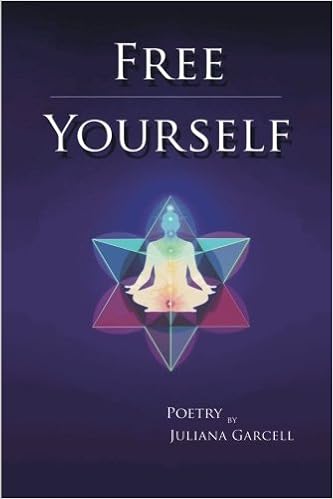
Free Yourself is a collection of intimate and engaging poetry written by Juliana Garcell. The poems are written in various styles and in various formats which helps to keep things interesting. The poetry sometimes hits on current social and political topics, but there is an overall focus on love, loss, and identity. Especially the struggle with identity in the face of love and loss; but having to define it in this way is somewhat limiting as I feel the poems are about much more.
I enjoyed this collection and found the poems to be lyrical, as if written for a song. Each poem has its own focus, although they area about slightly similar topics. The emotions expressed are often raw and painted in vivid detail with colorful connections and allusions to nature and culture.
Each poem is impactful, if not relatable, and I was able to understand each one. Understanding a poem is important for me, as I feel that poets often go off on some abstract ideas. But this collection is down to earth, and simple to follow, which makes the message ring clearly.
I appreciated the poems that left me with singular emotions at the end, but I really enjoyed the poems that were able to do the same work with just one or two lines. ‘Free My Expression’ is one of my favorite of the shorter poems, with the line “want you to stay but I always run away”. And the very last poem, which I believe is untitled, is probably my favorite of the collection because it manages the same emotional impact as one of the longer poems with only four lines.
I recommend this collection to anyone who enjoys poetry that is emotive yet easy to understand. The collection is short, but I suggest you give yourself some time to stop and ponder the thoughts, concepts, and ideas conveyed in each of these poems as this is an engaging assortment of passionate poetry.
Pages: 56 | ISBN: 1483622444
Kaifeng Chronicles

Robert Campbell Author Interview
18 Cranes follows a young boy as he prepares for an important civil servant exam while being tormented by nightmares. What was the inspiration for the setup to this intriguing story?
The story was inspired by my own journey of learning about China, first through teaching Chinese students in Canada, and then through my eye-opening experience teaching and traveling in China.
Bing is an interesting character that continued to gain depth as the story progressed. What were some driving ideals behind his character?
Bing is a composite character, reflecting some the attitudes and behaviors I’ve observed in my Chinese students, but also embodying elements of historical and fictional persons I’ve read about.
This story takes place during the summer of 1630 in China. Why did you choose this time and place for your story?
The story takes place in the final years of the Ming dynasty, culminating in a monumental and highly consequential event that takes place in the city of Kaifeng in 1642. By starting in 1630, I’m building the necessary background for readers to understand the significance of the event when it takes place.
What is the next book that you are working on and when will it be available?
18 Cranes is the first in a series of nine novellas, collectively known as, Kaifeng Chronicles. The second book, Mandarin Ducks, has been available for the past few months. The third book, Grand Canal, is scheduled for release in late January 2019.
Author Links: Website | Twitter
![18 Cranes: Kaifeng Chronicles, Book One by [Campbell, Robert]](https://images-na.ssl-images-amazon.com/images/I/41yNsThvW0L.jpg) In the late summer of 1630, 23-year old Li Bing writes the provincial level imperial examinations, the first step towards entering the Chinese civil service. He is tormented by a dream of 18 cranes, and as he awaits his exam results he seeks out insights from those around him to help him understand his dream. In the end, he learns more than he imagined.
In the late summer of 1630, 23-year old Li Bing writes the provincial level imperial examinations, the first step towards entering the Chinese civil service. He is tormented by a dream of 18 cranes, and as he awaits his exam results he seeks out insights from those around him to help him understand his dream. In the end, he learns more than he imagined.



 LITERARY TITAN