Blog Archives
A Society Divided By Technology
Christine Z. Miller Author Interview
Tools, Totems, and Totalities is a striking and expansive critique of modern technology and its pervasive role in shaping culture, institutions, and identities. Why was this an important book for you to write?
To bring together a society that has been divided by technology.
What is a common misconception you feel people have about how technologies impact culture and individuals’ identities?
We feel that we are the masters of the technology, when in fact we are enslaved by it.
What were some ideas that were important for you to share in this book?
First, that “technology” is not a human universal, but rather is a specific creation of the industrial revolution, and second that “technology,” like industrialization generally, has its pluses and minuses.
What is one thing that you hope readers take away from Tools, Totems, and Totalities?
That we collectively should be thinking about a world beyond technology, a world in which human connections and conviviality are more important than the tools we use.
Author links: GoodReads | Website
Tools, Totems, and Totalities: The Modern Construction of Hegemonic Technology, the 2024th Edition


Tools, Totems, and Totalities is a striking and expansive critique of modern technology and its pervasive role in shaping culture, institutions, and identities. Allen Batteau and Christine Z. Miller craft an ethnographic and philosophical journey through the social ecosystems technology inhabits, evolves within, and often dominates. Rather than viewing technology as a neutral tool, the authors challenge us to see it as a deeply embedded hegemonic force—one that organizes power, redefines human interaction, and reshapes meaning in the modern world. The book blends anthropology, design theory, engineering insight, and cultural criticism to show how tools become totems, and how both can culminate in totalizing systems of control.
What grabbed me right away was the authors’ raw honesty in grappling with our blind trust in “progress.” The opening chapter sets the tone, arguing that our imagination of technology—our deep faith in it—is more fantasy than fact. We treat smartphones, space probes, and electric grids as if they magically better our lives, when in truth, many of these devices mask deeper social problems or even create them. The idea that technology acts as a form of modern magic, filling the spiritual and communal voids of contemporary life really resonated with me. We reach for the newest device like it’s a talisman against chaos, and in doing so, we lose sight of the human behind the machine. That sense of disillusionment is something I’ve felt before, but the book gave me the language and history to make sense of it.
But it’s not all doom and gloom. I found myself surprisingly moved by Chapter 6, where the authors introduce “convivial technology.” Here, they offer a hopeful, even beautiful vision of tools designed to enhance human relationships and community life, not just productivity. It was a breath of fresh air. They celebrate thinkers like Ivan Illich and Victor Papanek, who envisioned technology that’s adaptable, human-centered, and a little slower. Their critique of modern design culture—its obsession with speed, efficiency, and control—felt deeply personal. As someone who’s worked in tech, it made me pause. Maybe the point of innovation isn’t always to push forward, but to step back and ask, “Who is this really serving?”
Tools, Totems, and Totalities is a mirror held up to our techno-utopian fantasies. It doesn’t offer easy answers, but it does offer clarity. The writing is at times dense but always thoughtful, weaving scholarly insight with a conversational rhythm that kept me engaged. The authors don’t pretend to speak with a single voice—they embrace their differences, and it works. The book doesn’t preach. It pokes, it nudges, and sometimes it throws cold water on our comfort zones. But I appreciated that. I finished the final chapter with a weird mix of dread and inspiration. I wanted to change something. Or at least think differently.
This book is for people who aren’t satisfied with buzzwords. If you’re curious about the social and cultural consequences of technology—and especially if you’ve ever felt unsettled by your own reliance on it—this book will challenge and reward you. Scholars, designers, engineers, sociologists, and everyday readers who are just plain tired of the hype will find something meaningful here.
Pages: 231 | ISBN : 9819787076

Musical Nationalism in Indonesia: The Rise and Fall of Lagu Seriosa

In Musical Nationalism in Indonesia: The Rise and Fall of Lagu Seriosa, author Sharifah Faizah Syed Mohammed meticulously dissects Lagu Seriosa, a unique musical genre, and its instrumental role in shaping post-colonial Indonesia. Mohammed’s exceptional narrative transports readers into the heart of Indonesian culture, history, and society, all through the lens of this captivating music form.
The book reveals a profound comprehension of Indonesia’s historical context and its societal dynamics. Throughout its pages, Mohammed beautifully illustrates the nation’s identity, from its political evolution to the vibrant individuals that comprise its population in both Indonesia and Malaysia. Readers become more than mere observers; they are offered a seat at the grand banquet of Indonesia’s rich culture, experiencing an in-depth exploration of the local traditions, customs, and references.
Mohammed’s writing, strategic and systematic, orchestrates an enlightening journey into the intricacies of Indonesian and Malay languages. She illuminates their similarities and differences, cleverly intertwining this linguistic discussion with the essence of music as an art form. Furthermore, the insightful examination of Lagu Seriosa legends underscores the influential role of musicians and the arts in societal development.
The book transcends the mere exploration of Lagu Seriosa, shedding light on the impact this genre has had on the construction of Indonesian nationalism and the emergence of iconic figures within the country. The narrative seamlessly weaves together historical strands, making the decades of the 1950s and 1960s come alive with vivid nostalgia, even for readers who never personally experienced those times.
Mohammed’s engaging storytelling is paired with impressive patience and precision in explaining unfamiliar and indigenous terms, practices, and traditions. As a result, readers gain a deep, nuanced understanding of Indonesian culture. Her writing reflects an admirable composure that deepens the reader’s immersion in every aspect of Indonesia portrayed in this fascinating book.
The crown jewel of this book is its compelling depiction of art’s societal role, exemplified by the enduring legacy of Lagu Seriosa. By highlighting this genre’s longevity, the author invites a broader contemplation of colonial and post-colonial music forms in different cultures. Despite the modern rise of pop culture, Lagu Seriosa stands as a timeless genre, respected by music enthusiasts and cherished by senior citizens of Indonesia.
Musical Nationalism in Indonesia: The Rise and Fall of Lagu Seriosa is a remarkable exploration of music, history, and culture written by a talented Asian / Muslim woman. In a field that is dominated by men, her work with music stands out with a unique voice and comprehensive analysis. With its thorough historical examination, engaging tone, and authentic portrayal of Indonesia, it fully deserves my recommendation. This book is a rewarding read for those interested in understanding the vibrancy of diverse cultures, particularly those related to Indonesia.
Pages: 412 | ASIN : B08ZLKMJ44
The Gift of the Seer
![The Gift of the Seer by [Laugheed, K.B.]](https://images-na.ssl-images-amazon.com/images/I/51jGcqsJFGL.jpg)
 When you tire of the overload of digital and technology tools within our 2019 era, K.B. Laugheed’s The Gift of the Seer will expedite time travel back with you, and this author will have you writing with a feathered quill by the end of this literary journey! Put on your cultural anthropologist boots and allow this novel to cleverly weave historical yet fantastical plot elements, interestingly complex characters, and a rugged setting that will definitely transport and immerse readers. You will face cultural nuances, norms, spiritual beliefs, worldviews, philosophies, goals, life lessons, conflicts, natural connections, romances, and myriads of adventures via an Indian perspective. Our protagonist, Katie, provides uncensored reflections and stories spanning from the years 1748-1778. Yet Katie, the book’s protagonist, is not the docile, silent, subjugated, stereotypical, domesticated wife and mother that many heroines from her time era typically portray. Instead, she is a literary and cultural badass-think Katniss from The Hunger Games -but Katie encompasses more maturity, carnal pleasures, and complexities as a woman struggling to survive among different cultures, determined to sustain her love for her husband against all odds, and abandoning the feelings of guilt and condemnation based on her feeling that she’s living a big lie!
In short, adventures, dangers, thrills, and chills will bombard you on every page. Yet instead of feeling defeated and exhausted, you will experience the triumphs and evolution, right alongside Katie, as if you were a passenger in her canoe! The book is brilliant in terms of its vivid, sensory details that paint a no-nonsense picture of life during this era. The characters also conjure feelings of fables and folk tales via the author’s unique, authentic style. At times, I noticed hints of magical realism, which further add pizazz to this riveting book. While there are so many positive qualities about this book, especially the way in which the author develops her vast array of characters and executes her dramatic dialogue, all with cultural relevance and sensitivity, I was a bit overwhelmed with the plethora of social, historical, political, cultural, marital problems and themes that she tries to address all at once. At times it was slightly too ambitious for me to keep track of all the family members, neighbors, friends, and foes. Although they are important, especially to comprehend the larger scope of the historical fiction milieu, some of the symbols were slightly perplexing and some plot events were mentioned but not fully explained.
All in all, because readers can sense the imminent danger on every page, as evident from the great use of foreshadowing and cautionary notes to build suspense throughout the text, as in “til the ocean wave of Colonists comes crashing down upon us—then we will see which of us is right,” We not only learn cultural and historical information through characters with real vulnerability and authenticity, but we also find solace in our own journeys about how to fit into this world and all its challenges! We obtain a true sense of empowerment within this challenging piece of art. Try this time travelling and cultural anthropological plight by K.B. Laugheed in The Gift of the Seer!
Pages: 308 | ASIN: B07L7FHTFC

Why, Anyway, Do We Quote?

Ruth Finnegan Author Interview
Quoting was something I didn’t even think about until I read Why Do We Quote. What made you realize quoting would be such a rich topic for a book?
Nor did most people!
Not sure. It just crept up on me and once I’d got started colleagues were very very puzzled -well in a way I was too – about what on earth there was to say about quoting. Onced it was published it was published everyoed said they’d been interested in quoting it all along!,
To elaborate, and as I explain in the Preface, until this book somehow crept under my guard I hadn’t thought I was much interested in quoting or quotation: something to be deployed with care in some settings, no doubt, but not a thing to be investigated. Certainly I had learned to use quote marks at school and later to wield quotations in academic writing, and had become aware of copyright obligations and the current concerns about plagiarism and about unauthorised words floating free on the web. I was also vaguely aware that words and voices from elsewhere ran through what I said, I read them in books, recognised them in formal speeches, heard them in conversation. But I had just come to accept this as part of common practice, not anything to be really noticed, far less to arouse particular curiosity.
As I thought about it, I realised how little I knew about quoting and quotation. What does it mean, this strange human propensity to repeat chunks of text from elsewhere and to echo others’ voices? How does it work and where did it come from? Does it matter? Why, anyway, do we quote?
I started by reflecting more carefully on my own experience and was startled by how quoting permeated my world. And then I wondered how others were using, or not using, quotation both nearby and in far away times and places. On some aspects I found a vast and fascinating literature. But there seemed no single account that directly tackled my questions about just what ‘quotation’ and ‘quoting’ were, how we had got to where we now are, and how in practice these had been used and conceptualised. This led me to considering how people here and now actually use quotation (in practice, that is, not just according to the grammar books) and also, going on from that, whether we might understand these present practices better by exploring something of their background and whether the problems currently causing concern belong just to the 20th and 21st centuries, or perhaps have longer roots.
And then? Well, I just couldn’t help writing It! Took longer than I expected, with part of the fun being finding illustrations (yes IMAGES are part of the story). I’d say it is my best academic book, perhaps alog with Communicating to which is it in a way linked (I leave out my novels like Black Inked Pearl).
Did you learn anything that surprised you about quoting while you prepared this book?
YES, and was amazed: about (many) people’s ACTUAL perspectives be on quoting -regarding it as a way of ‘showing’ off: showing off the quoter’s supposedly superior learning or status, putting you down. I was stunned. As an academic had always assumed that (properly attributed) quotation was unquestionably a Good Thing. It would never never have occurred to me without the extensive comments from the wonderful ‘Mass-Observation’ writers (results of this and other enquiries conducted and housed under the auspices of the University of Sussex (www.massobs.org.uk/).
With this book you shed new light on ideas such as ‘imitation’, ‘allusion’, ‘authorship’, ‘originality’ and ‘plagiarism’. How has quoting changed those ideas?
Mainly I think that I now realise how these concepts shade into each other and overlap (there is a stunning diagram at the start by Mark Cain showing this – and more) . Also how they are ALL socially managed and controlled in some way, and how the telling-off for ‘plagiarism’ of students and other ‘subordinate’ individuals is partly an exercise of power. We all in a way plagiarise (ourselves among others) when – almost all of the time – we in some way allude or quote. This was a real revelation to me. Also how invisibly pervasive all these practices, and similar ones, are in our speaking and writing.
There is a lot drawn from anthropology and cultural history. Is there any one event in history that affected quoting dramatically? Or did it all happen slowly over time?
Slowly and over time I think. Quoting and quotations have been there from the very very beginning – though it’s true that some individuals and sources get quoted more than others ( or have attributed to them things they DIDN’T actually say) , like George Washington, Goethe, Disraeli, the Bible. People quote Shakespeare all the time, often without realising that it IS a quote, the words just a special ring to them – isn’t that one of the points of quoting.
And did you know that the first piece of sustained writing, four thousand or ore years ago, was a cuneiform collection of – yes – of quotations (there’s a picture of it in the book)
Author Links: Facebook | GoodReads | Twitter | LinkedIn | GarnPress | Open University
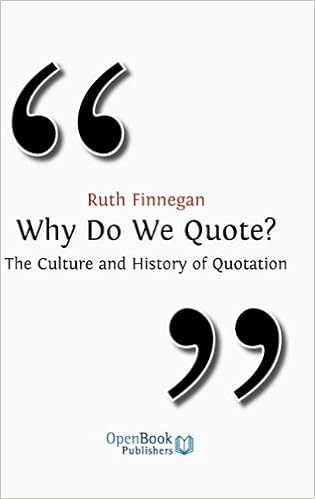 Quoting is all around us. But do we really know what it means? How do people actually quote today, and how did our present systems come about? This book brings together a down-to-earth account of contemporary quoting with an examination of the comparative and historical background that lies behind it and the characteristic way that quoting links past and present, the far and the near. Drawing from anthropology, cultural history, folklore, cultural studies, sociolinguistics, literary studies and the ethnography of speaking, Ruth Finnegan’s fascinating study sets our present conventions into cross cultural and historical perspective. She traces the curious history of quotation marks, examines the long tradition of quotation collections with their remarkable cycling across the centuries, and explores the uses of quotation in literary, visual and oral traditions. The book tracks the changing defi nitions and control of quoting over the millennia and in doing so throws new light on ideas such as ‘imitation’, ‘allusion’, ‘authorship’, ‘originality’ and ‘plagiarism’.
Look for the Hidden

Ruth Finnegan Author Interview
Entrancement is a collection of essays from educated professionals with different viewpoints on the topics of dreaming, trancing and the collective unconscious. What inspired you to write this book and bring all these different fields together?
Two things I suppose.
First of all, my own extended experiences over several years of a kind of heightened consciousness in dreaming, ‘musicking’ and of, somehow, communicating with others both near and far away outside time and space. This is described in the first chapter (my own) of the book: ‘There’ (an essay which earned an award from New Millennium writing).
Second I was further inspired by following this up in wider reading and discovering that not only in anthropology (my own discipline) are such things starting to be seriously studied as something of here and now, not just of supposedly strange folk far away or long ago, but also in innovative, if as yet unconventional, scientific thinking. Remarkable. There are now huge numbers of best-selling books by hard-nosed scientists inspired by Einsteinian thinking and, for example, quark theory on, for example, telepathy, dreaming, the consciousness of the universe, life after death and communication – long known and accepted – between dead and living.
The book begins with your own experience on trancing. What is ‘trancing’ and how did that experience happen?
Too long to answer properly here – read the account in the first chapter.
‘Trancing’ is a good concept and nearest to what I and others have experienced. It does however give a somewhat too explicit and, as it were, contrived and deliberate impression. Better to say the experience of somehow being outside time and space and seeing more clearly than in ordinary life’ (though it is there too, hidden).
One major problem indeed (discussed in the concluding chapter) is the absence of an accepted terminology to describe such things.
You bring together experts from many different fields in this book. Were they as enthusiastic about this book as you are?
YES. Both in taking up my initial invitation, in responding to it in their own terms, in the writing and, now, in receiving the finished volume.
What do you hope readers will take away from this book?
Look for the hidden in your own everyday life, find the extraordinary in the ordinary and vice versa: in music, in dreaming, in the miraculous workings of the great world around us. Open your mind – so easily closed by the undoubted but limited insights of the scientific revolution – to what is beyond.
Author Links: Facebook | GoodReads | Twitter | LinkedIn | GarnPress | OpenU
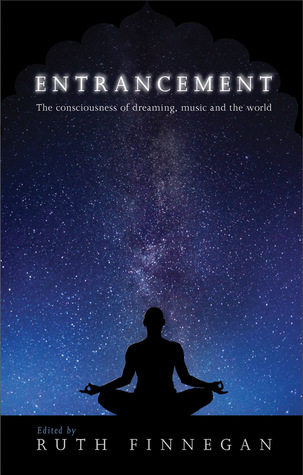 This powerful, ground-breaking study of dreaming, death, music, and shared consciousness brings together a staggering number of fields to explore what we know about dreaming and its interactions with other forms of consciousness. Setting a humanistic, evidence-based context, Ruth Finnegan engages with anthropology, ethnomusicology, sociology, psychology, parapsychology, cognitive science, and more, building a strikingly diverse base of evidence and analysis with which to treat a subject that is all too often taken lightly. Entrancement will quickly prove indispensable for anyone studying these altered states of consciousness and what we can know about how they work and what they do for our minds, bodies, and selves.
Why Do We Quote
If you’ve ever found yourself wondering why exactly it’s so natural to quote another person, Why Do We Quote by Ruth Finnegan is a great place to start. This book is laid out much like a textbook and goes over the history behind quoting in a comprehensive timeline. The text is easy to read and peppered with anecdotes which is a far cry from many traditional textbooks. It proves itself to be a wonderful companion piece to any student who may be researching this area as well as informational for an average person to learn more. It’s a look at the subconscious process of quoting and how we are influenced by those around us and what we are exposed to. Quoting itself is something many take for granted and is a process that is so ingrained in our society that we barely realize what we’re doing most of the time. Finnegan will take us on a journey to find out why.
The professional layout of this book would have readers believing that they picked up something from a university or college course. Indeed, this book would be a welcomed companion in a variety of studies from English to the Social Sciences. While the content is dense, it is not too heavy a read. The rationalization that Finnegan provides allows readers to identify more with the subject matter, therefore absorbing and learning from it easier. The illustrations match the content well and there are proper citations for what is being used. This is very important for a book about quoting others. Improper citation would ruin any academic or professional credibility.
Although this is a study disguised as reading material it may indeed be too heavy for a non-academic to enjoy. This is not the kind of book you pick up just for fun: you need to be genuinely interested in the contents or else it will be a book you never finish. To that end, this book may not grab the casual reader. As long as you go into this book with the expectation to learn, you will not be disappointed. Finnegan carefully guides her readers on the history of quotation and gently teaches along the way.
If you are looking for education and a better understanding of how language works, this is a great piece to add to your collection. This comprehensive history of quoting complete with illustrations is a great piece to add to any student or academic’s library. It’s a fascinating study that is sure to grab the interest of those who enjoy this type of reading. Be wary of its length and don’t be afraid to pause while reading it. Finnegan writes in a way that is easy to put down and pick up. Her personal anecdotes also add flavor to something that might otherwise be dry and boring.
Pages: 348 | ISBN: 1906924333



 LITERARY TITAN