Blog Archives
Beautiful Journey
Reigning Fire tells the story of a princess raised in a world built on Smokeveil magic, rigid hierarchy, and brutal expectations, whose Emberkin arrives too early and in a form that is forbidden. What was the inspiration for the setup of your story?
Reigning Fire grew out of two long-standing fascinations: mythical creatures inspired by East Asian folklore, and the question of what it costs a person to exist in a world that often values conformity over authenticity.
As a late-identified neurodivergent writer, I’ve spent much of my life feeling out of sync with the rhythm everyone else seemed to follow. When I was younger, a head teacher once described me as “a square in a world of circles.” It took years to realize she was right, but also that I wasn’t a square at all. I was a triangle. And ultimately, the problem wasn’t my shape, but the assumption that everyone should be the same.
That realization shaped the world of Reigning Fire more than anything. The Emberkin system—smoke creatures that take the form of real-world animals and bond with Weavers—became a way to explore identity, hierarchy, and the rules we’re told to accept without question. Characters in this world are taught that the timing of the bond and the “acceptable” Emberkin forms dictate their social status. Through that lens, I could examine the tension between who we’re expected to be and who we actually are.
As children, many of us inherit a set of rules about “how the world works.” But as we grow, we start looking closer and asking: Who created these rules? Why do they exist? Who benefits from them?
Xun’s Emberkin arriving too early and in a forbidden form allowed me to explore what happens when someone’s identity refuses to fit the timeline—or the template—that society sets for them. It’s a fantasy world, but the emotional truth beneath it is very real: the quiet, painful, and sometimes beautiful journey of learning to take up space as you are.
What were some themes that were important for you to explore in this book?
Beyond the question of identity, Reigning Fire explores three main themes that felt important for me to write about: historical erasure, loyalty, and the politics of perception.
First, I wanted to examine historical negationism—specifically, how societies can outlaw an aspect of human variation and then gradually erase all record of its existence. In the world of Reigning Fire, certain Emberkin forms are not only forbidden but deliberately removed from documented history and rewritten as “abnormal.” That dynamic mirrors the way real-world institutions sometimes control which narratives are preserved, which are buried, and which are reframed as taboo.
The second theme is loyalty, especially the form that exists between child and parent. I wanted to explore what happens when that bond is used as a tool—when a parent treats a child’s love and devotion not as something to nurture, but as a vessel for achieving their own agenda. It’s a painful tension: the longing to honor the people who raised you, and the slow, shattering realization that they may not always have acted in your best interests.
The third theme centers on power and perception. Throughout human history, the most enduring form of power hasn’t always come from weapons or armies—it has come from whoever controls the narrative. In Reigning Fire, characters constantly navigate a world where truth is malleable and obscure, and those in authority will go to extraordinary lengths to maintain their version of events. I wanted to explore the quiet, insidious ways people manipulate stories, memory, and even “facts” to protect their position.
All three themes—erasure, loyalty, and narrative control—shape the emotional core of the book. Even in a world of magic and mythical creatures, the human consequences of these forces are strikingly real.
What were some goals you set for yourself as a writer in this book?
One of my biggest goals with Reigning Fire was to write a story that felt deeply human, even inside a world full of magic, myth, and political danger. To do that, I challenged myself not only to explore the emotional territory I naturally gravitate toward, but also to sit with characters who unsettled me. I would ask them, “Who are you underneath your facade? What drives you? And how exactly did you become this version of yourself?”
Writing from perspectives that diverged sharply from my own was unnerving at times. There were chapters where stepping into another character’s inner world genuinely messed with my head for a while. But those were also the moments I’m proudest of because they made the story richer and more honest.
Another goal was to portray human choices in all their moral complexity. I wanted to move away from clean categories of “good or evil,” “loving or cruel,” and instead explore how intentions, fear, loyalty, and survival instincts collide. In real life, choices rarely fall into neat boxes—even the most well-meaning intentions can sometimes cause harm. One question that guided a lot of my writing was: At what point do good intentions stop being able to justify the consequences they create?
If readers walk away from the book holding more questions than answers, then I’ve achieved what I set out to do. Complex questions aren’t meant to have simple resolutions—but it doesn’t make them any less important to ask.
What is the next book you are working on, and when will it be available?
I’m currently working on the sequel to Reigning Fire, which will be released in late 2026. Without giving away any major spoilers, this next book explores how Xun—now going by Ling—ironically grows more in her years as a fugitive than she ever did as a princess. Stepping outside that gilded palace cage gives her the freedom to redefine who she is when no one is scrutinizing her every breath, even when her path is still fraught with danger.
Readers can expect to encounter more mythic Emberkin and new characters, as the world expands far beyond the political and cultural boundaries of the first book. Some familiar faces from Reigning Fire will return, while others may be absent… and I’ll leave it to readers to decide which disappearances should worry them.
One of the core themes of the sequel is reclamation—of identity, of history, and of personal power. That’s all I’ll say for now, but I’m excited for readers to see where the story leads next.
Author Links: GoodReads | Facebook | Instagram | Website | Amazon
In a realm where power is sealed through smoke and blood, Yan Xun was born to inherit a crown-or be destroyed by it.
When her Emberkin arrives far too early, and in a form the world has no place for, Xun becomes a danger to the very empire she was meant to serve. As she uncovers long-buried truths and navigates a court built on silence, loyalty, and control, her existence alone threatens to unravel everything.
Set in an ancient Chinese-inspired empire of myth and ash, Reigning Fire is a lyrical fantasy about forbidden power, political unrest, and the ghosts we carry. Through richly layered worldbuilding and emotional depth, this debut novel explores the complexities of trauma, neurodivergence, and what it means to survive when your truth has no place in the world.
Perfect for readers who love introspective characters, slow-burn rebellion, and myth-infused storytelling, Reigning Fire blends co
Reigning Fire
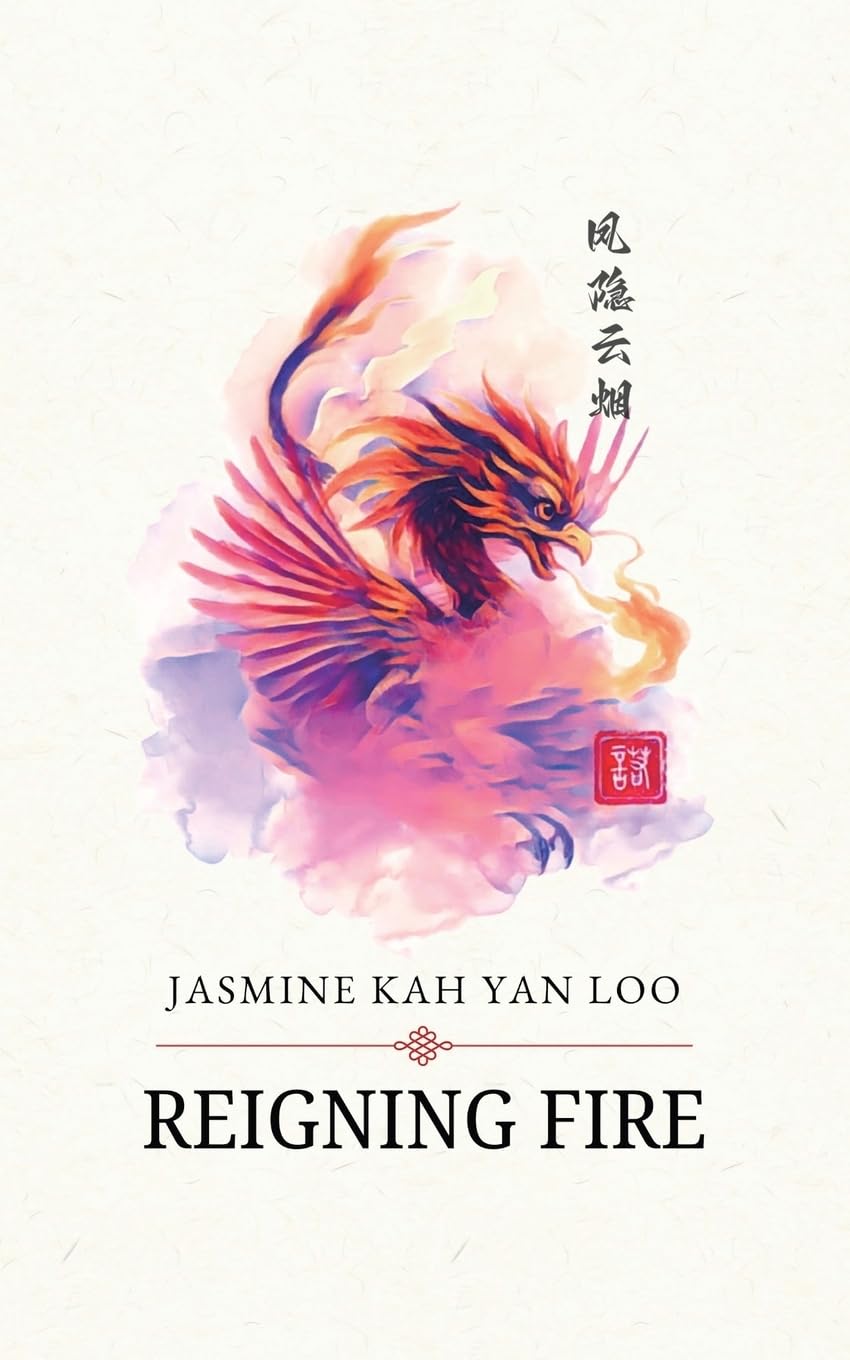

Reigning Fire tells the story of Yan Xun, a princess raised in a world built on Smokeveil magic, rigid hierarchy, and brutal expectations. Her secret Emberkin, a battered phoenix named Mo, marks her as something forbidden. That secret pulls her through a tightening web of palace politics, trauma, hidden archives, deadly trials at the Weaver Academy, and a long, dangerous unraveling of the Empire’s lies about power and worth. The book grows from courtly control to a fierce personal awakening, and the shift lands with real weight.
This book stirred me more than I expected. The writing has this sharp tenderness. Some scenes were very emotional, especially the ones where Xun remembers Kai’s abuse and the way his presence lingers like a stain in her memory. Her trauma does not exist for spectacle. It exists the way real pain exists, slipping into the quiet moments and messing with breath and thought. The training scenes with Xiao in the Dream Realm felt like oxygen, and I kept rooting for Xun to take each tiny step forward. The pacing in the middle swells as secrets pile up, especially once the Forbidden Archives start giving up their ghosts. I loved how the story mixes myth with rebellion and shows how tightly institutions grip the narratives they fear most.
I also found myself pulled toward the characters orbiting Xun. Jin in particular surprised me. His protectiveness has rough edges, but it feels shaped by real loyalty. His anger at what Xun endured is raw, almost reckless, and there were moments where his emotions reached through the page and hit me right in the gut. Even Yan Yun, cold as stone and twice as sharp, grabbed my attention. Watching him justify control while hiding old wounds gave him this unsettling depth. The world feels lived in, politically messy, and morally crooked. I liked that. I liked that nothing felt clean. The prose moves between poetic and punchy, and it never gets stuck in jargon. Sometimes the pacing jumps a bit fast, but I didn’t mind because the emotional beats landed exactly where they needed to.
By the time I reached the final stretch, the story had its claws in me. The revelations about mythic Emberkin, the tension in the archives, the pressure of Xun’s unbonded status closing in, all of it came together in a way that felt both heavy and hopeful. I walked away thinking about cycles of harm, about who gets to rewrite the rules, and about how power shifts when someone finally says no. If you enjoy fantasies that balance trauma recovery with rebellion, or if you like character-driven stories full of secrets, then this book is absolutely for you.
Pages: 330 | ASIN : B0FHQ211VC

Reputation Is Paramount

Gods of Glenhaven follows a middle-aged couple and their teen daughter trying to navigate a failing marriage and broken family dynamic in a talkative small town. What was the inspiration for the setup of your story?
I love suburbia for many reasons. What fascinates me most about it is that it seems like the goal is to eliminate as many of the hardships and vicissitudes of life as possible. In the suburbs, you try to capture and keep the good things, while either ignoring or reframing the bad things you can’t manage to avoid. And reputation is paramount — you don’t want to become known as anything other than an upstanding person who loves their job, their children, and their community.
Do you have a favorite scene in this story? One that was especially enjoyable to craft?
I especially enjoyed writing the scene in the Home Depot, which takes place the morning after the Rites of Initiation at the high school. There are seventy naked people slumbering amidst the lumber and wheelbarrows, and a stunned police sergeant has to sort it all out.
What were some themes that were important for you to explore in this book?
The value of the social contract is the big theme. This is why I needed Gods (who don’t play by the rules) and the potential for humans to have unusual power, which might encourage them to break the terms of the social contract.
Can fans expect to see more releases from you soon? What are you currently working on?
I like to write short comedy pieces — my work has been published in McSweeney’s, Points in Case, Weekly Humorist, and other magazines. I’m doing a lot of that kind of writing while also beginning work on a second novel, entitled Little Dan.
Author Links: GoodReads | Facebook | Website | Amazon
When Greek gods sweep into the quaint suburban town of Glenhaven to untangle their messy love lives, the helpless mortals don’t stand a chance.
Christian Orr, struggling with work and erectile dysfunction after discovering his wife’s infidelity, has just moved into what his daughter Francesca calls the Divorced Dads Apartment Complex. His high-powered attorney ex, Sloan, is jaded and restless, leaving precocious Francesca caught in the crosscurrents of change.
Enter Dionysus-“Dee”-the god of wine, sex, and questionable decisions, who shows up searching for his estranged wife Ari and their teenage son Maron. After three thousand years of Dee’s antics, Ari has had enough. She’s struck a deal with Zeus to start fresh-as a mortal suburban mom. And what’s more normal than falling for a regular guy like Christian? If only Dee would stop tearing through Glenhaven in his quest to win her back.
Drunk on Dee’s wine, the residents of Glenhaven form chanting covens in the woods, participate in ecstatic rituals, and experience divine revelations-all while Led Zeppelin’s “Whole Lotta Love” loops faintly in the background of their lives.
Gods of Glenhaven is a hilarious, poignant, and confronting novel about the universal fears and follies of the human condition, and the joy and freedom we can experience by letting go.
Making Sense Of The Insanity Of Moralities

Re-birth tells the compelling story of Anessa’s reincarnation in the intriguing fantasy world of Anfang. What was the inspiration for the setup to your story?
I’ve been a fan of Mythology of almost every variety. As a child I was always intrigued by Lewis Carroll’s Alice in Wonderland and being pulled through to a new world.
Anessa is an intriguing and well-developed character. What were some driving ideals behind your character’s development?
Anessa is a logical view of what might happen to a western person should they be taken at the point of their death and placed on a new planet through divine intervention. She’s lost, confused, and must navigate a new world alone, forging new bonds, making sense of the insanity of moralities that are different from what knew she on Earth.
What were some themes that were important for you to explore in this book?
Our world is on the precipice of some vital changes to personal rights. Anfang represents an exploration of an ideal, and in future volumes I may tinker with how easily it can crumble.
The exception to this question is nobles using marriages to form bonds between families as chess pieces, but that is a component of medieval societies, not of a theme I wanted to explore.
When and where will your book be available?
Re-Birth will be available November 24, 2022, on Amazon in eBook, Paperback (black and white) and Hardback (full color). The eBook is on sale for $4.99 until 1/1/2023. The sale pricing for the paperback and hardback are beyond my control as I’ve already found out.
https://www.amazon.com/dp/B0BHVG5ZB6 – eBook
https://www.amazon.com/dp/1959098004 – Hardback
https://www.amazon.com/dp/1959098101 – Paperback
Author Links: GoodReads | Twitter | Website
For Anessa, death was just the beginning…
Originally from Earth, she finds herself transported to Anfang with one question:
“How did I die?”
Reborn into a family of wealth, privilege and magic, the expectations placed on her clash with her Earthen sensibilities.
As Anessa grows into her newfound place and power, she struggles with the notions of political marriages, inane rituals, and the awareness that her biggest threat may come from within.
Who do you trust when your first life was stolen by your best friend, and your latest sin is living?
Join Anessa on her debut journey in My Own Mythology — Re-Birth; get yours now!
Inspiration in a Vivid Nightmare

Patricia Bossano Author Interview
Seven Ghostly Spins is a collection of paranormal stories written by you and Kelsey E. Gerard. What were some decisions that went into picking the stories for this collection?
Three of the stories; Carolina Blue, 205 ½ 25th Street and Alison, date back to the years I spent in Northern Utah. They were originally published in 2012-2014 as part of the Tales from Beyond anthologies, compiled by D. Hattingh. Ever since that project was completed, I began thinking of a collection of my own—to be based not only on true legends, but paranormal experiences as well.
At around the middle of 2017 the title for the new collection came to me; Seven Ghostly Spins, prompting me to remaster the original three and identify the other four.
In keeping with the “Haunted Ogden” theme, Kelsey E. Gerard submitted She Caught a Ride, fulfilling the based-on-true-legends requirement. That left me with the paranormal experience requirement, and for those I turned to my own memories and wrote By the Iron Gate and A Curse Lifted. Abiku is the novella among the short stories—the base idea for this thriller came from an ancient Yoruba belief and it includes supernatural and paranormal elements that I thought would make a proper central piece for this collection.
My favorite stories from the collection is ‘Alison’ and Gerard’s ‘She Caught a Ride’. What was your favorite story from this book?
Thank you! I am so pleased to hear you enjoyed these tales. I love each story equally though for different reasons. If I must pick a favorite, I would say Carolina Blue is my special, tragic friend.
Each story was intriguing and well developed. Where do you turn for inspiration for writing?
Two of the stories are rooted on personal experiences, while the others came to me through reading, and research. I found inspiration in a vivid nightmare and a real walk in the moonlight. In my godmother’s parting gift, and in assignments to explore Ogden’s haunted, colorful history. In the case of Abiku, all it took was an image—an illustration caught my eye and the short lines describing it spawned all the characters and circumstances in the novella.
What is the next book that you are working on and when will it be available?
My next project is a philosophical fiction/comedy entitled Daughters of the Bride, slated for publication on Mother’s Day 2020.
To recover from the unexpected death of their father, the ‘weird sisters’ cling to one another and to their widowed mother; the ‘head witch.’ However, no traditional mourning rituals await them.
Blindsided by the love their mother claims to have found, mere months after the death of her husband of 50+ years, the three women flex their powers and embark on a distressing journey of reflection; to know themselves and the mother they thought they knew.
Amid the hilarity of the head witch’s disconcerting return to a youthful attitude, difficult questions must be asked. Genetic memories must be acknowledged and banished. Painful feelings must be expressed, and life-altering decisions will be made because, at the end of their journey, their new reality must be embraced by all.
Author Links: GoodReads | Twitter | Facebook | Website
![Seven Ghostly Spins: A Brush with the Supernatural by [Bossano, Patricia, Gerard, ft. Kelsey E.]](https://images-na.ssl-images-amazon.com/images/I/419cB%2B2un0L.jpg) Based on harrowing legends and nightmares come true, this mind-bending collection of paranormal tales will creep under your skin and stay with you long after you have read it.
Based on harrowing legends and nightmares come true, this mind-bending collection of paranormal tales will creep under your skin and stay with you long after you have read it.

Legends of the Family Dyer

David W. Thompson Author Interview
His Father’s Blood follows John and Ada as they navigate their relationship, their family, and their curse. What was the inspiration for the setup to this thrilling novel?
Moll Dyer is a real historic personage, but there is scant official record of her life due to a courthouse fire. There is a local road named after her, and a boulder on display at the county courthouse where it is said she died. There’s also one colonial period letter describing her countenance unfavorably. Despite this, there are as many oral traditions about her life (and death) as there are local families. With book one, I tried to give Moll some peace and a new angle to her story.
In Book 2- His Father’s Blood, I expounded on her tale. As many of the legends associated with Moll included a son, and none covered exactly what happened to him, his was also a tale that begged to be told. As the local native tribes began leaving the area at this same time, it was easy to imagine that John’s ancestor would have followed them…especially as his mother was more at home with them than her own people. I based some of their adventures on the style of tales from the mountains they fled to.
John and Ada are both intriguing characters that are even more interesting when they are with each other. What were some obstacles you felt were important to develop their characters?
Their loyalty had to be rock solid to allow the belief and trust in one another under extraordinary circumstances. Their devotion for one another needed to be absolute to overcome all that was thrown against them and all of the naysayers plotting against them. With such nobility of character, introducing human foibles was essential to make them well rounded and believable.
You continue to develop the Dyer family’s curse in this book. What was something new that you wanted to introduce in this book that was different from the first book in the series?
A theme in both is personal sacrifice and the concept that love conquers all. In book 1, Moll is kept ignorant of her powers and was only briefly exposed to the healing aspects of it. John was exposed to the darkness early in life and fought against it. Moll gave her life in sacrifice to save her son, but in my opinion, John’s price was greater. Moll never knew romantic love and I wanted to explore what might happen if a romantic interest was present. Ada certainly provided that. Moll’s love for her son drove the plot of Sister Witch, but John and Ada’s love was the driving force in His Father’s Blood.
This is book 2 in the Legend of Family Dyer series. When will book 3 be available and where will the story take readers?
I’ve completed the rough draft for Book 3 and hope to have it released early next year. It is set in contemporary times and of course follows Moll’s descendants. Although her name is forgotten by them, she hasn’t forgotten them.
Author Links: GoodReads | Twitter | Facebook | Website
![His Father's Blood (Legends of the Family Dyer Book 2) by [Thompson, David W.]](https://images-na.ssl-images-amazon.com/images/I/51HtxhWKnWL._SY346_.jpg)
Homesteading on Devil’s Peak, skin-walking shaman John Dyer must fight to save his bloodline. Can the Dyers stand against the horrific desires of a centuries old demon? Can their faith in each other overcome the evil pitted against them?
This historically accurate epic follows John- scion of the Dyer family, and the great-great grandson of the venerable Moll Dyer– in his quest for a new life, and a place to settle down and call home.
The fates conspire against the Dyers, and only their sorely tested faith in each other can overcome the evil set in place against them.
Religion, Legends and Magic

Emma Plant Author Interview
For the Devil Has Come with Great Wrath provides a glimpse of the havoc the Devil can wreak when he comes for the End of Days and in search of a young Office Manager. What served as your inspiration while you were writing this novel?
The very first inspiration was a sort of vision, about 10 years ago. I saw a woman standing in a room surrounded by old wood and stones. She was close to a canopy bed and she was carrying a big, heavy, woolen blanket towards a window. I felt her sorrow, she was sad about somebody, she tremendously missed a person. Ten years after I was sitting in my beautiful sunroom in Northern BC, sipping tea and staring at the dark woods outside, the trees turning red, brown and orange, the crab apples filling the air with their sweet smell. I stared for maybe 5 minutes, after which I felt an extreme urge to write. I took my laptop and hastily started recording the events that would lead to “For the Devil Has Come with Great Wrath”. I started writing in September. I had the entire story in my head, but I was busy with my daily activities, so I decided to set up a plan: I had to write at least 3,000 words a day, making up for those days in which I did not have time to write. That year the winter was particularly harsh, I felt I was held captive, and writing was the only escape from the daily -30°C, from the roads covered in ice and snow, from the long hours of darkness. I wrote almost every day, not having to think once about how the story would evolve: the adventures just flew out of me, in a sort of “channeling”. In February my first book was finished, but 6 more were already brewing in my head, including the sequels of this first book. It was only at that point that I decided to walk the next mile, and treat it as a professional work. I contacted the BC Editors Association and was smitten by their reactions to my little story. After contacting the BC Editors Association, I decided to go on a solo trip through British Columbia, Washington, Idaho, Montana and Alberta. Every evening I would check my emails and find those of authorities in the field that loved my work and were looking forward to read the entire story. This incredible experience spurred me to publish the novel.
My upbringing also definitely influenced my story-telling. Both my parents are attached to traditions, religion, legends and magic. My mother made sure that I would not forget about my roots, the Valley, the village “on top of the lake” (Summus Lacus), our religion. My father enhanced everything with magic and mystery.
This book is a genre-crossing novel with elements of fantasy, christian, and supernatural as well. Did you start writing with this in mind, or did this happen organically as you were writing?
The story was absolutely not planned. I just decided to start writing it without even knowing how it would evolve. I did not prepare an outline, I did not fill my walls with sticky notes, I did not have pages and pages of comments. I do have a little notebook, containing information regarding, for example, how old the characters are, if they are allergic to something, when their birthdays are, when they met each other. Nothing about the story itself. It was as if I was writing events that really happened, and the intention was just to make sure those occurrences could be remembered by future generations. My editor, Janet Southcott from Viridian Earth Contract, called my novel a “New Age fantasy”.
Your book has some fantastical creatures, but what I enjoyed was how your characters worked in harmony with one another. What were some themes you wanted to capture while creating your characters?
I didn’t necessarily plan to capture any theme related to collaboration and compassion, so it definitely happened naturally. I do like the idea of different beings cooperating and developing these strong emotions and this genuine attachment for one another. In the beginning, the characters happen to come together for a higher cause; they are sort of forced to cooperate. In fact, we sometimes read that Emma doesn’t really appreciate the sternness of Ella, but, like a daughter-mother relationship, she respects the opinions and directions of a more experienced female. If we consider the novel from this point of view, it seems that the characters always approach a new “companion” with reservation, doubts and distrust. Of course, this is also caused by the events happening in the Valley, but don’t we often all react like this during our first meeting with somebody? It’s only after a few shared experiences that we manage to open up to the person in front of us. This is exactly what happens to Emma, Ella, Abela, and all the characters in the book. It is more obvious for Emma, because she is the one recollecting the events, we don’t really know what the other characters think of her, their first impression on her, but we can figure it out by reading about their behaviours and interactions with Emma through her own words. At the same time we can see how the characters evolve within their experiences: their core is the same, but their values change. There are no emotional barriers anymore; there is no time for counterproductive drama. The transition to peasant life also intensifies these values, all of a sudden the reader realizes that without technology and commodities, the characters have to communicate more, they have to cooperate and develop skills they weren’t even aware they had. Also, it is clear that by being the fellowship so diverse, each of the characters bring a different set of assets, which is shared between the members, increasing their knowledge and understanding.
This is book one in a trilogy. Where will book three pick up and when will it be available?
Book #2 and #3 are already in the process of being created, I just need the time to sit down and write them both. Book #2 will start with the main characters leaving the witch’s house and migrating to a more secure place: the gnomes’ kingdom beyond the mountains. The rest of the novel will bring more adventures and many unexpected twists. The common threads will still be the millennial fight between good and evil, love, friendship, occult, strength and hope with the Apocalypse permeating and hanging over everything like Damocles’ sword. Book #3 will incorporate also the final countdown until the last battle between good and evil, the one that will decide on the faith of humanity and Earth.
Author Links: Website | Twitter | GoodReads
![For the Devil Has Come with Great Wrath by [Plant, Emma]](https://images-na.ssl-images-amazon.com/images/I/51sVghWFV1L.jpg) When the Devil puts his price tag on your head, you know you have to call upon some very special friends to help you stay alive. Welcome to the world of Emma. Thrown from relative obscurity into a time of being hunted, our young protagonist must transition from modern day to peasant life with difficult choices and a need to adapt. Life on the run takes trust and belief in the power of others, on a vastly changing stage. Emma Plant’s first novel throws the reader into a place where reality is no longer three dimensional. Descriptions of fairies, witches, gnomes and demons paint a picture for anyone who may wish a glimpse beyond the veil. Her characters live in the reader’s imagination beyond the final page, with the promise of a sequel, and potential trilogy in the offing. This new-age fantasy story will appeal to young adults through to senior years and is a page-turner from start to finish.
When the Devil puts his price tag on your head, you know you have to call upon some very special friends to help you stay alive. Welcome to the world of Emma. Thrown from relative obscurity into a time of being hunted, our young protagonist must transition from modern day to peasant life with difficult choices and a need to adapt. Life on the run takes trust and belief in the power of others, on a vastly changing stage. Emma Plant’s first novel throws the reader into a place where reality is no longer three dimensional. Descriptions of fairies, witches, gnomes and demons paint a picture for anyone who may wish a glimpse beyond the veil. Her characters live in the reader’s imagination beyond the final page, with the promise of a sequel, and potential trilogy in the offing. This new-age fantasy story will appeal to young adults through to senior years and is a page-turner from start to finish.
Dragon Ascendants
![Dragon Ascendants (Luminess Legends Book 1) by [Vaughn, Paul E. ]](https://images-na.ssl-images-amazon.com/images/I/51HFSRvrGrL._SY346_.jpg)
Imagine if you will for a moment a medieval fantasy drama being brewed in a cauldron: throw in a measure of How to Train Your Dragon, add a dash of Game of Thrones, sprinkle in some of The Hobbit all topped off with a liberal dose of a King Arthurian legend, leave to simmer on a medium heat for few chapters and then you might have replicated Dragon Ascendants by Paul Vaughn.
So let’s get on to the plot, the setting and the highly descriptive cast of characters without creating spoilers for you.
Dragons, shadow-bats, elves, dwarves, bandits, skulduggery, betrayal, magic, fear, treachery, family discord, sibling rivalry, disappointment, parental disapproval, forgiveness, redemption and, lest I forget (although, how could I?) a very good measure of graphic violence – it’s all in there – so what more could I want from a fantasy novel? Perhaps a little romance? If it’s in here I missed it.
The action is all set in a mystical land, named the Luminess, which at first visit seems almost idyllic. That is, until the conflicts of this land are slowly revealed in the following chapters.
In these mountains live the elves, which have been there for centuries happily mining the gems hidden within. Their lives are occasionally interrupted by an assortment of other species, some for good cause some for ill.
Also, as within most fantasy novels, there is a power struggle between the forces of good and evil. From my reading, I felt that we are to consider these two grouping; one under the ‘command’ of the dwarf burrow’s hereditary leader, named Meerkesh, (representing the forces of good) and another under a very angry rogue elf, with unexplained issues, named Fearoc (representing the forces of evil). Such is the power of the latter, we are led to believe that the world has, or is about to, come to an end for the dwarves.
But I am not totally convinced as to which side is really the good and which that of evil is. In this strange land, where sapphires, ruby stones and diamonds are used as currency and the internal ‘politics’ seems to be driven by greed and ruled by bloodshed. On the one hand we have a population that apparently eats nothing other than apples, whilst the baddie mainly feasts on his conquests, we have quite a lot of axe wielding violence, bloodletting, beheading, dragons blinding by fire and melting of opposite forces during this fight between good and evil. Both sides seem as driven by bloodlust as the other. And this interesting dichotomy lends to some thought provoking reading.
This novel left me begging for more. More answers, more character development, more world building. I want to know! Ah, the mark of a good writer I suppose. I look forward to the next book in Paul Vaughn’s Luminess Legends series.
Pages: 217 | ASIN: B07B8STMY4



 LITERARY TITAN