Blog Archives
I Respectfully Disagree
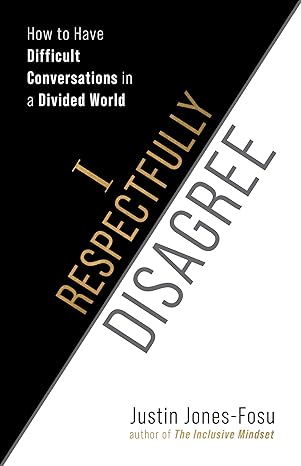

Justin Jones-Fosu’s I Respectfully Disagree delves into the delicate art of navigating tough conversations in an increasingly polarized world. The book introduces practical tools and principles to bridge divides without sacrificing authenticity or relationships. Using relatable anecdotes, Jones-Fosu outlines a five-pillar framework for fostering meaningful and respectful dialogue while challenging readers to see disagreements as opportunities for growth rather than barriers.
What I loved most about this book is how it feels deeply personal yet universally applicable. Jones-Fosu draws on his upbringing and professional experiences to underline the importance of empathy and perspective. The chapter introducing “Golden Respect” particularly stood out to me. It redefines respect not as something earned or transactional but as a fundamental acknowledgment of humanity. I found the comparison between societal respect norms and Golden Respect’s ideals enlightening, especially the principle that respect is more about internal conviction than external behaviors. This notion reframed how I approach disagreements in my life.
The stories Jones-Fosu uses to illustrate his points hit close to home. It’s a reminder that behind every sharp word is a tangled web of past experiences and unmet expectations. Similarly, the chapter on the power dynamics in workplace disagreements gave me pause. The tale of Jonathan, the corporate leader who mistook dissent for disrespect, highlighted how unchecked authority stifles innovation and erodes trust—a cautionary tale for anyone in a leadership role. Another standout is the Tortoise Principle, which emphasizes small, consistent efforts over grand gestures in fostering better communication habits. It’s a comforting idea in a world where instant solutions are often glorified. The book’s refusal to oversimplify the complexities of human interaction is refreshing.
I Respectfully Disagree is a timely, heartfelt, and actionable guide for anyone seeking to engage in deeper, more constructive conversations. It’s ideal for professionals, families, and anyone striving to connect across differences with empathy and respect. If you’ve ever found yourself dreading confrontations or unsure how to disagree without damaging relationships, this book will give you the tools to navigate those challenges with confidence and care. Highly recommended!
Pages: 240 | ASIN : B0CDMYLVFC

Mistakes, Misstatements, Lies and Other Miscommunication Tactics

Norm Cairns’ Mistakes, Misstatements, Lies, and Other Miscommunication Tactics is a witty exploration of the myriad ways communication goes awry, sprinkled with humor, philosophy, and a touch of absurdity. The book oscillates between fictional tales and reflective commentary, weaving a patchwork of anecdotes and insights that challenge readers to think critically about language and its impacts. It’s a cerebral yet playful work that doesn’t shy away from poking fun at the complexities of human interaction.
One thing I immediately enjoyed about this book is its dry humor. In the introduction, Cairns reflects on the evolution of the English language, describing it as both “a patchwork quilt of other languages” and “a disgusting lingua franca.” This sets the tone for the rest of the book—biting, unapologetic, and insightful. I chuckled at the author’s sardonic observation of American English’s global infiltration, not through admiration, but necessity. It’s a blend of erudition and irreverence that doesn’t take itself too seriously.
The fictional chapters are where Cairns truly shines. “Two Detectives Meet the Mummy” exemplifies his knack for creating chaotic yet relatable dialogues. The interaction between Floyd and the narrator, discussing whether “Why?” or “What the f***?” was the first question humanity ever asked, is both absurd and oddly profound. It captures the bizarre beauty of human communication—messy, flawed, and full of unintended revelations. I found myself simultaneously laughing at Floyd’s crudeness and pondering the existential implications of their debate. “The Black Site” explores the grim underbelly of the internet, delving into themes of anonymity and morality. This chapter was a stark contrast to the humor of others and left me feeling uneasy—but in a way that felt intentional. Cairns doesn’t shy away from showing the consequences of miscommunication or deceit, and this tonal shift highlights his versatility as a writer.
In the final reflection, Cairns reminds us of the power and responsibility tied to language. The chapter “The Big Reveal” is particularly memorable, with its poignant commentary on how lies, even small ones, shape relationships, and the world. This chapter left me with a lingering sense of introspection about the words I choose and the impact they have.
This book’s humor leans towards intellectual, with plenty of philosophical musings that might feel dense to some readers. That said, it’s perfect for anyone who enjoys a mix of satire, sharp dialogue, and thoughtful reflection. Whether you’re a linguistics enthusiast, a fan of dark humor, or someone fascinated by the quirks of human behavior, Norm Cairns’ Mistakes, Misstatements, Lies, and Other Miscommunication Tactics offers plenty to chew on—and laugh about.
Pages: 243 | ISBN : 978-1304081292
Be Novel and Surprising

Your three-book collection, Briefly Speaking, is more than just a guide to public speaking; it is an entire educational course presented in an easy-to-understand and relatable manner. Why was this an important book for you to write?
We wanted those who aspire to become better presenters and communicators to have a comprehensive guide so they can achieve their ambitions. We designed the three-book series to focus on Prepare, Present, and Communicate to make it easy to find a topic and get practical, useful skills that can be incorporated immediately. Plus, each tip takes under 30 seconds to read—whether it’s how to open, close, tell a story, structure a presentation, or engage an audience. And each book is small enough to carry with you for easy reference.
Communication techniques and approaches are highly personal, but there are some key factors that are essential for getting your message across. What were some ideas that were important for you to share in this book?
First, decide on your message and identify a singular intention or what you want to achieve. Then scan your life for material that will illustrate your message so that it best engages your audience. Use structure so you don’t ramble, and always speak in a genuine, authentic way to build trust and reduce stage fright. And when you communicate, speak with commitment and certainty.
What is the one most important piece of advice you think all presenters should consider when preparing to give a speech, no matter what the topic is?
Determine what you want to achieve (i.e. your Intention) and what will best serve your audience. Then speak in specifics, not generalities so the audience can visualize your content. And be novel and surprising so that you grab and hold the attention of your audience.
Do you have additional books or materials planned that will complement this collection and help readers continue on their journey to improving their communication skills?
Yes, Own the Room (published by McGraw-Hill) and Out Front: How Women Can Become Engaging, Memorable and Fearless Speakers (published by BenBella Books)
Author Links: GoodReads | Eloqui | Outfront | Briefly Speaking | Amazon
Book 1 – Prepare: Creatively Structure and Rehearse Your Content (5 x 7; 254 pages; $29.99 value)
Book 2 – Present: Techniques from the Professionals’ Playbook (5 x 7; 248 pages; $29.99 value)
Book 3 – Communicate: Make the Greatest Impact (5 x 7; 192 pages; $29.99 value)
Happy Thoughts: Going to the Aquarium

Happy Thoughts: Going to the Aquarium, by Lisa Jacovsky, presents an insightful glimpse into the life of Emma, a young girl with autism who has her own unique way of communication. Unlike her peers, Emma relies on index cards to express herself when she feels comfortable, a distinctive trait that sets her apart in social interactions. This narrative becomes especially poignant when Emma encounters new individuals, such as a boy named Alex at the aquarium, highlighting both the challenges and the triumphs of her communication method.
Jacovsky’s narrative is commendable for its sensitive and innovative portrayal of autism. By choosing index cards as Emma’s medium of expression, the author provides a tangible and relatable tool for young readers to understand and empathize with different communication styles. This technique effectively fosters awareness and acceptance among children, demonstrating that differing abilities should be embraced and respected. The aquarium setting is a masterstroke, offering a serene and engaging backdrop for this enlightening tale. It not only serves as a non-threatening environment for character interactions but also enriches the story with vibrant illustrations of marine life, including seals, dolphins, and beluga whales. John Thorn’s illustrations are noteworthy for their charm and their role in bringing the story to life.
Jacovsky‘s book stands out for its educational value, seamlessly weaving a lesson on acceptance and uniqueness into an enjoyable story. Emma’s journey, marked by her distinctive way of interacting with the world, is a testament to the beauty of diversity and the importance of understanding those who may seem different.
Happy Thoughts: Going to the Aquarium is a meaningful exploration of individuality and communication. Jacovsky’s thoughtful approach makes this book a valuable read for children, illuminating the richness that different perspectives bring to our world.
Pages: 30 | ASIN : B0CVHTT9W5
Great Leadership Starts With You
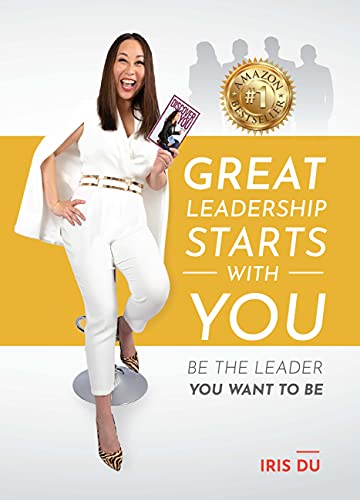
Iris Du targets leaders in all capacities in her book Great Leadership Starts With You: Be the Leader You Want to Be. The author writes hoping that her knowledge will benefit CEOs, managers, supervisors, youth group leaders, church leaders, and even leaders at home and in schools. The author extensively writes on what it entails to be a leader, how to make people appreciate and respect your position, and how to link with those you are governing. Iris Du uses solid illustrations to give additional details about leadership qualities and further explains how a leader should conduct themselves.
One of the most significant things you need to take note of as a leader is how to communicate. I like that the author started by explaining that great leadership begins with you. You establish yourself by leading from within before you guide others. The author continues to write about communication and how it influences excellent leadership. As an individual, you are taught how to be courteous, live by your values, and communicate what you feel in a modest way. One of the biggest lessons I learned in the book is that leaders are not born but made. You can learn how to be a leader.
In every chapter, the author focuses on one or two subjects that she writes about in detail. For example, the chapter on communication was incredible, and so were the rest of the chapters that discussed gratitude, manifestation, self-awareness, self-discipline, and self-mastery. These chapters have gems of knowledge and are written in an engaging and organized manner. Every chapter in the book starts with a quote from a famous person. She then proceeds to discuss the subject matter and includes quality questions and exercises in every chapter. I appreciate the questions and exercises, as they are vital to helping one self-reflect and change one’s leadership method.
Great Leadership Starts With You: Be The Leader You Want To Be is an eye-opening look at what it takes to become a successful leader in all areas of life, not just the corporate business world. With sound advice backed by case studies and actionable items, readers will be able to transform their leadership style into a more efficient approach that highlights not only their strength but their teams.
Pages: 202 | ASIN : B09HM2SG15
Keys to Healthy Communication
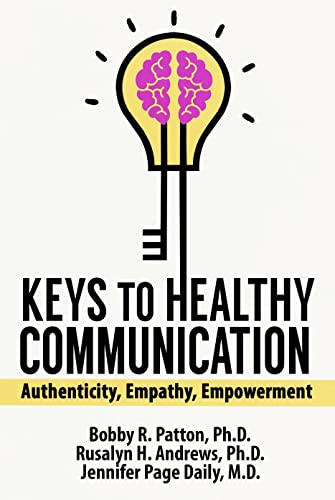

To sustain a fulfilling life, one must make a lifetime commitment to a healthy life. But what is the general definition of a “healthy life?” After witnessing the COVID-19 pandemic, the Keys to Healthy Communication was written. Authors Dr. Bobby Patton, Dr. Rusalyn Andrews, and Dr. Jennifer Daily developed this self-help guide to educate readers on improving interpersonal communication.
The first section, ‘Overview,’ outlines the many types of health and the necessity of the complementary relationship between personal and social health in achieving total well-being.
The first essential key to effective communication is ‘Authenticity,’ covered in section two. People are inundated with numerous erroneous beliefs and “alleged” facts, prompting them to question their own beliefs or those of others until they have properly analyzed and compared them to proof. The degree of sincerity exchanged between partners is also advantageous to the health of intimate relationships. Being unreal causes a skewed conscience, which leads to manipulation, dishonesty, and even abuse. Conversely, mutual trust in one another boosts productivity and decides the failure or success of society.
The importance of the second key to effective communication, ‘Empathy,’ is highlighted in the third section. Given people’s natural propensity to develop sympathy, empathy is seen as a key that may be taught through mindfulness or “moment-to-moment, non-judgmental awareness.” In addition, empathy is essential for a dynamic society because it allows people to empathize with people and cultures they do not necessarily identify with or agree with.
Section four is on ‘Empowerment,’ which depicts self-control and the ability to self-regulate, as well as comprehending the extent of one’s own choices and the repercussions of those actions, as well as detecting the power centers at play. Social variables that induce ill health are caused by a lack of self-authority.
The fifth section explains the activities, skills, and attitudes that should be practiced and a strategy for promoting good communication throughout one’s life. Finally, it breaks down all of the measures to improve one’s physical, mental, and relationship health into categories based on age and environment.
Keys to Healthy Communication: Authenticity, Empathy and Empowerment is an extensive self-help book filled with practical and actionable guidance. This well-researched book explains how individuals may adopt and learn certain practices and skills in daily lives to help them develop as a person.
Pages: 204 | ASIN : B09R4L4BRV
A-C-T Like A Kid And T-H-I-N-K Like A Parent: What All Good Parents Need For Their Kids To Know, Learn And Understand
Just for kicks, have you ever wondered what your parents really want from you in life? Is it you, or do your parents want you to have no real fun? On any given day, do you want to make your parents proud of you and still do what makes you feel really happy within yourself? Of course you do! But the real question has always been, and still is…how? How can we actually get this done?
Well, with A-C-T like a Kid and T-H-I-N-K like a Parent, a.k.a “the child-part consoler”, you will get past common misunderstandings by learning how to truly talk, hear, and listen to your parents, guardians or caregivers instead of feeling like you have to run to friends to find some sense of acceptance, understanding, and real connection.
In this book, chock-full of questions and answers gotten directly from the source, you’ll learn what your parents, guardians or caregivers really expect of you—and maybe you’ll even find out how to explain to them what you really expect from them! Not that this book could ever replace a parent, because it can not. But when it comes to openly communicating certain key ideas, this book comes really close.
This tell-all guide contains lots of enlightening explanations and helpful answers to many common kid questions like:
What do my parents really want from me?
Why do my parents do what they do and say what they say?
What do I really need to know about my parents’ parenting skills?
How can I keep my parents happy with me?
How can I help my parents to help me?
How can I get what I want from my parents every time?
A-C-T like a Kid and T-H-I-N-K like a Parent is an intro to the secret knowledge of adults which is a set of informations that is mainly covered in the book entitled Surrogate Re-Parenting: A.K.A. Get Your Mind Right, and even more thoroughly covered in the book The Secret Knowledge Of Adults. While this book, A-C-T like a Kid and T-H-I-N-K like a Parent is intended for kids 10 and up, the info in this book is beneficial and useful to the intelligent kid parts in all of us. Yes, this means you too.
The information in this book will help you and yours to start to see your parents, not as the enemy, but as the caring human beings they really are, and take the first step toward family unity, understanding, growth, success, and happiness! Both you and your parents really deserve this, and with this book, A-C-T like a Kid and T-H-I-N-K like a Parent, you and your parents can actually achieve this.

Look for the Hidden

Ruth Finnegan Author Interview
Entrancement is a collection of essays from educated professionals with different viewpoints on the topics of dreaming, trancing and the collective unconscious. What inspired you to write this book and bring all these different fields together?
Two things I suppose.
First of all, my own extended experiences over several years of a kind of heightened consciousness in dreaming, ‘musicking’ and of, somehow, communicating with others both near and far away outside time and space. This is described in the first chapter (my own) of the book: ‘There’ (an essay which earned an award from New Millennium writing).
Second I was further inspired by following this up in wider reading and discovering that not only in anthropology (my own discipline) are such things starting to be seriously studied as something of here and now, not just of supposedly strange folk far away or long ago, but also in innovative, if as yet unconventional, scientific thinking. Remarkable. There are now huge numbers of best-selling books by hard-nosed scientists inspired by Einsteinian thinking and, for example, quark theory on, for example, telepathy, dreaming, the consciousness of the universe, life after death and communication – long known and accepted – between dead and living.
The book begins with your own experience on trancing. What is ‘trancing’ and how did that experience happen?
Too long to answer properly here – read the account in the first chapter.
‘Trancing’ is a good concept and nearest to what I and others have experienced. It does however give a somewhat too explicit and, as it were, contrived and deliberate impression. Better to say the experience of somehow being outside time and space and seeing more clearly than in ordinary life’ (though it is there too, hidden).
One major problem indeed (discussed in the concluding chapter) is the absence of an accepted terminology to describe such things.
You bring together experts from many different fields in this book. Were they as enthusiastic about this book as you are?
YES. Both in taking up my initial invitation, in responding to it in their own terms, in the writing and, now, in receiving the finished volume.
What do you hope readers will take away from this book?
Look for the hidden in your own everyday life, find the extraordinary in the ordinary and vice versa: in music, in dreaming, in the miraculous workings of the great world around us. Open your mind – so easily closed by the undoubted but limited insights of the scientific revolution – to what is beyond.
Author Links: Facebook | GoodReads | Twitter | LinkedIn | GarnPress | OpenU
 This powerful, ground-breaking study of dreaming, death, music, and shared consciousness brings together a staggering number of fields to explore what we know about dreaming and its interactions with other forms of consciousness. Setting a humanistic, evidence-based context, Ruth Finnegan engages with anthropology, ethnomusicology, sociology, psychology, parapsychology, cognitive science, and more, building a strikingly diverse base of evidence and analysis with which to treat a subject that is all too often taken lightly. Entrancement will quickly prove indispensable for anyone studying these altered states of consciousness and what we can know about how they work and what they do for our minds, bodies, and selves.



 LITERARY TITAN