Blog Archives
Seasons of Life and Love


Seasons of Life and Love is a wide-ranging collection of poems that moves through weather, memory, loss, longing, regret, and joy as if each emotion were its own season. The book ties nature to human feeling in simple, steady language. Storms mimic sorrow. Sunlight lifts the spirit. Quiet evenings bring reflection. The poet uses these images to guide the reader through moments of love, heartbreak, aging, family, and the slow unraveling and rebuilding that we all face. It is a gentle collection, and it lingers on the enduring hope that tomorrow may feel lighter than today.
I found myself pulled in by how honest the poems felt. The writing is plain and open. I kept thinking how the poet reaches for everyday scenes and somehow makes them feel personal. A shift in weather becomes a shift in the heart. A walk at dusk feels like a confession. Sometimes the rhymes tighten the lines in a way that made me smile. Other times they made the sadness feel sharper. I liked that the book never hid from pain. It met it head-on, almost with a kind of calm acceptance. I felt the weight of past loves, old mistakes, and long memories, and I found myself slowing down to take it in.
I also enjoyed the way the poet moves from the small to the big and back again. One poem sits quietly with a single moment. Another sweeps across years in only a few lines. The tone stays warm even when the subject turns dark. There were points where the sentiment leaned a bit heavy, but I could tell it came from a real place. The emotional sincerity is the glue of the book. I liked how the speaker often steps back to reflect on the choices they made. Those moments felt tender, sometimes even vulnerable. I could feel the author trying to make sense of life as it rushes by.
I feel that Seasons of Life and Love is written for readers who want poetry that speaks plainly yet feels deeply. It will appeal to anyone who loves nature imagery, reflections on love and time, or poems that read like diary entries set to rhythm. If you want something gentle, emotional, and rooted in real human experience, this poetry collection will be a good fit for you.
Pages: 126 | ASIN : B0DXR4YLLT

Easy-To-Use Tactics

Dr. Toad’s Short Book for a Long Memory is a guide that blends humor with practical advice, vivid examples, quirky illustrations, and down-to-earth explanations to show how memory works and how anyone can strengthen it. Why was this an important book for you to write?
Among several reasons, I wanted to be a physician because I receive tremendous satisfaction from helping people with challenges. No longer in clinical practice or teaching, I realized some time ago that everyone—no matter their age—worries about lapses in memory. I knew I could help by offering my simple, easy-to-use tactics.
What is a common misconception you feel people have about memory and learning to improve it?
If you are young, under 40 years old, you worry about looking dumb when you can’t remember someone’s name or phone number. If you are older, you worry about early dementia. A lot of people assume they have a memory problem if they can’t recall everything. Not true! As I describe in my book, forgetting things is common. Good memory does not require brilliance. It only requires a small effort to employ one’s imagination.
Learning to strengthen memory can be overwhelming. What were some ideas that can help readers feel more comfortable with starting this process?
Start with a name you want to memorize. Use your imagination to turn that name into a mental image that is outlandish. If that image makes you laugh, you are on the right track. This may sound silly at first, but it works! Turning one’s wristwatch over and linking it to an item or date is another simple technique.
What is one thing that you hope readers take away from Dr. Toad’s Short Book for a Long Memory?
I hope readers will believe that they truly can improve their memory for things that are important by using the simple, easy-to-understand techniques that anyone can use. They can DO it!
Author Links: GoodReads | LinkedIn | Website | Amazon
Dr. Toad’s Short Book for a Long Memory is the first book in the Dr. Toad series, created to share simple, achievable solutions for the everyday challenges we all face on the path to better health and well-being.
Hidden Meanings

Fists in the Eye that Blinks on a Pin is a collection of poetry that feels both raw and surreal, and moves between moments of tenderness and moments of violence, exploring themes of memory, loss, and fractured identity. What inspired you to write this particular collection of poems?
This collection of poems was actually inspired by a very specific event. I was gearing up to see Billy Corgan perform at the Good Things festival when there was a sudden announcement that he would be performing an intimate acoustic set at a small venue called The Gem. The Gem is a tiny bar in a suburb called Collingwood in Melbourne, Australia. I managed to secure tickets and was huddled in this room of maybe 100 people, watching the legend Billy Corgan perform this unbelievable, stripped-back acoustic set. Truly a dream come true.
He opened up the floor to questions, and I asked how he manages to separate the emotional connection to his songs from the need to view them objectively for release to the world. His answer mesmerised me, as he talked about themes of going back to the freedom of creativity you have in childhood… reminiscing on how we have this creative flare that lets us do anything, we draw rabbits that are red with blue feet, we colour outside the lines; and it’s only once people start telling us that we’re wrong and that our drawing is terrible, that we focus on how we perceive things should be… he advocated for returning to the freedom of creativity before someone told us it was wrong. And so that’s what I tried to do with this book – just write with freedom and creativity, without concern for anything else.
How did you decide on the themes that run throughout your poetry book?
Following on from question one, there really were no preconceived themes or concepts. I didn’t set out to write the book with a particular arc or angle; nor did I know where it was going to go. Everything that was written was just written organically with a kind of spur-of-the-moment enthusiasm for creating something with freedom and enjoyment.
How do you strike a balance between clarity and ambiguity in your poetry?
It’s a good question, but probably not one I can answer. I think each reader would have a different perception of the balance between clarity and ambiguity in the book. For me, I like the idea of poetry that is more on the ambiguous side; that demands a bit of curiosity and a willingness to look for hidden meanings. But I don’t think the wider audiences like to unpack poetry anymore; people don’t want to sit down and read something that doesn’t make sense, and that they have to unravel like a code… but to me that’s what poetry is supposed to be – it’s supposed to be ambiguous, decoded…it’s supposed to challenge the reader to look deeper than merely reading the words. So who knows?
How has this poetry book changed you as a writer, or what did you learn about yourself through writing it?
I enjoyed the freedom of writing for myself first. I think my other poetry works have all been written with somewhat of a plan, a structure, a sense of narrative, and thematic linking points; I had fun writing as a homage to an experience, for the mere outcome of creating something. That was fun.
Author Links: GoodReads | Amazon
This is a rabbit painted red, with colour outside the lines; a blue foot, an orange ear – creative bliss and a child’s mind
Enhancing our Capacities

Shantha Kumar Author Interview
Functional Nutrients For Brain Health is a perfect title for this book as it outlines the different foods that can cause different health effects. What is a common misconception people have about food and brain health?
As we enter a new millennium, we are endowed with astounding knowledge about our Universe and ourselves and it is in our best interest to use them to our maximal advantage. We have to strive to protect our environment, our health and well-being and continue the momentum in the right direction. For this, we have to harness and combine the wisdom of the past with the insight and progress gained in the current information era. Lifestyle options with adequate and nourishing food, exercise and rest are needed to cope with the challenges we face every day.
Thus, the focus of this book is to provide guidelines for preserving and enhancing our capacities of intellect and thinking with proper dietary practices. This is especially important as we have extended lifespans, a plethora of commercial food products, food supplements, food fads and drugs that may be baffling to consumers. With increases in incidence of neurodegenerative diseases like Alzheimer’s, dementias and symptomatic brain disorders like autism, a retrospective look into how diet can influence proper brain function can help alleviate these conditions.
The brain is the control center of the body and as such, it has to function ideally for the rest of the body to be in perfect health. Besides its role in coordinating motor and sensory functions, the human brain has a major function in higher-order thinking and information processing skills. The role of the brain in fact extends beyond the physical into the meta-physical realm and consciousness.
A common misconception that people have about food and brain health is that what is good for the body is also good for the brain. However, this may not always be true, because every system in the body is specialized and nutrient needs are based on this. A high protein diet may favor an athletic body but may not be an ideal composition for brain functional activities. Similarly, a ketogenic diet may favor weight loss but may not be the best fuel for the brain. Also, growing fetuses, infants and children can have different nutrient requirements than adults for proper brain development.
What were some topics in the book that were important for you to cover?
I would consider this book as a preliminary attempt to understand the relation between diet and brain health. There are contradictory views on the effects of foods on brain health and the diversity of dietary practices, cultures, food availabilities makes it challenging to discern the right foods to use and the wrong foods to avoid. The approach I used for my book is to look closely at “best practices” in cultures where brain health was a priority and use scientific data to support their dietary styles. Another approach was to look at studies where specific diseases were correlated to dietary principles and try to have a disease model with a scientific basis to fit into these conditions.
However, to make the book useful to consumers, I have some dietary guidelines, plans and recipes which is the ultimate goal and this is a work-in progress.
One thing that I discovered with some of the food discussed was that although foods have health benefits they often also carry negative affects. What is a food that carries more health benefits than negative affects?
The ideal food, especially for infants and children, is milk. It is a complete food with correct proportions of macro and micronutrients and fluids. For adults, adequate and optimal quality and quantity of nutrients is important and foods can be beneficial when this principle is applied. Foods should also be customized according to a person’s needs and health status to maintain the body in homeostasis.
Do you plan to write more book on health and well being?
At this time, I would like to concentrate on making my ideas and work useful by applying the knowledge base about diet and health into the actual practice of planning diets. Also, providing people with better awareness and information regarding scientific evidence and strategies, so they can make informed choices in their food habits.
Author Links: GoodReads | Website | Facebook
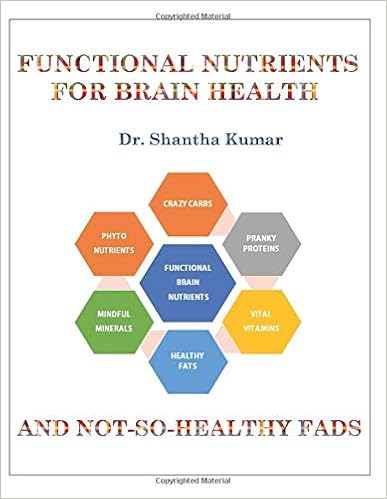 The evolution of mammals and humans is marked by a massive expansion of higher thinking abilities which has paralleled changes in associative regions of the brain and inter-neuronal connections.. This book aims to portray the role and influence of dietary factors in brain health and its intricate networks and has suggested menu options in diet planning for preserving healthy cognitive functions and preventing disease. With increasing life span, it has become a challenging issue to preserve the normal functions of the nervous system and prevent cognitive decline due to aging processes. The rising rates of diseases like obesity, diabetes, Alzheimer’s, autism, depression disorders that affect personality and brain health can be countered by dietary practices that establish better equilibrium and homeostasis in the body and central nervous system. Thus, optimal brain health involves nurturing and maintaining these capabilities and the structural and metabolic networks in the brain. Some of the relevant macronutrients (Caloric Energy, Carbohydrates, Proteins and Fats) and micronutrients (Vitamins, Minerals, Phytonutrients – Flavanoids, anti-oxidants, etc.) and their cellular and systemic functional roles in normal and abnormal health are discussed. Traditional practices in dietary control in cultures with a strong history of mental abilities have been used as the foundation for many of the recipes and suggested diet plans, while scientific advances in our understanding of the nervous system has been used as the rationale for some of the dietary modifications to achieve optimal cognitive abilities and preserve memory functions, especially in the aging process.

The Shudder of Realization
Tantra Bensko Author Interview
Glossolalia is a thrilling ride through the mind of a woman who is seemingly normal but her life slowly unfolds to reveal something bizarre. What was the inspiration that made you want to write this book?
I have a keen interest in mind control of individuals, and the way controlling each individual can effectively affect a large number of people. All my life I’ve studied in depth the methods that agencies such as the CIA has historically used, and they often have manipulated people’s interest in the occult. And that seems like a topic rich with dramatic fictional possibilities, especially for Psychological Suspense, in which gaslighting is such a common element.
I know I love that electric shudder I get when realize something is not what I thought it was, when I’m just starting to put the pieces together and it’s first making sense, grim as the truth may be. I wanted to give readers that entertainment as well.
Nancy, is like many women at first, but she suffers from narcolepsy and has an addiction to pills that she is trying to kick. How her character unfolds and develops is fascinating. What was your plan as you wrote Nancy’s character?
The only way she can explain her fugues at first is to believe she has narcolepsy, but when she discovers what she does during her periods of amnesia, she realizes her problem is something entirely different from that illness. Similarly, she thinks she’s addicted to the pills to keep hallucinations and delusions at bay, but once she manages to stop taking them, she realizes her visions have been actual memories.
My plan with her was to create an anti-hero who finds a way to redeem herself while staying true to the dubious skills she’s been taught all her life. And she gives readers a way to inhabit the sympathetic victim as well as to perhaps develop compassion for people who are compelled to commit violent acts. In a way, she stands for all of us, because everyone has fallen prey to disinformation at some point, and thus has been an unwilling promulgator of it. And all of us have some chance at heroically redeeming ourselves for that, though of course, I don’t promote violence in any way.
There are a lot of fantastic twists in this novel along with a variety of surprises that kept me turning pages. Did you plan the novel before you wrote or did the story develop organically?
I planned it out to make sure all the plot points, pinch points, act breaks and all were in proper order. However, as I wrote it, I got new ideas for twists that were great fun to conceive of. For example, Brandon the YouTube conspiracy journalist with gigantism wasn’t in the completed first draft. Just as much as I enjoy the shudder of realization, I love the feeling of coming up with new plot twists. It feels delightful.
Glossolalia is book one in the Agents of the Nevermind series. Where does book two, Remember to Recycle, take readers?
People who like Glossolalia will probably like Remember to Recycle because it falls within the same genre categories including Conspiracy Thriller and Political Thriller, and while book one focuses on how coups are created, book two focuses on how proxy wars are created. In both cases, the emphasis is on how intelligence agents deceive the public into going along with the terrible treatment of other countries for profit motive, while pretending it’s for humanitarian aid.
Glossolalia referenced our society’s history, particularly related to intelligence agencies, as a foundation for the series, as well as a pattern of coups that’s been recurring for a very long time; Remember to Recycle specifically addresses what’s happening right now. It goes into all the types of trafficking that go along with war, which is the secondary meaning of the title.
However, the first meaning of the title is more obvious, because a major character is Dave, a homeless man who survives by going through people’s recycling bins and selling the stuff, like all the other guys on the street. But he comes up with a brilliant plan. As in Glossolalia, there’s a darkly humorous aspect to it, and he provides a lot of that. He was really fun for me to write, especially as it’s first person present tense, while he describes his life moment by moment to the “character” he affectionately calls Mr. Interrogator. He’s got a hell of a personality. He likes to wear a wide variety of costumes that he keeps under the bridge, and fancies himself an actor of sorts. He idolizes the Rescuers, who are based on the White Helmets.
Author Links: GoodReads | Twitter | Facebook | Website
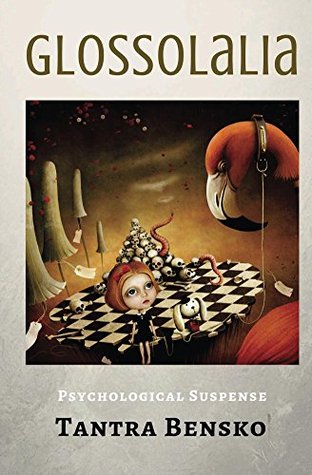
No one but her uncle would hire Nancy, considering her habit of snapping out of amnesiac fugues, wondering where she got her bruises and the scent of men’s cologne. When she sees a crime of poison in progress at the company, she chases the truck carrying away the chemical legally deemed too toxic to use or to dump. Her pursuit leads to a convoluted world of political intrigue, esoteric rituals and an arcane Elizabethan spy code, and assassinations she never imagined – though her imagination is what holds that world together.
This conspiracy novel introduces a young woman with an ambiguous past involving herself in a killer organization with one layer after another of her psyche. DARK, even possibly DISTURBING ROMANCE, is key to finding elusive authenticity.
The old cartoonish formula of good CIA VS bad guys no longer is fresh and relevant. Though through a fictionalized agency, the books in this series, like Barry Eisler’s spy thrillers, explore the shady side of the CIA secret psy-ops, covert experiments, illusions, coups, media theater, psychological warfare, and illicit methods of funding. The Agents of the Nevermind series dares to explore the edgiest controversies and the convoluted lives intelligence agents must endure as they create bizarre delusions for the world in order to hide the truth about their nation’s financial foundation.



 LITERARY TITAN