Blog Archives
I just look like this


In …I Just Look Like This, a book fitting for those seeking spiritual guidance, the author, A. Kirk Williams M.D., seeks to guide the reader towards finding peace in a world filled with lies and chaos. Williams provides social commentary in the form of articles, poems, and journal entries pertaining to a variety of topics in history, biology, and spirituality in no particular order.
Every chapter contains a new topic, allowing readers to piece together the greater story as they read. Most of the chapters are short, but ultimately leads to a provocative message pertaining to white males destroying the earth and inflicting misery on the rest of the world with their selfish, capitalistic, and destructive intent.
Williams attracts a large audience by relating to multiple cultures through his interesting genealogy and popular message of finding peace. Slowly, he reveals a controversial message to his initial pursuit of peace by encouraging people to be skeptical of ”those in power” and later equating that to white males. This turns into a biochemistry lesson on why white people are inferior to other races, using his professional background as a medical doctor as leverage to make his point.
The author uses some examples from history to boost his claim of white inferiority by presenting cases of war, genocide, and negligence committed by those of European descent. I felt that the historical cases were cherry-picked and ignored similar incidents throughout history perpetrated by other races on different continents.
This book has some great advice for living a happy life. Williams encourages his readers to seek a deeper sense of spirituality by pursuing mental, spiritual, emotional, and physical discipline. He details how to balance each of these four areas by seeking the innate truth of the world. This allows allows readers to find the truth that lies within them. Mostly, this is done by prayer and seeking the will of God, but I would have liked to have read a more defined description of this this search for truth.
Another inspiring concept addressed in …I Just Look Like This pertains to the benefit of close communities and seeking the wisdom of those who have experienced more in life. It’s the author’s view that wisdom comes with age and how he wished he had listened to his father’s advice on many things, saving him from his shortsighted nature.
While there are many life lessons and entertaining passages, I felt that this book blames many of the world’s woes on whites. Those uneducated in world history might be easily persuaded by Williams, but it’s always important to fact check authors with such bold claims of racial inferiority. This book has the potential to accomplish the opposite of the author’s stated intent, to promote peace, and instead, inspire hatred of others.
Pages: 158 | ISBN: 0964189453

The War Zone

Jolene Grace Author Interview
Going Dark follows Amelia as she tries to help journalists that have been kidnapped which has sparked an international incident. What was the inspiration for the setup to this thrilling novel?
The idea of ‘Going Dark’ started to form in my mind as I spent nights working on the foreign desk at CBS. Those nights, I was alone in the entire studio, watching incoming video feed from our military forces stationed in Iraq. In 2006-07, the war was in full swing and we received daily updates on the progress and struggle people were facing during the war. The war zone wasn’t too far off from our foreign correspondent team stationed in Iraq, reporting from there. As I was sitting at my desk, I envisioned Amelia Sinclair (a foreign liaison in Going Dark) how hard and challenging must be to be separated from your family when your job takes you away from them, especially if you have young children.
Amelia and Jets are dynamic characters that are enigmatic and empathetic. What were some themes you wanted to capture in their characters?
Amelia had to sacrifice her career when she became a mother. Having children was not something she had planned on doing, but when it happened, she made the decision to stay back and take a desk job.
However, her thirst for adventure never fully went away. So, when her boss, Harold Fost, approached her with a proposition to oversee a covert assignment, she simply couldn’t resist. But Murphy’s Law tipped the scale against her and her friends and co-workers get kidnapped. I wanted ordinary people, the readers, who juggle work and family life to be able to relate to her and to the choices she makes along the way on this journey.
Jets is a complicated guy. He’d seen things most of us have not, working as a spy for the CIA. To me, he was interesting because, he believed in the cause set forth by the CIA, but he still had conscious and when he sees the wrong person is being blamed for crimes that she didn’t commit; he has to put aside his oath to the CIA and go with his guts, even if that decision could cost him his career.
This is an exciting novel on par with Robert Ludlum or Tom Clancy novels. Did you start writing with this in mind of did this happen organically?
Tom Clancy was a master at setting up an engaging plot and building action in his novels. He is certainly an influencer in my writing. Another writer whom I admire is John Le Carre, unquestionably the undisputed father of spy thrillers. Both of these writers are exceptional.
What is the next book that you are working on and when will it be available?
I recently finished writing the second book in the Gabriel Jets series, called Political Whispers. Jets is a castaway in Afghanistan, having accepted a covert position, offered to him by Robert McKaine. Jets is in charge of a secretive drone program, most on Capitol Hill don’t know it even exists. The second book has more military overture and is action packed. Political Whispers is slated for release in early 2019.
Author Links: GoodReads | Twitter | Website
![Going Dark (Gabriel Jets Book 1) by [Grace, Jolene]](https://images-na.ssl-images-amazon.com/images/I/41-6vSsraWL.jpg) Gabriel Jets is the CIA’s top agent, a man with a reputation of getting the job done, no matter the price. On a rare visit back to the States, Jets is dispatched to collect a video depicting the kidnapping of four U.S. journalists working undercover in Damascus, Syria.
Gabriel Jets is the CIA’s top agent, a man with a reputation of getting the job done, no matter the price. On a rare visit back to the States, Jets is dispatched to collect a video depicting the kidnapping of four U.S. journalists working undercover in Damascus, Syria.
Meanwhile, the U.S. president and his chief of staff, Robert McKaine, are called to the Situation Room to receive a briefing. Damascus is rocked by a terrorist plot that killed twenty-five innocent people.
A link between the two events is quickly discovered, with evidence pointing to the involvement of another U.S. journalist, Amelia Sinclair, a prominent foreign correspondent, with direct ties to the missing.
While Jets hunts for the video, he crosses paths with Amelia. In a blink of an eye, his mission is compromised as he believes she is being set up to be the fall guy.
As the U.S. government closes in to arrest Sinclair, Jets alters his assignment to help clear her name and track down the powerful men behind the ploy to draw in the country into an international scandal.
If Jets fails, the country he swore to protect, will go dark.
Angel Virus
![Angel Virus: A Novella Trilogy by [Squire, Joshua]](https://images-na.ssl-images-amazon.com/images/I/51WI4GrmssL.jpg)

Think of the worst scenario you could possibly imagine. Got one? Chances are Joshua Squire can think of something worse. Angel Virus, Squire’s inaugural novel, paints a nightmarish scenario: all of the world’s children suddenly, inexplicably die. And the rest of world might not be too far behind. The story follows the lives of four people (Dutch: a Wisconsin metal worker, Jin: a small business owner in Beijing, Aletta: a European pediatrician, and Aysi: a teacher at a church in Africa) all of whom are recovering from past demons when the world starts falling apart. The novel wastes little time detailing the titular epidemic that kills the world’s children before zeroing in on the lives of these four protagonists. Squire, a poet by nature, flexes his linguistic muscles best in these personal scenes. At one point I found myself wishing that Squire would show the exposition instead of telling it. But when the narration focuses in on the individual suffering, the scenes cut deep enough to make the reader yearn for the safety of the omniscient narrator.
It’s in these dark, visceral images where Angel Virus shines the brightest. Subtle details such as place names and character backstories invite close reading. But at other times the reader races forward at full speed as characters flee through the jungle, get entombed in the city, or suddenly discover that allies can become one’s worst enemies. In addition to great images, Squire successfully creates realistic characters who inspire empathy within the reader. The dialogue comes off as believable while still maintaining a poetic quality.
Unfortunately, Squire’s excellent descriptions and well written characters also work against him. Angel Virus takes place over a wide variety of settings and includes many secondary characters. All of this helps create a believable disaster on a world-scale. But trying to tackle this much material in a novella length story sometimes becomes disorienting. In addition, while each of the four protagonists add compelling drama to the story, they all follow a similar path. Since the story is relatively short, none of the protagonists are allowed to fully develop.
Overall, Angel Virus is an exciting first novel. While the scope of its story and lack of versatility in the heroes’ narratives threatens to hamper the novel, the writing is strong enough to keep the reader interested. The novel’s conclusion left me wanting more, and that’s exactly what this trilogy plans to offer. But even if you stop at its last page, Angel Virus compels you to consider the link between psychology and spirituality, the nature of good and evil, and why you should cherish your loved ones long after you finish reading it.
Pages: 96 | ASIN: B01JZXY0JY
The Trauma of a War
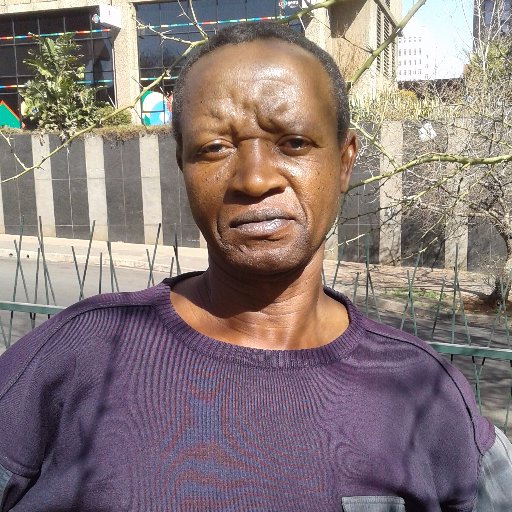
Jonathan Hatendi Author Interview
The Zimbabwean War of Independence is a vivid account of the country’s struggle for independence told through your personal experiences. Why was this an important book for you to write?
It, like most, if not all war situations has a lifelong impact on those affected and mine was an experience which I felt had to be told.
You used many of your own experiences when writing this book, but did you undertake any research to ensure you had a holistic view of events?
This book causes one to reflect on their own life journey. What do you hope readers take away from this book?
The main aim is for the reader to try and understand what it was like for the people affected. Just as I have read numerous accounts of the first and second world wars, I wanted the reader to be able to feel the trauma of a war situation which should be avoided by all and any means, where possible.
What is the next book that you are writing and when will it be available?
It is on political events, power struggles, and corruption on the newly independent countries of Zimbabwe and South Africa – the contrast and similarities.
Author Links: Amazon | Twitter
![The Zimbabwean War of Independence - My experience as a civilian by [Hatendi, Jonathan]](https://images-na.ssl-images-amazon.com/images/I/51ybl-9JC-L.jpg) A personal experience of the Zimbabwean war of independence as it happened and culminated in the country’s independence in 1980. The account is of events that took place almost four decades ago but the memory is still so vivid in my mind as if they had just occurred. I believe this is the case with any profound experiences that one goes through in one’s life’s journey.
A personal experience of the Zimbabwean war of independence as it happened and culminated in the country’s independence in 1980. The account is of events that took place almost four decades ago but the memory is still so vivid in my mind as if they had just occurred. I believe this is the case with any profound experiences that one goes through in one’s life’s journey.
I had always felt I had to tell the story some day especially soon after our abduction from school, but have only managed now to sit down and give the compelling story of the war as it was fought and escalated.
Extinction 6
![Extinction 6 by [Kouros-Mehr, Hosein]](https://images-na.ssl-images-amazon.com/images/I/41P9WZHs3ML.jpg)
Extinction 6 by Hosein Kouros-Mehr is a fascinating novel that finds itself straddling a variety of themes, writing styles, and motifs. In this novel, one can witness the conjunction of several major literary genres. From bleak dystopian imagery and post-apocalyptic ruin to deeply intense mystery and intrigue, Extinction 6 provides enough twists and turns to keep any reader engaged. Taking place in the year 2066, the reader is introduced to a world mostly underwater. Following a sharp rise in global temperatures by an average of 8 degrees Celsius, sea levels drastically increased and major settlements like San Francisco were submerged. In conjunction, animals and plants have completely vanished. Beyond this, the world appears to be plagued by war and corporate espionage. Battles for oil fields and small scraps of territory appear to occur daily, while depressing news bulletins ring out, highlighting decreases in rations or celebrating the smallest of military victories. In this dystopian future, greenhouse gases continue to be pumped at alarming rates, and it becomes clear to some that the world is facing its sixth, and potentially last, extinction crises.
Hosein Kouros-Mehr expertly uses this setting to deliver a story that is captivating and vividly written. There is a profound amount of world building conducted in this novel and the story’s framing gives readers a holistic experience at what life in this dreary world would look like. Through the use of multiple perspectives and point of views, Hosein Kouros-Mehr provides readers with an inside and personal look at the various dimensions that take place in this world. In some chapters, readers will become intimate with a forlorn lover embroiled in major geopolitical developments. Other sections masterfully showcase the experiences of an aggressive and cunning CEO. These different perspectives are woven in a way that provides keen connections and startling insights.
The writing itself is suspenseful and tense. The diction wastes no time in putting the reader through long segments of empty description and word padding. Every sentence is deliberate and has a definite sense of immediacy. Every word counts in a world that is slowly ticking towards oblivion. This is aided by Hosein Kouros-Mehr’s wonderful sense of pacing. While the writing is forward facing, it still gives readers the time to engross themselves in the world. Details about the major corporations and the nations that inhabit this world are peppered in where needed and helps to provide depth to the world. Many of these elements come into play throughout the course of the novel, and the pace in which these details become relevant greatly benefits Kouros-Mehr’s deliberate writing style. If there is any issue in the way in which Hosein Kouros-Mehr presents his work, it is the fact that the large cast of characters can lead to some confusion. This is somewhat alleviated by the clear characterization and literary role each character plays, and as a whole, this critique does not detract from the novel.
Extinction 6 by Hosein Kouros-Mehr is an incredibly tense story about what our future could easily look like.
Pages: 248 | ASIN: B07HB5Q24P
The Zimbabwean War of Independence

Jonathan Hatendi weaves a tale of abduction, terror, and young lives forever changed. The most frightening aspect of Hatendi’s writing lies buried deep in the fact that his words are true and lay before the reader the events of his own life prior to Zimbabwe’s successful acquisition of independence in 1980. As a civilian surrounded by guerillas and day-to-day routines fraught with danger and the ever-present element of the fear of the unknown, Hatendi survived to tell a tale like no other. The fact that Hatendi is here today to share his story is a testament to his strength and the determination of the people of his country.
Hatendi’s account of his life during secondary school and the torment he endured is titled The Zimbabwean War of Independence. Hatendi jumps right into the striking events and leaves the reader no time to breathe. While trying to process the fear and overwhelming barrage of emotions he and the other young people may have felt on the night of their abduction, I was left wondering how he and his classmates were able to psychologically survive in the months and years that followed. The author’s style of writing and plainspoken manner translates well into text and helps readers visualize the blatant abuse and the true horrors of the times.
The abduction itself is, by far, not the only striking aspect of Hatendi’s story. He relates several events prior to his abduction and following his return. Hatendi writes openly of the way children were forced to witness death and destruction and describes both the realization for the need of counseling and psychological help and the lack thereof. He shares the atrocities page by page as they relate to the young men and women forced to endure lives of fear always questioning their next move.
Hatendi provides little in the way of dialogue as his book is written in first person and reads similarly to a journal account citing events and detailing remembrances of his journey to adulthood. The manner in which Hatendi records his memories is unique and provides readers, as much as is possible, with a relatable account of his experiences. I was, at times, shocked at how easily he seemed to be able to express some of the most horrifying scenes in such basic terms.
Hatendi has given the world a unique and private account of a life lived under duress and a life survived despite insurmountable obstacles. To have made it through a war for independence as a child and be willing to share the story of that fight with the world is admirable and, quite frankly, nothing short of amazing. Hatendi is to be commended for the unique eloquence of his writing and his willingness to share with the world his life as one of Zimbabwe’s survivors.
Pages: 110 | ASIN: B07F1XHN5J
The Twisted Crown
![The Twisted Crown by [Richmond Bunkley, Anita]](https://images-na.ssl-images-amazon.com/images/I/510vwG6og9L._SY346_.jpg)
The Twisted Crown, the newest historical fiction novel by Anita Bunkley is a fascinating look into the post-Civil War South. Focused on the story of a free black woman from the North, Eva Phillips takes advantage of the abolition of slavery in the South to embark on a treacherous journey to South Carolina to try to find the mother who gave her a chance at freedom as a child. Along her way, readers meet a captivating cast of characters ranging from cunning professional gamblers to complex carpetbaggers to innocents turned corrupt by hardship. Eva has to navigate a part of the country decimated by the bitterest of fighting as it struggles to regain its footing. And like Eva, readers will never know if the character with the checkered past they just met will be someone who can be trusted or or who will surprise them with an unexpected betrayal.
Along the way she meets up with Chicago lawyer and profiteer Trent Hartwell who, against the recommendations of his new Charleston acquaintances, offers to help Eva in her quest. Although he came to the South to benefit from the financial opportunities blossoming in the wake of so many people’s misfortunes, he can’t quite understand the unwritten rules governing the South about the proper roles of white people and black people and why there should be any difference.
This book also sheds light on the important and dangerous work that took place during this time by black activists to promote equal participation in government for all races. This work made many who benefited from the pre-war social structure very angry and prone to violence, so the lobbying had to be done secretively.
While the story is solid and flows well, I thought that the characters and dialogue lacked some depth. This book kept me very engaged, however. The quick pace, many edge-of-your-seat situations, and several sultry moments kept me reading along without any lulls.
I also came away with a much clearer understanding of what life in the South was like after the Civil War for both whites and blacks. I didn’t know the depth of poverty freed slaves were faced with and this book provided a very interesting example of the creative and sometimes unfortunate ways that people used to survive and start a new life. Anita Bunkley is famous for writing stories that show what a famous period in history was like from the perspective of black women, and I really appreciated having the opportunity to experience this after so many other Reconstruction books (Gone With the Wind, That Bright Land, ect.) only focus on the white experience. This is important because, clearly, this was a period where the African-American experience is integral to understanding the situation appropriately.
I highly recommend joining Eva on her exciting voyage to the land of her birth and learning more about the United State’s most interesting periods of history in The Twisted Crown by Anita Bunkley.
Pages: 336 | ASIN: B07G7GPX2F
Their Ultimate Degree

D. Hart St. Martin Author Interview
Pushing Madness brings your Lisen of Solsta series to a close. The series took many years to write. Was this an emotional book for you to write?
I was so focused on finishing the damn thing that I didn’t have a chance to get emotional. Writing it in concert with the previous book (Breaking Worlds) meant I wrote 200K words before I could call it done in first draft. So when I came back to Pushing Madness after publishing Breaking Worlds, it felt both new and old to me. On the other hand, there’s this which I wrote in the “About the Author” section for Blooded, book 3 in the series. “The other thing I’d accomplished [on completing the first trilogy], though I hadn’t set it as a goal, was to show a hero saying ‘let’s not fight; let’s find another way to work it out,’ thus ending a war before it got beyond its first day.” This time out with book 6, Lisen couldn’t end the war the easy way. The easy way had led to dire consequences, and those consequences played out to their ultimate degree in Pushing Madness. I saw only one way to end it–a sad and unfortunate way to end it–so I did it. But unlike the feelings ending Blooded brought out, I felt relief, relief that I could get up and walk away. It was long past time, and I was grateful.
Who were some important people in your life that helped you write this book and series?
Well, there was my canary in the mine, Daniella, who never failed to ask the precisely right, simple question when I would orally outline what was coming next to her. She was the only person I shared the raw thought process with, and she, in turn, gave me valuable feedback–questions like “how does Nalin feel about that?” when I was contemplating a story I never ended up telling. Simple question, story-devastating answer. I also turned to friends for encouragement when I fell into the abyss of I’ll-never-get-this-right. One friend constantly points out, “You’ll figure out,” and that has become a bit of a joke between us. Because it’s true; I always do figure it out. Also the writers in the workshop I attend weekly have done nothing but support me and question every possible misstep. I highly recommend a critique group to anyone who wants to write. You can never fool your peers, and if they’re gentle the way the writers in my group are, they are a true blessing. A friend I met on line and who lives on another continent offers her best to any of my endeavors. And finally my sister, who writes better than I do and offers critique and love for free.
We finally get to see what happens to Rinli and Lisen. Was this planned all along or did things change as you were writing the series?
Lisen’s journey always stretched out to at least the moment Rinli comes of age, but it was a very different story with a very different ending. As I’ve said before, Breaking Worlds and Pushing Madness were written together in response to the question “what does a world broken by Mantar’s Child look like?” 200K words later, I had the answer. But that answer did not come easily. There were many starts and stops along the way. In particular, Rinli’s motivation of the people of Thristas was tricky and required several retakes before it flew properly. I usually write with a beginning and an end in mind, and I thought I knew the ending when I started writing the first draft of the two books, but it changed several times. Lin-Manual Miranda’s words from Hamilton come to mind: “Who lives, Who dies, Who tells your story?” I may have been telling the story, but for a long time I didn’t know who lived and who died.
Will this be the end of the Lisen of Solsta world? Are you moving on to other works or do you think you will revisit this world again?
It’s the end. For now. I may go back to it one day if I live long enough. In the meantime, I’ve published a paranormal romance called Soul Doubt: A Rock-and-Roll Faust, set in the 60s, which pits a young musician and his lady against evil incarnate. And I’m working on a new YA fantasy series, working title Into the Forsaken Forest, with a young female hero who has issues with her mother. I’m enjoying building a brand new world although I’d forgotten how hard it is. Like childbirth, you forget the pain once the child is born, but the labor pains of totally new characters, totally new world and totally new plot and subplots can be excruciating. (I’m kidding/not kidding.)
Author Links: GoodReads | Twitter | Facebook
![Pushing Madness (Lisen of Solsta Book 6) by [St. Martin, D. Hart]](https://images-na.ssl-images-amazon.com/images/I/51M1XUavpvL.jpg) Return for one last visit to Garla and Thristas where the Thristans follow an untried leader of sixteen into war. Where a spouse and a daughter must each withhold their plans from the man whose thoughts could betray them. Where a girl of twelve may rise up to meet the challenge of trying to save her mother. Where magic sometimes exacts a price that could prove to be deadly.
Return for one last visit to Garla and Thristas where the Thristans follow an untried leader of sixteen into war. Where a spouse and a daughter must each withhold their plans from the man whose thoughts could betray them. Where a girl of twelve may rise up to meet the challenge of trying to save her mother. Where magic sometimes exacts a price that could prove to be deadly.
Pushing Madness brings Lisen of Solsta’s saga to a close with battles waged in both Garla and Thristas using weapons of war and the defenses of the mind. Lisen’s daughter Rinli has vowed to “break the world,” and the havoc that ensues as she endeavors to fulfill that promise could obliterate the peace Lisen instituted sixteen years earlier with the Treaty of the One-Day War. Only one opportunity remains to avoid destruction, and it all rests in the hands of a twelve-year-out girl.



 LITERARY TITAN