Blog Archives
Kiki Finds Her Way


Peni Clark’s Kiki Finds Her Way, illustrated by Penny Weber, is a delightful addition to the Courage to Be Me series. It carries its message with grace and charm: real courage often begins when we learn to embrace the very things that make us different. From the opening page, Weber’s adorable illustrations draw readers into Kiki’s underwater world. I found myself just as enchanted as young children are sure to be.
The story follows Kiki, an octopus beginning her first day at Sea Floor School. Almost immediately, she becomes the focus of curious stares and unkind teasing, largely because she has eight arms while her classmates do not. Her natural octopus abilities, such as camouflaging and squirting ink, only make her feel more embarrassed. Instead of feeling special, Kiki wishes she could disappear into the crowd. Many children will recognize that tender, familiar ache: the longing to belong.
What makes this story especially memorable is the way it transforms Kiki’s differences into strengths. When her classmates face danger, the very traits that once made her feel ashamed become the tools she needs to help them. Her camouflage, her ink, and her many arms allow her to act with courage when it matters most. Kiki’s journey from embarrassment to self-acceptance unfolds naturally, without feeling rushed or overly instructive. The story delivers its lesson gently, allowing the heart of the narrative to speak for itself.
As part of the Courage to Be Me series, Kiki Finds Her Way fits beautifully within a trilogy devoted to helping children build confidence in who they are. Its message is simple, powerful, and deeply worthwhile: our differences are not flaws to hide, but gifts waiting to be recognized. That is a lesson every child who has ever felt out of place deserves to hear.
Penny Weber’s illustrations deserve special praise. They are warm, vibrant, and full of personality, bringing Sea Floor School to life with color and movement. Even the wiggliest young readers will find plenty to hold their attention. Kiki herself is wonderfully expressive, and her emotional journey can be seen clearly in every shift of her face and posture.
A charming bonus appears at the end of the book: a page of fascinating octopus facts for curious minds, along with a fun sing-along song that extends the reading experience beyond the final page.
Kiki Finds Her Way is a heartwarming read brimming with personality, compassion, and quiet wisdom. I would happily recommend it to families, teachers, and anyone seeking a gentle, engaging way to talk with children about embracing their differences. It is a wonderful reminder, for kids and adults alike, that what makes us different is often exactly what makes us shine.
Pages: 40 | ASIN : B0H535SB51

Expanding Our Boundaries

How to Sit With Someone is an intimate guide to offering peer support and explores active listening, stigma, self-compassion, boundaries, mutual power, and recovery. Why was this an important book for you to write?
Peer support changed my life, and I believe it has the power to change other people’s lives too.
The book places a strong emphasis on boundaries alongside compassion. Why do you believe healthy boundaries are essential for both the supporter and the person receiving support?
We share more in relationships once trust is developed. It’s important in life to maintain a balance between expanding our boundaries as we engage in relationships and keeping ourselves safe by sharing at the appropriate times and with the right people.
You explore difficult topics like addiction, psychosis, and stigma with remarkable nuance. How did you balance honesty about these experiences while still offering hope?
I think hope matters because I believe people can respond to what they’re going through, even when they can’t control everything about their situation. That doesn’t mean change is simple or that everyone has the same choices available to them. But I do believe people can grow, recover, and find new ways of living. This optimism is a part of peer support, that we aren’t irredeemable.
Addiction, psychosis, and stigma are real, and they can be incredibly difficult. I don’t think it helps to cover that over with blind positivity. Hope is only meaningful when it stays connected to what people are actually facing. There are some big obstacles with these sorts of things, but determining what is feasible to change and what isn’t is up to the person living it.
What is one thing you hope readers take away from How to Sit With Someone?
I hope readers take away that mental health struggles are often made worse by disconnection from other people, from community, and sometimes from ourselves. Some of the most meaningful healing happens in relationship, when someone feels seen, heard, and less alone. This book is about learning how to come alongside people with more care, humility, and presence. You don’t have to say the right thing, or fix the person. Just be present with them human to human.
Author Links: GoodReads | Website | Amazon
How to Sit With Someone explores the skills and ideas that make conversations safer and more useful: listening without taking over, staying curious, setting boundaries, reducing shame, and knowing when it is time to involve more help.
This thoughtful and accessible book offers a steadier, more human way to support someone through mental health challenges, while also helping us reflect on our own healing and growth.
How to Sit With Someone

How to Sit With Someone, by John F. Gerrard, is a thoughtful, intimate guide to peer support, rooted in lived experience rather than clinical distance. Gerrard writes about what it means to listen without taking over, to support without rescuing, and to stay present with another person’s pain while still respecting their autonomy. The book moves through ideas like active listening, stigma, self-compassion, boundaries, mutual power, recovery, and the dignity of risk, always returning to the same quiet center: people heal best when they’re met with respect, curiosity, and real human presence. From the opening memory of sitting in a parked car with coffee and a friend, the book frames peer support not as a technique, but as something many of us have already touched in our most honest relationships.
Gerrard doesn’t write from above the subject, and that makes a tremendous difference. He’s willing to admit where he’s overshared, interrupted, misread a moment, or leaned too hard toward fixing. That honesty gives the book its moral weight. The section on communication, where he recalls someone asking him, “Can you just let me finish?” stayed with me because it captures something so painfully familiar: the way our eagerness to help can sometimes crowd out the very person we’re trying to hear. I also found the discussion of sympathy, empathy, and compassion especially sharp. Gerrard understands how pity can shrink a person, even when it’s well-intended, and he argues for a warmer, steadier kind of presence that doesn’t turn suffering into spectacle.
The writing itself is plainspoken but often quietly beautiful. Gerrard has a gift for taking abstract ideas and making them feel lived-in. Dialogue becomes a racquet sport where the goal is to keep the ball in play. Recovery becomes a direction rather than a badge. Black-and-white thinking is treated with unusual generosity, not as a failure of intelligence, but as a kind of scaffolding the mind may need when life feels chaotic. I loved that nuance. The book doesn’t flatten people into inspirational lessons, and it doesn’t pretend that compassion is simple. Its strongest passages are the ones where Gerrard lets contradiction breathe, especially when he writes about psychosis, stigma, the “tortured artist” label, or the night he resisted using again by shrinking the moment down to small, almost invisible choices. There’s real emotional intelligence in the way he honors both agency and limitation.
How to Sit With Someone offers less of a manual and more of a posture toward life: patient, curious, boundaried, and deeply humane. Its concluding reflections on lifelong learning bring the book full circle, suggesting that connection softens isolation, and that small acts of presence can change the direction of a life. I’d recommend this book to peer supporters, mental health advocates, caregivers, friends of people who are struggling, and anyone who wants to become less frantic about helping and more trustworthy in their care. It’s a sincere, grounded, and quietly moving book for readers who believe that sitting beside someone, when done with humility and love, can be its own profound form of support.
Pages: 129 | ISBN : 978-1778050152
The Shoemaker’s Splendid Lamp
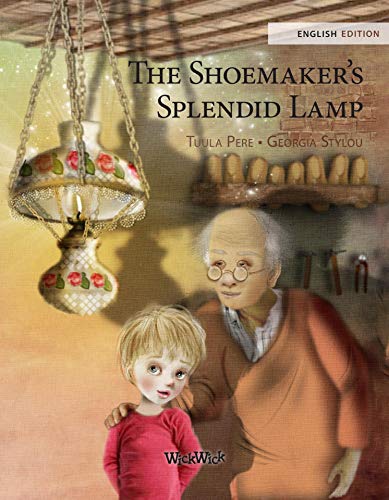
In The Shoemaker’s Splendid Lamp by Tuula Pere and Georgia Stylou, we follow a sickly young boy named Aron whose tenacity and determination keep his spirits high when all hope seems lost. The Shoemaker, Aron’s father, is deeply devastated by the fact that his son may not make it through the freezing winter. Until Aron spots, an oil lamp that he knows will help aid in his recovery so that he and his father can go fishing next summer, but also allow his father to work more hours into the night to sell more shoes to help feed his family.
At the story’s beginning, we become overwhelmingly sympathetic to the woes of the Shoemaker and his family. Knowing the burdens that come with having a large family grounds us as readers to connect to the characters. The message of never losing hope is self-evident whenever Aron speaks. He may have been deathly ill, with significantly low odds of surviving, but he kept positive and would speak of the future, which is a difficult task to accomplish, yet he does it with grace and maturity. It shows how resilient children are and gives power to them for what could only be seen as a vulnerable, sick child. This story also speaks to the community, where the rich man comes to help by giving lamp oil to the family, ultimately allowing Aron’s recovery. Showing how small acts of kindness can truly change lives and proving that sticking together is all for the greater good.
The Shoemaker’s Splendid Lamp is an inspirational children’s book that shows how positive thoughts and kindness can impact the world around you. I would highly recommend this story to young readers as it is skillfully descriptive in writing and keeps readers enraptured throughout the story.
Pages: | ASIN : B07HYX3385
Inspired by my Love of Art and Music

Mallory O’Connor Author Interview
American River: Tributaries follows three immigrant families struggling to pursue their dreams during the turbulent 1960’s. What served as your inspiration while writing this book?
My love of Northern California, the place where I grew up, and the wonderful history of the area. I was also inspired by my love of art and music and my passion for social justice issues. Immigration and ethnic diversity are the cornerstones of the story.
This book has so many fascinating characters that are well developed. What were some themes you wanted to capture in your characters?
Basically, the story focuses on the creative search for meaning, knowledge, compassion and understanding in a tumultuous world filled with prejudice, obstacles, jealousy, and betrayal. As my characters encounter these obstacles, they discover their own strengths and weaknesses and grow beyond their self-centered ambitions.
I thoroughly enjoyed the historical backdrop to the story and how well researched it was. What historical milestones were important for you to highlight in this book?
The Gold Rush had a tremendous impact on the population and culture of California. Before the Gold Rush, the population consisted mainly of Native Californians and Californios (settlers and landowners of mixed Spanish, Native Californian, and African descent). But gold fever brought people to California from all over the country and the world. The Anglo Americans (of English, Irish, or Scots descent), other Europeans (including Italians, Russians, Greeks and East Europeans), Chinese, Japanese, African Americans, and many more who came and stayed. This changed the makeup of the state’s population making it one of the most ethnically diverse in the country. So, this cultural diversity sets the scene for later entanglements.
Most of the story takes place in the 1960s, that decade that Time Magazine recently termed “The decade that changed a generation.” So, I take the reader down memory lane as my characters encounter the major issues of the time: immigration, racial prejudice, migrant workers, gay rights, women’s rights and the Vietnam War.
This is book one in the American River Trilogy. What can readers expect in book two, American River: Currents?
In Book Two, American River: Currents, a cavalcade of disasters—both personal and public—threatens to overwhelm the scattered members of the McPhalan, Ashida, and Morales clans. Alliances fray, relationships dissolve, divisive secrets are revealed, and promises are broken as the members of three California families struggle to salvage their shattered dreams. The story follows the character’s journeys to places as distant as Cleveland, Ohio, Venice, Italy, and Kyoto, Japan. From the concert halls of Europe to the artist’s lofts of Manhattan, American River: Currents is filled with passionate and resolute characters who refuse to let go of their unique visions of success—even as life’s tumultuous currents threaten to sweep them all away.
Author Links: GoodReads | Facebook | Website
![American River: Tributaries: Book One of the American River Trilogy by [OâConnor, Mallory M.]](https://i0.wp.com/images-na.ssl-images-amazon.com/images/I/51o27VrET0L.jpg?resize=276%2C427&ssl=1) In the mid-1800s, three immigrant familiesIrish, Japanese, and Mexicansettle along the American River in Northern California. A century later, only one family remains.
In the mid-1800s, three immigrant familiesIrish, Japanese, and Mexicansettle along the American River in Northern California. A century later, only one family remains.
Owen McPhalans Mockingbird Valley Ranch is still a thriving family business in 1959. But when his wife, Marian, leaves Mockingbird to follow her dream of becoming a successful artist, she ignites a firestorm that impacts the descendants of all three families. As artists, musicians, writers, and politicians inherit their immigrant parents hopes, they are torn apart by ambition, prejudice, and deception while struggling through the turbulent 1960s. From the concert halls of Europe to Kyotos ancient avenues, and Manhattans artists lofts to San Franciscos North Beach, they each learn the price they must pay in order to realize their dreams. But just as the river is drawn to the sea, they eventually find themselves pulled back to the place that forged the original link between their destiniesa place called Mockingbird.
American River: Tributaries follows three California families as the descendants of Irish, Japanese, and Mexican immigrants embark on unique journeys to pursue their dreams amid an unsettled 1960s world.

Walking Over Eggshells: Surviving Mental Abuse

Walking Over Eggshells: Surviving Mental Abuse by Lucinda Clarke is an autobiography where she has changed all the names to protect the innocent and guilty. The novel is about Lucinda’s life and how she survived growing up and living with mental abuse. Lucinda’s mom had narcissistic personality disorder, and this impacted her entire life. She uses this novel to show that despite growing up with this abuse she still lived a life full of adventure, had a family and eventually had a successful career. You will laugh at some of the stories, cry at others, and be outright shocked by many and wonder how this girl survived to write this. Through it all Lucinda was able to grow and keep up with the times, she was born in the 1950’s and has had to adapt with a drastically changing society while continuing to endure the mental abuse of her mother at every turn even into her adult years.
The beginning chapters of the book tell of how Lucinda’s parents met and the eventual death of her father when she was only two. From there we are introduced to the never-ending criticism, punishments, and agony that Lucinda as a child endured. It is heartbreaking reading her words begging for a cuddle or a word of love and compassion from the women that called herself her mother. As a teen, the typical back and forth arguments continued, the younger generation is ungrateful, they need to do their part, so selfish, these are common themes even today we hear about the millennials. With Lucinda though, it is deeper, her mother really did expect her to do everything for her, and even when she did it was never good enough. The emotional struggle and need for love and acceptance is one that many readers can relate to, those that live with constant mental abuse will relate to Lucinda and see how she coped with the abuse while understanding why she continues to have a relationship with her mother.
Once Lucinda meets and marries Jeremy her life adventures take off. They never stay in one place long, always moving from one job to the next, involving everything from traveling encyclopedia sales to sketchy engineering jobs in South Africa. In a way Lucinda traded one form of abuse for another, she loves Jeremy but he takes advantage of her and plays on her need to be loved. This is the part of the story where you read and think ‘is this real?’ how can one person put up with so much? That, I think, is the real story behind this book. You can survive though mental abuse even when that abuse spans the majority of your life.
Throughout the book, Lucinda finds a way to make the best of her situation. She is willing to work be it animal breeding, filling, cleaning hotel rooms or writing. She never gave up no matter where she lived or what was going on with her and Jeremy, or her children, or her mother, she pushed forward and didn’t just survive the abuse, she made something of her life that she is proud of and even enjoyed at times. It is emotional, and at times hard to read; but Lucinda will make you believe anything is possible to overcome with the right mindset.
Pages: 239 | ASIN: B00E8HSNDW
The Grumpface

One of the joys of childhood is sitting with someone and reading a favorite story over and over again. The kind of story that sticks with you, and works it’s way into your heart. The Grumpface is that kind of story. It is about a grumpy old man that is cursed and lives in the forest of Ho. He captures unsuspecting travelers that get lost in the forest and they must complete a challenge to earn their freedom. If they cannot complete any of the three challenges they are trapped in the forest forever. In this story an inventor named Daffy Dan is looking for a rose to win the love of a girl named Bella. Bella sells flowers in the village but longs for a rose that she cannot grow. Dan thinks that if he can bring Bella a rose, he will have the courage to finally speak to her and win her heart. As he searches the forest of Ho, he gets caught by Grumpface and must find a way to escape or he will never have the chance to see Bella and tell her how he feels.
The first thing that grabbed me about this book, was the amazing illustrations. Grumpface at his worst is still funny enough to not frighten my four-year-old daughter. She fell in love with this book the first time she saw me reading it and saw the bright pink bird in the first challenge. The images throughout are all done with detail and colors that draw you into the story more. They complement the text in an artistic way as well as helping convey the emotions. The rhythm of the rhyming makes the story entertaining and flow smoothly. It is perfect for young readers, but not too silly that it will make parents want to hide the book after a week. One of the great morals of the story is to find the humor in life even when things don’t go your way. Daffy Dan is clumsy and riddled with bad luck it seems, it makes him relatable to young readers that are often clumsy themselves. Dan’s creative inventions all sound like great ideas and spark the imagination of readers as well. Grumpface is like the teacher or parent that just stares in disbelief at the crazy things Dan does. Together the pair make a memorable story that will leave you laughing.
B.C.R. Fegan and D. Frongia have created a beautiful and enchanting tale with The Grumpface. They manage to convey the fear and concern of Dan throughout the story, the disappointment he feels as things don’t go his way, and the joy he feels as he thinks he finally got it. The story touches the hearts of adults and keeps children entertained. It the teaches morals of persistence, compassion, and friendship. This is a book you will want to keep on hand to read for years to come.
Pages: 34 | ASIN: B06XFFK7VZ
Challenges to Overcome

Anna Musewald Author Interview
A Small Bronze Gift Called Mirror follows Lydia who is a sixteen-year-old girl living at a boarding school when the headmaster of the school forces Lydia to compete in a mirror contest. What was the inspiration for this very imaginative story?
A quote from Plato’s Apology of Sokrates served as my inspiration for my story:
“something divine and spiritual comes to me, (…) I have had this from my childhood; it is a sort of voice that comes to me, and when it comes it always holds me back from what I am thinking of doing, but never urges me forward.” – Plato’s Apology of Sokrates- 31d. What if we could not only hear this divine and spiritual voice, but also give it a face? Would we be satisfied with the image? Would it be what we imagined it to be or would it be what others expect it to be?
Lydia is a strong-willed, independent teen who takes matters into her own hands. What were the morals you were trying to capture while creating your characters?
Like most characters of the story, Lydia has many challenges to overcome and a difficult task to carry. She faces a lot of issues that people today struggle with. That require many morals and values like self-respect, compassion, altruism and justice. Lydia is a strong-willed young girl, who changes and develops these values as she grows up.
The story has a wonderfully unique take on magic mirrors that’s different from the fairy tale version. How did this idea come to you and how did you develop it into a story?
From the beginning I wanted somebody for Lydia to talk to, because it’s not easy for a child to be left grow up alone. This resulted in the creation of Phoebus, who could prove to be a true friend or an enemy. I tried to show how difficult it is for us today to protect ourselves from bad influences. That’s why the reflections in the mirrors are often shaped by how we perceive ourselves through the manipulation of the others.
What is the next book that you are writing and when will it be available?
Currently I’m writing another mystery novel about two very different people, which have nothing in common until they bump on each other. It will be available as soon as the English translation is finished.
Author Links: GoodReads | Facebook
![A small bronze gift called "Mirror": A Mystery Novel by [Musewald, Anna]](https://i0.wp.com/images-na.ssl-images-amazon.com/images/I/51lytIp3rrL.jpg?w=604&ssl=1) “A small bronze gift called “Mirror” follows the story of Lydia, who is forced to go on the run at the age of 6 when her mother is murdered. Protected by her grandmother, Lydia’s life is shrouded in mystery, compounded by the small bronze gift she was given and which she calls ‘mirror’.
“A small bronze gift called “Mirror” follows the story of Lydia, who is forced to go on the run at the age of 6 when her mother is murdered. Protected by her grandmother, Lydia’s life is shrouded in mystery, compounded by the small bronze gift she was given and which she calls ‘mirror’.
At the age of 12, Lydia is left in the care of Mrs. M, and is given a place at a school filled with unusual characters. When she arrives there Lydia discovers that all the children have the same ‘mirror’ as she does. But it’s when she starts to learn how to use it that the real story unfolds and she must undertake a remarkable journey.”


