Blog Archives
Gray Girl

Susan I. Spieth Author Interview
Witch Heart follows Jan as she returns to West Point under a cloud of suspicion when several people are killed in unlucky accidents. What was the inspiration for this 3rd book in the Gray Girl Series?
The Gray Girl series (Gray Girl, Area Bird and Witch Heart) is mostly inspired by my experiences as a cadet at West Point from 1981-1985. Jan Wishart’s adventures are embellished, of course, but many of the events are authentic or realistic to what we experienced at that time. Being labeled a “witch,” for instance, certainly happened to some women then. Recently, we have seen examples of derogatory “labeling” used on outspoken and/or ambitious women.
The novel starts out at Army Airborne School in Fort Benning, GA. What experience do you have with the military. Anyone in your family serve?
Well, as stated above, I attended West Point in the early 1980’s. After that, I served five years as a missile maintenance officer in the Army. As part of our training, I attended Airborne School during the summer before cow (junior) year, which follows the storyline in Witch Heart. I wrote most of the Airborne School chapters based on memory. However, I cheated a little and looked at Youtube videos. I also consulted a few friends who went through Airborne training. One of my beta readers was stationed with the 82nd Airborne for a few years.
The book tackles the social issue of women serving in the military. How do you see women in the military and what is a common misconception you’ve come across?
Women have only added value to the military, as they have in all areas where they have been allowed to compete. One common misconception that seems prevalent is that standards had to be lowered for women to enter the military academies. What is surprising, however, is that ALL standards have gone up since women have been admitted. There’s probably a social-gender dynamic that might explain this reality, but physical and academic standards began to rise considerably with the admission of women cadets.
Jan is a well developed character. What were some obstacles that you felt were important for the characters development?
I wanted Jan to be a good person, but flawed. In other words, I wanted her to be authentic. I think hearing her internal dialogue (which is more prevalent in the first two books) is both an obstacle and an opportunity to bring a character to life. The reader sees her inner self, knowing her mixed emotions and the biases that she carries with her. You don’t really hear the inner voices of the other characters, but hopefully, using dialogue and actions, you get a feeling of the well-developed relationships and personalities.
Where does the story go in the next book and where do you see it going in the future?
Jan has to finish West Point. So, the final book in the Gray Girl series will be about her firstie (senior) year. She will encounter another major problem at West Point which can only be solved with the help of her friends and collaborators. This one, if I can pull it off, will involve international espionage—or something like that. I hate to say too much until it’s written because often times the book takes on a life of its own—and I never really know what’s going to happen until it does. It’s called writing.
Author Links: GoodReads | Facebook | Website
![Witch Heart: Leadership always requires sacrifice (Gray Girl Book 3) by [Spieth, Susan I., Spieth, Susan]](https://images-na.ssl-images-amazon.com/images/I/41DOgIczvvL.jpg) “Jan Wishart starts cow (junior) year at West Point in Airborne School. Terrified of heights, she narrowly escapes an accident that later turns deadly for another jumper. With a third death in as many years associated with her, Jan returns to West Point under a cloud of suspicion. Ominous signs left for her to find cause Jan to lose a precious and necessary requirement for survival at West Point: sleep. With her mental state in question, a masked intruder makes nocturnal visits to her room. Or is she imagining that? Events escalate to the point of no return for Jan and her two best friends. When they swear an oath of loyalty to each other, they have no idea how much it will cost to fulfill that vow. Leadership always requires sacrifice. So does loyalty. And sometimes, one virtue must yield to the other.”
“Jan Wishart starts cow (junior) year at West Point in Airborne School. Terrified of heights, she narrowly escapes an accident that later turns deadly for another jumper. With a third death in as many years associated with her, Jan returns to West Point under a cloud of suspicion. Ominous signs left for her to find cause Jan to lose a precious and necessary requirement for survival at West Point: sleep. With her mental state in question, a masked intruder makes nocturnal visits to her room. Or is she imagining that? Events escalate to the point of no return for Jan and her two best friends. When they swear an oath of loyalty to each other, they have no idea how much it will cost to fulfill that vow. Leadership always requires sacrifice. So does loyalty. And sometimes, one virtue must yield to the other.”

His Quest to Save the World

Nathaniel Turner Author Interview
The Chimaera Regiment follows Hector as he sets off on a world altering journey. What was the initial idea behind this story and how did that transform as you were writing the novel?
The first idea that I incorporated into this story, or what eventually became this story, was the question, “What if someone compelled a worldwide society, perhaps not far into our future, back to a level of technology and culture comparable to the very first tribal communities?” Of course, by the time I wrote the book, I had decided to aim for something closer to the late Bronze or early Iron Age than the Stone Age, and the whole question became part of the world-building rather than a story I tell during the book.
The character of Hector started to develop as I began to catalogue ideas and lay out a basic plan of the plot. Up to that point, I had never completed anything longer than a short story (in spite of my best efforts), so I wanted to make it as easy as possible for myself to get all the way through a novel. To that end, I took that advice so frequently bandied about, “Write what you know,” and decided to make the hero someone a little younger than I was at the time.
The first draft of the novel was quite a bit shorter than it is now, and it ended up collecting dust in a box for a few years. (I prefer to write first drafts by hand.) Around the time a movie was released with, by total coincidence, my working title, I decided to go back to it and see what I could make of it. By that point, I had gotten a college degree and learned enough to know that the first draft had a good core, but the implementation was all wrong. Over the next couple of years, I went through the entire book and rewrote it, this time trying to make sure all the pieces aligned. It was at this point that I incorporated mythology into the story and titled it The Chimaera Regiment.
That initial idea is still in there, and you can see the edges of it as the backstory develops through this book, but I’m going to explore that question more closely in future books.
I think the story has roots in mythology. Do you read books from that genre? What were some books that you think influenced The Chimaera Regiment?
It does, and I do. My bachelor’s degree is focused on the Classics, which some may have heard called Classical Studies or (my favorite) Classical Philology, so I learned Latin and ancient Greek and I read a lot of Greco-Roman mythology, both in English and in the original languages. (My knowledge of Norse mythology is pretty limited, I’ve barely touched Egyptian mythology, and I’m as clueless as the next guy when it comes to anything else.)
For The Chimaera Regiment in particular, I looked to a lot of different sources for inspiration. What I wanted, perhaps most of all, was to craft a story that people would enjoy regardless of their educational background, but I also wanted to include a lot of “Easter eggs” for people with the same knowledge-base I have. So on the surface you have Hector on his quest to save the world from the Chimaera Regiment, and underneath that, I’m incorporating themes and plotlines from the myth of Bellerophon. Bellerophon, of course, was the hero that killed the Chimaera in the Greek mythos. Most of that particular tale comes to us from the writings of Apollodorus and one section of Homer’s Iliad, but there are a lot of minor references in other works, too.
While the myth of Bellerophon and the Chimaera is interwoven with the main plot, I also included references to other myths, both significant and minor, throughout. The vast majority of those can be found in Homer (either the Iliad or the Odyssey), Vergil (the Aeneid), or Ovid (the Metamorphoses), but to be honest, I enjoyed the process of hiding those references so much that I’m not completely sure I could tell you all of them at this point!
I found the characters in this story to be complex and engaging. What were the driving ideals that drove the characters development throughout the story?
Especially when it came to Hector, whom we follow more closely than anyone else, I wanted something realistic. I find a lot of “coming of age” hero stories jump too quickly from “callow youth” to “great warrior” without much reason for it. I didn’t want my readers to ask, “Wait, why can he do that? How come he’s not daunted by this fight or fazed by this tragedy? When did he have time to learn strategy?” Incorporating that development was important to me.
When it came to the other characters, it was a matter of establishing ideals for each of them—how they saw the world, how they expected life to go—and then challenging those ideals with reality. Sometimes reality is better than they thought, but usually, it’s worse; either way, they have to adjust to deal with that. It’s a process not altogether different from the way we deal with change in our own lives.
I find a problem in a well written stories in that I always want there to be another book to keep the story going. Is there a second book planned?
There is a second book planned (and, very roughly, a third). The sequel is titled The Aegipan Revolution and picks up, not where the main story of The Chimaera Regiment leaves off, but rather where our epilogue leaves off, with the child learning this epic tale from his history.
I’m in the midst of writing The Aegipan Revolution, and I’ve passed the halfway point, but there is still a lot left to tell. After that, I’ll need to edit it thoroughly (though hopefully not as slowly as the first book!). On top of that, my day job has me incredibly busy these days. So I’d love to set a date for the next book’s release, but I can’t realistically estimate that right now.
Author Links: GoodReads | Twitter | Facebook | Website
It is late autumn in the 2040th year of the Sixth Era. For centuries, peace has reigned among the tribes of men, but as an early chill descends on the land, a new war looms from the south. Lord Derek, ruler of the Chimaera Regiment, seeks to reestablish the ancient Fylscem Empire under his banner, and he will stop at nothing to restore the dominion of his bloodline.
Before him lies the idyllic Valley of Kyros, home of the Alkimites, where the last direct heir of the old empire lives in ignorance. Guided by the ancient Guardian Lord Aneirin, Hector son of Abram must travel to the primeval capital of his heritage. There, in the Library of the Ancients, he must retrieve the three Blessed Blades of the Emperor, symbols of his authority. Agents of the Chimaera Regiment pursue him, and barbaric tribes stand in his way, but his path may unlock the secrets of the past, and it could bring light—or darkness—to the future.
Confronting Death

Tom Adams Author Interview
Coffin Dodgers takes place on a pre-historic world where thrill seeking competitors fight to be the last man standing. What was the inspiration for the Survivathon the characters must survive?
The story as a whole sprung from a nightmare I had where I was trapped amongst rapids with a bunch of other people, and we were being stalked by predatory dinosaurs – a bit like Jurassic Park! The dream was so vivid that I plotted out a simple outline immediately. As with many of my stories, I weave in a lot of ideas from books, films and experiences in life. I’m fascinated by people who drive themselves to the limits and it seems like extreme sports are springing up left, right and centre. The sports in the story, such as wing-suiting and volcano boarding actually exist and the dangers are very real. Recently, I was reading that two experienced wing suiters died in the US after attempting a risky drop. I imagined a future where this Type T mentality is extrapolated even further. Wouldn’t earth’s challenges seem a bit tame by the year 3154? The rest of the story basically wrote itself and incorporated the horror element of two contestants going rogue and using the whole event as a hunt to satisfy their psychotic desires.
This competition takes place on a dangerous planet called Atrocitas. Where the plants and animals are just as eager to kill as the competitors. What drove the development of this planet and how did that change as you were writing?
I’m a zoologist by training so I have always been fascinated by the living world. One fact I wasn’t aware of until a few years ago, was that at the time of the dinosaurs, grass and other cereal plants had not evolved. Much of the world was covered in more primitive plants such as cycads and ferns. So I researched the Cretaceous period to try and lend some authenticity to the flora and fauna. It was fun inventing the challenges for the ‘Coffin Dodgers’, from the peak known as the ‘Tooth’ to the white water rapids of the ‘Angelwater.’ The setting, the characters and the nature of the challenges worked together to produce what I hope is a fast-paced story.
The contestants range in gender, nationality, and skill-set. They can either work together to survive, or split up to try to win the whole bounty. What were some of the emotional and moral guidelines you followed when creating your characters?
I wanted to stretch myself and write a female lead character, together with a multi-cultural cast that might reflect a more homogenised society in the future (although recent world events seem to show that this is a long way off yet.) The T-type or ‘Coffin Dodger’ mentality is very different from your average person in the street. They crave and live for that adrenaline rush, the dopamine infusion that comes from confronting death full in the face. Such an extremely competitive spirit can, of course, lead to selfishness as everything else is given second place to being the best of the best. This tension is explored in the relationship between two of the main characters, Wade and Eden. They are from the same mould and are engaged to be married, so they think they understand each other’s life goals and motivations and accept them. However, the circumstances they find themselves in challenge this assumption. What is more important, relationships with your fellow men or the prize of knowing you are the number one multi-athlete in the world? Other characters are conflicted in terms of their desire to survive. Are they likely to increase their chances if they go it alone, or is it better to work together as a team? I think it’s fair to say that none of the characters are completely black and white in terms of their morality, and all of them are changed by the terrors they face on Atrocitas.
What is the next book that you’re writing and when will it be published?
I’m already half way through writing the sequel to my first dark fantasy novel. It’s the second book in the Psychonaut trilogy and will be called ‘Demon-Slayer’. This should be out in the late Summer. In the meantime I’m committed to getting my previous books, including Coffin Dodgers out on audio. I narrate my own books as well as produce for other authors and have a profile on Audible/ACX. So I’ve got a lot to keep me busy in the next six months!
Author Links: GoodReads | Facebook | Website | Twitter
The Status Update


Ever wonder what would happen if you made just one different decision? The Status Update by Sonia Buck examines the power inherent in just one choice. Christine Reed supports herself and her three children. Her twins, Brian and Brenda, are seniors in high school, and Samantha, her surprise child, is eight. Although Christine wants to keep her children safe and close to home, she allows the twins to attend a college party on New Year’s Eve, believing there is little harm because they are good kids. The repercussions of that night haunt Christine and her family until a miracle occurs through an unlikely source: a defunct Facebook account on an outdated computer. Christine gets to experience the ripple effect of that one decision and the gift of changing it.
Buck focuses on themes that resonate with many readers: choice and grief. Everyone wishes for an undo button in life, but only hindsight can reveal the choices that mattered. Christine and Brian Reed spend ten years of their lives wishing they could go back in time and change the one night that ruined everything. Brian’s alcoholism and Christine’s refusal to treat an illness force them to live in a world of pain, punishing themselves. Both Brian and Christine succumb to their own grief in destructive ways. Anyone with loss or regret can relate to these two characters. Then there is a moment of magic that allows Christine to alter her past and future, and who wouldn’t want that?
The Status Update follows a familiar path but with new twists. A magical moment gives Christine a second chance, and social media is the impetus for this change. The new approach piques the interest and pushes the reader to keep going until the end where Buck unpacks some surprises.
While the plot keeps readers engaged, I felt the character descriptions were doled out mechanically through second hand accounts rather than organically. There is a lovely scene in which Brenda is able to help her younger more analytical sister understand the magic of a fairy tale. The interaction between the two characters felt like a genuine moment, but there were too few of these experiences. I felt I was being told who a character is rather than being shown.
Sonia Buck has a way of leaving tantalizing bread crumbs throughout the story that lead to an entertaining ending. I would say the pacing of the novel was spot on except for one spot; the event that allows Christine to alter her choice and her future is told twice: once as it happens and again as part of a journal entry. This time could have been spent with more anecdotal accounts that make readers fall in love with the amazing characters Sonia Buck has created.
Overall, The Status Update by Sonia Buck is a fun read and is an enjoyable way to pass the time.
Pages: 99 | ASIN: B01F2EXTQU
A Genuine Curiosity

Robert Stava Author Interview
The Nightmare From World’s End is a science fiction thriller that begins when various people go missing along a river and a mythical squid may be to blame. What was the inspiration behind the idea for this book and how did that change as you were writing?
It was two things, actually. The first was an offhand comment by my wife one day while we were having lunch along the Hudson River. It was something out in the water that I took a grainy photo (zoom lens) and it came out looking like the classic ‘Loch Ness’ hoax photo. She looked at it and said: “Oh, that’s Ossie!”. “Indeed it is,” I replied, and so it started. The second was a massive crate I discovered along the shore of the Hudson after a big storm. It looked like it had been underwater for some time. That’s how it usually works – something I saw here, a comment there.
Along with that was a genuine curiosity about the American Indians that once populated this area, which go back at least 8,000 years. For me it’s a fluid process of researching and letting it inform the story as it develops. For example, I’d had the concept of the ‘Crazy Jack’ character for years, but dismissed the name as a product of me watching too many movies or TV shows. So, I initially wrote a scene where the American Indian anthropologist – Sarah Ramhorne – is saying as much. Then I discovered (to my shock) that in Munsee/Lenape mythology, there really is an enigmatic trickster named ‘Crazy Jack’. The joke was on me.
Native American folklore around the Hudson River area is a relevant theme within the book. What was the inspiration to infuse such rich culture in this novel?
So little is written about it yet aside from local names – Wappinger, Kitchawank, Weckuaesgeek, Sint Sinck – almost nothing remains of it here. It’s like a ghost hiding in plain sight. Many of the local tribes here were wiped out completely within a couple decades of first contact – we don’t even really know what they looked like. That naturally piqued my interest.
Is there anything that readers connect with in your story that surprises you?
People seem to really be into the characters in this one. That and the American Indian history. A frequent comment I get is: “Is all that stuff true?”. As far as I know, yes.
Your story makes mention of the ancient alien theory. Why did you include this in your novel?
Mainly it was by accident. I was at a local Indian pow-wow researching the story when I ran into an American Indian vendor who in a confidential tone started going off about ‘lost technology’, Atlantis and how the Indians ‘really’ got here in spaceships and had forgotten it. I immediately thought “This is too rich, I have to work this into the novel!” Then it became a running joke through the story: what if some real phenomena was going on to one side while everyone in the story is focused on the hoax phenomena happening on the other?
What is the next book that you are working on and when will it be published?
Currently writing another novel for Severed Press titled The Lost World of Kharamu. It’s an updated take on Michael Crichton and Arthur Conan Doyle themes. It’s due out later this year – stay tuned.
Author Links: GoodReads | Twitter | Facebook | Website
In the aftermath of a major hurricane, a massive antique crate washes up on the shore of Raadsel Point. It’s smuggled cargo from the wreck of the Edmund Wood, an unregistered transport returning from a very unusual expedition. . . a ship that went down in the deepest and most dangerous part of the Hudson known as ‘The World’s End’. The nightmare creature it contains is about to unleash havoc on the citizens of the sleepy river village of Wyvern Falls and inadvertently draw to it a predator thought extinct a millennia ago. It will come down to two people to figure out what both these creatures are and how to stop them: expat CID Detective John Easton and American Indian anthropologist Sarah Ramhorne. The two of them will have to unravel local Indian myths, outmaneuver a corrupt mayor, a failing Ancient Astronaut Theorist TV show and an overzealous Green Folk Festival if they are to stand any chance of saving the day.
Psychic Abilities Required

Terry Tumbler Author Interview
The Deaduction Agency follows a team of psychics, telepaths and remote viewers who investigate several cases of disappearances, murders, and missing persons. This is a thrilling paranormal mystery novel. What was the initial spark for this book and how did that develop as you were writing?
I empathize with psychics, whose skills gained credibility as I read about them in series such as Psychic Detectives. The willingness of the police and detectives to appear in the shows, often after retirement from the force, speaks volumes for their appreciation of the skills of the psychics they employed. What also emerged was the need of the program makers to pad out the stories of psychic detectives with endless repeats of the facts. This is because the crimes are resolved in such a straightforward manner that it makes regular policing look tedious – which it is.
The first case, of a complex divorce, took longer to resolve because it did not require psychic abilities. I used it to contrast the differences in time to describe regular, traditional policing and those cases that require the skills of a psychic.
To my regret, some reviewers failed to understand why this approach was taken.
The book covers several different cases which range from quick and easy to edge-of-your-seat thriller. My favorite was ‘Case of the Prodigal Son’. What was your favorite case?
The same ‘Prodigal Son’, plus ‘The Honey Trap’, where Richard’s possessive and devious nature is revealed to the full.
The psychics at this agency have skills and near-future technology that give them powers beyond what psychics can do now. What were the limitations you needed to keep them believable and what was something that you absolutely had to have for them to be interesting?
I accept psychic skills as they exist now, and have no patience with skeptics who try to fool around with their sensory perceptions, to prove they are frauds and have no special skills. However, in the book they had to be fully capable of reading minds, in order to be foolproof in their assessment of criminals. Even so, some reviewers failed to understand this, and judged the psychic teams to be behaving unacceptably in passing sentence on some criminals. Why, if they can read minds and know the vile nature of the people they are categorizing? It is hardly as if they are executing them! The aim is to re-incorporate them into society, with their souls purified.
This story is ripe with paranormal activity, remote viewing and the powers of the mind. Which power and character do you identify with?
Telepathy, having experimented with it in front of others, as a young teenager. I identify with Richard and Chuck and Joe, in different ways.
A final, general observation on the review itself. The opening scene is criticized for its excess of descriptive detail, That is almost a verbatim criticism made by another reviewer, Marta Cheng in 2015, who stated: In some places, such as near the beginning of the book, there is an inordinate amount of detailed explanation provided as to the set up of the agency’s offices – details that detract from the momentum of the story. In response, I cut down the detail to a mere 360 words, which is hardly inordinate! It also became apparent that Marta (who got fond of changing her surname to put me off the scent) had not read the book in its entirety and was intent on having a dig at another reviewer from the same stable as herself.
To emphasize why it was done, I then suffixed the description with the following sentences:
Richard, the most senior partner in the agency, was busying himself constantly re-arranging brochures on a side table in the waiting area in reception. It was a quirky habit of his that Honey found most annoying. It also reflected his fussy preoccupation with orderliness and exact measurements.
Naturally, he was the architect of the office layout, which Honey was often tempted to rearrange, solely to unsettle him.
Love scenes soon followed as well! Some of this preoccupation is revisited later, as part of Honey’s tangled love life. What more can an author do?
Author Links: Twitter | Facebook | Website | Blogspot
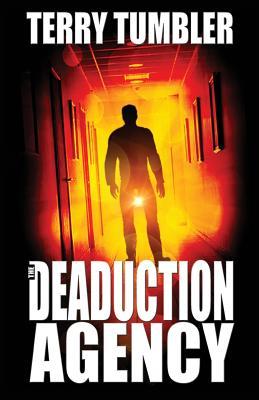
Witness at first-hand a group of specialist investigators, as they set up and run a new, innovative crime fighting agency. They are dedicated to the resolution of criminal cases using paranormal assistance. This will be a new, innovative and emerging brand of policing designed to protect the citizens of our country.
Read how they deal with the anti-social, disturbed behavior of a wayward, divorced husband, who is on the verge of destroying the lives of his ex-wife and their two young sons.
Read how they identify the members of a murderous ring of pedophiles from relatively few clues, and bring them to justice.
Read how they move from ineffectively resolving one case at a time, and onto tackling multiple cases with far more beneficial results to society.
Read thereafter how they clear the penitentiaries of criminals, starting with the most dangerous inmates, using novel means to cleanse their souls of sin, and equip them for new roles in life in special clearing centers. The objective is to reintegrate them into society, rendered capable of performing straightforward tasks and genuinely purified, via the novel process of atonement.
Read how they find one talented young man who was lost, presumed dead, and reunite him with his family. Thereafter, as agents of change, they help launch him on the path to stardom.
This is not a simple, gory, two dimensional book, but an exploration into the timely use of mediums in crime detection. It can pay dividends in assisting the fight against crime.
They use the latest techniques and technology in a future world that is not far removed from that which exists today.
Drawing Word Pictures
Terry Tumbler Author Interview
The Time Slipsters spans science fiction, travelogue, historical fiction and comedy while showing a vibrant world of the future and the past. What is the funnest part about imagining and writing the future?
The fun is in seeing things that are commonly regarded as Sci-Fi beginning to happen. I believe that research on the web reveals what a wonderful world we live in. If you look for articles on medical research, the motor industry and technology in general, it also indicates where the human race is heading.
We are already seeing Nano robots being used for keyhole surgery, drugs being tailored to combat and kill cancer cells, and the early diagnosis of dementia, to name but a few. Plus the whiff of flying cars and free power is in the air!
Imagine a world where the health service does not feel overwhelmed by an aging population, because old people are no longer suffering the ‘ravages of old age’. Why would that be? The answer is: treatment of their various sufferings is being mastered, until death they do part! By the way, I come into the latter category.
Envisage a world where travel is from home to destination, in minutes. No airports, no connecting flights or trains or buses or taxis. No squandering of natural resources, no electricity costs, no power stations needed, no pylons or towering wind vanes blotting the landscape. Much of what I describe has been available for over a century, if it were not for intervention of vested interests.
The characters end up traveling through time, and like many stories, their actions in the past affect the future. What was the most interesting part about writing a time travel story?
Getting into the heads of the characters on both sides of the experience of time travel. Drawing word pictures of the experience and conveying mental images to readers was fun too. It challenges my imagination to run riot. By the way, unlike Professor Hawking I do not believe that the death of an ancestor caused by a time traveler would have any impact whatsoever on his or her descendants.
The threat to Earth is revealed by uncovering the mystery of the aliens who have been living under the auspices of the Sombrella Syndicate. What was the inspiration for the Sombrella Syndicate?
I once worked for a Lloyds of London group of insurance syndicates, so am familiar with the concept. The deserted brickworks near where I live in Spain was an ideal undercover location for an alien base, but not big enough to house it, on the surface. Who better to man it, underground, than dwarfs, who have a reputation for mining and gold!
Time Slipsters is book three in the Dreadnought collective. Where does book 4 take the characters?
Book 4 takes the characters in an entirely new direction that totally engrossed me for a while. I took great interest in the feasibility of psychic involvement in crime detection. This added another dimension to the evolution of the Dreadnought Collective. The various characters in all the books are intertwined in book 5, the Sightseers Agency, which is now run under the auspices of the U.S. government, as is the entire collective. The individual agencies in the collective instantly become more effective as the two genres are mixed.
Author Links: Twitter | Facebook | Website | Blogspot
A group of friends who have drifted apart decide to reunite and take a trip together. It is the near future, and their intention is to travel on the latest type of transport, in order to visit the ancient sites in Turkey.
They want to do this in luxury, and the travel company they selected has done its best to accommodate their desires. They are lost for words when they first cast their eyes on the spectacular, gleaming new vehicle waiting for them. It is in fact alien in technology, and far more of a futuristic craft than a mere ground-hugging coach.
Unwittingly, they are entering a world where time travel is a reality and machines can cater for individuals as well as the masses.
Soon, they embarking on a sightseeing tour like no other they could have imagined, and meeting a time-travelling stranger who takes them under his wing.More than one person has a hidden agenda, as they realise when reach a highly protected secret location. It contains hybrid creatures on which the Gods of mythology are based.
It’s About the Chaos

Dave Droge Author Interview
The Game Changer revolves around the life of creative businessman Henk who finds himself in trouble after an art robbery takes place in the heart of Rotterdam. This book is a genre-crossing novel with elements of a romance, crime, and art history as well. Did you start writing with this in mind or did this happen organically as you were writing?
Thanks first for all the time and effort to read my book. This is a very good question and maybe therefore not easy to answer: it’s both in a mixture I would say. I started with some basic ideas and investigations, did some research on the subjects and meanwhile, on the other hand, write highly intuitive. Then I switch from these two mindsets every now and then, like in a loop that rolls forth until you get the feeling it’s almost finished. I certainly have no idea how it will end when writing and I am surprised at times about the direction the novel or characters takes… so then I change the research and idea’s to be able to go on a bit further. In the end, it takes a lot of editing, and in this process the book is also enriched a bit, blended.
The relationship between Henk and his daughter Julia is intriguing and risque. What was the driving ideas behind these characters traits and relationship?
Emancipation and seeking of one’s identity/freedom of Julia and maybe also the idea that world problems might need to be solved by women. But in this novel, it’s mainly about Henk, the businessman whom you might in some ways see as a Donald Trump kind of guy (thinking now of the open letter I read on the website of Michael Moore written to Ivanka Trump: ‘your dad is not well’, but it’s written after writing my novel). It’s about the chaos in Henk’s mind, the obsession of dominating, maybe caused by fear of women taking over power, confused with and entangled in the love for his daughter.
There is some fantastic art history in this novel. Was that intentional? Did you have to do research for this book?
Yes, I did quite some research, but in the intuitive writing process most of it is done for nothing probably, you never know for sure. The general idea I guess is indeed that art can maybe help us, it’s an investigation if so and if the answer is yes, how this can be done. What role can art play, seen from the viewpoint of the eighteen-year young Julia. She wants art to be decisive.
Why did you choose Rotterdam as the setting for this novel?
It’s close to my hometown, Vlaardingen, and plays a major role in the area where I live, historically and still from this day on, although the work in the harbour gets more automated nowadays. Furthermore, I would like to emphasize that Elias Canetti’s Auto-da-fe (‘Die Blendung’), written in 1935, was an inspiration for my novel, mainly regarding the atmosphere. As a tribute, I mentioned his name once deliberately within the novel in the middle somewhere, as well as using the term ‘stipendium’, which I came to know reading this novel and ‘Masse und Macht’. I consider this novel my personal and modern ‘die blendung’.
What is the next book that you are working on and when will it be published?
The next book is all about Julia, Henk his artistic daughter. At this point in time I feel that it can still take a while before it will be finished, although there are more than 100k words written and severely edited so far. I tend to be rather ambitious regarding goals and ideas of a new book I guess, so to finish it, to pull it off is unsure: it might not work at all. Especially since the new novel will partly be science fiction, playing in 2050, I wonder if I will manage.
Author Links: GoodReads | Facebook | Website
Sneak preview of the new novel:
 The floating pavilion called The Game Changer, peacefully located between the landscaped garden and artistic attributes crammed with solar – panels, foils and conductive basins along the eaves – is virtually deserted, a rarity. As if Providence feels there is something special happening since I will, after all these years, speak privately with her. After several decades, the moment finally arrives. The ring gives an orange signal, I will have to do sport for half an hour the least, followed by a silent meditation to bring my blood pressure and pulse combination back to acceptable levels. The nerves vultures in my throat, my nasal breathing is irregular, but I consider it too late for intense exercise; I can at best apply a short-term yoga technique, click the ring signal back to inactive and start enjoying the view. In the distance I see a dot rising, it could be the amphibian taxi, one that brings her to this magnificent pavilion, two miles off the coast of Hoek van Holland situated in the North Sea, a sea largely transformed into a sea farm: one big floating habitat of many thousands of hectares. It remains beautiful to see how the east side of our integrated Maasvlakte has become a place for handling assembly of environmentally friendly products surrounded by renewables and encapsulated between tens of thousands of wind turbines, seaweed farms and solar generating systems with modern forms of salt mining. We are a leader in the world, people! Mom will not believe her eyes. In a country like the U.S.A., they are still jealous; they have looked with uttermost suspicion at our ultra-modern business, our activities that saved the planet and ourselves, mankind, from The Great Catastrophe.



 LITERARY TITAN