Blog Archives
Complicated, Strange, and Fun

Kevin James Breaux Author Interview
Two Polluted Black-Heart Romances follows the lives of a vampire, fairy and mummy as they try to escape the wrath of a paranormal group bent on revenge. What was the initial idea behind this story and how did that transform as you were writing the novel?
This was a follow up to One Smoking Hot Fairy Tail. In that story, the main character is hunted for her wings. The otherworldly world I created, opens up and you get a glimpse inside. In this new novel, I wanted to show a much deeper look insider. And I wanted to show how complicated, strange, and fun, some of the lives of these otherworldly creatures can be. My initial idea was to have something very large for all of them to be afraid of. But then I wanted something even larger to be out there to make the original big thing look small. Imagine if you were afraid of Godzilla and then an alien that could swallow the planet showed up. Yeah, something like that. J
The characters in this novel, I felt, were intriguing and well developed. Who was your favorite character to write for?
I always enjoy writing Sabrina London, the female lead. She is constantly growing and learning from her mistakes….her many…many mistakes. I also enjoyed writing for Joe, the new guy. The sentient slime character. He’s fun and funny. He also provides good contrast to the other characters and otherworldly races.
What draws you to the fantasy genre? When you start writing is this where your stories go naturally, or do you have the intention of writing fantasy?
I am drawn to the fantasy world. Totally. I prefer writing in a realm where anything and everything is possible. But I think my writing is secretly fueled by things more…steamy. When I watch a fantasy show on TV and it is devoid of sex or sexuality, I tend to feel empty. But when you give me something like Game of Thrones or Spartacus, which are filled with all sorts of naughtiness…then I feel like the story is complete.
If Hollywood came knocking, who would you cast to play your characters?
I love to cast my books. I do so on all my blogs and on my FB pages. For Sabrina, I think of Joanna Krupa as being exactly what she looks like. But as an actor I would cast Beth Behrs from Two Broke Girls or Jessica Sipos from Ascension. I would pick Beth because she is pretty and statuesque and funny. AND she pretty much already knows how to play a spoiled rich girl who had a fall from grace. So it makes total sense. I would pick Jessica because she has the sex appeal to play Sabrina.
For Moselle there is only one choice: Priyanka Chopa, from the TV show Quantico. When writing the books, I imagined a Sofia Vergara type of woman. But I think Priyanka is an even better fit now, and could pull off looking like an ancient Egyptian in flashbacks.
Cade…well, I have a image of him in my head. Slight built. Looks out of time. Like one of those classic Hollywood guys; James Dean at his peak. I always say it would be hard not to pick Ian Somerhalder, but he has already done this role. Still, I like him as an actor and he is the right body type and look.
Hollywood rang my doorbell once. But I was not dressed, and by the time I got to the door they were gone…
What is the next book that you are working on and when will it be available?
I am writing book three in this series. THREE BURNING RED RUNAWAY BRIDES. It will be released in late 2018.
Author Links: Website | GoodReads | Twitter | Facebook
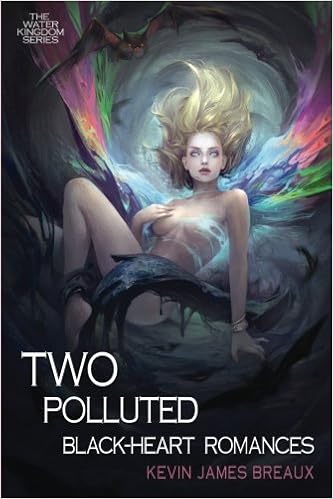
Welcome to Los Angeles—but not the LA you know. Here, humans coexist with vampires, mummies, fairies, and other nonhuman entities. Everyone’s just trying to get by for the most part—but some are having more difficulty than others.
A vampire named Cade, a fairy named Sabrina, and a mummy named Moselle are on the lam after exposing the existence of the Otherworldly Assembly, a shadowy organization of paranormal beings. The assembly has sent terrifying assassins called wraiths to exact revenge. The nonhuman trio is in for a real horror show, and they don’t know the half of it—another threat looms, and its destructive ambitions are vast.
Meanwhile, a human named Jackson is recovering from a near-death experience. Old memories and new loves flood his brain, and he’s having trouble finding an outlet for all these feelings—that’s when Sabrina the fairy catches his eye.
Two Polluted Black-Heart Romances, a fast-paced adventure filled with high stakes and unexpected twists, continues the action-packed saga that began with One Smoking Hot Fairy Tail. When unimaginable dangers threaten the planet they all share, humans and nonhumans find a common cause and must work together to prevent disaster.

Sacrificing Yourself

Sara Butler Zalesky Author Interview
Wheeler is a suspenseful romance novel that follows a strong female cyclist battling both physical and emotional challenges. What was your inspiration for this thrilling novel?
I have been been a fan of cycling for some years now but over the last five years I’ve been hugely influenced by the women’s peloton. Their grace under pressure, heart and incredible talent is an inspiration. My ultimate goal for the hard copy of Wheeler is for the proceeds of each book sold to be donated to the Homestretch Foundation, founded by Kathryn Bertine, a former pro cyclist. She saw a need for women cyclists who wanted to compete but financially, had no way to train and earn a living. Homestretch provides the housing, equipment, training and nutrition for elite riders to have a chance to compete at the pro level.
Loren and Graham connection develops into a complex relationship through the novel. What were the driving ideals behind the characters development throughout the story?
Relationships among creative types can begin intensely, with all the Shakespeare quotes and French terms of endearment, only to burn out in a few short months. Loren and Graham are both isolated and lonely, even though they are surrounded by friends and family. They each have personal issues to overcome and are willing support each other through their trials in order to make the relationship work, just like real people.
Wheeler starts in the middle of Loren’s cycling competition. What is your experience with the sport and why was this a good setup for your novel?
Being a cyclist myself, understand most of what they go through: the training, the discipline, sacrificing yourself for your teammates. I know the intense physical discomfort (i.e. pain) of taking your body to the limit and beyond.
There’s a parallel between being a pro athlete and an actor – long hours of training, constant travel, the media spotlight, but also the close relationships that can develop between teammates (co-stars). It takes the right mix of personalities to make it work or the film (or team) won’t succeed. I thought this would be an interesting, and realistic, pairing. They would need to understand how important their careers are, but also know that it could all end with one bad review, or the squeal of a car tire.
What is the next book that you are working on and when will it be available?
I am currently wrapping up the first draft of the as unnamed follow up and I hope to have it to my editor by Autumn, 2017.
Author Links: GoodReads | Twitter | Facebook | Website
 To become an elite cyclist in Europe, Loren Mackenzie has overcome much in her life, but no one would know it. Her tragic past is hidden inside tarnished armor and her fear of it being uncovered has kept her out of the spotlight.
Known as the Ice Queen of the peloton, Loren rarely shows emotion in the heat of competition; she leads her team with quiet strength and determination. But when a chance meeting quickly develops into a whirlwind romance, the ice surrounding her heart begins to melt.
All is not rainbows and unicorns, though. The relationship with an A-list celebrity brings with it the microscope of tabloid-media attention but also exposes the jealousy and obsession of another, threatening to unravel Loren’s tightly wound life.
Can Loren open her heart to the love she has held at a distance, or will her fear and shame ultimately defeat her?
Keep My Mind Active

Jerry J.C. Veit Author Interview
Apocalypsia details a post-apocalyptic Earth. Demons comb the land and what is left of humanity struggles to survive and trust one another. What was the inspiration that made you want to write such an immersive story?
I had a lot of time on my hands (haha). I was in my early twenties, worked two days a week, living in my parents’ basement, and was addicted to video games. Writing was my way to keep my mind active and a way to escape my uneventful reality. It started out as some dark and depressing poetry (some of which appears in the book). I felt like the only way I could find meaning in this world is if it ended. That was the idea that sparked Apocalypsia. I wanted to go on an adventure, and if I couldn’t live it, I could at least create it. I also drew inspiration from authors like Edgar Allen Poe, and Charles Dickens, and stories like Beowulf and Lord of the Rings.
This story is a fun blend of science fiction, fantasy and post-apocalyptic. Did you plan the novel before you wrote or did this happen organically?
I was told to always know the ending of your story before you begin. Apocalypsia was the exception. I had no idea where this story was going to go. At times I felt the story was telling itself and I was just the messenger. I never thought about what will come next only what was happening now.
In its infancy I wanted to make Apocalypsia a graphic novel. I wrote it into twenty-five separate books in a little over a year and a half. Since I cannot draw or know an artist that could take on this huge project I rewrote it to read more like a manga, but without the art; since I was into Japanese anime at that time. About a year later I developed a love of screenplays and the desire to write them. Apocalypsia was rewritten again into three different scripts due to its length and the 80-120 page constraint of a normal screenplay. When I discovered self-publishing the book that exists today got another overhaul. The book gained new content and became a little darker too. I was older so everyone in the story had to grow up also. Overall it took seven years and several rewrites before Apocalypsia appeared in our hands.
What is your writing experience and how has that helped you write Apocalypsia?
I actually wrote all of my books as screenplays first until I learned about self-publishing. I reformatted my screenplays into novelized script versions by taking away all the screenplay lingo, headers and directions, but kept the name of the speaker before my dialogue to cut down on “he said” “she said” throughout the entire story. Screenplays taught me about plot points and showing not telling. I learned to write a good ending and a good beginning and then finding out how to link the two. I learned how to write books by thinking about them as movies. Usually screenplays are the product of books. My books are products of screenplays.
What is the next book that you are working on and when will it be available?
I have started writing a steampunk story. I think that will be a cool genre to explore. I have the beginning written and several notes about the world, technology and devices that exist, and character backgrounds and personalities, but I’m still working on the plot so no release date in sight yet.
Author Interview: GoodReads | Twitter | Facebook | Website
 Much of civilization lies in ruins after the mysterious happenings of a demonic uprising. In this post-apocalyptic world survivors must scavenge for supplies while taking up arms against demons, goblins, and even each other.
When an ally’s fort is attacked; a small group of survivors take it upon themselves to unite and stand against the further spread of demons. Along the way new allies agree to stand with them. Encountering stronger demonic threats and the discovery of an ancient artifact, which could destroy the boundaries between Hell and Earth, causes a collision of the human resistance into an epic final battle with the demonic forces.
One Demented Family Christmas

Dave Matthes Author Interview
Lockless Doors weaves a brutally honest and incredibly unique story of a family in all its ugly and painful moments. What was the initial idea behind this story and how did that transform as you were writing the novel?
Initially, the entirety of the story was just going to revolve around one demented family Christmas, but as it always seems to happen… the plot thickened and I couldn’t exactly control what happened. And then, while exploring the backstory of Jean, I saw an opportunity to expand upon a favorite character of mine from another older book I wrote back in 2013-2014. And now I’ve pretty much got 2 to 3 books in the making to continue with the chaos that is the Ponces.
Lockless Doors subtly examines complicated relationships and skillfully reveals insights into the siblings’ connection to each other. What were the driving ideals behind the characters development throughout the story?
I wanted to establish a sense of foundation for the three main characters, so that the reader could sense that there was in fact a very complicated past. Little by little, I offered little tidbits as to just what that past entails, and each of which would (at least for this book) center around the death of their mother. Their own childhood, while growing up, was riddled with seeds that would eventually force them all to spiral out of control. And so the death of their mother, at least according to their mother, would hopefully begin to bring them back together again. If I could narrow it all down to one single word, I’d say this book is about forgiveness, and not just the simple “on-the-surface” kind. Self-forgiveness is probably the most important type out there.
Lockless Doors is both hilarious and heartbreaking, soul-searching and sarcastic. Was there anything from yourself that you put into the novel, and did you have fun writing it?
Honestly, I can’t think of anything I really took from real life experiences that would inspire the book. I just started writing it one day and it just kind of became what it is. As I’ve said to others who’ve asked, I never really plan out a novel’s plot, at least I can’t think of a time during which I actually sat down and outlined a story. Maybe dabble a few ideas here and there, jot down some quotes for characters to use at some point in the story. The Ponce siblings, Edgar, Jean, and Charlotte are far and beyond my favorite characters I’ve thus far shat out out my brain. And yes, I can say I had the most fun writing this book compared to my others, and I am currently having loads more fun writing the second book.
What is the next novel that you are working on and when will it be available?
I’m actually working on the sequel to “Lockless Doors…” at the moment and have written about two to three chapters. I wouldn’t expect it to be finished until next year sometime, but I can say that the story and the characters will explode in a way that makes “Lockless Doors…” seem like an ABC Family special. If all goes according to how it feels it’s going, “Lockless Doors…” may end up being the first in a long and chaotic series that may or may not have a definitive ending.
Author Links: GoodReads | Facebook | Twitter
 It’s Christmas time, again. Family gatherings. Company parties. Yule logs. Screaming fits of dysfunctional requiem. But for the three Ponce siblings, they’ll be burying their mother. Edgar Ponce, the family exile. His brother Jean, the west coast porn star. And their younger sister Charlotte, mother to four kids and wife to the richest orthopedic surgeon in Western Pennsylvania. Reuniting them for the first time in over a decade, the funeral of their mother will only serve as the mere whisper that starts the avalanche of the next month, entangling them in their own webs of insanity for a holiday season none of them will ever forget. ‘Lockless Doors in the Land of Harsh Angels’, a crossover/sequel to 2014’s ‘Sleepeth Not, the Bastard’, is at its core a story about family. Beyond that, it’s an examination on forgiveness, the relationship between Christmas trees and caskets; bliss with a little bit of chaos thrown in for good measure, and learning the importance of one of the holiday’s most heartfelt lessons: appreciating those loved ones around you while doing one’s utmost best at tolerating the rest of the family without murdering them.
Potions are Toxic

Jason Hubbard Author Interview
The Legend of the Three Roses follows a magician’s apprentice and an assassin on a thrilling journey through a new series of books you’ve written. What was the inspiration for this book and the series that follows?
The story contains themes about morality and spirituality that I’ve been thinking about and wanted to “get out there.” My original idea was for a really grand epic featuring several parties all traveling to the same goal for different reasons. It would take place in a grand empire which grew prosperous due to a kind of sci fi concept. I never really took the idea seriously and hadn’t thought about it for a long time until I was suddenly inspired to simplify the story by making it about a boy and a girl, like many great stories. And I must confess, I borrowed a few ideas from some of the recent fantasy books I’ve been reading—things about medieval society and magic wards.
I really enjoyed the medieval setting of the novel. What themes did you want to capture while creating the world your characters live in?
I can’t say the world “Three Roses” takes place in is an accurate reflection of medieval Europe. I imagine the brick buildings of St. Mannington have a strong, advanced type of cement not found in the Middle Ages, when constructors commonly used mortar. Crossbows also weren’t around, but since this is a kind of make-believe Earth, I felt free to include any kind of invention as long as it was reasonably outdated in the modern world. Medieval Europe was of course a very Christian world, and I imagine many young people were like my main character, Kane, who is nearly pious to a fault. But in spite of being beholden to a religion that promotes peace and forgiveness, Europe was a very cruel place where people were treated like mere commodities and terribly punished. A quick Google search for “medieval torture devices” would definitely show you what I mean!
I always enjoy magic that is well thought out and believable. What decisions went into creating the magic system you use in your story?
The magic system was mostly inspired by a certain video game where potions are toxic. If you drink a potion, you can gain a boost to your stats or immunity to debuffs, but it costs you a little of your health. I never really thought of the possibility of potions being poisonous, and I thought it was an excellent way of keeping magic in check. I never want magic in my stories to be too powerful, because if it if it is, it can lead to story problems. When you have characters seem like gods, they can seem unrelatable and mere tools of plot convenience.
Where does book 2 in The Three Roses trilogy take the characters and when will it be available?
Right now, book 2 is all in my head. It takes place in Lonsaran, the rival kingdom of Kane and Callie’s homeland. They’ll have little choice but to settle there and look out for each other. The good news is that they’ll discover what the Three Roses are; the bad news is that Rainer the assassin is still alive … and he’s thirsty for revenge.
Author Links: GoodReads | Twitter | Facebook
 Embark on a thrilling dark fantasy adventure where one man’s faith and a woman’s spirit may shape a kingdom!
Four years ago, the Son of Man returned to Earth, seemingly to begin a new age of enlightenment. But two years later, he vanished without a trace …
Today, nineteen-year-old Kane Bailey–a nobleman and sorcerer’s apprentice–works and studies in his master’s tower in the middle of his nation’s capital. In spite of making a few mistakes (such as nearly blowing up a spellchamber), he shows the potential of being a great sorcerer. But his dreams of working with magic come to an end when he’s caught in the middle of an assassination attempt on the King’s life.
Upon getting captured by the assassin, Kane is swept up by lofty ambitions, terrible greed, and maddening bloodlust. Cut off from his sorcery, he’ll need to rely on his wits and knowledge to survive, as well as the trust and friendship of a young woman who may be taking on more than she can handle.
And a question lingers: What are the “Three Roses,” and what do they have to do with the impending war?
Return to the Gun

Kwen D. Griffeth Author Interview
A Higher Calling follows Sam as his reputation follows him even though he’s retired from his gun wearing days, and his new life is threatened as the opportunity for revenge comes knocking. Why did you think this was a good starting point for book 2 in the series?
At the closing of book one, Sam had gotten a glimpse of what his life could be instead of the anger and violence filled existence he had accepted. For a few months he is able to enjoy that normalcy. He is not only seen by the family and neighbors as a husband and father, he starts to see himself in those roles. Even a few friends from his past are willing to give him a chance to be a different man. Too soon, a stranger demands Sam return to the gun. The stranger bribes Sam with money, but also carries a threat in order to manipulate Sam to do his bidding. Sam must choose who he is to be.
Sam must achieve a series of steps in order to become a member of a civilized society. I think of them as similar to Maslow’s hierarchy of needs. First, Sam had to forgive himself and see himself as something more than just a killer. Now, he is making commitments to a family. He has the chance to become a part of that family if he chooses. Hence the name of this book, “A Higher Calling.” Which is the higher calling? Be a husband and father or avenge the death of a friend.
We get to dig deeper into Sam’s character in this book as he has to decide if he is Sam Cardiff or Sam Moses. What were the obstacles you felt were important in develop his character further?
Sam, to me, represents soldiers and Marines who return from combat and are unable to adjust to the quieter life. We only hear about them, unless we know them, when they commit some horrendous act of crime or violence. Sam gave me the opportunity to tell people, who don’t know, that these men and women are wounded as surely as if they had lost a limb. The only difference is the wounds can’t be seen.
That’s what I wanted Sam to tell the reader. He was just a guy with dreams, plans and hopes who circumstances put in a situation so ugly he couldn’t cope. In the aftermath, his value system, his self-awareness, his expectations of himself as well as others are distorted.
Are you a fan of western novels? What books do you feel influenced you as a writer?
I grew up reading Louis Lamoure, Clair Huffaker and Will James. While I read more than just one genre, I am a fan of the western, but I also have a complaint about them. Too often, the characters are single dimensional or at best shallow. This series is the story of the internal struggles of a war vet. I chose the Civil War as I felt it allowed me to tell a better story. I could have chosen any war, but I felt there was a poetry in choosing a 19th century warrior inflicted with a 20th century injury.
Where will book three in the Sam and Laura’s Story series take the characters?
Recovery from any emotional/mental illness is a progression of steps. In book one, Sam came face to face with himself. Who was he going to be. The changing of his name represented that turmoil. In book two, Sam had to find his place in a family but also a community. Once he accepted himself, he had to find a way to accept those around him and allow them to accept him. Book three addresses Sam’s relationship with God and nature. He has spent several years cursing God and wishing God would strike him dead. Now, he must find a way to resolve that conflict.
Author Links: GoodReads | Website | Twitter
![A Higher Calling: Laura's Tale (Sam and Laura's Story Book 2) by [Griffeth, Kwen]](https://images-na.ssl-images-amazon.com/images/I/41PKMrJO2-L.jpg) “What is the matter with you? We do not need his money!” She stood behind him; her hands on her hips.
“What is the matter with you? We do not need his money!” She stood behind him; her hands on her hips.
“It’s not about the money.”
His voice was calm. He could have told her what day of the week it was with the same level of excitement.
“Then why? Why must you go back and try to get yourself killed? You have responsibilities here!”
Sam stopped brushing and seemed ready to turn and face her. He then thought better and did not. He returned to brushing the horse.
“Samuel, you turn around and face me! You tell me why I have to get ready to mourn a second man in my life. You tell me what I’m supposed to tell our children!”
His turn was powerful and deliberate; he faced her, “Our children, Laura? It wasn’t that long ago you told me in no uncertain terms they were your children and I was a bad influence. You share them with me only when it suits you. They are our children if you think you can use them to your advantage.”
“Is that why you’re doing this? To punish me for what I said?”
“Laura, please. Do you really think that little of me? I gave the man my word. I promised him I would avenge him if this happened.”
“You promised? You promised? You also promised my husband you would look after us. I know Wiggins was your friend, but he is cold and dead in the ground. There is nothing you can do that will change that.”
Sam’s’ brows furrowed, “And how is that different from William, your husband? Is he not also cold and dead in the ground?”
Laura stepped forward and took his free hand. She placed his hand on her chest, between her breasts, “Does this feel like it’s cold and dead? Do you not feel the love that surges through my body with every beat of my heart? Tell me what I have to do to keep you here? What must I do to change your mind?”
Sam Moses was in a quandary, a crossroads. He had followed the beautiful Laura Stoddard and her children to Missouri in order to care for them as he had promised the dying William Stoddard, the husband and father. He was determined to keep his word.
Now, he had received notice a friend had been murdered. A friend whom he had promised to avenge if such a thing happened; now, it had. Avenging his friend would most likely kill him but he had given his word.
Now, after living most of his life being beholden to anyone, he must choose, which promise is the higher calling?
What Came of the Tough Times

Bryan Falchuk Author Interview
Do a Day: How to Live a Better Life Every Day is written using your experience with turning your life around; losing weight and eating healthier. What was the thing that motivated you to write a book and help other people?
I have seen the Do a Day philosophy work so well, not just for myself, but for all the people I’ve been coaching and mentoring over the years. No matter how many hours I spend coaching, I still can help enough people, so I wrote the book to share the approach with as many people as possible. Based on the feedback, it’s working. Not a day has gone by since the book came out where I don’t get some kind of outreach from someone who the book has impacted.
What I like most about this book was that there were stories from your own life in it which helped me relate. Where there some experiences you felt were harder to write about then others?
Yes, definitely. It was hard to go back in time to some of the more painful moments in my life, like when my wife was in the throws of her illness and it wasn’t clear she would survive, or some of the pain I experienced as a child that shaped a lot of who I am today. But there’s so much growth from those moments that I have benefitted from, so I focused my mind of what came of the tough times rather than dwelling in the toughness of those times. That is, I used Do a Day in looking back. Instead of being trapped by past pain, I looked at what I can achieve today.
Personally, it was also very hard to talk about parenting. That chapter is the shortest in the book, and the one I wish I could do more with. I think it was hard to write because being a parent is so profound and powerful, but also because this isn’t my son’s book and he didn’t choose to be in it, so I wanted to balance respecting his privacy with getting the message across. I shared only one story in that chapter, and I think it’s enough to illustrate the point I’m trying to make, but the chapter is clearly different from others in the book.
I felt that the book did a great job giving sensible advice about everyday life. What is one thing you hope readers take away from Do a Day?
The one thing I want them to take away is the power the approach offers to overcome and achieve. Being free of the past and simultaneously not living in fear or anticipation of the future is incredibly empowering for you to do the best you can today. Each day of doing your best adds up to a life that is full of achievement instead of sadness and regret.
What is the next book that you are working on and when will it be available?
My plan for my second book is to move to the next step in Do a Day. The first book was some of my stories.
For the second book, I want to share the stories of my readers and people I work with.
I have only experienced so much, but the stories people come to me with are so varied and profound, I think reading about this and seeing how Do a Day helps in even the most extreme situations would be incredibly impactful for those looking for a connection to their experience that they couldn’t find in the first book.
Beyond that, there are some specific situations that warrant a full book on them alone. I don’t want to give too much away, but I can see a series of deeper dives into these tougher life situations with more specific guidance on how to put Do a Day into action to overcome and achieve.
The good news is, life is ever changing, challenges keep evolving and are always specific to each individual experiencing them, so there is so much to share with Do a Day. You can expect much more from me and Do a Day over the years to come. I’m so excited to help even more people change their lives.
Author Links: GoodReads | Twitter | New Bodi Twitter | Facebook | Instagram | New Bodi Instagram | Website
![Do a Day: How to Live a Better Life Every Day by [Falchuk, Bryan]](https://images-na.ssl-images-amazon.com/images/I/51Os0EBcmML.jpg) Bryan Falchuk overcame adversity, lost nearly 100 pounds, ran a marathon, dramatically changed his diet and created an approach to help others live a better life, every day. That way is Do a Day.
Bryan Falchuk overcame adversity, lost nearly 100 pounds, ran a marathon, dramatically changed his diet and created an approach to help others live a better life, every day. That way is Do a Day.
Like so many people, Bryan has faced challenges in life, like obesity, depression, work stress, the responsibilities of parenthood, the potential of losing his wife to illness, and more. And he struggled, like anyone else. Through that struggle, Bryan learned the secret to not just overcoming any individual challenge, but creating a life of achievement, happiness and harmony. In Do a Day, you will learn how to make each day contribute to your goals so you can live the life you want to live – a better life.
Do a Day will free you of the burden and judgment of yesterday‘s choices, while relieving you of the pressure of what tomorrow may bring. By teaching you how to identify your true motivation and how to use that to focus on what you have to do today, Do a Day will help you change your life.
Like the Hero in the Myth

Charles C. McCormack Author Interview
Hatching Charlie: A Psychotherapist’s Tale is a frank autobiography centered around the theme of the pursuit of happiness and a meaningful life. What was the inspiration that made you want to write a memoir?
I was inspired by two of my children and some of my patients. My oldest daughter, Keeley, once presented me with a book that asked questions about me. The idea of the book was to have it for the grandchildren in posterity. I liked the idea of leaving something for the grandkids but didn’t like the venue. I didn’t think that telling them my favorite color was particularly pertinent to letting them know who I was. Then my son Chandler, several years later, prospering greatly in both his business and personal life in his mid-thirties asked me, in somewhat of a despondent tone, “Is this it?” He was kind of like the hero in the Myth of Percival who after garnering great fame as a killer of Dragons asked a similar question. I translated my adult children’ questions into “Who am I?” and “What is it [life] about?” My patients also played a role in that I often use stories from my life to illustrate points I am trying to make and also to normalize rather than pathologize the struggles they are having. In turn, they have found these stories very helpful and even entertaining and often suggested “You should write a book of these stories.” These three factors percolated in my mind for several years until one day they bubbled up and I just started writing.
There is a lot of reflection on life events in this book. Is there anything that was hard for you to write about?
My relationship with my first wife, Jane, and my own struggles in relationship. My first wife came to fight mightily with mental illness and I was extremely concerned with writing anything that might upset her. However, when my editor received the manuscript she noted immediately the presence of the absence of much to do about that relationship. I explained the problem and she respected the restraint feeling that many people make the book the all of everything without concern for its impact on others. At the same time, she pointed out that the readership would have a difficult time in empathizing with either Jane or myself with such sparse information. I was thus pushed to confront this issue and did so after several sleepless nights by writing the chapter on Jane and then sending it to her with complete and total veto power. To my surprise she responded with praise for the chapter, thought it was beautifully written and wouldn’t change a word. That felt so healing.
Other chapters that were difficult to write were the ones several reviewers have picked up on including yourself. Those are the chapters on the kids. They were indeed somewhat of an afterthought in that they were written later after my kids asked me why there wasn’t much on them or the grandkids in the book. On thinking about this, I did think it was an oversight driven by the difficulty in deciding what to write and the impact this could have on them. At the same time, even though somewhat an appendage to the book, I decided to go forward with it in that I thought, particularly as a family therapist, that there were valuable lessons to be learned within them for both adult children and parents. So, though I agree the book may seem to lose focus in these three family related chapters, I still thought they added to the lessons I wanted to share with readers and pertained to my ongoing hatching and self-discovery, as well as sensitizing me to the shadow my history cast on the lives of my offspring. In addition, with these chapters I was able to discuss the challenges of the life cycle and I older readers, those from my generation, have expressed particular appreciation for them.
Finally, just writing about my romantic relationships and failures in them were difficult to write because I find them embarrassing and felt some shame about them, particularly in that I’m a marriage and couples’ therapist. Yet, I didn’t feel I could tell my story with integrity and walk the walk of my talk if I avoided them. As I note in the book, you can’t lead a self-examined life if you cheery pick what you look at.
In this book we get to witness many peoples lives, loves, and tragedies. What do you hope readers take away from this book?
First, that we are all human and imperfect and to be okay with this. In saying this I don’t mean to imply we should shrug them off as “typically human,” but recognize the losses, or mistakes and/or harm we have done and to learn about ourselves and grow from them. I believe it is incredibly important for people to keep learning and growing till death do us part and that if we stop doing so we are more likely to become despairing as we’re caught in the smothering quicksand of stagnation. Second, that we have to live our lives, there are no short-cuts and that the attempt to not deal with our lives through avoidance and denial only leads to bringing about that which we fear. Finally, I wanted to posit a belief I’ve come to as a therapist and as a human being in the last several years. It was a realization that struck me as as an epiphany. That is, “Each of us is as happy as we can stand.” Isn’t that a concept worth thinking about? Here I’m not talking about people with psychotic illness or intense mental illness of any kind, but more so what I call the normal/neurotics who have been primarily affected by issues of nurture rather than nature that comprise the majority of the human race. The ultimate limiter of our happiness is we ourselves. We are each encompassed in habituated mental/emotional states that resist change, even when or perhaps even especially when, those changes are for the good. I won’t rewrite the book here but the how and why of this alone, in my view, is worth the read.
What is the next book that you are working on and when will it be available?
I don’t know the answer to this although it is a question I have been asking myself. Writing is hard for me. I don’t do it for fun unless I feel inspired, then it is one of the most fun and rewarding experiences of my life. So, I’ve been looking inward, trying to discern what is moving out of sight within the fathoms below. It has not yet come into view but I do feel its stirrings.
Author Links: GoodReads | Twitter | Facebook | Website
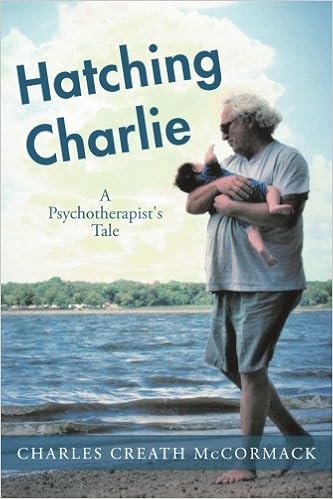 If you’ve ever wanted to read someone’s diary, be a fly on the wall during a private exchange, or wondered what someone, possibly your therapist, really, really thinks, then Hatching Charlie will roundly satisfy that curiosity. It’s a fascinating read if you just leave it at that, but, in doing so you’d miss a rare invitation to be guided through elements of your own personal story on a parallel plane. An emotionally charged, inspirational, thoughtful and humorous book filled with wisdom, psychological insight and relationship truth Hatching Charlie: A Psychotherapist’s Tale is both an autobiography and a quest story. In spellbinding fashion, it interweaves the incredibly interesting life journey of Charles McCormack with his becoming a counselor and psychotherapist. Born into an abusive home and spending early years in the racist Jim Crow South where he witnessed segregation first hand, Charlie at age eleven is then involuntarily exiled to a Catholic boarding school in France even though he doesn’t speak the language. There he is again abused. Cut off from family and friends, isolated from those around him and under the rule of sadistic authorities Charlie spirals downward in the grip of anxiety and depression. Disoriented and confused he feels a determination to make sense of his life, his world, his relationships, and his place in them, core questions that will shape the rest of his life. But the going is not easy. Charlie acts out, flounders, is a mediocre student, fails high school, is expelled from college, and goes on an odyssey to Mexico where he meets a psychologist turned auto-mechanic who plants an idea in his mind. After this encounter, Charlie pursues a career as a counselor and psychotherapist. He returns to school, finds he’s a natural, and eventually earns a master’s degree in psychology and then another in clinical social work. Subsequently, working on a long-term psychiatric locked door inpatient unit he suffers PTSD following the suicide of a patient, begins writing, becomes published, and encounters career success. He is invited to join the faculty of the Washington School of Psychiatry, promoted to Senior Social Worker of Long-Term Adult Inpatient Services at a psychiatric hospital in Baltimore, is named the Clinical Social Worker of the Year in Maryland, and writes a book on how to treat “difficult to treat” couples entitled Treating Borderline States in Marriage: Dealing with Oppositionalism, Ruthless Aggression and Severe Resistance that is well received. Yet, as his career is evolving his personal life is disintegrating. He is forced to confront mental illness in his own family, divorces twice, suffers a return of anxiety and depression, and leads him to question the impact of his early relationships on his own capacity for love and loving, and of being a father and grandfather. Throughout his journey Charlie repeatedly travels to his own interior, his internal world, where he continues to grapple with those early questions, “What is life about? What’s the point? How can one be happy? How can one be secure in relationship? What is love? What is loving?” In so doing Charlie “truly covers the full gamut of human experience – warmth, love, friendship, loneliness, unhappiness, violence, despair: life and death.” (Literary Titan) His insights and answers will surprise you. “Hatching Charlie: A Psychotherapist’s Tale” is an inherently fascinating, thoughtful, and thought-provoking read from beginning to end.” (Midwest Book Review)



 LITERARY TITAN