Blog Archives
For the Devil Has Come with Great Wrath
![For the Devil Has Come with Great Wrath by [Plant, Emma]](https://images-na.ssl-images-amazon.com/images/I/51sVghWFV1L.jpg)

For the Devil Has Come with Great Wrath by Emma Plant provides a glimpse of what havoc the Devil and his disciples wreak when they come to earth for the End of Days and in search of Emma Plant. Emma, a young Office Manager, notices that things aren’t quite normal in the valley where she lives. Accidents and fatalities are on the rise, and Emma herself is even visited by strange people and creatures that seek to do her harm. She is visited one night by two gnomes who explain the devastation that is taking place and seek to whisk Emma away into the mountains that overlook the valley. Their goal is to hide and protect Emma from the Devil while he wages war against civilization. It is in the mountains that Emma is introduced to more fantastical creatures, such as witches and fairies, and it is also where she begins to make a new life for herself – a life that is a far cry from the one she once knew.
Author Emma Plant adds interesting fantasy elements to her novel by the inclusion of a variety of mythical creatures, such as gnomes, fairies, witches, demons, and other creatures. The novel is entertaining in that each type of fantasy creature has its own magical powers that are displayed throughout the novel. For example, Ben and Ella, the gnomes that help protect Emma have the ability to shrink larger items in order to be able to carry them easily. Another interesting element of the novel is that, apart from the demons, these characters work harmoniously together. Abela, the witch, provides guidance and protection to Emma, the fairies provide powers and protection to the gnomes, and so on and so forth. These magical characters add a creative depth to the novel.
However, I felt that there was a lack of detail and explanation in the novel. I did not understand why demons are inhabiting earth and wreaking havoc. More importantly, I did not understand what the Devil wanted with Emma. What exactly makes her the center of his attention? I think that there wasn’t enough explanation given to fully develop the events. I felt like there was an overabundance of ‘telling’ rather than ‘showing’. So, I felt I was reading long sections of text rather than an organic delivery of information while the story is unfolding. But with this story being part of a trilogy, I feel much more comfortable knowing that there is two more books on the horizon that will dig deeper into this world and it’s characters.
I felt like the climax was not as climactic as it could have been. Emma spends nearly two years hiding in the mountains. During that time, she reunites with a former flame and they have a family together. Much has happened to her as a person, but it’s a small detail in what, I felt, was the overall point of the novel. Towards the end of the story, Emma is hiding out in Abela’s house when the Devil decides to unleash his wrath on the valley that was her previous home. I expected that the Devil would eventually make his way up to Abela’s home and try to take Emma away. But I expected a battle between the Devil, Emma, and her protectors up in the mountains; however, the devastation doesn’t make its way to the mountains and stays contained within the valley. I felt that there was no real climax or resolution that is reached by the end of the novel. Ultimately, I felt like this novel lacked character development that makes me invest in the characters. For the Devil Has Come with Great Wrath by Emma Plant is a fascinating fantasy story with many opportunities for a surreal story that plays off of biblical legend.
Pages: 251 | ASIN: B01L0FLHY6

The Butcher’s Daughter: A Memoir
![The Butcher's Daughter: A Memoir by [Grende, Florence]](https://images-na.ssl-images-amazon.com/images/I/51rD%2Bkt6PyL.jpg)

Florence Grende’s parents survived the Holocaust and managed to settle in New York City to provide a new life for their children. The horrors of their past, however, never leave them and infiltrate every aspect of their lives in the United States. Florence, their daughter, grows up watching her parents keep their demons at bay as she learns as much about her family’s haunting past as she learns about herself. Grende’s questions about her mother’s outbursts and her father’s deep, dark sadness lead her to answers she is afraid she already knows but is not willing to admit.
The Butcher’s Daughter is Florence Grende’s own recollection of her life in New York City and her struggle to come to terms with her parents’ own battle with the memories of their lives in Germany during the Holocaust. Grende’s memoir is written in a unique and gripping style. Her words flow from page to page in the most poetic fashion with emphasis placed on short, striking bits of text highlighting especially difficult memories.
Grende pulls her memoir together with short chapters, each focusing on specific situations, distinct memories, and her own analyses of events from her childhood and teenage years. I looked for the memoir style to follow a sequential order but, in Grende’s case, the random scattering of memories and the jumps she makes from one time period backwards and then forward again works well. Her own confusion and the turbulence dictating her life as a result of her family’s past is reflected effectively in the style of writing chosen by the author. Short bursts of memories are easy to read, engaging, and incite the reader’s curiosity.
It is not often readers are afforded a look into the author’s own experiences. Grende gives readers a particularly vivid picture of the trauma and the lasting impact the Holocaust had on the ensuing generations. Her father’s behavior and neediness are sad in a way I find it almost impossible to describe. She underscores the way he seems to emotionally cling to her in a markedly poetic chapter in the second of the book’s three sections. Never is her father’s tragic past more clearly defined than in his sadness and desperation at losing her to her new husband.
Closure being the goal for Florence Grende, I felt relief for her as she details her journey for answers and the meeting which brings her face to face with people on all sides of the Holocaust. Her writing experience begins with her trip to Berlin and the diary that starts it all. I felt the tension as I read of Grende’s meetings with fellow survivors and descendants of Nazis. The horror stories flow, and Grende, at last, shares her own with those who can, not only relate, but wish for the same closure as the author herself. Grende writes of these meetings with raw emotion and does more to help readers absorb the truth of history than is ever possible with any textbook.
Florence Grende has bared her soul and shown readers a perspective on history that most of us will never fully grasp. She walks readers eloquently through a minefield of emotions and tackles the savagery of the Holocaust with truth, directness, and poetic prose.
Pages: 148 | ASIN: B01M751TN4
Book of Matthew: House of Whispers
![Book of Matthew: House of Whispers by [DuBois, Catalina]](https://images-na.ssl-images-amazon.com/images/I/512Y5VFaJNL._SY346_.jpg)

Catalina DuBois’s Book of Matthew: Part I. House of Whispers is a tale of forbidden love that, at times, seems Shakespearian in its delivery. The story begins in rural Missouri in 1850, a tumultuous time in the United States. Slavery was still very much in practice at southern plantations. Along with the master/slave dynamic came secret, taboo romances between captive slaves and free, white plantation owners and their family members. Matthew, the plantation owner’s son and heir, and Sarah, a slave owned by Matthew’s father, are two star crossed lovers trying desperately to navigate through social stigma, away from the plantation-dominated south, and toward freedom.
Barely a few pages into the first chapter, Matthew’s lust for the slave girl, Sarah, is evident. This is shown through a very sexually explicit scene that turns out to be a dream. There are a few of those scenes like this scattered throughout the book. Over all, I didn’t feel they detracted from the book, but might be a little too graphic for some readers.
The book seems accurate in its depiction of slavery. Slaves are subjected to unwanted sexual advances, beatings, whippings, and, in some cases, death. Families are ripped apart. Mixed race children are born in slave quarters. Secrecy is rampant. Slaves aren’t legally recognized as people. They are merely property. They are bought and sold as simply stock on store shelves. They are forced into unwanted marriages. They are denied a proper education, and are often punished if they find a way to become literate. They have no rights. They have no choices. This is a grave, but important reminder of America’s past.
Thank goodness for the few characters besides Matthew and Sarah who seem to have some common sense about them. A handful of characters, even during that timeframe, believed in equality. They are reminded at a point that race didn’t matter at all in God’s eyes, even if men’s eyes had such skewed filters. They find help from some unlikely sources as they try to outrun those who would rather see them dead than together.
The book keeps interest piqued through all the obstacles that Matthew and Sarah overcome to try to be together. There are similar story lines that play along parallel to theirs. Other pairs of seemingly mismatched lovers run and hide and jump through hoops to be together as well. This story based on love is not without its hindrances. Villains walk amongst them in their treks toward love. Menacing characters sabotage, violate, abuse, and even murder their victims throughout the story. They still don’t give up on each other. Even in such dire circumstances, love finds a way to unite. Ultimately, love conquers all.
DuBois’s story reads easily and quickly. I didn’t want to put it down. I found myself cheering for the more righteous characters, and hating the more deviant of them. The plot flows nicely, and loose ends are tied up neatly by the end. I’d love to read a Part II and see where DuBois takes Matthew and Sarah’s journey.
Pages: 233 | ASIN: B076ZS21T6

The Forsaken Book Trailer
In the distant future, religion is against the law, and the Earth is a war-torn world ruled by an insane United Nations. All military forces are put on high alert when an ex-bishop of the outlawed “Catholic Church” decides to steal an artifact called “The Shroud of Turin” to help save the Earth from herself. He claims to have the power to use the cloth to help bring about “The Second Coming” – but what’s even more terrifying: he might just do it!
Return of the Sagan
![Return of the Sagan by [O'Donnell, Neil Patrick]](https://images-na.ssl-images-amazon.com/images/I/51wQbY8q4nL.jpg)
Francis, a twenty-three year old man dealing with his own overwhelming fears brought on by Obsessive Compulsive Disorder, happens to be humanity’s next best chance at establishing life on Earth once more. Traveling aboard the Sagan, Francis faces all the struggles of a man coping with life in space and the anxiety of having one of his own forgetful moments bring about the destruction of the entire vessel and all who inhabit it. As a professor and trusted expert, it is Francis to whom the rest of the crew turn to as they make plans to return to Earth. Forced to break out of his comfort zone and abandon the safety of his classic literature, Francis obliges and proceeds to help save life as it was once known.
Professor Francis Burns, the main character in Neil O’Donnell’s Return of the Sagan, is one of the richest and most well-drawn characters I have encountered in a book in the science fiction genre. He is endearing from his first appearance and continues throughout the book to be relatable on a level most characters never reach. Francis’s battle with OCD is just one of the many aspects that keeps him down-to-earth. His constant references to Tolkien and the effortless way with which he quotes lines from Tolkien’s novels make him a less intimidating personality among the other characters.
O’Donnell’s desire to pepper his text with pop culture references adds to the book’s overall appeal. I am not a science fiction fan, but familiar names, books, movies, and song titles pull me in and give me more of a reason to continue reading when the more technical lingo tends to have the opposite effect. The author places these pop culture hooks in the perfect spots throughout the reading.
The unique blend of science fiction and fantasy emphasized by Francis’s extensive knowledge of literature and history is quite amazing to behold. The repopulation of some of the world’s most endangered animals was beautiful to visualize. However, the reappearance of extinct species–and aggressive predators, at that–was simply breathtaking. I hesitate to compare it in any way to Jurassic Park, but in some small ways, O’Donnell’s story bears a resemblance to the original movie’s plot.
I have to admit, I saw the plot going in a much different direction once the crew reached Earth. I won’t say I am disappointed, but I will say, without giving away the ending, that I looked for a resolution that never arrived. O’Donnell has left me to reach some of my own conclusions–and that, I appreciate. Whereas, some readers prefer to have the story wrapped up in a nice little package by the concluding lines, I prefer an author leave me with the desire to reread for clues and leave the book open for a sequel. O’Donnell definitely inspires as many questions about the fate of Earth’s human population as he does answers about the resurgence of plant and animal life.
I give Return of the Sagan 5 out of 5 stars. With a relatable main character and a plot filled with action from the opening chapter, O’Donnell has provided readers with a hit. Science fiction fans who seek memorable characters will not be disappointed with Professor Francis Burns, his extensive knowledge base, and his undying love for J.R.R. Tolkien.
Pages: 304 | ASIN: B00SP4BOZS
History Is Not Always Pretty

Ed Protzel Author Interview
Honor Among Outcasts continues the story of the Dark Horse inhabitants that joined the Union Army as soldiers in the Missouri State Militia Calvary. What direction did you want to take this book that was different from book one in the series?
In the first novel of my DarkHorse Trilogy, The Lies That Bind set in the antebellum South, I wanted to debunk many stereotypes and myths about blacks, whites, rich and poor, regarding slavery and gender. Southern literature is generally about powerful aristocrats who make fortunes, and often ignores the slaves who actually did the work or gives them little credit. So I created a situation where the protagonist, Durksen Hurst, a hustler/drifter, forms a secret partnership with a group of escaped slaves to build their own egalitarian plantation in the fictional hamlet of Turkle, Mississippi. But, rather than the white man, one of the slaves, Big Josh Tyler, who had run his former master’s plantation, is the natural leader of the group and is greatly responsible for their enterprise’s success. (Such was often the case, historically.)
Developing the novel into a trilogy allowed me to show the full historical arc and the resultant changes of the time period: from antebellum South/slave society (The Lies That Bind, book 1); to the Civil War years (Honor Among Outcasts, book 2); and end in post-war Reconstruction (Something in Madness, book 3). You see the arc.
Together, the three novels depict the historical developments and their effects on the men and women, black and white, of all social stations.
So to answer your question, in book 2, Honor Among Outcasts, the milieu, conflicts, plot, and themes all had to be completely different from book 1, as will those in the third.
I felt like you did a great job with the historical details and facts. What were some things that you felt had to be accurate and what were some things you took liberties with?
Although I am a big Civil War buff, I didn’t want to write a typical battle-type novel. Fortunately, the guerrilla war in western Missouri was like modern-day Syria, with terrible murders and depredations like the massacre and burning of Lawrence, Kansas, by Quantrill’s Confederate bushwhackers. In Missouri, combatants of both sides took scalps! I felt it important for the characters to face these major events in order to illuminate humanity’s potential for brutality and cruelty.
Also, in the spring of 1863, President Lincoln began to allow “colored” regiments to be formed, but these required a white officer to lead them. Naturally, having the DarkHorse partners form their own regiment was a nice parallel to their dreams of the democratic enterprise depicted in The Lies That Bind.
Throughout Honor Among Outcasts, I tried to remain faithful to the difficulties and unique dangers these regiments and the local populace actually faced. In rare cases, I had to move minor events around to aid the narrative. For example, a train raid massacre like the one in Honor did take place, but at a later date and at a different location. Nevertheless, in writing book 2, the actual history did very much shape the story.
The characters were very well developed in this story, which led to some heartbreaking scenes when some characters met their end. What was your decision process like in deciding who stays and who goes?
Heightened emotions give your themes greater impact. I hated to kill off some of the characters I’d become attached to, but in doing so, the reader is able to feel the senseless terror and cruelty of the time, which required more than the characters merely observing the conflict.
For example, wise Big Josh is the backbone of the DarkHorse partnership, despite the many loses in his past that he carries in his heart. So when his mate, Ceeba, found late in life, is one of the three women killed in the train massacre, the poignancy of the event is increased. Plus, Josh’s emotional state throughout the rest of the novel is deepened. Similarly, in the Lawrence massacre a relatively unarmed colored regiment training there actually was massacred. How could I ignore that in my novel? And with the loss of a favorite DarkHorse character during the Lawrence raid, I hoped to bring out the horror of that event. (I, myself, had to recover after writing that wrenching scene.)
Where will book three in the Dark Horse Trilogy take readers and when will it be available?
In the final novel, Something in Madness, at war’s end the surviving characters return to Mississippi, only to confront new indignities restricting the rights of freedmen in the South.
Researching the Black Codes, lynchings, and other humiliations perpetrated on blacks during Reconstruction made writing book 3 tough, and I expect it will be tough on the reader, as well.
History is not always pretty. I only hope the DarkHorse Trilogy does its part to see that such cruelty and hatred doesn’t re-occur. Something in Madness is planned for release in 2019.
Author Links: GoodReads | Twitter | Facebook | Website
![Honor Among Outcasts (DarkHorse Trilogy Book 2) by [Protzel, Ed]](https://images-na.ssl-images-amazon.com/images/I/61bPtY8HKRL.jpg) After their harrowing escape from Mississippi, abolitionist Durksen Hurst, his fiancée Antoinette DuVallier, and their friends — a group of undocumented slaves — land in guerrilla-infested Civil War Missouri, the most savage whirlwind of destruction, cruelty, and death in American history. Trapped in a terrifying cycle of murder and revenge, scarred by Quantrill’s cold-blooded Lawrence massacre and the Union army’s ruthless Order Eleven, Durk and everyone he cares for soon find themselves entangled in a struggle for their very survival.
After their harrowing escape from Mississippi, abolitionist Durksen Hurst, his fiancée Antoinette DuVallier, and their friends — a group of undocumented slaves — land in guerrilla-infested Civil War Missouri, the most savage whirlwind of destruction, cruelty, and death in American history. Trapped in a terrifying cycle of murder and revenge, scarred by Quantrill’s cold-blooded Lawrence massacre and the Union army’s ruthless Order Eleven, Durk and everyone he cares for soon find themselves entangled in a struggle for their very survival.
Honor Among Outcasts takes readers on a pulse-pounding journey of desperate men and women caught up in the merciless forces of hatred and fear that tear worlds apart, and the healing power of friendship to bring them together.
Allegories of Biblical Narratives

Arnold Holtzman Author Interview
The End of Days follows the tragic story of Avrum as he spends his young life making his way to America to build a life for himself and hoping to reunite with his brother. What was the inspiration for the setup to this emotional novel?
TO THE END OF DAYS can best be understood when the characters and episodes are visualized as allegories of biblical narratives. The saga begins with the covenant between God and Abraham (through his mother). That covenant is in effect a prophesy that foretells of the forced separation between the brothers (the separation between the tribe of Judah and the “lost”, or dispersed tribes of Israel – and their eventual reunification.
Avrum and his brother share a tight bond with one another that I truly appreciated. What were some themes that guided you when creating their relationship?
Ianuk, the giant lumberman at the start of the story is the Pharoah of biblical Egypt who held Avraham (the Hebrews) for those years in slavery. The Hebrews then cross the Red Sea to the land of Can’nan (here the water crossed is the Atlantic – and America is the “promised” land). Bella reflects the infamous Golden Calf, Fanny represents the extremely fanatic biblical clerics obsessed with purity (the Essens) – those responsible for the destruction of the temple and the loss of Jerusalem. “The Doctor” (among the woodsman) and “Strulevitch” in Montreal represent Sodom and Gomorrah. Israel’s prophets are represented in Kapitolnik. Avram’s battle with the street gang that so violated Fanny reflects the wars of Israel against those who had so violated the Holy Land and Jerusalem and successfully redeemed it – bonding with an evolved Fanny. The reunion at that time between Avrum and his brother reflects the reunion between all the tribes of Israel in the rebirth of the land (the ingathering of the exiles)
I felt myself immersed in the sights and sounds of early 1900’s America. What kind of research did you do to ensure you maintained accuracy?
I am 80 years old born in Montreal to parents who reached Montreal in the 20″s. No research was necessary.
What is the next book that you are working on and when will it be available?
There are 2 other books I would like to share with you: Dead-End Sex – 42 accounts from the 42 years of my clinical work as a psychologist. These introduce serious problems with intimacy and failures in relationships, and explaining their core failures. Neurotic Children as Adults: a book as much for people who suffer their lives going nowhere as for truly caring mothers of young infants.
Author Links: GoodReads | Amazon
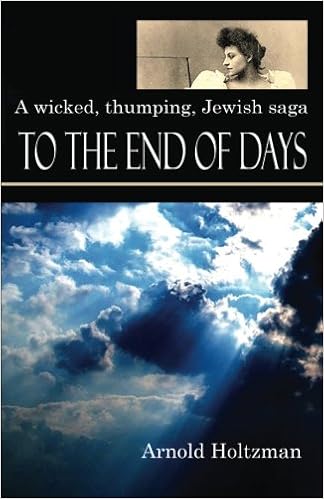 To the End of Days is a pulsing theater rich with allegories of Old Testament narratives. This is the story of a heritage delivered by a mother to her very young sons in the last hours of her life. It is a heritage which man could not modify, time could not temper, and the expanse of oceans could not distance from their lives. This is a book of secrets. The steamy alchemy of will, fate, and destiny deliver a kaleidoscope of everything human and inhuman in man. It is an epic saga charged with life and the thick rich of blood. where lawlessness and anarchy are the vehicles of timeless and inexorable laws of this universe. But all that was promised becomes delivered.
Those Poor Souls Need Revenge

Geoff Nelder Author Interview
In Xaghra’s Revenge the past and present collide when paranormal forces seek revenge and force one couple to relive the past. What was the inspiration for this thrilling book?
Malta is a popular destination for us Brits. It’s foreign, hot and sunny but the locals speak English! What’s not to like? 12 years ago I attended a multimedia presentation in Malta about its history. I gripped my seat to stop falling off when I learnt that in 1551 pirates savagely abducted the entire population of the nearby island of Gozo. Most became galley slaves, labouring slaves in Libya and the young women in harems in Constantinople. Those poor souls need revenge. I gave it to them in Xaghra’s Revenge. The other inspiration is a pile of old rocks in the Gozo town of Xaghra. The Ggantija Temple is one of the oldest buildings in the world. Older than the pyramids and Stonehenge. When I hugged them I felt a buzz. They told me to include them in that historical novel so I did.
Reece and Zita are interesting characters that continue to develop as the story progresses. What were the driving ideals behind the characters development?
I needed contemporary characters that were descended one from the pirates and one from the abducted. Oh what fun I had with them. A mumbling fart like Reece, who knew he had no luck with women and yet this great looker was interested. Thrown together by ancient spirits they were destined to be together, but of course like real life, nothing goes smoothly. Reece grows up quickly when one crisis after another trips him up, but he develops a backbone and maturity. Zita gains experience but her womanly ways always were sophisticated and she is able to support the fakwit Reece on and off until she realizes she’s in love with him for real.
The story is rich in historical detail. What research did you do for this novel to get the setting just right?
I’m a sucker for research in whatever stories I write. I stayed at the Preluna Hotel in Malta and traipsed all over both Malta and it’s little island, Gozo. Over the limestone surface and below in people’s cellars, which often had caves complete with stalactites and stalagmites. Hours I’d spent in the Melitensia and other libraries in Malta, up to my elbows in ancient deeds, records and emptied coffee cartons. So grateful was I that I donated a copy of Xaghra’s Revenge to the library and the librarian shook my hand only last week in gratitude. All the geography in the novel is accurate. Yes, I crawled into Calypso’s Cave on Gozo, really hugged the Ggantija massive stones and stood inside an Ottoman galley – that one is in a North Cyprus museum at Kyrenia Castle. A few yards away I nearly fell over a stone grave and too my shock saw it belonged to Sinan Pasha, the Jewish Ottoman Commander at both the abduction of Gozo and the siege of Malta in 1565. During the writing I returned many times though only the once to Tarhuna, Libya, in order to smell the aromas, see the wildflowers, and meet the real people.
What is the next book that you are working on and when will it be available?
I run a short story critique group. It forces me to write at least six shorts a year in between novels. The publisher of my ARIA Trilogy (scifi / medical mystery based on the unique premise of infectious amnesia) commissioned me to put together a collection of surreal shorts. I’ve called it INCREMENTAL because they all have an element of something getting smaller, or bigger. For example a noise the world hears one day getting louder by a decibel every day. A pothole appears in a Madrid suburb and doubles every day – without stopping. Do you know it would only take 46 days to swallow the planet, but it still doesn’t stop. There’s historical fiction in there too. It’s being published by LL-Publications later this year.
Author Links: GoodReads | Twitter | Facebook | Website
![Xaghra's Revenge by [Nelder, Geoff]](https://images-na.ssl-images-amazon.com/images/I/51VJ2UZFkCL.jpg) When Reece and Zita become lovers, past and present collide as the spirits of their ancestors force them to relive one of the greatest battles of the 16th century.
When Reece and Zita become lovers, past and present collide as the spirits of their ancestors force them to relive one of the greatest battles of the 16th century.
Xaghra’s Revenge follows the fate of a sixteenth century abducted family, and of two contemporary lovers thrown together by the ancients. Reece and Zita are unaware that one descends from the pirates, the other from the abducted family. While ancient Gozo spirits seek revenge, so do the Ottoman Corsairs, who intend to roll back history, and this time win the siege of Malta.
The history is real. The places are authentic. The tension and excitement are palpable.



 LITERARY TITAN