Blog Archives
Faithful to Egyptian Style

George Neeb Author Interview
Pharaoh’s Arrow is a picture book that tells a fascinating story using authentic hieroglyphics and historic papyrus paintings. What was the inspiration that made you want to put this book together?
I have taught elementary school for over 25 years. I have always found that using picture books is a great way to teach subjects like history and art to students. Picture books bring history alive. I found in teaching about Early Societies that there was an abundance of information books but not picture book narratives. I wanted to create a resource that teachers or any Egyptology fan could use and enjoy that included factual information but was also entertaining. I have always been fascinated by Ancient Egypt, so I thought this would be a great way to break into writing and illustrating picture books.
Each piece of artwork in the book was done by you on papayri. What was that process like?
The illustrations are actually done on paper to replicate the look of papyrus. I included directions in the back of the book, so readers can create similar drawings. The secret is to colour with pencil crayon, as this medium will resist paint. Then I painted over the coloured illustration using brown and yellow tempera paint. I used a large paint brush and painted both directions leaving the brush strokes showing. Last, I covered the wet paint with a disposable cloth and rubbed the cloth then removed the cloth. That is how the look of papyrus is achieved. It is simple yet works. I hope readers will try it out. I made a Youtube video to demonstrate the technique and colouring pages are found on my website https”//georgeneeb.ca
I felt that you did a great job of getting the facts of ancient Egypt correct. What kind of research did you undertake for this book?
I spent months researching how the Egyptian drew everything. I looked through lots of information books about Ancient Egypt. The Egyptians had a distinct way of drawing. Their style is simple yet graceful. I’ve heard the Egyptians described as the first graphic artists. People were drawn in profile but with forward facing eyes and shoulders. It is almost a contorted look. I also researched how trees, homes, palaces and animals were drawn. Egyptians didn’t uses perspective and size differences were usually due to importance, so sometimes the Pharaoh was drawn larger than everyone else. This made illustrating the book challenging because I couldn’t draw a lot of varied perspectives, such as a bird’s eye or an ant’s eye point of view. I really could only do some close ups in order to keep faithful to Egyptian style.
What is the next book that you are working on and when will it be available?
My next book is totally different. It is a story about an overweight girl that longs to be a super hero, but her mother and aunt really pressure her to act like the other girls and try to be pretty and popular. When some bullies befriend her, she has to decide if this is the person she wants to be. I did the illustrations using cut paper and also dyed paper backgrounds. The book is in the editing stage, so I hope it will be ready by late summer. I am also writing a book about an Emperor and a dragon in Ancient China. It will be illustrated to look like Chinese silk paintings have come to life to tell the story.
Author Links: GoodReads | Twitter | Facebook | Website
![Pharaoh's Arrow by [Neeb, George]](https://images-na.ssl-images-amazon.com/images/I/514W8IcmfgL.jpg) Akia loves living in an oasis far from the Nile River with her father. But when she is faced with another family tragedy, Akia embarks on a plan of revenge that takes her to the ancient capital of Memphis and to meet Almighty Pharaoh. She quickly learns that vengeance isn’t as easy as it may seem! Come visit Ancient Egypt through a tale told in rhyming couplets, authentic hieroglyphics and historic papyrus paintings come to life. Ages 8 – 11 or any Egyptology fan!
Akia loves living in an oasis far from the Nile River with her father. But when she is faced with another family tragedy, Akia embarks on a plan of revenge that takes her to the ancient capital of Memphis and to meet Almighty Pharaoh. She quickly learns that vengeance isn’t as easy as it may seem! Come visit Ancient Egypt through a tale told in rhyming couplets, authentic hieroglyphics and historic papyrus paintings come to life. Ages 8 – 11 or any Egyptology fan!

Pharaoh’s Arrow

If you’re shopping for a picture book, George Neeb’s Pharaoh’s Arrow should be high on your list of choices. This unique book is an experience like you haven’t seen before – a whole book written and illustrated in the style of ancient Egypt! Neeb took the time to paint all the pages by hand and tell us a story of revenge set in the times of a bygone era. He studied Egyptian art and it shows on every page.. Every page is an individual work of art, bringing the artistic style of the Land of the pyramids into the modern format.
While set in ancient times of the pharaohs, Neeb came up with the story himself. As he explained, he tried to get the facts correct. The style of clothing and the makeup match the era the story is set in and he spent a considerable amount of time giving his book the feel of an old papayri. He didn’t just stop at the characters, whom he painted in the drawing style of the ancient Egypt, but went as far to match the authentic hieroglyphics that appear throughout the story with the text!
Pharaoh’s Arrow excels in the themes it takes us through. While picture books usually don’t trouble themselves with big moral questions, George Neeb had other ideas for his characters. What starts like a story of revenge ends up differently than you would expect. Without giving the details, you will be surprised with the decision the main character decided to go with. And while odd, the decision is very practical. Considering the times the story is happening the decision is quite fitting. I felt that Neeb’s poetry was not his strong suit and were not lyrically challenging, but he is still able to tell an interesting story.
Many odds and ends of the life of ancient Egypt show throughout the book. The story starts in quite an unusual way – the mother of Akia, our heroine, is killed by a crocodile which makes her father decide to live in the desert. Crocodiles where a predator on the Nile back in the day and the situation gives us a glimpse of life thousands of years ago. Burial rites of the ancient Egypt are also referenced and Neeb also talks about the spirituality that the people of those times were observing. His reference of “ba”, roughly translated as the modern concept of the soul, is something you will not find in many books that deal with this long gone civilization!
The illustrations are unique and make it an unforgettable work of art. At the end of the book Neeb even explains how to accomplish the style yourself, making the Pharaoh’s Arrow a perfect choice for anyone interested in painting and history.
Pages: 18 | ASIN: B07DV1XL2M
Deadly Homecoming at Rosemont
Historian Wrenn Grayson arrives at the Rosemont mansion expecting to receive payment for her services from the mansion’s new owner, Clay Addison. That expectation dies when she and Clay find Trey Rosemont murdered on the foyer floor. Across town, police officers race to Eastwood University. Priceless Egyptian artifacts were stolen from the history department safe. Wrenn’s longtime love, Eastwood professor Gideon Douglas, heads the department. Only recovery of the artifacts will save his career.
Life in Havens, Ohio, doesn’t stop for this crime spree. Wrenn works for Mayor K.C. Tallmadge. He wishes Wrenn would stop searching down clues ahead of the police and pacify temperamental playwright Barton Reed. Barton’s play is just days away from opening in the town’s historic Baxter Theater.
Amid murder, theft, or curtain calls, Wrenn’s instincts prove sharp. But it’s her stubborn one-woman approach that places her directly in the killer’s path.
Allegories of Biblical Narratives

Arnold Holtzman Author Interview
The End of Days follows the tragic story of Avrum as he spends his young life making his way to America to build a life for himself and hoping to reunite with his brother. What was the inspiration for the setup to this emotional novel?
TO THE END OF DAYS can best be understood when the characters and episodes are visualized as allegories of biblical narratives. The saga begins with the covenant between God and Abraham (through his mother). That covenant is in effect a prophesy that foretells of the forced separation between the brothers (the separation between the tribe of Judah and the “lost”, or dispersed tribes of Israel – and their eventual reunification.
Avrum and his brother share a tight bond with one another that I truly appreciated. What were some themes that guided you when creating their relationship?
Ianuk, the giant lumberman at the start of the story is the Pharoah of biblical Egypt who held Avraham (the Hebrews) for those years in slavery. The Hebrews then cross the Red Sea to the land of Can’nan (here the water crossed is the Atlantic – and America is the “promised” land). Bella reflects the infamous Golden Calf, Fanny represents the extremely fanatic biblical clerics obsessed with purity (the Essens) – those responsible for the destruction of the temple and the loss of Jerusalem. “The Doctor” (among the woodsman) and “Strulevitch” in Montreal represent Sodom and Gomorrah. Israel’s prophets are represented in Kapitolnik. Avram’s battle with the street gang that so violated Fanny reflects the wars of Israel against those who had so violated the Holy Land and Jerusalem and successfully redeemed it – bonding with an evolved Fanny. The reunion at that time between Avrum and his brother reflects the reunion between all the tribes of Israel in the rebirth of the land (the ingathering of the exiles)
I felt myself immersed in the sights and sounds of early 1900’s America. What kind of research did you do to ensure you maintained accuracy?
I am 80 years old born in Montreal to parents who reached Montreal in the 20″s. No research was necessary.
What is the next book that you are working on and when will it be available?
There are 2 other books I would like to share with you: Dead-End Sex – 42 accounts from the 42 years of my clinical work as a psychologist. These introduce serious problems with intimacy and failures in relationships, and explaining their core failures. Neurotic Children as Adults: a book as much for people who suffer their lives going nowhere as for truly caring mothers of young infants.
Author Links: GoodReads | Amazon
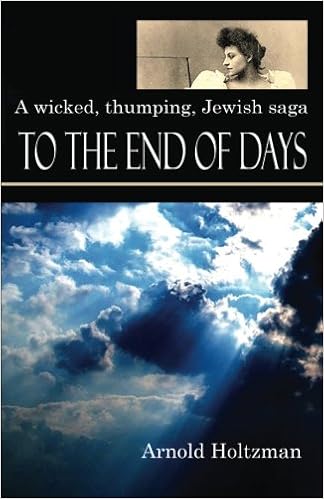 To the End of Days is a pulsing theater rich with allegories of Old Testament narratives. This is the story of a heritage delivered by a mother to her very young sons in the last hours of her life. It is a heritage which man could not modify, time could not temper, and the expanse of oceans could not distance from their lives. This is a book of secrets. The steamy alchemy of will, fate, and destiny deliver a kaleidoscope of everything human and inhuman in man. It is an epic saga charged with life and the thick rich of blood. where lawlessness and anarchy are the vehicles of timeless and inexorable laws of this universe. But all that was promised becomes delivered.
His Quest to Save the World

Nathaniel Turner Author Interview
The Chimaera Regiment follows Hector as he sets off on a world altering journey. What was the initial idea behind this story and how did that transform as you were writing the novel?
The first idea that I incorporated into this story, or what eventually became this story, was the question, “What if someone compelled a worldwide society, perhaps not far into our future, back to a level of technology and culture comparable to the very first tribal communities?” Of course, by the time I wrote the book, I had decided to aim for something closer to the late Bronze or early Iron Age than the Stone Age, and the whole question became part of the world-building rather than a story I tell during the book.
The character of Hector started to develop as I began to catalogue ideas and lay out a basic plan of the plot. Up to that point, I had never completed anything longer than a short story (in spite of my best efforts), so I wanted to make it as easy as possible for myself to get all the way through a novel. To that end, I took that advice so frequently bandied about, “Write what you know,” and decided to make the hero someone a little younger than I was at the time.
The first draft of the novel was quite a bit shorter than it is now, and it ended up collecting dust in a box for a few years. (I prefer to write first drafts by hand.) Around the time a movie was released with, by total coincidence, my working title, I decided to go back to it and see what I could make of it. By that point, I had gotten a college degree and learned enough to know that the first draft had a good core, but the implementation was all wrong. Over the next couple of years, I went through the entire book and rewrote it, this time trying to make sure all the pieces aligned. It was at this point that I incorporated mythology into the story and titled it The Chimaera Regiment.
That initial idea is still in there, and you can see the edges of it as the backstory develops through this book, but I’m going to explore that question more closely in future books.
I think the story has roots in mythology. Do you read books from that genre? What were some books that you think influenced The Chimaera Regiment?
It does, and I do. My bachelor’s degree is focused on the Classics, which some may have heard called Classical Studies or (my favorite) Classical Philology, so I learned Latin and ancient Greek and I read a lot of Greco-Roman mythology, both in English and in the original languages. (My knowledge of Norse mythology is pretty limited, I’ve barely touched Egyptian mythology, and I’m as clueless as the next guy when it comes to anything else.)
For The Chimaera Regiment in particular, I looked to a lot of different sources for inspiration. What I wanted, perhaps most of all, was to craft a story that people would enjoy regardless of their educational background, but I also wanted to include a lot of “Easter eggs” for people with the same knowledge-base I have. So on the surface you have Hector on his quest to save the world from the Chimaera Regiment, and underneath that, I’m incorporating themes and plotlines from the myth of Bellerophon. Bellerophon, of course, was the hero that killed the Chimaera in the Greek mythos. Most of that particular tale comes to us from the writings of Apollodorus and one section of Homer’s Iliad, but there are a lot of minor references in other works, too.
While the myth of Bellerophon and the Chimaera is interwoven with the main plot, I also included references to other myths, both significant and minor, throughout. The vast majority of those can be found in Homer (either the Iliad or the Odyssey), Vergil (the Aeneid), or Ovid (the Metamorphoses), but to be honest, I enjoyed the process of hiding those references so much that I’m not completely sure I could tell you all of them at this point!
I found the characters in this story to be complex and engaging. What were the driving ideals that drove the characters development throughout the story?
Especially when it came to Hector, whom we follow more closely than anyone else, I wanted something realistic. I find a lot of “coming of age” hero stories jump too quickly from “callow youth” to “great warrior” without much reason for it. I didn’t want my readers to ask, “Wait, why can he do that? How come he’s not daunted by this fight or fazed by this tragedy? When did he have time to learn strategy?” Incorporating that development was important to me.
When it came to the other characters, it was a matter of establishing ideals for each of them—how they saw the world, how they expected life to go—and then challenging those ideals with reality. Sometimes reality is better than they thought, but usually, it’s worse; either way, they have to adjust to deal with that. It’s a process not altogether different from the way we deal with change in our own lives.
I find a problem in a well written stories in that I always want there to be another book to keep the story going. Is there a second book planned?
There is a second book planned (and, very roughly, a third). The sequel is titled The Aegipan Revolution and picks up, not where the main story of The Chimaera Regiment leaves off, but rather where our epilogue leaves off, with the child learning this epic tale from his history.
I’m in the midst of writing The Aegipan Revolution, and I’ve passed the halfway point, but there is still a lot left to tell. After that, I’ll need to edit it thoroughly (though hopefully not as slowly as the first book!). On top of that, my day job has me incredibly busy these days. So I’d love to set a date for the next book’s release, but I can’t realistically estimate that right now.
Author Links: GoodReads | Twitter | Facebook | Website
It is late autumn in the 2040th year of the Sixth Era. For centuries, peace has reigned among the tribes of men, but as an early chill descends on the land, a new war looms from the south. Lord Derek, ruler of the Chimaera Regiment, seeks to reestablish the ancient Fylscem Empire under his banner, and he will stop at nothing to restore the dominion of his bloodline.
Before him lies the idyllic Valley of Kyros, home of the Alkimites, where the last direct heir of the old empire lives in ignorance. Guided by the ancient Guardian Lord Aneirin, Hector son of Abram must travel to the primeval capital of his heritage. There, in the Library of the Ancients, he must retrieve the three Blessed Blades of the Emperor, symbols of his authority. Agents of the Chimaera Regiment pursue him, and barbaric tribes stand in his way, but his path may unlock the secrets of the past, and it could bring light—or darkness—to the future.
Bodybuilding for Weight Loss: Facts About Weight Loss Through Body Building That You Did Not Know About

 Want to lose weight and look great but don’t know where to start? We’ve all heard that to get that perfect summer body we need to exercise right and eat well – but where to begin? How do we get there? Is simply jogging and eating a few more vegetables enough?
Bodybuilding for Weight Loss by James Eaton seeks to answer those questions. Eaton takes the workout regimen and diet typically used by bodybuilders and shows how anyone can lose weight and look great by following their lead. Eaton organizes and breaks the information down into digestible chunks that even those with no gym experience can understand and apply. While occasionally he jumps from one topic to the next a bit too frequently you can get lost in all the information he presents. His book is a solid building block for learning how to lose weight through bodybuilding.
Eaton starts by giving a rapid-fire history of bodybuilding, tracing its roots from ancient Egypt and Greece to the 20th century when professional bodybuilding competitions really came into their own. After that historical introduction though – it’s all business.
Taking a holistic approach, Eaton stresses the importance of coupling appropriate exercises with the right foods. To see results, you’ve got to give your body what it needs and then work it appropriately. Eaton walks through the raw foods consumed by bodybuilders, such as onions, apples, and brown rice, and explains why each is such a great option for building muscle and losing fat. However, it’s not just about what you eat, it’s when you eat as well. He points out that eating certain foods before or after working out will help build muscle faster. For example, eating foods higher in carbohydrates just before getting your pump on will keep you powered throughout your work out. But, those same carbs eaten just before bed will simply turn to sugar in your body, undoing your hard work at the gym. It’s this sort of insight, Eaton’s explanations of the reasons behind his recommendations, that really keep you reading.
Healthy eating is only one side of the coin; it’s got to be balanced with aerobic exercise and weightlifting to really see the body you desire. Eaton doesn’t leave us in the dark here either: He provides us with step by step instructions for several weightlifting exercises and walks through how to perform them correctly. Barbell bench presses, seated dumbbell press, bar curls, and even the Arnold press (yes, named after that Arnold) – it’s all here. And for those of us who’ve never picked up free weights before, the pictures and texts are easy to follow and make you want to grab some soup cans and try them out.
The book provides valuable insight and a clear path to losing weight through exercise and diet. Eaton’s passion for the subject clearly shines through.
Pages: 47 | ASIN: B00T3ETMIU



 LITERARY TITAN