Blog Archives
Laburnum Lanes
![Laburnum Lanes by [Shantha]](https://images-na.ssl-images-amazon.com/images/I/51fNomIw5NL._SY346_.jpg)

Laburnum Lanes is a small collection of beautiful poems by Shantha. The poems mainly contain nature themes, such as birds and marigolds, with birds as illustrations. Some of the poems have continuances. For instance, a poem may continue into another poem, telling a short little story within those small series of poems, while all of them tie together pleasantly. The book is serene with its descriptions of nature and the beauty of it. The poem book is also incredibly cultural. It makes references to Indian culture and the author provides footnotes to define the specific aspects.
I enjoyed this collection of poems. While it is a short read, it is a beautiful one. Many of the lines of many of the poems resonated with me or touched me in a profoundly deep way. A lot of the lines paint detailed exquisite visuals. For example, “Strawberry Filled Path” elicits visions of strawberries on the ground as well as gives the visual of someone holding strawberries. You can even get the smell and the feel of sunshine from it. Shantha’s words jump from the page and really make you feel like you are in the scene they paint. Similarly, “A Large Palm” does the same as “Strawberry Filled Path.” The reader sees the flashes of imagery. Many of Shantha’s words are paintings that have come to life, with being able to see, smell, and even feel the some of the descriptions. It takes talent to be able to construct strong sensory responses. Even the title of the poem book evokes imagery of the trees.
Poems like “Togetherness” also have great lines in them, like “marigolds come from heavens/They are not born of the womb.” It has such powerful phrasing. Then there is something like “Meditation” that resonates with me because it illustrates parts of life so well. Many of these poems are like this poem in that way, where it is relatable because it reflects life.
I have so many poems bookmarked because they either resonated with me in some deep, profound way, they were relatable, I enjoyed the imagery, or I loved the phrasing. I am a huge fan of poetry because it can be done so well and conjure up different feelings and can even be an outlet for feelings. I think Shantha was able to do this magnificently with their poems, tap into universal feelings while also giving readers a taste of Indian culture. It definitely made me want to look into Indian culture more and be more educated about it.
I think good poetry makes you feel something, but great poetry leaves this feeling of change within you. It gives you new knowledge, new perspectives, and the hunger for more of it all. That is what Shantha’s poetry did with me. It was interesting and beautiful. I highly recommend this book of poems to anyone who is a fan of poetry or even just pretty words and phrases.
Pages: 130 | ASIN: B07DLZPCXL

For The Difficult People Who Sometimes Never Know

Sarah Elliston Author Interview
Lessons from a Difficult Person: How to Deal with People Like Us is a guide for people who find themselves dealing with people they find difficult. Why was this an important book for you to write?
As a recovering difficult person, I find myself aching for the people who didn’t say anything to me as I gaffed, who avoided me rather than take the time to help me see how annoying I was. I wrote the book for all of us who avoid difficult people, to help them actually have conversations with them. And I wrote it for the difficult people who sometimes never know how they are perceived by others and feel lonelier and angrier and distanced from others.
I understand that you are a successful workshop leader and trainer. What is one common misconception you find that people have about ‘difficult people’?
One common misconception people have about difficult people is that their behavior is purposefully hurtful; deliberately unkind.
I enjoyed the personal stories you shared. Was this always going to be a guide book, do you think this could have easily been a memoir?
I wanted to help people understand how difficult people are unaware of their impact on others and to do that I had to use my own life stories. It could have been a memoir but my passion is helping difficult people discover that they can change and the only people who tell them would be the readers. Thus, I included the exercises and practice processes for having a conversation.
What do you hope readers take away from your book?
I hope readers will look at difficult people differently and look for ways to help. I hope readers will see that difficult behavior is a habit, and it can be changed.
What is the next book that you are working on and when will it be available?
I am currently working on a book with more stories about my life in terms of how I changed, with the focus on how difficult people can change; either a reader or a friend of a reader.
Author Links: Facebook | Twitter | Website
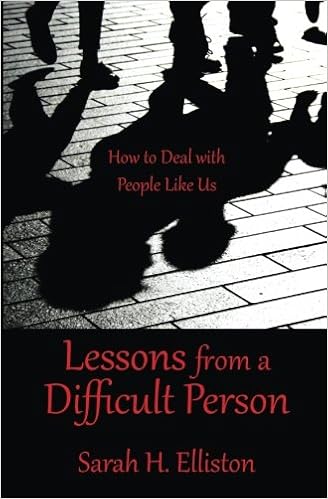 The funny thing is that Sarah Elliston never realized she was “a difficult person,” –someone who harangued people until she got her way, threw snip fits and temper tantrums, talked over her bosses and pointed out what she thought were their misconceptions. In her family, where she felt bullied, the only way she knew how to get someone’s attention and approval was to voice her opinion–and loudly! Without standing her ground, how could she do what she thought was best for herself and everyone else around her. She wasn’t intentionally mean-spirited. She was just trying to do what she thought was RIGHT!
Until a kind, but firm, boss woke her up! With great compassion, and strength, her boss pointed out that her actions had consequences. That in being “difficult,” she was not only disrupting the office camaraderie and production, but impeding her own professional advancement.
That’s the beginning of Sarah’s transformation– when she started on the journey to leave behind the difficult person, and become the woman who teaches others how to deal with difficult people. Sarah “Sam” Elliston is now bringing forth her vital manual on how to awaken the challenging personality, and change both the relationship and the environment with her new book Dealing with Difficult People; Lessons Learned from a Difficult Person.
Today, Elliston is a highly successful workshop leader and trainer, who offers wisdom learned the hard way–and through rigorous study and certification in many areas of professional training that aid her in her work — Values Realization, Parent Effectiveness Training and Reality Therapy. She is a faculty member of the William Glasser Institute. Glasser is an internationally recognized psychiatrist and developer of Reality Therapy, a method of psychotherapy that teaches people they have a choice in how they choose to behave.
For Good Health

Shantha Kumar Author Interview
The Vegetarian Diet Guru is a guide that provides strategies to design diets for specific nutritional needs. Why was this an important book for you to write?
Diet plays a central role in determining the structural and functional basis of our living and is basic to our sustenance and productivity. Modern medicine has relegated the role of nutrition in our well being, and I wrote this book mainly to bring its importance to the fore and also provide individuals with the knowledge and means to be in charge of their dietary planning. Nature has provided us with a bounty of options to fulfill our nutritional needs but it is up to us to make the right choices for good health. I wanted to outline recipes that use natural, time-tested ingredients and combinations that utilize the latest scientific principles that enhance the value of food, while providing flavor, nutritional balance and variety.
In normal body homeostasis, all parameters fall within normal ranges and the body is on autopilot mode, with the various systems working in unison to provide robust energy, growth and vitality. However, in disease conditions, the body is off balance and requires additional monitoring, medications and diet therapy to function effectively. While the recipes in this book are based on vegetarian selections, they can substitute or supplement non-vegetarian diets as well, as the nutrients and their actions are very similar.
This book has more than 150 recipes. My favorite recipe was the Green Chilies Curry. What is your favorite recipe from the book?
My favorite dish from this book is Masala Okra Curry. Okra is a valuable vegetable in vegetarian diets due to its multiple benefits. Okra is high in fiber, being a rich source of soluble pectins and gums that lower cholesterol, insoluble fibers that aid digestion, and mucilage containing polysaccharides and glycoproteins that lower blood sugar. Other carbohydrates include low glycemic neutral sugars galactose and rhamnose. Okra seeds have 20-40% essential unsaturated fats, and also, rare in vegetables, high amounts of protein, made up of amino acids lysine and tryptophan which are usually lacking in cereal-based vegetarian diets. Okra is also rich in polyphenols and catechins, which provide exogenous anti-oxidant defense against lipid peroxidation and increase endogenous glutathione peroxidase for stabilizing intracellular redox status. This powerhouse of nutrition in this recipe is combined with tomatoes, onions and spices which add to its value. This curry can be a side dish to accompany rice, rotis or complement other menus.
What is a common misconception you find people have about dieting and how they can overcome it?
The common misconception about diet is “one size fits all”; however, people are very unique with respect to their dietary needs, tastes, cultural preferences and health status. Thus, menus have to be customized taking individual factors into consideration. Often, it is difficult to find the right solution for dietary problems and information sources can be confusing or misleading, sometimes even dangerous. In addition, there are plentiful natural, prepared and commercial foods to tempt our palate. In these cases, it may be best to follow safe or tested alternatives that are proven to be effective.
Another common aspect of diets is their content and how the combination of foods affects their assimilation. That is why knowledge of nutrient values helps to precisely target the recipes and menus towards meeting the requirements as closely as possible. Often, with diets and nutritional health, a holistic approach works best rather than an isolated, symptom-based approach. The dieter should aim at harmonizing various body systems in the most optimal way, gearing towards maintaining equilibrium and normal function. Diet should be the first line of action in preventing disease and always have a supportive role in curing and ameliorating abnormal conditions.
Some diets can give results for a short time, but may not be practical for the long term, but here the diet plays a timely role to correct deficiencies or excesses and normalize after which, one can switch to a maintenance diet. Also, some degree of experimentation or trial and error can be allowed with diets and individuals can tailor their diets according to how their body reacts to foods. In the final analysis, a good diet is one that makes you feel happy, energetic and healthy.
What is the next book that you are working on and when will it be available?
In this book, I have explained basic principles of Nutrition and Diet Planning in health and some abnormal conditions. In my next book, I would like to provide further details, better understanding and additional resources for healthy diet planning. Dietary practices are very personal and it takes time for people to commit to change. Diet should be habit forming and in tune with our lifestyle and modifying them according to our needs is a lifelong process. I would like to provide convincing arguments for food choices, simplified menu planning and food preparation strategies, dietary guidelines for other specific conditions and equip people with knowledge, freedom and practices to plan and use their diets optimally for the health and well-being of their family. As we delve deeper into our knowledge about what, how and why our body works, we realize that we have to reclassify foods and nutrients further into sub-categories that work in a coordinated manner. Although all this information may not fit in a book, I would like to popularize these ideas and publish at appropriate times to reach a larger audience.
Author Links: GoodReads | Website | Facebook
 “The Vegetarian Diet Guru” is a nutrients-based menu planning guidebook that explains and provides strategies to design diets that meet nutritional specifications according to individual requirements. There are low-calorie recipes for weight loss; low-glycemic carbohydrates based recipes for blood sugar control in pre-diabetes and diabetes; rice, millets and oats-based recipes that can be used for individuals with wheat gluten hypersensitivity; high fiber vegan and vegetarian recipes for gastro-intestinal health; high protein dishes using lentil bean and dairy proteins to lower BMI (Body Mass Index) and increase muscle mass for vegetarians.
Available on Pothi.com
The Warrior Teenager: Let Go of Self-Sabotage & Embrace Your True Power
![The Warrior Teenager: Let Go of Self-Sabotage & Embrace Your True Power by [Fernandez, Mary Lynne]](https://images-na.ssl-images-amazon.com/images/I/516iC6i4GsL.jpg)
In this world where everything is fast paced and competitive, one can feel a little overwhelmed. They can feel lost in the crowd. They can feel like they are drowning in their inability to measure up to society’s expectations and standards. It is not easy. It is not ideal but it is what it is. There is nothing more to do than equip the future generations with the skills to ignore all the news. The wherewithal to see the standards but not bend to them. The ability to understand that the only standards worth measuring up to are ones set by one’s own self.
Mary Lynne Fernandez, with her extensive experience and brilliance, seeks to do exactly that with this book. She seeks to guide teenagers through life. To arm parents with tools to efficiently and successfully navigate the mucky and turbulent waters that is parenting to teenagers. She seeks to shine a light on this depression and suicide epidemic. She seeks to weed it out. She seeks to ensure teenagers seek help before they seek the noose. The only way to achieve this is by harnessing one’s own true power. To embrace and overcome. Suicide is not the way out. Staying alive to fight and exorcise those demons is.
The author has done an excellent job of appealing to her demographic. She does not tell the reader to just get over it. She outlines practical steps with passion and affection. Her delivery and presentation are powerful. She lays a strong foundation for her message with vivid writing that uses simple but powerful language. She is not looking to provide answers but rather a road-map to realization. The subject matter is relevant, relatable, and rings true. She has addressed the conversation in a sensible and sober way.
I think this book is aimed at two demographics. The first is the teenagers, of course. They need to understand just how stacked the deck is and how to play the game. They need to understand the truth about the world they live in. Parents of said teenagers will also find this book useful. The author does a good job of addressing both generations. I felt that she understood and appreciated the different situations and thus successfully speaks to both parent and teen.
This book is inspirational and useful by providing ingenious insights that are both practical and applicable. If you go into the woods, you may bring a wilderness survival book. If you’re becoming a teenager you may want to take this book along with you. This book will help you approach your thoughts and passions with fresh eyes. Read it. Understand it. Utilize it.
Pages: 188 | ASIN: B07CSF7PPN
To the End of Days
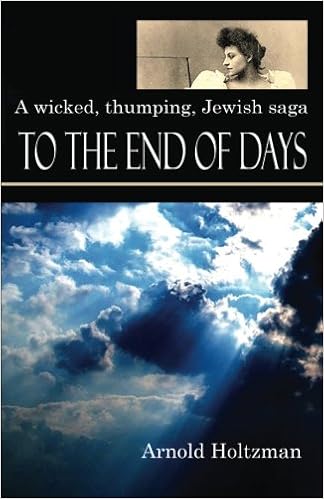
When the Cossacks invade their village, young Avrum and his brother Hershel manage to hide and survive the attacks which kill more than 80 members of their small Polish community. Trying to gather their wits about them and come to terms with the deaths of both parents, the two boys decide to make their way to the synagogue in Lvov. The road to Lvov is paved with one horror after another, and a harrowing experience at the home of a decrepit old woman leads to the brothers’ ultimate separation. Avrum, the tragic main character in Arnold Holtzman’s To The End of Days, spends the better part of his young life making his way to America to build a life for himself and, hoping beyond hope, to reunite with Hershel.
Holtzman has the striking ability to appeal to all of the reader’s senses through his writing. The scene in which Avrum and Hershel are fighting for their lives at the cottage of the old woman is particularly gripping. I was utterly repulsed by the vivid descriptions of the vile woman and the filth in which she lived. As horrific as the circumstances were, I was unable to tear myself away from this disturbing string of events. The same can be said for each stage in Avrum’s life. As he moves across the country and eventually on to North America, each new circumstance brings rich details, vivid images of despair, and poignant scenes of his struggle as an immigrant.
The various settings described throughout Avrum’s journey are exceptionally well-written. At every turn, I felt myself immersed in the sights and sounds of early 1900’s America and the Jewish culture. Holtzman leaves nothing to the imagination which, in turn, leaves the reader more time to focus on the plot surrounding Avrum and the subplot focusing on Fanny.
Avrum captured my heart from the moment he and Hershel faced the fate of their mother. His heart-wrenching grief and his determination to find his brother dominate his life for years, and are the driving force behind everything he does from finding work and wrestling when offered the opportunity to pursuing every lead no matter how futile it may seem. Avrum’s strength is unmatched.
Bella is not a character I enjoyed–but I wasn’t supposed to feel warm toward her. Holtzman has done a phenomenal job creating a selfish, arrogant, and needy female match for unlucky Avrum. Though she doesn’t make her true intentions known until much later in her relationship with Avrum, I admit I was suspicious of her from the beginning. She is one of those characters who is far too concerned with making herself understood and appreciated. The author has succeeded phenomenally in creating a character worthy and deserving of the reader’s loathing.
Intermingled with the characteristics of historical fiction is a pleasing amount of mystery. Avrum encounters numerous clues to Hershel’s fate throughout the years, but the author skillfully weaves a web of subplots while redirecting the reader’s attention. Even to the final pages, I was yet unsure of poor Hershel’s fate. Kudos to Holtzman–this is how I prefer my fiction.
Fans of historical fiction will appreciate the insanely detailed descriptions of the havoc wreaked by the Cossacks and the accuracy regarding the Jewish culture. Avrum and Hershel represent everything that was wrong with this period in world history and everything that can go incredibly right when a man remains unfailingly loyal to his family.
Pages: 410 | ASIN: 1977981844
Looters and Grabbers, 54 Years of Corruption and Plunder by the Elite, 1963-2017

“While Kenyatta initiated corruption, and made it a pastime for well-placed government officials, Moi institutionalized it and made it routine within all ranks of society.”
Looters and Grabbers, 54 Years of Corruption and Plunder by the Elite by Joe Khamisi is a detailed account of the historical and contemporary corruption plaguing the African country of Kenya. It details corruption from the highest levels of government down to average citizens. Each chapter is dedicated to a specific theme of corruption spanning from 1963 to 2017 and encompassing four presidencies; Presidents Jomo Kenyatta, Daniel arap Moi, Mwai Kibaki, and Uhuru Kenyatta.
I started this book thinking there would be some kind of a silver lining at the end, but there isn’t one. What you’ll find is a detailed account of the pervasive corruption that is literally everywhere in Kenya. Time and time again it’s shown how corruption is despised by all but is undertaken at every opportunity. It seems that anti-corruption is the political rallying call, but profit is always the underlying goal.
This is a historical book in that it does describe the rise of four of Kenya’s presidents, Kenya’s independence from Britain, and the development of Kenya’s modern government, but it does all of this with a focus on corruption; from it’s inception into it’s many manifestations in every part of Kenya’s government. One thing that I learned is how corruption in Kenya is not a local affair, but a global enterprise. European, Asian, and Western countries have had their turn profiting from corruption in Kenya.
One thing I did enjoy was how we get to see the country develop, through stories of corruption, into modern times. We go from President Kenyatta who is the first president when Kenya receives its independence from Britain, to president Uhuru who its noted as having a large Twitter following. At one point even mentioning Paul Manafort and his company helping the Kenyan President resuscitate his global image.
This is a good book for those interested in history, African culture, political science students, and most of all corruption. If you’re interested in learning how corruption is instituted, contributed to, and perpetuated, then this book is a master class in delivering specific examples.
What concerned me the most after reading account after account was that, as the author states, these are the corruption cases that we know about, and have been documented or reported on by the media. I’m sure there are plenty more that we don’t know about.
This book is exceptionally researched with a wealth of references. Joe Khamisi has done a fantastic job turning a list of corruption cases into a linear narrative that is compelling and thought provoking.
ISBN-10: 9966192123
Embrace Adversity

Annella Metoyer Author Interview
Dare to Be the Change tells the story of your life and how you overcame adversities to be the change you wanted to see in the world. Why was this an important book for you to write?
It was important for me to write this book to give the readers a glimpse into some of the adversities that women and people of color face in corporate America. More importantly, how to embrace adversity and make it your advantage by becoming the voice for others.
You grew up in a small town in Louisiana, in a time where racism was prevalent in the community. How has your perception changed of that time and place now that you’re an adult?
I do not feel my perception has changed now that I am an adult. However, as an adult, I do understand the WHY behind why some things happened.
I found this book to be inspirational and motivate me to help others seek change. What do you hope readers take away from your book?
Since the book published, I have received countless emails, phone calls, text messages from all cultures. The book is doing exactly what I hoped it would do. First, giving individuals a platform to talk to each other about a sensitive subject versus talking at each other. Secondly, it’s an opportunity for each person to tell their own story. And finally, its reenergized individuals to stand up and be the voice in the room.
What is the next book that you are writing and when will it be available?
My next book Stronger than Fear is a children’s book scheduled to be published late summer 2018. It’s about a boy named Christopher and his dog Loki experiencing bullying by members of their species.
Author Links: GoodReads | Twitter | Facebook | Website | LinkedIn
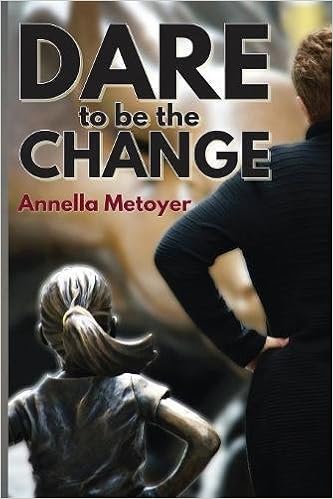 In Dare to be the Change, Annella Metoyer courageously shares the details of her life’s challenges, her family’s dedication to positive change as well as offers hope for readers through her struggles and accomplishments. Starting with the integration of her small town public school, she encounters a life-changing experience that sets her on a path of “being the change.”
Not only did she face the challenges when women were not the voice in the room, but she also did so as a person of color. From coworkers to disgruntled customers’ discrimination, she lived the evolution of attitudes. With each adversity, she became more determined to take the challenge and turn it into an advantage.
Annella Metoyer was blessed to experience many firsts. She was the first person of color employed by a local bank and ultimately became the City President for a large corporate bank. Her journey later took an unexpected turn when she transitioned from employee to entrepreneur.
Dare to be the Change will resonate with anyone that has ever faced adversities. As you read the story, you will rejoice in the strength that Annella finds within to help others and to make this world a better place.
All That is Romantic

Pamela Horter-Moore Author Interview
LoveQuest is a dramatic retelling of an ancient Greek myth about Psyche, a mortal woman, and Eros, the god of love. Why did you want to retell this story and what were some new ideas you wanted to introduce?
I’ve always loved mythology, from the time I was first exposed to it as a child. As a student of literature, I was aware of how the ancient myths continued to influence art and culture to the present day.
There were myths in particular that caught my attention, and, in my early 30s, I was particularly drawn to that of Eros and Psyche. I never imagined a Roman setting, but the romantic, wonderful, and bucolic setting of ancient Greece.
To me, the myth of Eros and Psyche comprises all that is romantic. Each of us yearns for a partner who is the ideal of everything we’ve ever dreamed of, but somehow we don’t believe we are worthy of such love.
We deceive ourselves by letting others define us. We vacillate and let fear conquer us. The world leads us astray and we fail ourselves and those who love us.
To be human is to be like Psyche. I identified with her and all her failings, as well as with her attempts to make reparations and redeem herself.
Psyche held her gifts in low esteem, and that was her first mistake. Beauty is a gift, and those who are blessed with it are meant to shine, just as a writer must write and a dancer must dance.
Being morbidly influenced by her malignant sisters was another of Psyche’s mistakes. It should be easy to tell a friend from an enemy; people should not let their enemies define them or direct their behavior.
Eros has a coming-of-age experience; he takes a path distinct from his mother’s and follows his own destiny. As for Aphrodite, she has to decide whether she should set her child free or protect him from making a grown-up’s mistake.
At one point, Psyche has an opportunity to escape her trials and slink back home. Instead of choosing the mediocrity of a safe and easy path, she decides to follow her heart and endure and suffer for a higher objective. The difficult path is the one that gives us a chance to stretch ourselves, excel ourselves, and be better than we would otherwise be.
On an elevated level, the myth is the story of the redeeming power of love, and of the soul in search of redemption and perfection.
I felt that your characters were well developed and their personalities were distinct. What are some important traits you like your characters to have?
I want people to identify with my characters, or at least see in them what they see in others. A character cannot succeed unless he or she connects with the reader. The reader doesn’t have to like the character; it’s only important that the reader perceives the character as alive and real.
I don’t want my characters to be too good or too bad. There is risk of falling into parody if they are. My villains, if they can be called villains, are not all bad; they just behave badly.
What kind of research did you undertake to ensure you got the mythology right in LoveQuest?
The main source for my story is The Age of Fable (1855) by the American writer Thomas Bulfinch (1796 – 1867). This has been a classic and standard text for the Greek myths ever since.
Bulfinch appeals because he attempts to write the myths with all “the charm of a story book,” while adhering “to the text of the ancient authorities.” He writes “for the reader of English literature” and “to popularize mythology and extend the enjoyment of elegant literature.”
I have allowed Bulfinch to provide the framework of my story, but I have attempted to expand upon it, infuse it with other elements of magic and wonder, and, I hope, provide readers with a greater depth of understanding for the lessons the story imparts.
I have taken some liberty with Bulfinch’s story of Eros and Psyche. Gaia, the Earth Mother, is an immortal apart from the gods of Olympus. The talking animals are a tribute to C. S. Lewis and Disney, and the intervention of the South and North Winds is my own device, providing a natural way to give Eros allies outside his mother’s influence.
The mysterious Dream Lover is a mystical being born of imagination.
What is the next novel that you are working on and when will it be available?
I have been spending much of my time since the publication of LoveQuest in promoting my books (my historical novel Brief Candles was published in 1983) and sharing my short stories on my website. However, I do have many projects planned and already in development.
I am building a narrative around the diary I kept when I was fourteen, filled with the anxieties, vanities, and pain of adolescence.
Another project is a dystopia of a class-based society where the tidal wave for change is already churning under the surface of a closed and exclusive world.
An overreaching work is a history of late 15th century England during the period popularly known as the Wars of the Roses. I have been studying that period on and off for over 50 years, and friends have encouraged me to collect my research in a nonfiction book.
None of these projects is close to completion, and I know by experience that a sudden inspiration could cause me to push something totally unexpected forward.
One way or another, I will never stop writing.
Author Links: GoodReads | Twitter | Facebook | Website
![LoveQuest by [Horter-Moore, Pamela Jean]](https://images-na.ssl-images-amazon.com/images/I/511KGCQbJRL.jpg) LoveQuest, a romantic fantasy, is a light-hearted retelling of one of the most enduring love stories from ancient Greek mythology: the forbidden passion of Eros, the god of Love, for the mortal woman Psyche.
LoveQuest, a romantic fantasy, is a light-hearted retelling of one of the most enduring love stories from ancient Greek mythology: the forbidden passion of Eros, the god of Love, for the mortal woman Psyche.
A god’s love for a mortal woman…
It is ancient Greece, a world of gods, superstition, and magic. The villagers dwelling under the eyes of the jealous and capricious gods on Mount Olympus seek to gain their favor and to uncover the mysteries that only the immortals can know by turning to priests, soothsayers, seers, and fortune-tellers.
The oracle of the divine Apollo is one of the most famous of these seers. Although physically nothing more than a pool of water in a cavern, its wisdom is so renown across Greece that many journey far and wide to seek its counsel.
Among the pilgrims are the wealthy cloth merchant Pericles, his wife Leena, and their daughters Medea, Tanna, and Psyche. Although Psyche is blessed by Aphrodite, the goddess of Beauty, and is cherished by the people of her village for her loveliness, she cares little for their attention, seeking only the approval of her envious and malicious sisters.
Medea and Tanna ridicule the oracle’s prophecy that Psyche will make a “marvelous” marriage to someone “not human,” and use it as another means to torment their sister, driving her to tears.
Offended by Psyche’s behavior and not accustomed to being taken for granted, Aphrodite retaliates by asking her son Eros, the god of Love, to punish Psyche with a life of lovelessness.
Coming to Psyche and her sisters under a cloak of invisibility, Eros is filled with pity for Psyche but determined to carry out his mother’s wishes. Aphrodite’s plan goes amok when Eros wounds himself with his own arrow carrying out the punishment. He falls in love with the woman his mother hates.
Eros must make a decision: Will he do his mother’s bidding and resist the power of love, or will he defy her by setting his own course in pursuit of Psyche’s heart?
And, if he develops an elaborate plan to win Psyche, whose help can he enlist? Is love with Psyche possible, and how long can he keep up his deception before his mother discovers him?
Compared with Eros, Psyche is a novice at love. Eros can’t approach her as a human suitor would approach a human woman. She too has a decision to make: Should she believe the loving words of a mysterious stranger, or should she believe her sisters?
The consequences for Eros and Psyche are dear. Aphrodite’s temper is not something to toy with. She is angry enough with Psyche, but if Psyche should do wrong to her son Eros, there might be no end to the punishment Psyche faces at the hands of the jealous goddess.
Psyche must choose between betrayal and fidelity, just as Eros must connive to win her love and the approval of his mother. Both of them must be put to the test in order to find their heart’s desire.



 LITERARY TITAN