Blog Archives
Amazing Experiences

M. P. Prabhakaran Author Interview
An Indian Goes Around the World – II recounts your travels through Europe and shares the amazing experiences you had along the way. When you first set out on your journey were you expecting to encounter so many interesting people?
No. It was those “amazing experiences,” as you put it, which I had in the early stage, that made decide that I must travel to as many countries as I can before I kick the bucket.
You come from a teaching an journalism background. How has your professional background helped you write this book?
My thirst for learning is attributable to the two professions I straddled. Whatever writing skill I have is attributable to my background in journalism. English is not my mother tongue. So to survive in journalism in the English language, I had to put in extra efforts to learn the finer points in English. I realize that I will have to continue those efforts until my dying day.
You state in the book that traveling has opened your mind. Do you think that everyone should undertake such traveling?
Yes, it opens your mind to many things you were blissfully ignorant of until then. When you travel to a new place and interact with the people there, you learn to your surprise that many of the notions you had about both were false. So traveling is not anly a learning experience, bout also a correcting process, in life.
What is the next book that you are working on and when will it be available?
It is a collection of some of the political and social commentaries I published on the online monthly I edit. It is expected to be out in about six months. Side by side, I am also working on my third book in the “An Indian Goes Around the World” series.
Author Links: Amazon | GoodReads
![An Indian Goes Around the World â Ii: What I Learned from My Thirty-Day European Odyssey by [Prabhakaran, M.P.]](https://images-na.ssl-images-amazon.com/images/I/51aY1g4hq2L.jpg)
This is the second book by M.P. Prabhakaran on his world-trotting experience. The first one, Capitalism Comes to Maos Mausoleum, was published three years ago. This book is devoted exclusively to the 30-day tour he undertook through 10 countries of Europe in the summer of 2009.
If academic qualifications are a measure of ones learning experience, Prabhakaran says in the Preface to the fi rst book, he has a string of them, including a Ph.D. in Political Science from The New School for Social Research, New York. But, he hastens to add, what I learned from this prestigious American institution and, before that, from various academic institutions in India is no match for what I did from my travels around the world.
In describing what he felt at the end of the 2009 European tour, he goes a step further. The more I travel, he says, the more I discover my ignorance. He admits that his description is a
mangled version of poet Shelleys immortal words: The more we study, the more we discover our ignorance. But, he adds, he could not find a better way to express his enlightening experience.
The tour of 10 European countries, he says in the Preface to this book, opened his mind to various aspects of European cultures he had been quite ignorant of. Through the subsequent pages of the book, he shares with readers the knowledge he gained from conversations with people and from events and objects he got exposed to during that tour.

The Bookbinder: A Personal Journey with the Tsaddik Rabbi Yitzhak Kaduri
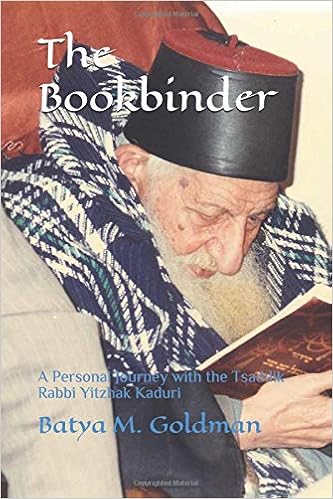

In an age where science attempts to explain everything, it can feel like the world has run out of mysteries. In reality, we still struggle to rationalize many aspects of life. Batya M. Goldman’s memoir, The Bookbinder: A Personal Journey with the Tsaddik Rabbi Yitzhak Kaduri sheds light on one such mystery. The book follows Goldman’s family as they move to Israel, try to raise a family, battle illness, and start their own business. All of these endeavors keep connecting to the famous (although highly secretive) Rabbi Kaduri: a physical as well as spiritual bookbinder.
Much of the memoir focuses on Goldman’s family life in Israel. But she clearly shares these stories in an attempt to fill a void left by a humble man who did his work without concern for his lasting legacy. This old soul helped guide Israel and its people through many decades. And the insight into his methods, perhaps being written down for the first time, is fascinating.
Still, there is no doubt that Goldman wrote this book for an audience familiar with Orthodox Judaism. That’s not to say that there’s nothing here for readers from different backgrounds. The stories are layered with journeys and returns between Israel and the United States. It’s also a moving portrayal of a young mother in a new land with a traveling husband dealing with chronic health problems. In these sections, Goldman praises the community she discovered in Israel. Relative strangers, linked by connections to Rabbi Kaduri, take care of one another. Accounts of miracles and visions from deceased loved ones also pepper the account. These always seem to be presented in a straightforward, matter of fact way. In doing so, the memoir has an honesty to it that those who don’t prescribe to the Jewish faith should appreciate, but will probably be confused by.
Ultimately, Goldman delivers a sincere account of a life both vastly different and surprisingly similar to that of the average reader. The specifics of her memoir will likely appeal to those already familiar with, or interested in learning, Orthodox Judaism or Israeli culture.
Pages: 105 | ASIN: 151941868X
Crimes of Rumba – Trailer
Crimes of Rumba is the hottest, epic combination of business, politics, music, and of course, crimes behind the predatory conduct culture that has glamorized the worst corporate malpractice in US cultural history. As a matter of law, order, and economy, the state administrations intolerance and crackdown on musicians dissent and opposition to the colonial music cash crops production is authoritarianism at best and without precedent in the worlds history of colonization and music. This legal truth and material facts-checkings operation is the blunt, exclusive disclosure of the sources and methods used for the cultivation and autocratic harvest of music cash crops in the Belgian Congo, which were economically engineered from and back to America for its consumption through misinformation, disinformation, deceit, and fraud. Not only is this the tale of the utmost scam that has been very fully funded to defraud the worlds collective memory of rumba, it is the hefty price that our humanity has dearly paid for without consent for Foniors crimes of rumba for decades. Silence has been complicity at worst from the people with knowledge of the case against rumba. Not only are the material facts and consumers rights violated and suppressed, along with musicians copyrights for decades, the morally repulsive glamorization of the fraud has brought creative freedom in the worlds music into disrepute. A lot of readers will discover Thierry Antha with the publication of Crimes of Rumba, Volume I of Congo Music. But this international journalist carried decades of excellence in covering the Congo and Haitis politics, business, and entertainment. His professional and personal ties with all the most famous Congolese musicians in advocacy, promotion, and production of their musical works have crowned him the best authority with respect to the Congo musics history. Contrary to all the spinning, posturing, and work of fiction for rumba, Thierry Anthas expertise and dedication to exposing the truth behind material facts and laws related to Congo music from the Belgian Congo to the Congo is second to none. Embark in this riveting literary journey to discover how Socit Gnrales authoritarian harvest of music cash crops has shattered and destroyed lives and careers for its economic gain in the Americas. Without censorship, Crimes of Rumba, Volume I of Congo Music exposes Foniors victims long overdue rebuttal, which is long way apart from the reality of its predatory conduct culture and its propaganda of rumbas fake-outs.
An Interesting Psychology

Igor Valec Author Interview
Damnation is a thrilling dark fantasy novel that follows King Lortar as he finds himself surrounded by enemies. What was the inspiration for the setup to this novel?
Loosely, the Warring States period of ancient China.
Asuf was an intriguing character that I enjoyed following. Your book is filled with interesting characters, who was your favorite character to write for?
Princess Alerise. She has an interesting psychology and fun dialogue. Plus I have a thing for tomgirls, villainesses, and blondes, and Alerise just so happens to tick all those boxes.
The characters inhabit a world with a rich backstory. How did you create the backstory for this world and what were some themes you wanted to capture?
From the ground up. First the geography, then the ecology, then the peoples and their cultures, then their histories.
As for themes, I wanted to show a harsh people bred by a cruel and uncaring world—but more importantly, I wanted to show how kindness, however small, can exist even in a world that punishes the kind.
What is the next book that you are working on and when will it be available?
The sequel to this book will most likely be available sometime in 2021.
Author Links: Website | Twitter
![Damnation: A Grimdark Fantasy Political Drama by [Valec, Igor]](https://images-na.ssl-images-amazon.com/images/I/41x%2Ba5mqJrL.jpg) An Empire fallen. A kingdom beset. A family divided. When King Lortar discovers a savage cult performing heathen rites, he’s forced to battle a foe he never imagined: his own son. Surrounded by enemies, Lortar is trapped in a world of treachery and betrayal, where mercy is vice and malice is glory.
An Empire fallen. A kingdom beset. A family divided. When King Lortar discovers a savage cult performing heathen rites, he’s forced to battle a foe he never imagined: his own son. Surrounded by enemies, Lortar is trapped in a world of treachery and betrayal, where mercy is vice and malice is glory.
An Indian Goes Around the World – II

M.P. Prabhakaran takes readers across ten countries in Europe. The exciting journey is filled with amazing experiences, new trials, immense learning, and lovely interactions. Reading the book made me understand why the author modified English poet Percy Bysshe Shelley’s words and said: “The more I travel, the more I discover my ignorance.” Traveling the world is truly fun, at least that’s what I got from M. P. Prabhakaran’s book. I learned quite a number of things as I read.
The first city the reader is introduced to is Stockholm. The fact that the author visited the Swedish city twice confirms just how much he loved being in Stockholm. One can say that M. P. Prabhakaran is inquisitive in nature. That is perhaps the reason why he knows about a lot of people, their culture and the political climate in their respective countries. He is also charismatic and easy to talk to. I loved the conversation he had with the Swedish woman married to an Iraqi while riding a bus in Vaxholm. I empathized with the woman and her baby. I loved their conversation though. Mr. Prabhakaran knows how to keep the conversation going and that’s why the woman felt comfortable talking about her life with a stranger. The author’s conversations are among the things that made the book a lovely read.
It was interesting reading about the author’s encounter with the Russian Mafia on a St. Petersburg street. Being a target because you are a foreigner is no fun at all. There was a lesson at the end of it all; don’t put all your cards in one pocket. You would have imagined that his trip would have been smooth without any trouble. His harassment with the mafia was however just a little problem that was averted without the author being harmed. His trip was mostly pleasant, with only a few incidents that can be ignored.
From Stockholm to Bergen, to Helsinki, Prague, Berlin, St. Petersburg, Moscow, and all the amazing places the author went made the story exotic, for someone that hasn’t been to all these places. Having to travel through all those countries in just 30 days is not a simple thing. The author enjoyed walking, taking the train and even flying to go see the world and learn about societies.
The author is knowledgeable in the political state of the countries he traveled. I admired that in him. I would be there reading about his beautiful trips, then out of nowhere, he would throw in a fact about the leadership of a country either in the past or present. I love that he reminded the reader of a little history that may have been forgotten.
I understand why M. P. Prabhakaran took to traveling in Europe. Given an opportunity, I would travel the world as he did. I loved that he also documented every interesting thing because I enjoyed reading his tales. “An Indian Goes Around the World – Ii: What I Learned From My Thirty-Day European Odyssey” is a lovely book that will make you want to travel.
Pages: 270 | ASIN: B0794N38FB
Paper Safe: The triumph of bureaucracy in safety management
![Paper Safe: The triumph of bureaucracy in safety management by [Smith, Gregory]](https://images-na.ssl-images-amazon.com/images/I/41qFOgokVsL.jpg)
Gregory Smith starts the book by explaining the basics in health and safety industry. Reading through the pages, one gets to understand why the author had to write this book. In his book, Gregory Smith clearly explains the difference between trivial health and safety rules, and bureaucracy. On the former, he explains that rules may be trivial, but would have a link to their purpose more often than not. The rule acts as a handrail so you may not fall down the stairs. In essence, the rule and purpose are connected. On bureaucracy, the author noted that the challenge comes because it has lost its connection with purpose. Though both bureaucracy and trivial health and safety requirements are somehow attached, the author insists that doing away with trivial health and safety requirements in the workplace does not certainly make health and safety less bureaucratic; it may not automatically display a clearer image of health and safety.
The author‘s use of real-life examples when expounding on topics was a big plus. As a reader, I sometimes fail to immediately understand the terminologies used in the text. I fully get the concept when the author uses examples which I can relate to.
In my opinion, The Safety Paradox was the most interesting topic in the book. The author started off by explaining the two triumphing mindsets. I enjoyed reading about the “more is better” philosophy, that sometimes multi-day inductions are better than a short 20-minute summary of key points vis a vis the second mindset which suggests that things done in the name of health and safety will essentially produce good health and safety outcomes. The author gave his stand either at the end and or between all discussions. On this particular one, he opined that neither of the two propositions was right.
To say that Paper Safe: The triumph of bureaucracy in safety management is a spring of knowledge would be an understatement. This book has tons of information relating to safety management, that I believe people in related fields should keep it on their desks for everyday reference.
Apart from the amazing explanations in the book, one gets to be introduced to new words. The author’s vocabulary is vast. He has a great diction and he is talented when it comes to interpreting distinct terms. Each chapter is well written for the reader to grasp the content of the book. One learns a lot from the introduction to the final thoughts.
Reading Paper Safe: The triumph of bureaucracy in safety management will definitely expand your mind. Apart from the general information about safety management and reporting, workplace tools, bureaucracy, auditing, and accreditation, one feels like they are getting schooled as they read on.
Pages: 177 | ASIN: B07HVRZY8C
The Turmoil of Future Existence
Charles R. Reid Author Interview
The Philosophical Future discusses the social and psychological challenges facing people in the 21st century. Why was this an important book for you to write?
Man is of course a creature of needs, which are easily misunderstood and in a confrontational world often taken by the individual as absolute imperatives. Violent actions and reactions, and more broadly aggressive behavior in general, tend to satisfy only, and too often, wrongly perceived needs of an instant. Long-term consequences are imprudently ignored. But it is too late as a rule to correct the mistake.
To avoid this familiar trap, nothing avails save the self-aware use of individual will — a learned capability — to survey each situation as it arises, and then rationally decide on and carry out a plan of action (including non-action) suitable to the circumstances. In an overly crowded world, and given today’s climate of festering person-to person and group-against group hostility, however, nothing appears to succeed other than violence or a threat of it. Whatever deprives the “other” of his ability to remain a self-respecting combatant can be employed. This wholly negative world view leads down an unsustainable road — in fact to social chaos.
Calls for meaningful change fall on mostly deaf ears. They do not convince. Nonetheless, the burden for positive change rests with individual minds. Such social unanimity as does occur is forced, and unless or until enough self-discipline takes hold in individual minds, and without coercion, this millennial consummation seems just as probable as another..
This book was written with such global issues in mind. Its significance lies in the message which it conveys to minds honestly aspiring to achieve a personal knowledge of what they may expect to encounter in the way of social, psychological, and moral trials in years to come.
You have an M.A. from the University of Wisconsin and an Ed.D. from the University of California, and you taught at many different schools. How has this experience helped you write this book?
Teachers, much akin to dispensers of religious doctrine, today more than ever share a burden of communicating to students more than mere facts or supposed facts originating with cultural authority. The effective teacher has also himself both learned and understood the “material” of his lessons. Even so, automatic transfer from one mind to another is a misconception. Not all learning experiences can be summed up in this formula. Even the substance of what there is to be learned erodes in this migration.
The basics of language and social skills can of course never be taken for granted. This includes all knowledge that can be reduced to a common parlance, including number, letter, names, places, dates, and even some rules of interpersonal behavior. The tyro can usually master this domain with aid from a teacher who himself studied and retained not only the rote aspect but some of the life-value of its content. Still, more than ever beyond this one needs certain more fundamental elements to make his way in life.
Most individuals, sadly enough, while they do achieve a grasp of these lesser aspects of behavioral competence, fail to move past them. Even many teachers may not learn to question themselves, to seek beyond their already memorized data base to explore the deeper significance of being human. For all further, higher knowledge, the kind needed to live with meaning, though built on a firm foundation of “the basics,” requires a yet greater step, and the true teacher recognizes this. All such higher knowledge demands a learner, as well as his teacher, who together strive for genuine understanding — so that each of them in the web of his own experience questions both himself as well as the “why” of things, basic and abstract alike.
I think this book does a fantastic job of delivering complex ideas in an understandable and meaningful way. What do you hope readers take away from your book?
To those whose developing interests include a genuine curiosity about conditions of life over the longer tomorrow, and assuming they are looking for an unvarnished view of today’s global scene, with some adumbration of what lies ahead, this book aims to provide some, but not all, and never absolute, answers. It is not indeed a prediction but an advisory. It deals only with the possible, in an age of few if any certainties.
Most young people, but also readers in general, tend to live on two levels of thought: On one hand they have a vision of society as some kind of mechanical entity; its fundamental workings go on at a comfortable distance; unless one becomes caught in their legal entanglements, they can be ignored. On the other hand, when society calls on them as individuals to participate actively in its formal activities (such as jury duty), thought and intelligence must be brought to bear; even so, the passive state of mind dominates. Typically (even in the jury room) one follows the herd.
For this typical reader this book then cannot help but sound a wake-up call. Neither mechanistic nor presumably-more active approaches to life in society in fact suffice. Knowledge of the whole and of its salient moving parts and of one’s own capabilities for adaptation to the turmoil of future existence — these will be key to genuine success in the art of living.
Where do you think society is headed and what can an individual do to ensure they are successful in that future?
The question of where society is headed and how it is likely to get there cannot be answered without giving thought to the individual’s plasticity of character and his motivations as a moral being. If individuals en masse pay no heed to what serves the common good, then the way forward becomes rife with predictable social decline. But this view overemphasizes the dark side. Neither man’s overall world outlook nor his web of relations in a complex environment ever reduce to a simple unidirectional pattern, at least in the short run.
History reveals one singular truth: In its gradual development, and often without conscious control, society “fixes” some problems, analyzes others without acting on them, and simply ignores those it cannot deal with. So we cannot rationally envision either a future utopia or dystopia. There is no end-point. The real wild card remains the “average” individual’s capacity for directing his powers either to improve the common good along with his own sense of social stability, or to give way to mental and moral negation, with destructive results in society.
Men are not prisoners of history, as is often claimed. But there is just so much any generation can do in a practical sense to unleash itself from on-the-ground conditions and the relatively passive state of mind it inherits. Revolutions come and go, yet underlying capabilities cling to their natural limits. The process is slow, unseen, and does not involve conscious volition other than to a limited degree. So the likeliest condition of society a century hence, barring an atomic or planetary disaster, will represent in essence only a repetition in substance (though not in detail) of what have been the commonplace evils of our time: over-population and consequent mass poverty; ever increasing global hysterias; police-state governments; continued lack of education and subsequent bewilderment over how to live a meaningful individual life in a complex and demanding environment. The true individual may disappear as this process works itself out. Yet fortunately, his eventual reappearance cannot entirely be ruled impossible either. And how this unresolved dichotomy is then resolved will make all the difference.
Author Links: Amazon | Barnes & Noble | GoodReads
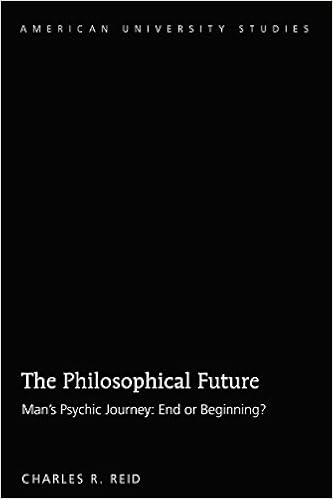 This book surveys the breadth of mankind’s postmodern malaise, which is achieved through a discussion of the major challenges, social and psychological, which every individual faces in the effort to live fully in the twenty-first century. These challenges lay in broadly familiar domains: self- and group-consciousness; common man and his place in a future society in which mental activity dominates; work and leisure; knowledge and values accruing from it, both for self and others; possibilities in education; civilization, with its “Dark Age” phenomena and its dreams of progress; the role of the past in contemporary life; and power, both in society and within the sovereign individual who, though bound by physical and intellectual limits, functions as a seeker after the freedom and self-fulfillment which are so wholly integral to the human condition. And finally a serious question: What fate awaits the perpetual non-conformist, whose views, however unwelcome in his own time and in a contemporary environment, may in fact anticipate future living conditions?
My Natural Obsession

Intrigue Generis Author Interview
The Witch Trials is an interesting historical drama centered around the life and times of a middle-class woman living in France during the 16th century. What served as your inspiration while writing this book?
I imagined how difficult it would be during the middle ages to be a strong, intelligent woman, constantly having to hide their true self for fear of ridicule or rebuke. Then it hit me, I should write a story illustrating that. I also am inspired by world history and how all cultures and countries tie in together and effect one another both knowingly and unknowingly.
I enjoyed the historical accuracy in this book. What kind of research did you undertake to get things right?
Allot. Which is why I usually shy away from writing these type of books. However, I wanted my first published books to showcase my writing skill and I felt the best way to do that was to have an organized field of reference. I love learning about history and seeing how that contributes to todays society. As the medieval time period is my natural obsession, I picked a topic that many people know of, but dont really know the historical background to, within that time period. I used typical college outline format as a baseline and timeline reference and filled in the blanks with my imagination. My next series after Witch Trials, a novel currently in edit, will showcase my imagination more in depth.
Sylvie’s character is an intriguing character who struggled for a dream beyond what many women settled for at the time. What were some themes you wanted to capture in her character?
1. Knowing that you have something so invaluable to those around you and feeling a spiritual calling to share it, but fearing to release it. (More captured in book 2 of Witch Trials).
2. Discovering a tolerable balance as a women in this time period; knowing when to show strength and when to hold back.
What is the next book that you are working on and when will it be available?
Witch Trials is a short story series. So I am currently working on book 2 now. I expect it to be released in time for Christmas. I am also working on a fantasy novel currently in edit.
Author Links: GoodReads | Twitter | Facebook | Website
![The Witch Trials: The Becoming by [Generis, Intrigue]](https://images-na.ssl-images-amazon.com/images/I/41qZ8kVk82L.jpg) Once upon time, women struggled to gain notoriety capable of any feat besides household responsibility. The struggle was life and death in the resistance of recognizing the inevitable rise of women. Starting life in Italy with a wealthy protestant family. Sylvie idolizes her father Dr. Fiore. Sylvie has her hopes set on being one of the first female doctors known to the area. But when Sylvie is married off to a wealthy craftsman named Leon, in France, she quickly realizes that this dream may be out of her reach and possibly run the risk of death. Is Sylvie’s dreams worth dying for? This book starts our journey in a small town of Eze in Southern France in the late 1600’s and tells a fictional story based from real time events in our history. This is book one of a new short story series.
Once upon time, women struggled to gain notoriety capable of any feat besides household responsibility. The struggle was life and death in the resistance of recognizing the inevitable rise of women. Starting life in Italy with a wealthy protestant family. Sylvie idolizes her father Dr. Fiore. Sylvie has her hopes set on being one of the first female doctors known to the area. But when Sylvie is married off to a wealthy craftsman named Leon, in France, she quickly realizes that this dream may be out of her reach and possibly run the risk of death. Is Sylvie’s dreams worth dying for? This book starts our journey in a small town of Eze in Southern France in the late 1600’s and tells a fictional story based from real time events in our history. This is book one of a new short story series.



 LITERARY TITAN